







A LEGO Survival World That Slowly Becomes Home
My first hours in LEGO Fortnite Odyssey followed the familiar survival-game pattern. I collected wood, picked up loose stones, searched for food, built a rough shelter, and discovered that night becomes considerably less charming when hostile creatures begin wandering near an unfinished wall. The materials were simple, the tools were basic, and my first village looked less like a heroic settlement than a collection of emergency decisions arranged around a campfire.
The difference appeared gradually. A non-player character moved into the village, new crafting stations unlocked, and the small camp began developing a routine. I built a proper house, assigned a villager to collect resources, created storage, prepared better equipment, and started planning journeys into biomes that had previously looked too dangerous. This LEGO Fortnite Odyssey review begins with that transformation because the game is most rewarding when an empty patch of procedural terrain becomes a place I understand, improve, and eventually miss when I travel too far away.
LEGO Fortnite Odyssey combines Fortnite’s engine and cosmetic ecosystem with LEGO-style survival, crafting, construction, exploration, village management, and light action-RPG progression. It originally launched under the simpler LEGO Fortnite name before being renamed Odyssey as Epic expanded the survival mode into a broader long-term adventure.
The concept is immediately appealing. Fortnite provides smooth movement, cross-platform infrastructure, a huge selection of compatible outfits, and a world capable of supporting regular updates. LEGO provides recognizable brick-built structures, playful destruction, modular construction, and a tone that makes survival feel adventurous rather than relentlessly harsh.
The experience is considerably deeper than a temporary Fortnite event. Players can create persistent worlds, invite friends, establish multiple villages, construct vehicles and machines, explore caves, fight bosses, recruit residents, farm resources, and continue expanding long after the first shelter becomes obsolete. Its weaknesses are equally clear. Resource gathering becomes repetitive, inventory management struggles to support large projects, procedural worlds contain long stretches of limited activity, and several systems are explained less clearly than they should be. Building individual pieces can also feel awkward compared with placing complete prefabricated structures.
Even with those frustrations, Odyssey has developed into one of Fortnite’s most substantial experiences. It is not Minecraft with LEGO graphics, nor is it merely Battle Royale without guns. It is a cooperative survival sandbox with enough personality to justify its own place inside Epic’s larger platform.
Core Survival Loop: Gather, Build, Improve, Travel Farther
A new survival world begins with limited resources and few protections. Wood and granite support the first tools, crafting stations, shelters, and basic village structures. Food restores health or provides useful effects, while weapons allow safer exploration beyond the immediate starting area.
The progression loop is based on expanding capability. Basic tools gather common materials, stronger tools break tougher resources, and improved equipment allows travel into more dangerous regions. Each biome introduces new ingredients, enemies, temperature conditions, caves, and reasons to upgrade.
The early game is particularly satisfying because almost every collected object has an obvious purpose. Wood becomes a shelter, granite becomes a crafting station, food supports exploration, and simple weapons turn nighttime enemies from serious threats into manageable interruptions.
Later progression becomes more demanding. Recipes may require materials from distant biomes, cave systems, powerful enemies, or several processing stations. One upgrade often begins a chain of smaller projects involving tools, food, transportation, storage, and protection.
This interconnected progression creates good preparation stories. A journey into a dangerous region may require heat or cold resistance, stronger weapons, replacement tools, food buffs, and enough empty inventory space to return with useful resources.
The same structure can become tiring. Reaching one desired upgrade may involve gathering several secondary ingredients that exist mainly to extend the crafting process. When I am excited to build or fight, repeated harvesting can feel like administrative work placed between me and the interesting part.
Odyssey is most enjoyable when I allow the objectives to emerge naturally. Rushing directly toward the highest equipment tier turns the game into a resource checklist. Alternating between construction, exploration, combat, farming, and village development keeps the repetition less visible.
Building: LEGO Creativity With Survival-Game Friction
Building is one of Odyssey’s central attractions. I can place complete structures from guided blueprints or construct freely using individual walls, floors, roofs, supports, stairs, and decorative pieces.
Guided builds are the easiest entry point. The game displays a structure in stages, showing where each piece belongs. Completing the sequence produces a polished building without requiring architectural confidence. These blueprints are particularly useful for young players and anyone who wants a functional settlement quickly. Houses, workshops, storage buildings, and larger themed structures can be completed through clear steps.
Free building offers much greater creativity. I can combine pieces from different sets, adjust dimensions, create unusual towers, connect structures, build bridges, design workshops, or ignore ordinary architecture completely. The LEGO identity is strongest here. Walls, roofs, fences, platforms, and furniture resemble pieces from a large virtual collection. Unlocking new building sets feels like receiving another box of components rather than merely gaining a numerical upgrade.
The controls do not always support the imagination smoothly. Snapping can become stubborn, especially around corners, uneven terrain, roofs, and moving structures. A piece may attach to the wrong point or refuse to align because another object is slightly too close. Removing mistakes can also create additional problems. Destroying one misplaced part may damage nearby objects or require reconstructing a section that was already correct.
Terrain is another source of frustration. Prefabricated structures prefer flat ground, while natural landscapes rarely provide the perfect surface. Foundations help, but building an organized settlement on slopes can become an extended fight with elevation. The system is powerful enough to support impressive creations, but it lacks the effortless precision of placing blocks on a fixed grid. Odyssey offers more detailed pieces than Minecraft while making simple alignment more difficult.
Villages & Residents: Turning Buildings Into a Community
A village begins when I place the relevant central object and start improving the surrounding area. Buildings, furniture, crafting stations, and decorations increase its development, while upgrades unlock additional features and resident capacity. Villagers give construction a purpose beyond appearance. They can move into the settlement, perform jobs, gather resources, process materials, accompany the player, and make an otherwise empty group of buildings feel inhabited.
Assigning work is especially useful during later progression. A resident may collect local resources or operate a station, reducing the amount of repetitive gathering I must complete personally. Villagers can also join expeditions. A companion provides additional damage, distracts enemies, and helps during cave exploration. Their artificial intelligence is not always reliable, but even imperfect support can make dangerous journeys more comfortable.
The system creates a pleasant domestic rhythm. I return from an expedition, place gathered materials into storage, collect resources from residents, repair equipment, improve a building, and prepare for the next trip. Different villages can be established across biomes, encouraging regional bases rather than one enormous central settlement. A desert village may support access to heat-region materials, while another base near snow or jungle content reduces travel time.
The residents remain mechanically simple. Their dialogue repeats, personal stories are limited, and relationships do not develop with the depth of a dedicated life simulation. Pathfinding can also become irritating. Villagers may block doors, fail to use furniture naturally, become trapped around construction, or follow inefficient routes. Despite these limitations, villages are essential to the game’s emotional appeal. A survival world becomes more meaningful when the player is not the only figure using it.
Crafting & Stations: Progress Built Through Chains of Materials
Crafting is distributed across several specialized stations rather than one universal menu. Tools, weapons, food, refined materials, potions, equipment, and mechanical components may require different structures. This gives villages visual and practical organization. A workshop can contain production stations, kitchens can handle food, and storage areas can support specific resources.
Processing materials creates dependency chains. Raw resources become refined components, which are then used in equipment or construction. These chains give exploration a practical purpose because each region contains ingredients connected with new possibilities. The system has improved through major updates, but it can still feel more complicated than necessary. A desired item may require checking several menus, identifying an unfamiliar ingredient, locating the correct biome, and remembering which station creates the intermediate component.
Recipe discovery is uneven. Some unlocks occur naturally after collecting materials, while others appear only after particular interactions or progression milestones. The game could communicate these relationships more clearly through a centralized recipe guide. Food has become more useful than a simple hunger meter. Meals and drinks can provide health restoration, resistance, stamina support, temperature protection, or combat benefits.
Recent versions have reduced the amount of pressure associated with constant hunger management, which improves the pace. Food remains meaningful without forcing me to stop an expedition repeatedly because one bar is becoming empty. The crafting depth is welcome, but the interface needs better filtering, recipe tracking, and material-location information. Complexity feels rewarding when it supports decision-making; it feels like friction when I am switching between outside guides and several station menus.
Exploration & Biomes: Long Journeys With Uneven Rewards
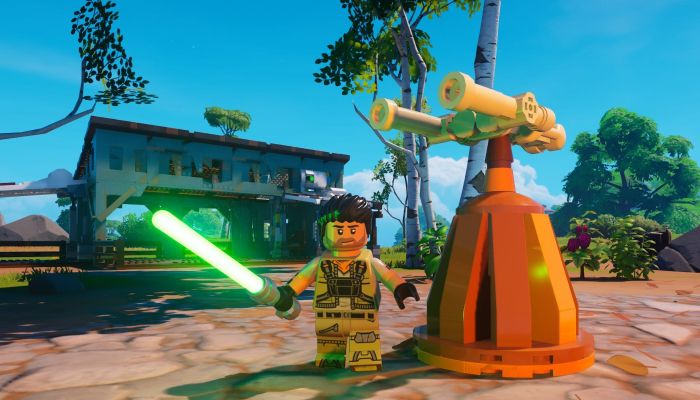
Odyssey generates large worlds containing grasslands, deserts, snowy regions, caves, coastlines, islands, storm-related zones, special event areas, and content introduced through collaborations such as Star Wars and NINJAGO. Each major biome creates practical differences. Temperature may require protection, enemies become stronger, and local resources support the next equipment tier. Caves provide some of the most concentrated exploration. They contain valuable materials, hostile creatures, narrow paths, environmental hazards, and the danger of becoming lost inside similar-looking tunnels.
I enjoy the preparation and tension of cave expeditions. Carrying enough food, weapons, tools, lighting, and inventory space creates a clear objective. Returning safely with rare resources feels meaningful because the journey involved genuine risk. The surface world is less consistent. Beautiful landscapes can stretch for a long distance without offering much interaction beyond repeated resources and familiar creatures.
Procedural generation creates unique geography but cannot guarantee handcrafted interest around every hill. Some journeys feel like discoveries, while others become long walks between known materials. Vehicles reduce this problem once they work correctly. Cars, flying machines, boats, and custom contraptions can make travel faster and more entertaining.
Fast travel systems and regional bases are still important because worlds are large enough that repeated routes become exhausting. The best exploration occurs when geography creates a story: a village overlooking a canyon, a cave entrance near an enemy camp, a vehicle damaged far from home, or a sudden storm interrupting an otherwise simple resource run.
Vehicles & Physics: Brilliant Ideas, Unreliable Engineering
Odyssey allows players to construct functional vehicles using platforms, wheels, engines, thrusters, balloons, seats, steering components, and other mechanical pieces. This system combines LEGO experimentation with Fortnite physics. A simple car may carry resources between settlements, while ambitious players can create aircraft, moving bases, boats, or machines that appear structurally impossible.
Successful vehicles are incredibly satisfying. Designing a working machine produces a sense of accomplishment different from following a building blueprint. Physics also creates comedy. A vehicle may flip after hitting a small obstacle, rotate unexpectedly when a thruster activates, or continue moving after the driver has lost control. The problem is reliability. Custom vehicles can behave differently after loading, collide strangely with terrain, lose pieces, or become difficult to recover after one accident.
Flying machines are especially sensitive. A small imbalance may cause permanent turning, while landing can damage components or place the vehicle in an unusable position. Resources invested in a machine make these failures more frustrating. A broken experimental vehicle is funny when the materials are cheap; it becomes irritating when rare components are involved. The system reflects Odyssey at its most ambitious. It gives players tools instead of predetermined answers, but those tools are attached to physics that do not always behave consistently enough for serious engineering.
Combat & Hero Equipment: More Than Basic Swords, Still Not a Full Action RPG
Combat originally relied heavily on straightforward melee weapons, ranged tools, shields, dodging, and equipment strength. Later updates introduced more specialized abilities, powerful gear, potions, and hero-style equipment influenced by the former Expeditions mode. The result is more dynamic than the earliest version of LEGO Fortnite. Players can use mobility abilities, elemental attacks, enhanced weapons, defensive tools, and stronger class-like combinations.
Basic combat remains accessible. Enemies communicate many attacks clearly, and the control scheme will feel familiar to Fortnite players. Melee fighting depends on positioning, attack timing, dodging, blocking, and equipment durability. Ranged attacks provide safer pressure but require ammunition or specific resources. Hero equipment gives builds more identity. Instead of relying only on weapon rarity, I can select abilities that change movement or create stronger combat options.
This helps Odyssey compete with dedicated survival-action games, although the system remains less deep than a traditional RPG. Enemies often rely on repeated attack patterns, large health pools, and numerical difficulty. The most satisfying battles combine terrain, multiple enemy types, limited resources, and a meaningful destination. A random creature encountered near a base rarely creates tension; a boss fought after a long preparation process can become a memorable event. Combat also suffers when companions or enemies struggle with pathfinding. Opponents may become trapped around rocks, while villagers can stand in dangerous areas or fail to attack the intended target. The action has improved significantly, but construction and exploration remain stronger foundations than pure fighting.
Storms, Bosses & Larger Adventures: A Needed Sense of Direction
Odyssey’s early sandbox structure gave players freedom but provided limited long-term narrative purpose. Major updates introduced stronger questlines, special villages, Storm-related progression, powerful enemies, and multi-stage boss encounters.
These additions give survival worlds clearer direction. A village associated with a major storyline can guide players toward particular resources, enemies, upgrades, and regions. Bosses provide a reason to optimize equipment beyond ordinary exploration. Preparing food buffs, potions, weapons, defensive items, and companions makes the larger crafting economy more meaningful. The Storm King represents the kind of climactic challenge Odyssey needs. A powerful multi-stage fight gives players an objective beyond constructing a larger house.
NINJAGO content expands combat and progression through themed islands, elemental abilities, characters, enemies, and new building pieces. Collaborations work best when they become integrated systems rather than temporary advertisements. The narrative remains light. Dialogue and quests provide direction without turning Odyssey into a heavily scripted campaign.
This balance suits the sandbox, though story objectives can feel disconnected from player-created settlements. A dramatic threat may be occurring while my residents continue behaving as though nothing has changed. Future updates would benefit from making major events affect the ordinary world more visibly. Villager reactions, regional changes, defenses, and evolving settlements could connect global adventures with personal construction.
Sandbox Mode & World Settings: Playing Without Survival Pressure
Sandbox Mode removes the need to gather resources and allows players to access building pieces, items, creatures, and tools more freely. This is the ideal mode for large creative projects, vehicle testing, experiments, and players who prefer construction without hunger, equipment durability, temperature, or hostile progression. World settings allow the experience to be customized further. Players can control enemies, survival systems, elimination consequences, stamina, villagers, and other conditions depending on the available options. The ability to create multiple worlds supports different purposes. One world can remain a serious survival campaign, while another becomes a creative testing ground. This separation is useful because experimental construction can consume valuable resources or damage an established settlement in Survival Mode.
Sandbox also highlights the size of Odyssey’s building library. Without progression barriers, the game becomes a digital LEGO environment connected with Fortnite movement and multiplayer. The weakness is that unrestricted access removes much of the emotional value attached to materials. A building completed instantly does not carry the same story as one constructed after several expeditions. Creative and survival play therefore satisfy different needs. Odyssey succeeds because it supports both without forcing one philosophy onto every world.
Multiplayer & Shared Worlds: Cooperation Makes the Grind Easier
Odyssey supports cooperative worlds where friends can build, explore, gather, fight, and manage settlements together. The division of labor improves the survival loop. One player may gather wood, another process food, another explore caves, and another design buildings. Large projects become realistic because several people contribute resources. Vehicle experiments also become more entertaining when one person drives while another attempts to repair the machine during motion. Shared worlds create ownership questions. Players may disagree about where to build, how to use rare resources, or whether one person’s giant tower belongs in the middle of an organized village.
World permissions and key-holder systems allow trusted players to access a persistent world even when the creator is absent. This is convenient for long-term groups. Cooperation also reduces difficulty. Several players can revive one another, distract bosses, carry more resources, and cover multiple tasks. The technical experience depends on connection quality and host stability. Busy settlements, machines, animals, villagers, and several players can create performance issues.
Split-screen support on compatible consoles makes the mode more accessible for households, although interface space and performance naturally become more constrained. The best shared worlds develop informal histories. A damaged vehicle remains beside a mountain, one badly designed house becomes a landmark, and storage systems reveal which player refuses to organize anything.
Inventory & Storage: The Real Survival Boss
Inventory management is one of Odyssey’s most persistent weaknesses. The game contains many materials, foods, tools, weapons, charms, mechanical parts, processed components, and decorative resources. Personal inventory space becomes limited quickly during serious exploration.
Storage chests help, but organizing them requires time and discipline. Without a clear system, a village becomes filled with containers holding random combinations of wood, food, monster drops, and components. Moving resources between distant villages is especially annoying. Vehicles can help, but unreliable physics make valuable cargo risky. Multiple regional storage networks reduce travel but increase duplication and confusion.
Tools and weapons also have durability, meaning inventory slots may be occupied by replacements. Returning from a cave with damaged equipment and several resource types becomes a small logistical puzzle. The interface needs stronger sorting, searching, labeling, and automatic material transfer. Crafting should be able to recognize nearby storage more consistently instead of requiring resources to be moved manually.
Large projects expose these limitations severely. The creative possibility is enormous, but the storage tools remain designed for much smaller ambitions. Inventory friction can provide meaningful preparation in survival games. Odyssey crosses into unnecessary administration once the player manages several settlements and production chains.
Graphics & LEGO Art Direction: Fortnite’s World Rebuilt as a Toy Set
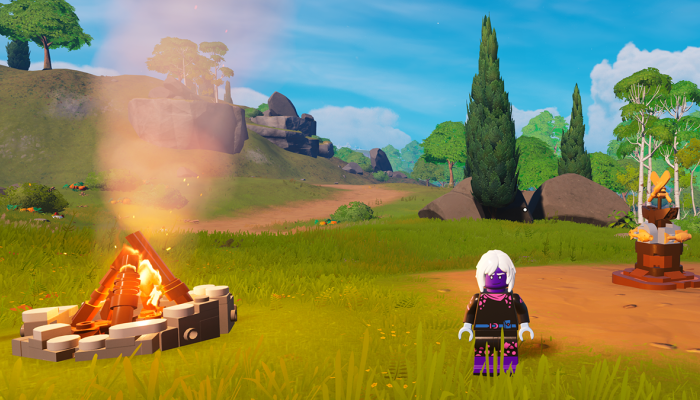
Odyssey has a strong visual identity because the environments combine natural Fortnite landscapes with LEGO characters, structures, resources, animals, furniture, and machines. Compatible Fortnite outfits receive LEGO-style versions, translating recognizable costumes into minifigures. This creates a strong connection with a player’s existing locker. Buildings look especially appealing. Roof tiles, walls, windows, furniture, and decorative objects resemble pieces from physical sets while remaining large enough for characters to inhabit naturally.
Destruction supports the toy-like presentation. Objects break into pieces rather than realistic debris, keeping combat and accidents visually playful. Biomes use strong colors and readable materials. Deserts, snowfields, jungles, caves, grasslands, and storm zones remain easy to distinguish. Lighting can make settlements look beautiful at sunrise or during storms. A village filled with lamps and active stations develops an atmosphere far beyond the simplicity of the individual pieces.
Visual effects can become crowded during combat, particularly after the addition of hero abilities and collaboration content. Some distant terrain and large structures also reveal the limitations of procedural generation. Landscapes may look impressive from one angle and strangely unfinished from another. The art direction remains charming because it does not chase realism. Odyssey looks like a collection of enormous LEGO sets arranged inside a living survival world.
Audio & Music: Gentle Exploration Interrupted by Plastic Chaos
The soundtrack supports relaxed exploration, village building, dangerous caves, combat, and major story events without overwhelming the experience. Quiet environmental music suits long construction sessions. It allows the sounds of tools, footsteps, animals, stations, and weather to create the sense of an active settlement. LEGO pieces produce satisfying clicks, impacts, and breakage. Building sounds make completed stages feel physical, while destroyed objects scatter with playful audio rather than realistic violence. Enemies have recognizable warnings, though crowded battles can make important cues difficult to isolate.
Villagers add ambient dialogue, but repeated lines become familiar quickly. Their limited voice variety reinforces the mechanical nature of the characters. Vehicles produce useful engine and thruster feedback. Strange changes in sound may warn that a machine is becoming unstable before the visual disaster occurs. The music is pleasant rather than unforgettable. Odyssey’s emotional identity comes more from the accumulated sounds of a personal village than from one dominant theme.
Technical Performance: Ambition Exposes the Limits of a Persistent Sandbox
Odyssey runs inside Fortnite, which provides cross-platform support, familiar controls, regular updates, and strong online infrastructure. The mode asks the engine to manage persistent worlds, procedural terrain, villagers, animals, physics objects, vehicles, construction pieces, enemies, weather, storage, and multiple players. Unsurprisingly, technical issues remain part of the experience.
Simple worlds usually perform well. Problems become more likely around dense villages, large machines, many loose objects, extensive farms, and complicated player creations. Vehicles may shift after loading, structures can behave strangely, villagers may become stuck, and interactions occasionally fail until the world is reloaded. Updates can improve major systems while introducing new bugs. A long-term survival world depends on mechanics that may change significantly months after construction.
Loading and streaming become more visible during fast travel or flight. Terrain may appear late, and vehicles moving too quickly can produce awkward collisions. World persistence requires trust. Players investing dozens of hours should understand that online survival sandboxes can experience unexpected technical problems. Regular backups or version history would provide greater reassurance. Player creations are the most valuable content in the game, so protecting them should be a central technical priority.
Monetization & Cosmetic Integration: Free Survival Inside a Commercial Platform
LEGO Fortnite Odyssey is free to access through Fortnite. Core survival, crafting, world creation, village development, exploration, and combat do not require a separate purchase.
Compatible Fortnite outfits can be used in LEGO form, giving existing cosmetics additional value. Players may enjoy seeing familiar characters transformed into minifigures. Purchased outfits do not provide stronger tools, better health, faster crafting, or exclusive survival statistics. The core mode is therefore not pay-to-win. The surrounding Fortnite platform remains heavily commercial. The Item Shop, Fortnite Crew, passes, starter packs, collaboration bundles, and rotating cosmetics are always nearby.
LEGO-themed kits and building bundles are more complicated than character outfits because construction pieces affect creative variety. They do not normally provide direct survival power, but paid décor can make one player’s building library larger than another’s. This is not competitive advantage in the usual sense. It is still a form of creative content separation inside a game built around construction.
Younger players may feel pressure when a desirable LEGO version of a famous character or themed building set appears for a limited period. Parental purchase controls remain important. The free core experience is generous enough to support extensive play without spending. The store is also integrated deeply enough that completely ignoring monetization requires conscious effort.
Who Should Play LEGO Fortnite Odyssey?
Odyssey is best suited to players who enjoy survival crafting, cooperative construction, village management, exploration, and open-ended objectives. Minecraft fans may appreciate the resource gathering and building, though Odyssey uses more detailed construction pieces, stronger animation, structured villages, and less precise free placement.
Fortnite players receive familiar movement, cosmetic integration, and a less competitive environment. Families can create shared worlds without the pressure of Battle Royale. LEGO fans will enjoy the visual language and modular structures, although players seeking complete brick-by-brick freedom may find the building system restrictive. Action-focused players may enjoy bosses and hero equipment but should not expect the combat depth of a dedicated RPG.
Players who dislike inventory sorting, repeated harvesting, long travel, equipment durability, or procedural emptiness may lose patience. The game works best for people capable of creating personal goals. Odyssey provides many systems, but the player still decides whether the next project is a stronger weapon, desert village, flying machine, castle, farm, or expedition into a new region.
Final Verdict: A Survival Game That Becomes Better When I Stop Rushing It
LEGO Fortnite Odyssey has grown from an appealing experiment into a substantial survival sandbox. Its combination of Fortnite movement, LEGO construction, persistent worlds, villages, crafting, exploration, vehicles, bosses, and regular themed updates provides enough material for long-term play. The early progression is excellent. Every tool and structure improves practical survival, while the first village changes the world from a temporary campsite into a developing home.
Building provides the strongest long-term motivation. Guided structures help players begin, and free construction supports far more creativity once the controls become familiar. Villagers give settlements warmth and practical value, though their dialogue and artificial intelligence remain basic. Vehicles create some of the game’s funniest and most frustrating moments because the engineering possibilities are greater than the physics reliability.
Combat has improved through stronger equipment, potions, bosses, and hero-style abilities. It still supports exploration more effectively than it functions as a standalone action game. The mode’s largest problems are friction rather than lack of content. Inventory management, storage, travel, snapping, recipe discovery, and technical instability can make ambitious play feel like maintenance.
Odyssey is most enjoyable when I stop treating progression as a race. Building a road, redesigning a workshop, helping a resident, or testing an absurd vehicle may produce more memorable sessions than obtaining the next equipment tier as quickly as possible. I recommend LEGO Fortnite Odyssey to survival-crafting fans, families, cooperative groups, builders, Fortnite players seeking a persistent noncompetitive world, and LEGO fans comfortable with structured digital construction.
Personal rating: 8.5/10.
LEGO Fortnite Odyssey earns that score for its satisfying survival progression, charming LEGO art direction, flexible building, useful villages, extensive exploration, cooperative worlds, and increasingly varied adventure content. It loses points for weak inventory tools, repetitive resource gathering, unreliable vehicles, inconsistent snapping, simple enemy behavior, and technical issues that become more visible as a world grows.
The game begins with a campfire, a crude tool, and enough materials for one uncertain shelter. Its best achievement is making that same location feel completely different many hours later—not because the world changed automatically, but because I stayed and built something worth returning to.
Pros

- Engaging blend of building creativity and competitive gameplay
- Rich and customizable environments with innovative building modes
- Smooth cross-platform performance and accessibility
- Active modding community that supports cheats and customizations
- User-friendly download and installation process
- Regular updates and dedicated community support that keeps the game fresh
Cons

- Potential stability issues when extensive mods and cheats are used
- Graphics might underwhelm on older or low-end hardware
- Occasional imbalance in online multiplayer matchmaking affecting competitive play


Leave a comment
Your comment is awaiting moderation. We save your draft here
0 Comments