





The Toy Factory That Should Have Stayed Closed
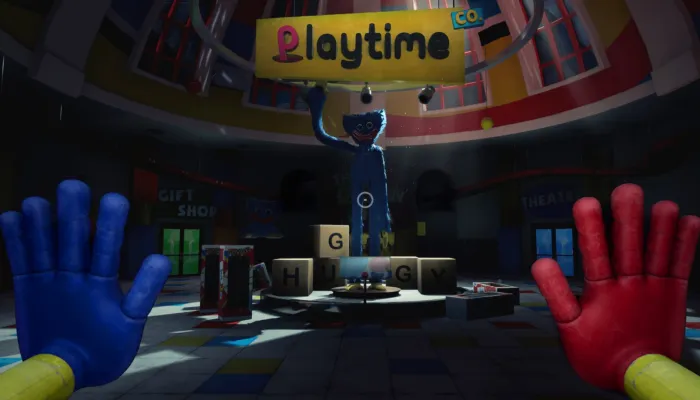
My first walk through the abandoned Playtime Co. factory felt strangely harmless. The reception area was colorful, the company mascots looked designed for children’s television, and cheerful posters promised creativity, friendship, and perfect toys. Then I noticed how quiet the building was. No workers. No functioning production line. No clear explanation for why everyone had disappeared. By the time a tall blue figure vanished from its display case, this Poppy Playtime review had already shifted from industrial exploration into a nervous search for the nearest exit.
Poppy Playtime is a first-person horror puzzle series developed by Mob Entertainment. I play as a former Playtime Co. employee who returns to the abandoned factory after receiving evidence that the missing staff may still be inside. The first chapter establishes the factory, introduces the GrabPack tool, and turns Huggy Wuggy from a friendly corporate mascot into a patient predator.
The premise works because it corrupts familiar childhood imagery. Playtime Co. is full of smiling characters, bright primary colors, oversized play areas, and recorded messages delivered in reassuring voices. None of those elements is frightening on its own. The discomfort comes from knowing they were created by a company that treated children, employees, and living experiments as resources.
Poppy Playtime has expanded far beyond its original short chapter. The opening installment is now the free base game on Steam, while later chapters are sold separately as downloadable content. Chapter 3 introduced Playcare, an underground orphanage, and CatNap, while Chapter 4 pushed the story farther into the factory’s hidden depths. Chapter 5 has since appeared as the newest paid continuation, meaning the series is still built around an unfinished episodic mystery rather than a fully closed narrative.
That structure shapes the experience. Each chapter expands the scale, adds a major creature, introduces new GrabPack functions, and provides another collection of documents, recordings, environmental clues, and dramatic revelations. I am not simply trying to escape one monster. I am slowly reconstructing the history of an entire company.
The result is a horror game that alternates between effective suspense and visible franchise machinery. At its best, Poppy Playtime makes an empty corridor feel dangerous before anything appears. At its weakest, I can sense the game preparing a new mascot, merchandise line, or cliffhanger before the current chapter has fully resolved its ideas.
Core Gameplay & Mechanics: Long Arms, Locked Doors, and Relentless Pursuit
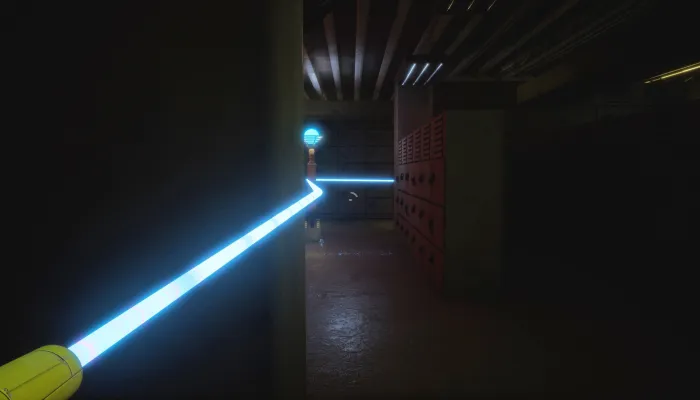
The GrabPack is Poppy Playtime’s defining mechanic. Worn like a backpack, it gives me two extendable artificial hands that can reach across rooms, pull handles, connect electrical circuits, carry energy, move objects, open doors, and interact with machinery. The hands travel along cables, which limits their range and creates spatial puzzles based on distance, angles, and obstacles.
Using the GrabPack feels intuitive during basic interactions. I aim at a handle, launch one hand, and pull. More complex puzzles ask me to connect a power source to several conductive points while wrapping the cable around poles or moving through the room in a specific order. The challenge often comes from understanding the route the cable must follow rather than performing difficult inputs.
Later chapters expand the tool with additional hands and functions. Different GrabPack attachments can carry electrical power, create temporary connections, activate special surfaces, launch the player, or interact with systems that the original hands cannot operate. These upgrades prevent every puzzle from feeling identical, although the structure remains familiar: enter a sealed area, inspect the machinery, identify the required sequence, and restore power or access.
The best puzzles make the factory itself feel like a machine. Conveyor belts, production rooms, generators, switches, ventilation systems, and testing chambers are not decorative backgrounds. They create obstacles and explain how Playtime Co. once operated. Solving a room often reveals something about the company’s priorities or its disregard for safety.
Other puzzles feel artificially extended. I sometimes understood the solution quickly but still had to walk between distant switches, wait for machinery, or repeat slow interactions. The GrabPack is inventive, yet the game occasionally uses cable length and locked doors to stretch a simple idea across a larger area.
Exploration is mostly linear. Chapters may contain branching corridors, optional recordings, hidden collectibles, and rooms that can be visited in different orders, but the primary path remains controlled. This allows the developers to manage tension carefully. A hallway can stay empty until the exact moment I return with a required item.
The linear structure also makes some objectives predictable. When the game gives me a large room, several hiding places, and an unusually complicated mechanism, I know a chase or hostile encounter is probably coming. Poppy Playtime becomes less frightening when I can see the design preparing the next scare.
Enemy encounters are divided between scripted pursuit sequences, stealth sections, environmental hazards, and direct survival challenges. Huggy Wuggy’s original chase is memorable because the creature follows me through narrow ventilation routes where turning around is difficult and stopping is fatal. The sequence removes most puzzle-solving freedom and replaces it with immediate movement.
Later antagonists are given broader roles. Mommy Long Legs manipulates the player through game-station challenges, CatNap controls the atmosphere of Playcare, and later creatures combine scripted appearances with longer survival sequences. Each major mascot has a different silhouette, movement style, and relationship to the factory.
The monsters are most effective before they attack. A distant sound, a hand disappearing around a corner, or evidence that something recently moved creates more anxiety than a direct chase. Once the enemy enters a fixed pursuit pattern, fear becomes a question of memorizing the route.
This is my first major frustration. Several chase sequences depend heavily on knowing where to turn before the correct path is visually obvious. Failing because I reacted too slowly feels fair. Failing because two corridors look similar and the objective marker disappears during a sprint feels more irritating than frightening.
Checkpoint placement varies between chapters. Many deaths return me close to the failed encounter, limiting repetition. Other sections require replaying dialogue, animations, slow setup actions, or parts of a puzzle. Horror loses momentum quickly when a tense sequence becomes a routine obstacle course.
Movement is functional but not especially expressive. I can walk, sprint, crouch, jump, interact, and use the GrabPack. Platforming becomes more important as the series continues, particularly when upgraded hands allow new forms of traversal. The controls usually respond well, though the first-person perspective can make narrow jumps and moving platforms awkward.
The player character has almost no visible physical presence. I see the GrabPack hands but not much of the person operating them. This keeps attention on the factory, yet it also weakens the sense of vulnerability. I am often closer to a floating camera carrying two mechanical arms than a former employee returning to a traumatic workplace.
Combat is limited compared with conventional survival horror. Poppy Playtime is primarily about avoidance, escape, tools, and environmental problem-solving. Certain chapters provide ways to stun, repel, or temporarily confront threats, but I am rarely collecting ammunition and clearing rooms of enemies.
That restraint suits the monsters. Huggy Wuggy would be less disturbing if I could defeat several identical versions with a weapon. Still, later chapters sometimes struggle to create new mechanical pressure without introducing more action-oriented encounters.
Difficulty comes from observation, route recognition, quick reactions, and occasional timing challenges. The puzzles are generally accessible, making the series suitable for players who enjoy horror but do not want highly complex logic problems. The chase sequences create sharper difficulty spikes than the puzzles themselves.
Graphics, Audio, and Technical Performance: Colorful Corridors With Something Breathing Inside
Poppy Playtime’s art direction is its strongest feature. The Playtime Co. factory combines industrial machinery with children’s entertainment design. Metal walkways, pipes, generators, storage rooms, and concrete tunnels sit beside painted murals, toy displays, game areas, and oversized mascot statues.
This contrast gives the locations a specific identity. The factory does not resemble a generic abandoned hospital or dark mansion. It looks like a business that attempted to manufacture happiness on an industrial scale and left the equipment running after the people disappeared.
Character design is equally important. Huggy Wuggy’s long limbs and oversized smile make him recognizable from a distance. Mommy Long Legs turns elastic movement into both personality and threat. CatNap’s thin body and fixed grin suit the darker, more oppressive spaces of Playcare.
The mascots are designed to appear simple enough for a toy catalogue but distorted enough to become threatening when animated. That balance is difficult. A creature that looks too realistic would not fit the company’s branding, while one that looks too harmless would struggle to carry a chase.
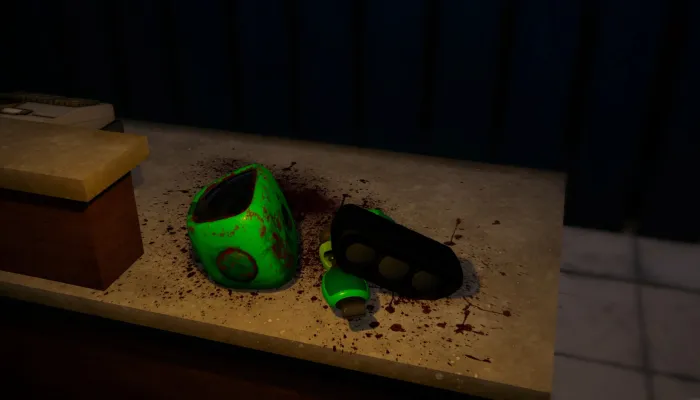
Environmental storytelling fills the spaces between major encounters. Abandoned workstations, damaged toys, blood, company notices, recordings, testing rooms, and hidden laboratories gradually expose what happened inside Playtime Co. The story rarely arrives in one complete explanation. I have to connect corporate language with the physical evidence left behind.
Chapter 3 significantly increased the scale through Playcare, a ruined orphanage located beneath the factory. Mob Entertainment describes it as the largest and most frightening entry of the first three chapters, with new locations and CatNap as its central antagonist. Chapter 4 continued downward into previously hidden areas and promoted a darker atmosphere, new enemies, allies, and more demanding puzzles.
The growing scale creates more visual variety, but it also produces empty stretches. Larger chapters sometimes require extended travel through corridors or rooms with limited interaction. The factory feels more substantial, yet bigger is not always scarier.
Lighting is used aggressively. Flashing equipment, colored emergency lights, deep shadows, and narrow flashlight beams control what I can see. Strong lighting makes certain rooms striking, but darkness is occasionally overused. Searching for a small interaction point in a nearly black environment is not the same as feeling suspense.
Sound design carries much of the horror. Distant metal impacts, ventilation noise, electrical systems, toy voices, footsteps, and distorted recordings keep the factory from feeling truly empty. Silence is often followed by a small sound that makes me stop moving and listen.
The creatures have distinct audio identities. Huggy Wuggy’s movement creates a sense of something large traveling through spaces that should be too narrow. CatNap is supported by a heavier, dreamlike atmosphere. Recorded voices range from cheerful company material to frightened testimony and threatening instructions.
Music is used more carefully than constant background scoring. During exploration, environmental sounds create tension. Chases introduce louder and more urgent tracks, clearly changing the pace. The transition is effective, although it also confirms that the danger is now following a scripted sequence.
Voice performances are generally strong, especially when friendly presentation and hidden cruelty overlap. Poppy’s calm delivery can sound helpful and unsettling at the same time. Company recordings often begin with polished enthusiasm before revealing disturbing implications.
Technical quality has improved across the series, but inconsistency remains. The original chapter is small and usually runs smoothly. Later chapters contain larger spaces, more complex lighting, additional characters, and heavier scripted events, increasing hardware demands and the possibility of frame-rate drops.
Chapter 4 released on January 30, 2025, and its Steam reception remains mixed, with roughly two-thirds of English reviews marked positive at the time checked. The chapter’s store page emphasizes atmosphere, new characters, and more intricate puzzles, but its mixed reception reflects concerns that include technical problems and uneven design.
I encountered the most friction around asset loading, animation transitions, and interaction detection. A hand may fail to connect with an object from an angle that appears valid. A scripted character can move unnaturally into position. Performance can briefly decline when a chase begins or a large area loads.
These issues form my second major complaint. Poppy Playtime depends on controlled timing. When a technical pause, unclear collision, or delayed interaction causes a death, the carefully constructed fear disappears and is replaced by irritation.
Monetization & Ads: A Free Entrance Followed by Paid Chapters
The first chapter of Poppy Playtime is available as the free base game on Steam. Additional chapters are sold separately as DLC. Steam’s base-game description clearly states that the initial download includes Chapter 1 and that subsequent chapters require separate purchases.
This model gives new players a useful trial. Chapter 1 introduces the setting, GrabPack, puzzles, and Huggy Wuggy without requiring payment. By the end, I had enough information to decide whether the mystery and mechanics justified buying the continuation.
There are no pay-to-win systems. Poppy Playtime is a single-player narrative horror experience, so purchases do not provide stronger equipment, extra health, or competitive advantages. Each payment unlocks another part of the story.
Traditional advertising does not interrupt the PC chapters. I am not asked to watch videos after dying or spend premium currency to continue. The financial commitment comes from buying separate episodes.
The weakness of this structure is fragmentation. A player beginning the series today must purchase several chapters to follow the full story, and Chapter 5 is now included in Steam’s current chapter bundle alongside Chapters 2, 3, and 4. The total cost is much higher than the word “free” on the base-game page initially suggests.
Chapter prices have also increased as the episodes have grown. Chapter 4 is listed at $19.99 on Steam, which is substantial for one installment of an unfinished story. Length, puzzle quality, technical polish, and replay value therefore matter more with each release.
The value varies sharply by chapter. The short opening works well as a free introduction. Later chapters offer larger environments, more story, and additional mechanics, but they are still linear experiences with limited reasons for immediate replay beyond collectibles, achievements, and missed lore.
The series also exists inside a much larger commercial franchise involving merchandise, licensed products, online content, and spin-offs. That success does not automatically reduce the quality of the games, but it can make new characters feel designed partly for recognition outside the story.
Players interested only in gameplay may prefer waiting for bundle discounts. Those strongly invested in the lore will feel more pressure to purchase chapters close to release, especially when online discussion quickly exposes major plot developments.
Who Should Play This? Horror Fans Who Enjoy Lore More Than Combat
Poppy Playtime is well suited to players who enjoy narrative horror, environmental storytelling, memorable monsters, and accessible puzzles. It does not require mastery of complex combat or resource management. Most progress depends on observation, GrabPack use, and surviving scripted threats.
Fans of games such as Five Nights at Freddy’s, Bendy and the Ink Machine, Little Nightmares, and mascot-centered indie horror will recognize the appeal. Poppy Playtime combines a child-focused fictional brand with corporate secrets, missing people, living creations, and a story designed to support theory-building.
Lore hunters may get the most value. Recordings, notes, environmental details, character dialogue, and hidden references encourage discussion between chapters. The story is intentionally incomplete, so players who enjoy connecting clues can remain engaged after the main path ends.
The series also works for streamers and groups watching one person play. Chases, reveals, mascot designs, and sudden scares create clear reactions. The puzzles are understandable enough for viewers to suggest solutions without needing to study a complicated rule system.
Players who dislike jump scares should be cautious. Poppy Playtime builds atmosphere, but it also uses sudden appearances, loud audio cues, chase sequences, and scripted shocks. The horror is not based entirely on subtle psychological pressure.
Anyone seeking deep survival mechanics may find it limited. There is little inventory management, weapon customization, or open-ended enemy strategy. Most threats have intended solutions, and once those solutions are known, much of the fear disappears.
Players who dislike episodic releases should wait until the complete story is available. Every chapter answers some questions while creating new ones. Cliffhangers are central to the structure, and the current series remains dependent on further paid continuation.
People with low tolerance for technical imperfections may also be frustrated, particularly in the larger chapters. Visual ambition and chapter scale have grown faster than consistency in some sections.
Younger players are clearly attracted to the colorful mascots, but the games contain frightening imagery, pursuit, violence, disturbing experiments, and darker story material. The toy designs should not be mistaken for proof that the series is suitable for every child.
Final Verdict: A Clever Horror Franchise Still Searching for Its Final Answer
Poppy Playtime is far more effective than its merchandising success might suggest. Behind the recognizable mascots is a well-designed horror setting built around industrial spaces, corporate cruelty, childhood fear, and a tool that supports both puzzles and traversal.
I enjoyed exploring Playtime Co. most when the game trusted its environment. Empty production floors, distant sounds, damaged toys, and recorded messages created stronger fear than a creature suddenly filling the screen. The factory feels like a place with a history, not merely a corridor connecting monster encounters.
The GrabPack remains a smart central mechanic. It gives the player a recognizable ability without turning the experience into combat-heavy action. Pulling distant objects, completing circuits, and manipulating machinery makes me an active participant rather than a passenger moving between scripted scenes.
The monster encounters vary in quality. Huggy Wuggy’s original pursuit is simple but memorable. Mommy Long Legs provides personality and direct manipulation. CatNap supports a darker atmosphere, while later chapters increase the number of threats and narrative revelations. The best creatures feel connected to the company’s history rather than added only for another chase.
The series is less successful when spectacle replaces tension. Long scripted sequences, sudden performance problems, unclear routes, and repetitive deaths weaken the horror. Once I understand exactly when a creature appears and where I must run, fear becomes execution.
Its episodic format is equally mixed. Separate chapters allow Mob Entertainment to expand the scale and respond to the franchise’s growth. They also create long gaps, repeated cliffhangers, and a rising total price for players who want the complete narrative.
I recommend Poppy Playtime to fans of first-person puzzle horror, mascot mysteries, environmental storytelling, and memorable creature design. The free first chapter makes trying it easy. Players who enjoy the opening should consider later installments individually rather than assuming every chapter offers equal value.
Those seeking deep combat, open exploration, or a finished story should wait. The experience remains strongly linear, mechanically guided, and dependent on continuing chapters.
Personal rating: 8/10.
Poppy Playtime earns that score for its distinctive setting, excellent monster designs, clever GrabPack concept, effective sound, accessible puzzles, and strong mystery. It loses points for inconsistent technical polish, trial-and-error chases, uneven pacing, fragmented chapter pricing, and limited replay value.
The factory still has secrets worth uncovering. I only wish each locked door led to a complete answer instead of another receipt for the next chapter.
Pros

- Immersive atmospheric setting that heightens the horror experience.
- Innovative and engaging puzzles that challenge the player.
- Unique storytelling that encourages deep exploration of the narrative.
- High-quality graphics and sound design create a tangible sense of dread.
- Flexible difficulty settings cater to both newcomers and experienced gamers.
- Accessible across various platforms, including unblocked versions for restricted environments.
Cons

- The puzzle complexity can sometimes frustrate newcomers.
- Repetitive elements may limit the appeal for players seeking constant novelty.
- Performance issues may arise on lower-end devices or during intense sequences.
Leave a comment
Your comment is awaiting moderation. We save your draft here
1 Comments
Your reply is awaiting moderation. We save your draft here