





Marvel’s First Family Finally Feels Like a Family
The moment that defines The Fantastic Four: First Steps for me is not Galactus appearing above the planet, Johnny Storm becoming a trail of fire, or Reed Richards stretching across another impossible machine. It is the family sitting together while a television program turns their lives into cheerful public history. The world knows them as explorers, celebrities, scientists, and protectors. Inside the room, they interrupt one another, share private anxieties, and understand that the polished image outside their home cannot explain the relationships holding them together. This The Fantastic Four: First Steps review begins there because the film’s greatest success is not finally making stretchy powers look convincing. It is making the Fantastic Four feel like people who would still choose the same dinner table after surviving cosmic danger.
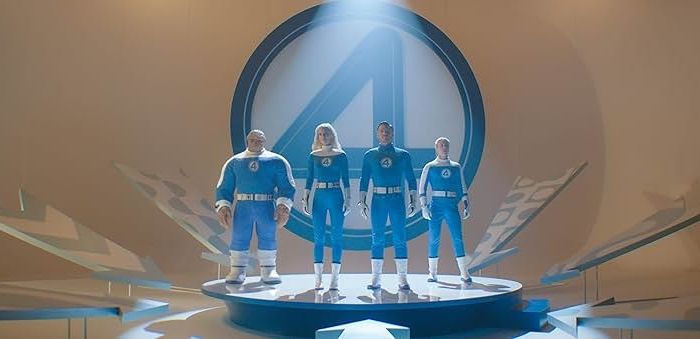
Directed by Matt Shakman, The Fantastic Four: First Steps introduces Reed Richards, Sue Storm, Johnny Storm, and Ben Grimm inside a separate retrofuturistic universe inspired by the technological optimism of the 1960s.
The team already possesses its abilities when the story begins. Their origin has become part of public history, allowing the film to avoid another extended sequence about laboratory exposure and accidental transformation.
Reed is the brilliant Mister Fantastic. Sue is the formidable Invisible Woman and a central public representative of the team. Johnny is the Human Torch, a charismatic younger hero often underestimated because of his confidence. Ben is the Thing, a powerful rock-covered pilot whose humanity remains visible beneath his transformed body.
Their established world changes when the Silver Surfer arrives with a warning: Galactus is coming to consume the planet. The cosmic threat becomes personal when Sue’s pregnancy and the future of her child are drawn into Galactus’ plan.
The movie combines superhero adventure, family drama, science fiction, public-relations satire, and disaster spectacle. Its visual identity is stronger than that of many recent Marvel films, using rounded technology, colorful uniforms, analogue screens, television broadcasts, and architecture shaped by an optimistic idea of tomorrow.
Vanessa Kirby gives the film its emotional center. Pedro Pascal plays Reed as a man whose intelligence cannot remove uncertainty. Joseph Quinn brings more thoughtfulness to Johnny than the character’s public image suggests, while Ebon Moss-Bachrach gives Ben a restrained sadness without turning him into constant misery.
The film is not equally successful in every area. Galactus is visually powerful but emotionally distant, several supporting citizens are introduced without enough development, and parts of the final act rely on familiar Marvel sacrifice mechanics.
Even with those limitations, First Steps is one of the MCU’s more focused recent films because it builds its largest ideas around one simple principle: the Fantastic Four do not save the world despite being a family. Their family is the reason they know what saving it means.
Plot & Storytelling: A Perfect Future Receives a Terrible Warning
The story takes place on Earth-828, a universe whose technology resembles an idealized future imagined through the design language of the 1960s.
The Fantastic Four are already global figures. Their earlier space mission, transformation, and first heroic adventures have been turned into documentaries, merchandise, public ceremonies, and television entertainment.
Reed’s inventions have accelerated scientific development. Sue has helped transform the team into a trusted public institution. Johnny enjoys celebrity attention, while Ben remains deeply connected with ordinary neighborhoods and the people who view him less as an icon than as a familiar protector.
Their private life becomes more complicated when Sue reveals that she is pregnant.
The announcement creates joy, but it also activates Reed’s instinct to analyze every possible danger. Their powers, unusual biology, and exposure to cosmic forces mean that the child’s development may not follow ordinary expectations.
Reed begins calculating. Sue begins preparing emotionally. That difference defines much of their relationship. Reed responds to uncertainty by building models. Sue responds by deciding what values must remain stable even when the outcome cannot be controlled.
The larger crisis begins when the Silver Surfer enters Earth’s atmosphere. This version of the Surfer is Shalla-Bal, a silver-skinned herald moving through space on a board-like craft. Her arrival is elegant, frightening, and treated initially as a global scientific event. She announces that Earth has been selected for consumption by Galactus.
The message is not a negotiation. It is a declaration delivered by someone who has repeated the same warning across other worlds. The Fantastic Four travel into space to confront Galactus before he reaches Earth. Reed believes direct communication may reveal a scientific solution. Their journey brings them aboard Galactus’ enormous vessel, where the scale of the cosmic being becomes clear. Galactus is not simply a large alien standing beside ordinary machinery. His ship, body, and technology belong to a level of existence that makes human achievement appear temporary.
Ralph Ineson gives Galactus a deep, controlled voice. He does not behave like an angry conqueror seeking revenge or admiration. He is hungry, ancient, and convinced that planetary consumption is an unavoidable part of his existence. The meeting produces a horrifying offer. Galactus is interested in Sue and Reed’s unborn child, whose unusual cosmic potential may provide something he wants more than Earth.
The family refuses to exchange the child for the planet. Their decision is morally immediate but politically catastrophic. When they return home and reveal the offer, sections of the public begin asking whether four people have the right to reject a sacrifice that could save billions. This conflict gives the film one of its strongest ideas. The Fantastic Four are loved as long as their private lives remain publicly useful.
The moment their family interest appears to conflict with global survival, admiration becomes suspicion. Sue refuses to describe her child as a resource. Reed still believes another solution can be found. The team develops a plan involving transportation technology and Galactus’ own cosmic path. Reed hopes to move Earth outside the devourer’s reach or redirect Galactus through a constructed gateway.
The details become increasingly complicated, but the emotional objective remains clear: find a solution that does not require treating one innocent life as acceptable payment.
Meanwhile, Johnny investigates the Silver Surfer. He notices that her messages and movements contain information beyond the public warning.
Their encounters reveal that Shalla-Bal was not born as a detached cosmic servant. She once belonged to a world threatened by Galactus and accepted the role of herald through a terrible bargain.
Her apparent coldness is therefore not absence of feeling. It is the emotional armor required to participate in endless destruction after convincing herself no alternative exists.
Ben remains more grounded. He helps organize practical protection, connects with civilians, and reminds Reed that equations must become actions people can survive. As Galactus approaches, the city prepares for evacuation and possible destruction.
The team’s plan partially works but fails to remove the threat completely. The final confrontation requires Sue to use her powers beyond their ordinary limits. Her pregnancy, protective instinct, and ability to create force fields become central to resisting Galactus physically.
Johnny uses information learned from Shalla-Bal to challenge her obedience. Reed coordinates the technology, while Ben provides the physical stability needed when the system begins collapsing. The climax brings the family’s different strengths together. No single member can solve the crisis.
Galactus is ultimately redirected, though the victory demands a severe personal cost and leaves the family uncertain whether Sue will survive. The resolution reinforces the film’s central position: saving the world is not meaningful if the process requires abandoning the values that make the world worth preserving.
Reed Richards: Intelligence Confronting a Problem It Cannot Guarantee Away
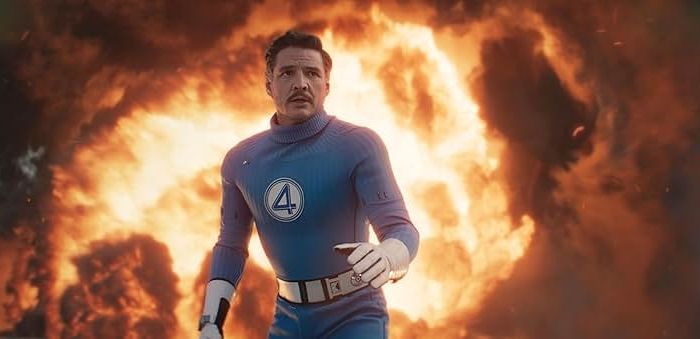
Pedro Pascal plays Reed as a man whose brilliance is both a gift and a defense mechanism. He speaks carefully, observes constantly, and responds to emotional danger by attempting to turn it into a measurable system. This version of Reed is already respected. He does not need to prove that he is the smartest person in the room. His insecurity comes from knowing intelligence has limits.
Sue’s pregnancy confronts him with a future he cannot model perfectly. Galactus presents a threat beyond any scientific scale he has handled. Reed responds by working harder, sleeping less, and attempting to protect everyone through preparation.
Pascal keeps the performance restrained. Reed’s fear appears through pauses, fixed attention, and the way his voice becomes more technical when a conversation turns personal. He loves Sue deeply but occasionally treats information as though it were comfort.
Sue does not need only probability estimates. She needs him to remain emotionally present inside uncertainty. The public debate over their child makes Reed’s position even more difficult. As a scientist and protector, he understands the arithmetic being used against them.
One life compared with an entire planet appears simple when expressed as numbers. As a father, he recognizes that using a person as an instrument would reproduce Galactus’ own moral logic.
Reed’s development comes from accepting that responsibility does not always provide certainty. He cannot guarantee that every choice will save everyone. He can decide which boundaries should remain intact while searching for the best available solution.
His stretching abilities are also presented more creatively than in several earlier adaptations. Reed uses extension for movement, rescue, machinery, and rapid coordination rather than only throwing elastic punches.
The effects occasionally look artificial during close facial distortion, but the film generally understands that his power should appear unusual rather than completely natural.
Sue Storm: The Invisible Woman Becomes the Film’s Strongest Presence
Vanessa Kirby gives the movie its most commanding performance. Sue is not treated primarily as Reed’s partner, Johnny’s sister, or the future mother of an important child. She is the person most capable of holding those relationships together while operating as a global leader.
Her invisibility remains useful for stealth, but her force-field abilities define her power more clearly. Sue can protect, contain, redirect, and create space where survival would otherwise be impossible.
These abilities fit her emotional role without reducing her to a passive caregiver. Protection is not presented as softness. It is an act requiring strength, judgment, and willingness to place herself between danger and another person.
Sue understands the public better than Reed. She recognizes that scientific solutions require trust, communication, and political legitimacy. When the population turns against the team, she refuses to respond with contempt. People are terrified, and fear is searching for a simple answer. Her refusal to sacrifice the child does not prevent her from understanding why desperate citizens ask the question.
The pregnancy storyline could easily have reduced Sue’s agency. Instead, the film uses it to intensify her decisions. She continues participating in strategy and action because motherhood is not treated as withdrawal from identity. Her final use of power is spectacular but emotionally risky. The movie approaches the familiar idea that a mother’s love unlocks unlimited ability. Kirby keeps the moment grounded through visible physical effort and fear. Sue does not become powerful because pregnancy makes her magically complete.
She pushes beyond safety because the situation leaves no easy alternative. My main concern is that the story occasionally treats her suffering as the emotional cost required to motivate the other members. Sue remains active enough to resist that reduction, but the final act comes close to placing too much symbolic weight on her body. Even so, this is one of the strongest live-action interpretations of Invisible Woman because the character is never actually invisible within the family or the story.
Johnny Storm: Charm Concealing an Observant Mind
Joseph Quinn’s Johnny is confident, flirtatious, publicly popular, and fully aware that people often assume he is the least serious member of the team.
The film uses that assumption deliberately. Johnny enjoys attention, but he is not unintelligent. He reads people well, remembers patterns, and notices details others dismiss. His interest in Shalla-Bal begins partly through attraction and curiosity. It develops into recognition that the Surfer’s loyalty to Galactus contains conflict. Johnny becomes essential because he listens to what she does not state directly.
This gives him a stronger role than simply providing fire-based action and jokes. His relationship with Sue is affectionate and believable. They tease one another, disagree, and share a history that existed before the team became famous. Johnny’s concern during the pregnancy and final battle reveals emotional maturity without removing his personality.
His Human Torch abilities are visually dynamic. Flight leaves bright trails across the retrofuturistic skyline, and the contrast between orange fire and the Surfer’s silver form gives their encounters a strong visual identity.
The movie occasionally pushes his confidence into familiar playboy territory. Several jokes feel inherited from older versions of the character rather than discovered through Quinn’s performance.
He remains compelling because the screenplay allows competence to emerge gradually. Johnny is not becoming serious for the first time. The rest of the world is finally noticing that seriousness was already present.
Ben Grimm: The Most Human Member No Longer Looks Human
Ebon Moss-Bachrach gives Ben Grimm warmth, dry humor, restraint, and a quiet awareness of how permanently his life changed. The Thing’s rocky body could have become the film’s main source of visual comedy. The movie allows humor but avoids treating him as a walking effect. Ben remains a pilot, friend, public hero, and neighborhood figure.
His relationship with Reed contains loyalty complicated by history. Reed’s decisions contributed to the mission that transformed them. Ben does not spend the film accusing him, but the physical difference remains present in every room.
The performance suggests a man who has processed much of his anger without pretending it disappeared. Ben’s connection with ordinary people gives the team social grounding. Reed understands humanity through systems. Sue understands it through communication. Ben understands it through daily contact.
He knows what evacuation instructions sound like to frightened families. He knows public admiration does not remove private loneliness. The character receives hints of a personal life outside the team, though those elements remain less developed than I wanted.
The film could spend more time exploring whether Ben feels comfortable being loved by people who cannot know the physical life he lost. His action scenes use weight effectively. Ben does not move like a quick digital monster.
Each step, impact, and act of support communicates mass. Moss-Bachrach also gives him excellent comic timing. Ben’s jokes rarely announce themselves. They emerge from patient observation of the family’s absurd habits.
Galactus: Cosmic Hunger Given Monumental Scale
Galactus has often been difficult to adapt because a giant humanoid cosmic being can look either magnificent or ridiculous. First Steps approaches him with seriousness and scale. Ralph Ineson’s voice gives Galactus ancient authority. He speaks as though arguments about morality belong to creatures living inside a much smaller frame of time.
The visual design preserves a recognizable armored silhouette while making him feel physically connected to his enormous ship and cosmic technology. His arrival above Earth is one of the film’s strongest images. Buildings, streets, and crowds become tiny beside a face occupying the sky.
Galactus does not hate humanity. That absence of hatred makes him more disturbing. He views planets as necessary consumption and individual lives as details inside a natural process. His interest in Sue’s child introduces a more personal motive, though the exact cosmic logic remains less developed than the emotional consequences.
This is one of the screenplay’s weaker areas. Galactus is powerful enough to threaten reality, yet his needs and limits become flexible whenever the plot requires a possible solution.
The film gives him grandeur more effectively than depth. That choice works during visual confrontation but makes the final victory feel partly mechanical.
A more developed version could explore whether Galactus experiences guilt, compulsion, entitlement, or complete emotional distance. He remains memorable because the movie never reduces him to a cloud or generic energy effect. He is physically present, intelligent, and terrifyingly certain that survival gives him the right to consume others.
Shalla-Bal and the Silver Surfer: A Herald Carrying the Weight of Every Warning
Julia Garner plays Shalla-Bal with controlled movement, emotional distance, and flashes of grief beneath the silver surface. The Surfer’s role is difficult because she must appear both threatening and trapped.
She arrives as Galactus’ messenger, announcing planetary death without visible hesitation. Johnny gradually discovers that repetition has become her survival mechanism. If she allows herself to feel every world fully, continuing as herald would become impossible.
Her past bargain connects with the film’s larger theme of sacrifice. Shalla-Bal once accepted an arrangement intended to protect what she loved. The result turned her into a participant in the destruction of countless other homes. This makes her a warning for the Fantastic Four. Saving one family through another person’s destruction can become an endless moral compromise.
Her relationship with Johnny is effective when based on curiosity and recognition. It is weaker when the screenplay leans too heavily toward romantic suggestion. The limited time prevents the connection from becoming fully convincing as romance.
As a confrontation between two people performing public roles, it works much better. Johnny is treated as a shallow celebrity, while Shalla-Bal is treated as an emotionless servant. Both contain more than the identities assigned to them.
The Silver Surfer’s movement is elegant. Her board cuts through space with minimal visible effort, making human vehicles appear clumsy by comparison. The reflective design occasionally smooths Garner’s expressions too much, but her voice preserves the internal conflict.
H.E.R.B.I.E.: A Robot That Feels Like Part of the Household
H.E.R.B.I.E. gives the film a useful source of warmth and practical comedy. The robot assists Reed, monitors the home, supports the team’s work, and participates in family routines.
Its design fits the retrofuture perfectly. Rounded surfaces, visible mechanical details, and expressive movement make H.E.R.B.I.E. feel like a machine imagined during an earlier technological era.
The character avoids becoming only a merchandise-friendly companion because its usefulness is integrated into the household. H.E.R.B.I.E. helps reveal how advanced technology has become ordinary for the family. A machine capable of extraordinary functions may still be interrupted during dinner or asked to manage a domestic problem.
The film could give the robot more personality beyond loyalty and efficiency. Even so, H.E.R.B.I.E. strengthens the sense that the Baxter Building is a lived-in home rather than only a superhero headquarters.
The Retrofuturistic World: Tomorrow as the 1960s Imagined It
The visual world is one of the film’s greatest achievements. Earth-828 does not attempt to reproduce the historical 1960s exactly. It creates a future imagined through that period’s optimism. Buildings use curves, geometric patterns, large windows, and public spaces designed around scientific progress.
Vehicles fly without losing the shape language of classic automobiles. Screens are thick, controls are physical, and computers contain illuminated buttons rather than invisible interfaces. The Baxter Building combines laboratory, home, launch facility, and public symbol.
Its interiors feel advanced while preserving domestic warmth. Kitchens, hallways, family rooms, and research spaces belong to the same design philosophy. Television broadcasts play an important role. The Fantastic Four’s story is packaged through variety shows, news reports, documentaries, and public announcements.
This creates a society in which superheroes are both protectors and national entertainment. The design also supports the public conflict. The world has treated the team as proof that progress will solve every problem. Galactus represents a scale of danger that technological optimism cannot absorb easily.
Some digital city environments appear too clean, particularly during wide destruction shots. The stylization generally makes that artificiality feel intentional rather than incomplete.
The film’s strongest visual decision is refusing the gray military appearance common in modern superhero cinema. Its world contains color, personality, and an idea of progress worth protecting.
Action & Superpowers: Cooperation Matters More Than Individual Spectacle
The action is structured around the team’s complementary abilities.
Reed stretches through machinery, reaches distant controls, and creates rapid physical connections. Sue builds shields, moves objects, protects civilians, and controls space. Johnny provides speed, heat, and aerial attack. Ben supplies mass, stability, and direct force.
The best sequences require the four to combine those functions. A collapsing structure may require Ben to hold the foundation, Sue to protect the people inside, Reed to repair the system, and Johnny to reach an external component.
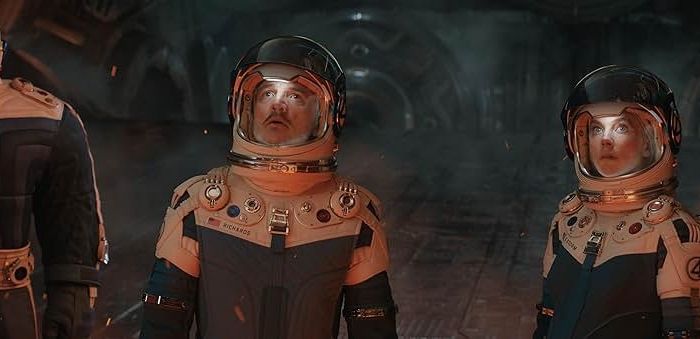
This teamwork makes the action feel specific to the Fantastic Four rather than interchangeable superhero combat. The initial space confrontation establishes Galactus’ scale effectively. The family’s powers appear impressive until placed beside technology capable of moving between worlds.
The city evacuation also gives action practical urgency. Saving people involves communication and logistics, not only striking the villain. The final confrontation becomes more conventional as the movie moves toward sacrifice, collapsing machinery, and a last-second solution.
It remains visually strong, but parts of the strategy are explained too quickly. Reed’s science occasionally functions as a collection of impressive words covering a convenient mechanism.
The effects for Sue and Johnny are consistently convincing. Ben’s design balances rock texture with facial expression well. Reed’s body remains the hardest challenge. Some stretching looks inventive, while several close shots approach the uncomfortable artificiality that has troubled every live-action version of the power.
Music & Sound: Michael Giacchino Gives the Family a Heroic Theme
Michael Giacchino’s score embraces optimism rather than treating sincerity as embarrassing. The central theme uses bold orchestral movement, choral energy, and a memorable rising structure associated with exploration and family unity. The music fits a world that believes science and heroism can improve life.
Galactus receives heavier, slower material. Deep sounds and enormous spatial echoes communicate scale before the character is fully visible. The Silver Surfer’s music feels more distant and reflective, supporting her position between servant and prisoner.
Domestic scenes use lighter variations of the family theme, helping the same melody connect public heroism with private affection. This is important. The Fantastic Four’s heroic identity does not begin when they enter battle. It exists during meals, arguments, scientific work, and moments of fear.
Sound design also helps distinguish each power. Johnny’s flames roar without covering dialogue, Sue’s force fields carry a compressed energy, and Ben’s movement produces dense physical impact. Galactus’ presence changes the entire audio environment. Ordinary city noise becomes small beneath his voice and machinery.
Themes & Emotional Meaning: No Life Should Be Reduced to a Calculation
The film’s central moral question concerns sacrifice. Galactus offers to spare Earth in exchange for one child. The arithmetic appears simple, particularly to a frightened public. The Fantastic Four reject the idea that moral responsibility can be solved through scale alone. Their refusal is not presented as indifference toward billions of people. They continue searching for another solution precisely because they accept responsibility for the planet.
The difference is that they refuse to define one innocent person as material. This connects Galactus with the public debate more closely than either side recognizes. Galactus also treats lives as quantities inside a survival calculation. Family becomes the structure resisting that logic.
The Fantastic Four know one another as individuals rather than functions. Reed is not only intelligence. Sue is not only protection. Johnny is not only energy. Ben is not only strength. Their relationships prevent them from reducing one another to useful traits.
The film also explores public ownership. Society celebrates the team and begins assuming that access to their bodies, powers, and private choices is part of the arrangement.
Sue’s pregnancy reveals the limit of celebrity gratitude. The public feels entitled to judge the child as a planetary resource because the family’s earlier sacrifices became expected. Responsibility does not mean surrendering every boundary.
The movie also examines scientific optimism. Reed has helped create a world that believes intelligence can solve anything. Galactus forces him to confront a problem where invention alone is insufficient. Science remains essential, but values determine which solutions should be pursued.
Critical Reception & Lasting Appeal: Marvel Finds Strength in a Smaller Emotional Center
The Fantastic Four: First Steps received generally positive reviews, with frequent praise for Vanessa Kirby, the retrofuturistic production design, Michael Giacchino’s score, and the family chemistry. Many viewers appreciated that the story begins after the origin, allowing the characters to function as an established team. The film’s standalone universe also reduced the amount of continuity explanation required from the wider MCU.
Criticism focused on the crowded final act, uneven digital effects, limited development for Galactus and Shalla-Bal, and emotional shortcuts surrounding Sue’s pregnancy and sacrifice.
Pedro Pascal’s Reed divided some viewers initially, though his restrained anxiety fit the movie’s family-centered approach. Joseph Quinn and Ebon Moss-Bachrach were often praised for giving Johnny and Ben more emotional intelligence than their familiar archetypes suggested.
The movie’s visual identity helped distinguish it from recent superhero releases. Its bright retrofuture, practical-looking controls, television culture, and optimistic architecture gave audiences a setting that felt designed rather than assembled from generic franchise elements.
Its reputation will likely depend on how later MCU films use the family. First Steps succeeds partly because its world and relationships remain focused. Future crossover appearances may test whether that personality survives larger franchise machinery.
Final Verdict: The Fantastic Four Work Because None of Them Stands Alone
The Fantastic Four: First Steps is a strong introduction to Marvel’s First Family because it understands that their relationships are more important than another explanation of how they received powers.
Pedro Pascal gives Reed intelligence without effortless certainty. Vanessa Kirby gives Sue the film’s strongest moral and emotional presence. Joseph Quinn turns Johnny into more than a reckless celebrity, while Ebon Moss-Bachrach makes Ben’s restraint as important as his physical power. Together, they feel like a family shaped by years of shared work, arguments, meals, rescues, and public attention.
The retrofuturistic world is a major success. Flying cars, analogue machinery, colorful architecture, television broadcasts, and optimistic science create a setting with a personality separate from the main MCU.
Galactus finally appears as an enormous cosmic being rather than an abstract cloud. Ralph Ineson gives him authority, although the character remains less developed than the family opposing him.
Julia Garner’s Shalla-Bal provides a useful emotional bridge between cosmic duty and personal choice. Her material deserves more time, especially the relationship with Johnny.
Michael Giacchino’s music gives the film a heroic identity that feels sincere rather than embarrassed by its own optimism. The final act is crowded, and several scientific rules bend conveniently. The emotional structure remains strong enough to carry the spectacle.
I recommend The Fantastic Four: First Steps to Marvel viewers, science-fiction fans, families with older children, and audiences who prefer superhero stories built around relationships rather than continuity homework.
Personal rating: 8.5/10.
The Fantastic Four: First Steps earns that score for Vanessa Kirby’s excellent performance, convincing family chemistry, a memorable retrofuturistic world, Michael Giacchino’s score, and action designed around cooperation. It loses points for an underwritten Galactus, compressed supporting arcs, inconsistent stretching effects, and a final confrontation that becomes more conventional than the film’s visual world deserves.
Reed can reach farther than any ordinary person. Johnny can cross the sky in fire. Ben can hold structures that should crush him, and Sue can place a shield between the world and disaster. Their true strength is simpler: whenever one of them reaches the limit, the other three are already there.
Pros

- Deep character development that takes its time
- Authentic performances that emphasize emotion over spectacle
- Thoughtful pacing that builds tension and connection
- Grounded visual effects that enhance realism
- A script that prioritizes personal stakes over world-ending events
- Successful reintroduction of a team with previously failed adaptations
Cons

- Some viewers may find the slower pace underwhelming
- Lack of a central antagonist may leave action fans wanting more
- Minimal MCU connectivity could frustrate universe-focused audiences

Leave a comment
Your comment is awaiting moderation. We save your draft here
0 Comments