
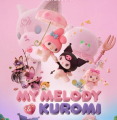






A Sweet Stop-Motion Adventure With a Surprisingly Bitter Center
My Melody & Kuromi looked like an easy comfort watch when I first saw its soft textures, miniature bakeries, pastel houses, and familiar Sanrio characters. The stop-motion world appears designed to make every cake, flower, cloud, and tiny piece of furniture feel collectible. That surface impression is accurate, but it is only half of the experience. Beneath the sweetness is a story about jealousy, insecurity, public approval, damaged friendships, and the temptation to accept suspicious help when someone else’s success makes your own efforts feel invisible.
This My Melody & Kuromi review focuses on the complete twelve-episode Netflix series, which plays like one connected animated feature divided into short chapters. Most episodes last around twelve to fifteen minutes, so the story moves quickly from an innocent baking competition to a much larger fantasy conflict involving Mariland and the mysterious Cloud Kingdom. Watching the episodes together gave me the sense of one compact movie rather than a conventional season filled with separate adventures.
The central relationship remains immediately recognizable. My Melody is gentle, optimistic, and naturally talented at creating treats that make other people happy. Kuromi is louder, more competitive, and constantly frustrated that her own hard work rarely receives the same effortless praise. The series does not ask me to choose one of them as the correct personality. Instead, it shows how their differences create both the conflict and the friendship capable of resolving it.
The production is visually delightful, the humor is accessible, and the short runtime makes the story easy to watch. It also rushes a few emotional developments, leaves some supporting characters underused, and occasionally explains its message more directly than necessary. Even with those limitations, My Melody & Kuromi offers considerably more substance than a decorative anniversary project. It respects the charm of its characters while giving them a real emotional problem to face.
My Melody: Kindness Without Complete Awareness
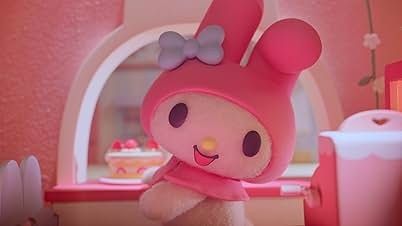
My Melody is presented as sincerely generous rather than secretly competitive. She enjoys baking, wants other people to feel happy, and rarely approaches a situation expecting admiration. This natural warmth explains why Mariland responds so positively to her creations. She does not appear to be chasing popularity, which makes that popularity arrive even more easily.
Her innocence is attractive, but the series wisely allows it to create problems. My Melody does not always recognize how deeply Kuromi is struggling. She sees their competition as playful and assumes that honest effort will eventually make everyone feel included. That attitude comes from kindness, yet it can sound dismissive to someone who has spent years feeling overshadowed.
Rei Sakuma gives the character a soft voice without making her emotionally empty. My Melody often speaks calmly, but the performance becomes more vulnerable when her confidence is shaken by negative reactions and the worsening condition of Mariland. Her kindness is tested most effectively when being kind no longer produces an immediate happy result.
The baking contest allows My Melody to demonstrate creativity and teamwork. She works closely with Flat and Piano, listening to their ideas rather than treating them as assistants. Their success feels connected to cooperation, patience, and genuine enjoyment.
I particularly liked that My Melody eventually has to express less pleasant emotions. She cannot save the friendship by remaining endlessly cheerful. She needs to admit that Kuromi’s actions hurt her and that she has also failed to understand her friend completely. The story becomes stronger when honesty is presented as part of kindness rather than its opposite.
Kuromi: The Most Emotionally Complicated Character
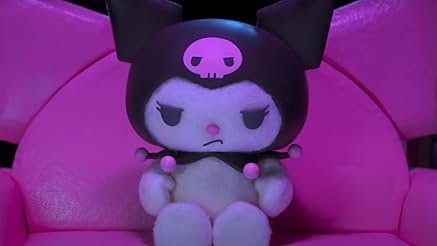
Kuromi provides most of the series’ dramatic energy. Her rivalry with My Melody is funny because she treats every cupcake, recipe, and compliment as evidence in a much larger personal competition. It is also painful because her jealousy grows from a recognizable fear: she believes she will always be the person standing beside someone more lovable.
Junko Takeuchi gives Kuromi a combination of pride, irritation, theatrical confidence, and hidden vulnerability. Her louder behavior never completely hides how closely she watches My Melody’s success. Every compliment directed toward her rival becomes another reminder that Kuromi does not feel equally valued.
Her decision to steal ingredients and search for shortcuts is wrong, but the series provides enough emotional context to make it understandable. Kuromi wants proof that she can create something people genuinely prefer. When ordinary effort fails to provide that result, she becomes vulnerable to Pistachio’s assistance.
The rapid popularity of her dorayaki gives Kuromi everything she thought she wanted. Crowds praise her, customers seek her work, and she finally becomes the celebrated baker in Mariland. The happiness does not remain satisfying because it depends on a process she cannot fully control or trust.
Kuromi’s greatest strength as a character is that she is not reduced to an antagonist. Her resentment causes real damage, but she is also capable of loyalty, courage, and regret. When the situation becomes serious, her concern for My Melody is stronger than her desire to win.
The series occasionally resolves her emotional turns too quickly. A few additional quiet scenes showing how she processes guilt would have strengthened the later episodes. Still, Kuromi receives the richest arc and carries much of the story’s appeal.
A Friendship Built From Rivalry Rather Than Perfect Harmony
My Melody and Kuromi are often marketed as opposites, and the series uses that contrast intelligently. One character prefers softness, patience, and open kindness. The other values boldness, recognition, and direct expression. Their friendship does not exist because these differences disappear. It exists because each offers something the other lacks.
My Melody can help Kuromi feel safe enough to lower her defenses, while Kuromi can force My Melody to confront emotions she might otherwise avoid. Their arguments reveal problems that endless politeness would leave hidden.
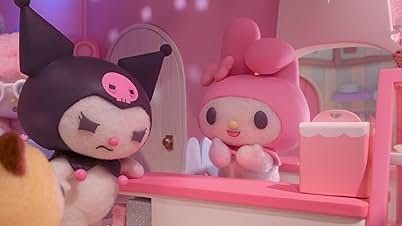
The story’s most effective emotional scenes arrive when the characters stop speaking through competition. My Melody acknowledges that she has been hurt, and Kuromi recognizes that her resentment has affected someone who genuinely cared for her. Neither confession removes the past, but it allows their friendship to become more honest.
The series understands that rivalry can contain affection. Kuromi wants to surpass My Melody partly because My Melody’s opinion matters so much to her. My Melody continues reaching toward Kuromi because she sees more than the dramatic behavior.
This relationship gives the fantasy conflict purpose. Saving Mariland matters, but restoring trust between the two central characters matters more. The larger threat works because it has grown from a small emotional wound that was ignored for too long.
Pistachio and the Cloud Kingdom
Pistachio initially appears helpful, charming, and unusually interested in Kuromi’s ambitions. His assistance gives her recipes the immediate popularity she has been craving, but the series makes his generosity feel suspicious before his full intentions become clear.
The Cloud Kingdom expands the setting beyond Mariland’s cozy shops and homes. Its history introduces loss and resentment on a larger scale, creating a parallel with Kuromi’s personal insecurity. Pistachio also believes that something meaningful was denied or forgotten, but he responds by manipulating others and spreading damage.
This connection makes him a suitable antagonist. He is not simply a random threat arriving from another world. He recognizes Kuromi’s dissatisfaction and uses it because he understands what it means to feel overlooked.
The series could have developed him further. His history is explained effectively enough to support the plot, yet the short episodes leave limited room for gradual transformation. I understood his motives, but I did not feel the same emotional complexity that Kuromi receives.
His visual design fits the production beautifully. He appears soft, elegant, and harmless enough to belong in the same handcrafted world, while subtle expressions and staging suggest that his friendliness has another purpose.
Mariland as a Miniature World
The stop-motion version of Mariland is the production’s most immediate attraction. Buildings look like carefully assembled dollhouses, food appears physically textured, and outdoor spaces feel like sets I could almost reach into and rearrange.
My Melody’s home is especially appealing because every object supports her personality. The soft colors, baking equipment, fabrics, and rounded furniture create an environment that feels comforting without becoming visually empty.
Kuromi’s spaces use stronger contrasts and darker decorative details. Black, purple, pink, and sharper shapes communicate her rebellious self-image while preserving the series’ overall sweetness.
The town’s stores, contest spaces, forest paths, and public areas all maintain a consistent handmade aesthetic. Small imperfections in materials make the environments more charming because they remind me that these sets were physically constructed.
The Cloud Kingdom introduces softer forms, pale surfaces, misty spaces, and an initially peaceful atmosphere that gradually becomes unsettling. The contrast between fluffy imagery and hidden danger works well because the series never needs to abandon its visual identity to create tension. I occasionally wanted the camera to remain in these spaces longer. The story moves so efficiently that some environments appear mainly as stages for the next plot event. A slower scene devoted to ordinary life in Mariland would have made its later destruction feel even more personal.
Stop-Motion Animation With Modern Energy
The animation balances tactile stop-motion movement with the pace expected from a contemporary streaming production. Characters retain the slight physical quality that makes stop motion distinctive, but action and comedy remain smooth enough to avoid feeling stiff.
Facial expressions are particularly successful. Kuromi can move from confidence to panic through small changes in her eyes and mouth, while My Melody’s simpler features communicate sadness through posture and timing.
Food animation deserves special attention. Cakes, cupcakes, dorayaki, creams, and ingredients appear soft, crisp, sticky, or fluffy depending on the scene. Baking sequences use texture as part of the storytelling, making success and failure visible before anyone tastes the result.
The animators also use scale effectively. Tiny utensils, vehicles, decorations, and household objects give the characters a convincing physical environment. Nothing feels like a flat background placed behind moving figures. The final fantasy sequences become more visually active, with spreading rot, unstable environments, and larger supernatural events. A few moments are busier than the intimate stop-motion format handles comfortably, but the handcrafted identity remains visible.
Baking as Creativity, Competition, and Communication
Baking is more than a cute activity added to suit the characters. It becomes the language through which My Melody and Kuromi express themselves. My Melody treats food as a gift, while Kuromi initially treats it as proof of personal value.
The contest turns that difference into direct competition. My Melody succeeds through collaboration and attention to others, while Kuromi becomes focused on creating the item that will finally place her above her rival.
The magical ingredients intensify this conflict by providing popularity without genuine connection. People respond strongly to the food, but their reaction becomes obsessive rather than warm. The distinction between appreciation and consumption becomes increasingly important.
The series also touches on the effect of public criticism. Mean online comments upset My Melody even though she has received significant praise. This is a simple but relevant observation about creative work: one hostile response can become louder than many positive ones.
Kuromi has the opposite problem. She becomes dependent on sudden approval because it confirms the identity she wants. Both characters allow public reaction to influence their self-image, though they begin from different positions.
The story ultimately argues that creating something meaningful requires more than technical success or popularity. Intention, honesty, and the relationships surrounding the work matter too.
Flat, Piano, Baku, and the Supporting Cast
Flat and Piano support My Melody during the sweets contest and give her scenes a stronger sense of teamwork. They are dependable without becoming completely interchangeable, though the limited runtime restricts their individual development.
Baku remains an essential part of Kuromi’s side of the story. His loyalty often survives her worst decisions, providing a quieter example of friendship. He recognizes her flaws but does not reduce her to them. Tanba and Sasage add comic conflict through their pursuit of baking secrets and their questionable choices. Their behavior creates several entertaining sequences, including the honey car chase, though their role occasionally feels more functional than personal.
The citizens of Mariland contribute to the shifting mood. Their excitement over popular treats is initially funny, then becomes uncomfortable as desire turns into uncontrolled appetite. This change helps the series move from cozy comedy toward fantasy danger. Because episodes are short, many supporting characters appear only when the plot needs them. The central friendship remains strong enough to carry the story, but a longer version could have given Mariland a richer community identity.
Humor and Emotional Balance
The humor relies on character reactions, physical comedy, exaggerated rivalry, and the contrast between tiny adorable figures and intensely dramatic behavior. Kuromi’s determination turns simple baking problems into personal emergencies, while My Melody responds to confusion with such sincerity that the situation becomes even funnier. The series avoids treating Kuromi’s insecurity as one long joke. Her frustration can be amusing, but the story recognizes when it becomes genuinely painful. That transition allows the later emotional scenes to feel sincere rather than suddenly serious.
Visual humor works especially well in stop motion. A small pause, an awkward turn, or a character holding a miniature object can create comedy without dialogue. Some jokes are clearly aimed at younger viewers, and a few reactions repeat. The short episode length prevents most gags from becoming exhausting. I appreciated that the production never becomes cynical about its own sweetness. It can laugh at the characters without suggesting that caring deeply is embarrassing.
Pacing and the Twelve-Episode Format
The short chapters make My Melody & Kuromi extremely easy to continue watching. Each episode introduces a problem, moves the central mystery forward, and usually ends with enough uncertainty to encourage the next one.
This structure works well for younger viewers and casual family sessions. It also allows the production to shift between comedy, baking, mystery, and fantasy without placing everything inside one long uninterrupted film. The complete story develops so continuously that the episode breaks occasionally feel artificial. Watching only one chapter may provide an incomplete emotional experience because several episodes end during active conflict.
The final third moves particularly quickly. Revelations about Pistachio, the Cloud Kingdom, Kuromi’s guilt, My Melody’s condition, and the spreading danger arrive close together. Nothing becomes impossible to understand, but several moments deserve more space. A few longer conversations could have made the reconciliation and antagonist storyline even stronger.
Music and Sound Design
The music supports the handmade fantasy without overwhelming it. Light melodies accompany baking and everyday life, while more mysterious sounds enter as the Cloud Kingdom’s influence grows.
Character themes help distinguish the emotional worlds of My Melody and Kuromi. My Melody’s scenes tend to feel gentle and warm, while Kuromi’s energy is more playful and forceful. Sound effects give the miniature materials convincing weight. Ingredients are mixed, pastries break, vehicles move, and small objects land with carefully exaggerated clarity.
The voices remain central to the characters’ identities. Rei Sakuma and Junko Takeuchi sound completely comfortable inside roles they have helped define for years. Their performances preserve familiar traits while supporting more emotional material than a short comedy sketch would require. Megumi Han gives Pistachio enough softness that his manipulation initially feels plausible. His vocal presentation supports the character’s position between sympathetic history and harmful behavior.
Themes of Jealousy, Recognition, and Honest Friendship
The story treats jealousy as an emotion that needs to be understood rather than simply punished. Kuromi’s behavior causes serious problems, but the feeling beneath it is not presented as proof that she is bad.
She wants recognition and believes My Melody receives it without effort. The series gradually shows that comparison has distorted her understanding of both herself and her friend. My Melody must also learn that positive intentions do not automatically mean she has understood another person. Her kindness becomes more useful when she listens to the anger and sadness she would prefer to smooth over.
Pistachio represents what happens when hurt becomes entitlement. Instead of communicating grief honestly, he manipulates other people’s vulnerabilities to regain control. The final message is simple but effective: friendship is not protected by pretending that resentment does not exist. It becomes stronger when uncomfortable feelings can be expressed without ending the relationship.
Who Should Watch My Melody & Kuromi?
My Melody & Kuromi is an easy recommendation for Sanrio fans, families, stop-motion enthusiasts, and viewers who enjoy short fantasy adventures with gentle emotional lessons. Familiarity with the characters adds nostalgic value, but the story explains their relationship clearly enough for newcomers.
Younger audiences can enjoy the visual comedy, baking contest, expressive characters, and fantasy danger. Adults may connect more strongly with the themes of comparison, creative insecurity, public criticism, and the difficulty of supporting a friend whose success activates personal doubt.
The series is also suitable for viewers who prefer one connected story but do not have time for a feature-length session. The short episodes make it easy to divide, even though the narrative is most satisfying when watched in larger groups.
Anyone expecting complex fantasy mythology or detailed character studies may find the production too brief. The emotional ideas are genuine, but they are presented with directness and simplicity.
My Rating
I give My Melody & Kuromi a personal rating of 8.5/10. The series combines charming stop-motion animation, tactile miniature design, entertaining baking sequences, warm humor, and a thoughtful friendship story. Kuromi’s insecurity gives the production emotional depth, while My Melody’s imperfect kindness prevents their conflict from becoming one-sided.
The compact runtime limits the supporting cast and rushes part of the Cloud Kingdom storyline, but it also keeps the adventure focused. I remained interested because every episode moved either the friendship or the fantasy problem forward.
What I enjoyed most was the refusal to treat sweetness as emotional simplicity. My Melody & Kuromi understands that a soft world can still contain envy, disappointment, guilt, and anger. Its characters do not protect their friendship by avoiding those emotions. They protect it by finally sharing them.
Pros

- The film features high-quality animation that captivates the audience.
- It offers an engaging narrative that appeals to both children and adults.
- The character development is deep and layered, creating memorable personalities.
- The soundtrack and sound design enhance the emotional impact of the film.
- It includes thought-provoking themes that resonate on a cultural level.
- The movie is accessible on multiple platforms, ensuring broad availability.
Cons

- Some narrative complexities might be challenging for younger viewers.
- Certain narrative elements may appear overly ambitious for a single film.
- Regional streaming restrictions can limit availability for some audiences.

Leave a comment
Your comment is awaiting moderation. We save your draft here
0 Comments