






The Alarm Inside Riley’s Head
The moment Inside Out 2 truly won me over was not during a joke, a hockey match, or one of its larger visual set pieces. It was the instant an alarm sounded inside Riley’s mind and the familiar emotional headquarters was abruptly taken apart to make room for something new. Joy, Sadness, Anger, Fear, and Disgust had spent years learning how to work together. Then puberty arrived like an overnight renovation nobody approved. This Inside Out 2 review begins with that disruption because the film understands adolescence as a period when the self does not simply grow—it is reorganized under pressure.
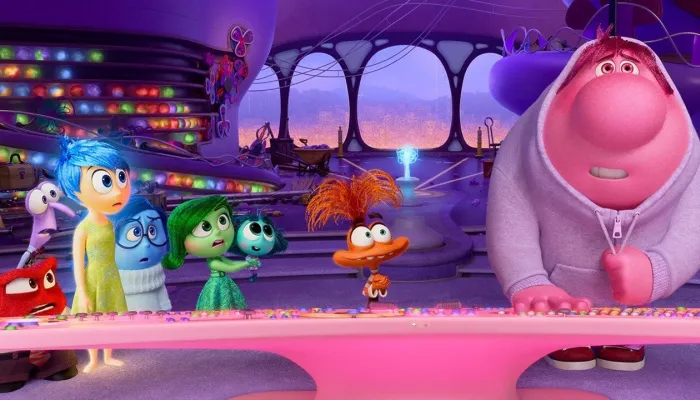
Directed by Kelsey Mann, Inside Out 2 returns to Riley as she enters her teenage years. She is older, more capable, more socially aware, and more vulnerable to judgment than the child from the first film. Her emotional life has become more stable, but that stability disappears when Anxiety, Envy, Embarrassment, and Ennui arrive at headquarters.
The sequel faces a difficult problem. The original Inside Out had a complete emotional arc and a brilliantly clear premise: every feeling has a purpose, even the ones people try to suppress. Repeating that lesson with a larger cast could have produced a safe but unnecessary continuation.
Inside Out 2 avoids that trap by changing the question. The first film asked whether sadness belongs inside a healthy emotional life. The sequel asks what happens when fear of the future begins controlling the present.
Anxiety is not presented as a simple villain who wants Riley to suffer. She wants to protect her. Her methods become destructive because she believes safety can be achieved through perfect planning, social control, constant rehearsal, and the removal of any identity that might lead to rejection.
That approach gives the sequel emotional credibility. Riley’s internal conflict is not about becoming a bad person. It is about trying so hard to become the correct person that she loses contact with who she already is.
Plot & Storytelling: A Hockey Camp Becomes an Identity Crisis
The story begins with Riley playing hockey alongside her closest friends, Bree and Grace. The three girls are excited about attending a hockey camp that could influence their future at school and perhaps earn Riley a place on the Firehawks, a team led by the admired older player Val Ortiz.
Riley enters the camp believing that her friendships and ambitions can continue together. That assumption changes when Bree and Grace reveal that they will attend a different high school. The news is ordinary rather than catastrophic, yet it creates exactly the kind of uncertainty that Anxiety can exploit.
Inside headquarters, the original emotions have built a developing Sense of Self from Riley’s memories and beliefs. Joy carefully protects this structure, removing memories she considers harmful and sending them away. Her intentions are positive, but this decision quietly repeats her mistake from the first film: she still wants emotional health to mean selecting only the material she considers useful.
The arrival of Anxiety and the other new emotions turns that hidden flaw into the center of the plot. Anxiety decides that Riley’s existing identity is no longer sufficient for the future. She removes the old emotions from headquarters and begins constructing a new version of Riley based on social survival.
That new identity is built around one central fear: Riley is not good enough unless she earns acceptance.
The hockey camp gives the story a focused physical setting. Riley wants to impress Coach Roberts, connect with Val, and avoid appearing childish. Every social decision becomes evidence that Anxiety uses to plan the next move.
Riley begins distancing herself from Bree and Grace. She changes her interests, laughs at jokes she does not find funny, and attempts to copy the behavior of the older players. None of these actions is individually dramatic, but together they create a recognizable portrait of adolescent self-editing.
The screenplay understands that teenage social pressure often operates without an obvious antagonist. Val is not secretly cruel. The Firehawks are not presented as villains. Coach Roberts has standards but is not deliberately humiliating Riley. The pressure comes from Riley’s interpretation of what acceptance requires.
This makes the conflict more mature than a simple story about resisting a bully. Riley is harming her relationships because she believes the future demands it.
The internal plot follows Joy and the other original emotions as they attempt to return to headquarters and restore Riley’s Sense of Self. Their journey introduces new parts of the mind, including spaces connected with secrets, imagination, suppressed thoughts, and future planning.
Some of these sequences are inventive and funny. Others feel more familiar because the structure resembles the first film: emotions are removed from headquarters, travel through symbolic mental landscapes, and race to return before Riley makes a damaging decision.
That repetition is the film’s most obvious narrative weakness. The emotional problem is new, but the physical architecture of the adventure often follows the original too closely.
The sequel compensates through pacing. It moves quickly, uses the hockey camp to maintain external momentum, and avoids overcomplicating the story with too many unrelated subplots.
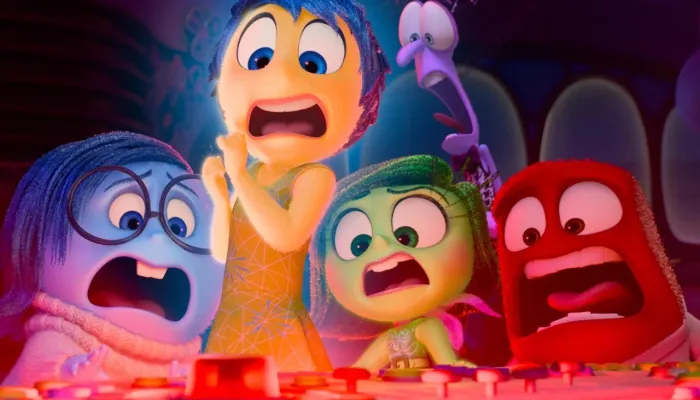
The climax builds toward Riley’s anxiety attack during a hockey game. It is the strongest scene in the film because the spectacle becomes quiet. The emotional machinery spins out of control, Riley’s breathing changes, and Anxiety discovers that she can no longer stop the system she created.
The resolution does not remove Anxiety. It allows Riley’s identity to become more complex. Positive memories, failures, selfish decisions, kindness, insecurity, loyalty, and fear all contribute to the person she is becoming.
That conclusion preserves the core philosophy of the first film while expanding it. Emotional health does not come from eliminating uncomfortable feelings or manufacturing a flawless self. It comes from allowing contradictory experiences to coexist.
Anxiety and the New Emotions: More Than Additional Characters
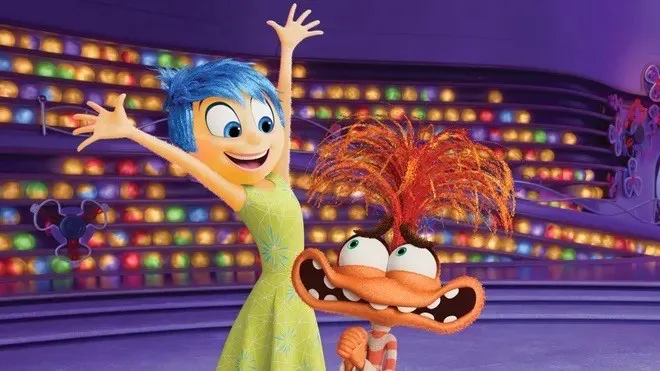
Anxiety is the film’s most important new character and its strongest creative decision. Her design, movement, voice, and behavior all communicate speed. She thinks several steps ahead, creates plans for events that have not happened, and treats uncertainty as an emergency requiring immediate action.
Maya Hawke gives Anxiety a voice that is energetic, intelligent, helpful, and increasingly desperate. She rarely sounds openly malicious. Even when removing the original emotions, she believes she is performing a necessary upgrade.
That makes Anxiety more unsettling than a conventional villain. Her logic often sounds reasonable. Riley should prepare. She should think about her future. She should make a good impression. The problem emerges when preparation becomes control and self-improvement becomes self-rejection.
Envy is smaller, quick, and constantly focused on what other people possess. She does not create the film’s central conflict, but she supports Anxiety by identifying qualities Riley should imitate.
Ayo Edebiri gives Envy a bright, eager energy. The character is funny because she treats comparison as admiration rather than resentment. Her enthusiasm makes the behavior look harmless even when it contributes to Riley’s insecurity.
Embarrassment is physically large but emotionally withdrawn. He hides inside his clothing, avoids attention, and reacts to situations by attempting to disappear. The contrast between his size and behavior is visually effective.
Paul Walter Hauser gives the character a restrained, hesitant presence. Embarrassment receives fewer lines than Anxiety, but his actions become increasingly important as he recognizes that the new emotional system is hurting Riley.
Ennui represents boredom, detachment, and defensive indifference. Adèle Exarchopoulos gives the character a flat delivery that works as a joke while also capturing a familiar teenage performance: pretending not to care in order to avoid vulnerability.
The new emotions are not developed equally. Anxiety receives a full arc, while Envy, Embarrassment, and Ennui function more as supporting forces. They are memorable, but the film does not explore them with the same depth.
This imbalance is understandable because too many central emotional arcs would overcrowd the story. Still, I wanted more interaction between the new emotions and the original group.
Fear has an especially obvious relationship with Anxiety, yet the film does not examine the difference between immediate danger and future-focused worry as deeply as it could. Disgust and Envy also share thematic territory involving social judgment and comparison.
The film introduces a strong emotional ensemble but sometimes uses its members as functions rather than characters.
Riley’s Development: The Pain of Becoming a Different Version of Yourself
Riley is more active in the sequel than she was in the original. Her external decisions carry much of the drama, and the emotional story inside her mind is closely connected to visible changes in her behavior.
Kensington Tallman gives Riley a convincing mixture of confidence and insecurity. Riley is not presented as permanently awkward or socially helpless. She is talented, energetic, and capable of forming friendships.
Her anxiety grows precisely because she has something to lose. She has a sport she loves, friendships she values, and a future she can imagine. The possibility of failure becomes more frightening when success seems close.
The hockey camp setting works because sport combines performance, identity, hierarchy, and teamwork. Riley is judged individually but must function within a group. She wants attention from the coach while also wanting acceptance from older players.
Her conflict with Bree and Grace is painful because nobody begins with bad intentions. Riley believes she must prepare for a life where they are no longer constantly beside her. Her friends recognize that she is moving away from them before she admits it to herself.
The film is strongest when Riley’s behavior remains understandable even when it becomes hurtful. She does not suddenly reject her friends because the plot requires conflict. She gradually makes choices that seem strategically useful.
This is how Anxiety changes her. Riley begins treating relationships as future assets or obstacles rather than present connections.
The new Sense of Self built under Anxiety’s influence becomes a devastating summary of that mindset. Riley’s internal belief is no longer simply that she is a good person. It becomes the fear that she is not good enough.
That belief affects every action. A mistake becomes evidence. A social hesitation becomes a warning. Another player’s success becomes a comparison.
The final emotional breakthrough does not restore Riley to her childhood identity. The film understands that she cannot return to the simpler version of herself from the first story.
Instead, she develops a more complicated self-concept. She can be kind and selfish, confident and afraid, loyal and ambitious. None of those qualities alone defines her.
This is the sequel’s most valuable message. Maturity is not the construction of one perfect identity. It is the ability to live with multiple truths about oneself.
Voice Cast & Character Performances: Familiar Emotions, New Pressures
Amy Poehler remains the center of the emotional ensemble as Joy. Her performance is optimistic without making Joy emotionally simple. She gives the character determination, impatience, affection, and the growing fear that Riley may no longer need her in the same way.
Joy’s arc is subtler than Anxiety’s, but it matters. She has learned that Sadness belongs, yet she still wants to manage Riley’s identity by discarding negative memories.
Phyllis Smith again brings warmth and precision to Sadness. The character is less central than in the first film, but her presence provides emotional grounding.
Lewis Black remains perfectly suited to Anger. His explosive delivery works in short bursts, though the character contributes less to the central themes than he did before.
Tony Hale replaces Bill Hader as Fear and gives the character a slightly different rhythm. Fear remains nervous and expressive, but Anxiety’s arrival naturally reduces his narrative importance.
Liza Lapira replaces Mindy Kaling as Disgust. Her performance preserves the character’s sharp judgment and social awareness while fitting comfortably into the established group.
The voice changes are noticeable for viewers deeply familiar with the original, but they do not damage the ensemble. The new performers respect the characters rather than attempting dramatic reinvention.
Maya Hawke gives the film its defining performance. Anxiety’s speech moves quickly, often combining enthusiasm with visible strain. Hawke makes the character sound like someone who has already imagined every possible outcome and is terrified of missing one.
Ayo Edebiri brings immediate charm to Envy, while Adèle Exarchopoulos gives Ennui an effective emotional flatness. Paul Walter Hauser does a surprising amount with Embarrassment despite the character’s limited dialogue.
The human supporting cast is smaller and less developed. Val Ortiz is confident but not cruel, while Coach Roberts remains firm and observant. Bree and Grace function primarily through their relationship with Riley.
The limited development of these characters keeps attention on Riley’s internal life but makes the external social world feel somewhat simplified.
Visual Design & Animation: A Mind Becoming More Complicated
Inside Out 2 preserves the visual language of the original while expanding the mental world. Headquarters remains colorful, readable, and built around the emotional console.
The new emotions are designed according to clear visual ideas. Anxiety is thin, tense, and physically restless. Envy is small because comparison often begins by looking upward at someone else. Embarrassment is large but wants to disappear. Ennui appears loose, flat, and almost disconnected from physical effort.
These designs communicate personality before the characters explain themselves. Pixar’s strongest character work often begins with silhouette and movement, and this film continues that tradition.
Anxiety’s animation is particularly effective. Her hair, eyes, hands, and posture seem to move faster than the room around her. Even while standing still, she looks as though she is processing several emergencies.
The film uses orange light and fast visual patterns to communicate escalating worry. During Riley’s anxiety attack, the colors and movement become overwhelming without losing emotional clarity.
The mental landscapes are imaginative, though they rarely achieve the surprise of the first film’s most original locations. The concept of belief systems and the Sense of Self provides the strongest new visual metaphor.
Memories create beliefs, beliefs combine into identity, and identity influences Riley’s decisions. The film turns an abstract psychological process into a physical structure the audience can understand.
The “sar-chasm” joke and other wordplay-based locations continue the series’ tradition of transforming mental language into literal environments. Some jokes are clever. Others feel designed to repeat a familiar formula.
The external world receives realistic but stylized animation. Hockey movement has weight, speed, and enough physical detail to make the sport convincing.
Riley’s body language is especially important. Small changes in posture, eye contact, breathing, and facial tension show Anxiety’s influence before the dialogue confirms it.
The film remains visually polished throughout, but its artistry is most impressive when animation supports psychology rather than spectacle.
Music, Direction & Pacing: A Faster Sequel With Less Mystery
Kelsey Mann directs the sequel with a strong understanding of the original film’s emotional rules. He does not attempt to replace Pete Docter’s approach entirely. Instead, he extends the established world into adolescence.
The direction is clean and efficient. Emotional changes inside headquarters connect clearly with Riley’s behavior outside. The audience rarely loses track of why she is acting differently.
The hockey camp gives the story a natural deadline and helps maintain momentum. Practices, meals, social encounters, and games create visible stages in Riley’s changing behavior.
The pacing is quicker than the first film, particularly after the new emotions take control. This makes the sequel entertaining but leaves less space for quiet reflection.
The first Inside Out allowed grief and memory to unfold slowly. Inside Out 2 is more focused on escalation. Anxiety plans, Riley reacts, and the situation becomes more complicated.
Andrea Datzman’s score supports both emotional warmth and rising tension. The music respects Michael Giacchino’s original themes while adding energy suited to Riley’s teenage experience.
The anxiety sequences use rhythm and repetition effectively. Musical patterns create the sense that Riley’s thoughts are accelerating and becoming harder to interrupt.
The film occasionally moves too quickly through new concepts. Secrets, imagination, beliefs, and suppressed memories appear in inventive sequences, but some ideas receive only enough time for one joke or plot function.
This is my first major criticism. The sequel introduces enough psychological material for several films but often chooses speed over exploration.
My second concern is structural familiarity. The original emotions are removed from headquarters and must travel through Riley’s mind to return. The journey is enjoyable, but it repeats the first film’s broad narrative shape too closely.
Themes & Emotional Meaning: When Self-Improvement Becomes Self-Rejection
Inside Out 2 is fundamentally about the difference between growth and control. Anxiety believes she is helping Riley improve. She identifies future risks and constructs a version of Riley designed to avoid them.
The problem is that this new identity depends on rejecting existing relationships, memories, and qualities. Riley is not allowed to become more complex. She is instructed to become more acceptable.
This distinction gives the film relevance beyond adolescence. Adults also reorganize themselves around professional expectations, social comparison, fear of exclusion, and imagined future failure.
The film does not argue that Anxiety is useless. Without concern for the future, Riley would struggle to prepare or recognize consequences. Anxiety becomes destructive when she claims authority over every decision.
Joy makes a similar mistake from the opposite direction. She removes painful memories because she believes Riley’s identity should be built from positive experiences.
Both emotions attempt to curate the self. One wants an identity made from goodness. The other wants an identity made from preparation and achievement.
The final resolution rejects both approaches. Riley’s self must emerge from the complete range of her experience rather than an approved collection of memories.
The anxiety attack is the clearest expression of this theme. Anxiety’s system reaches maximum effort but produces complete paralysis. Every possible plan, mistake, judgment, and future consequence becomes active at once.
The scene is powerful because it does not resolve through a magical command. Anxiety must release control, the other emotions must return, and Riley must reconnect with her immediate physical reality.
The film’s language around belief and identity is simplified for a broad audience, but the emotional truth remains recognizable.
Inside Out 2 also examines friendship during transition. Riley’s relationship with Bree and Grace is threatened not by conflict alone but by the knowledge that their lives are changing.
The film refuses to promise that nothing will change. Riley cannot keep every relationship exactly as it was. She can only avoid destroying the present while preparing for the future.
Critical Reception & Audience Response: A Sequel That Justified Its Return
Inside Out 2 received a broadly positive critical response. Reviewers praised its emotional intelligence, visual polish, voice performances, accessible treatment of anxiety, and ability to expand the first film’s ideas without completely repeating its lesson.
Maya Hawke’s performance as Anxiety received particular attention. Critics often identified the character as the sequel’s strongest addition because her behavior is funny, recognizable, and unsettling at the same time.
The anxiety attack sequence was also widely discussed as one of the film’s most effective moments. Its physical detail and emotional restraint allowed younger viewers to understand the experience without turning it into a lecture.
Some criticism focused on the sequel’s familiarity. The plot once again removes the established emotions from headquarters and sends them through symbolic mental spaces.
Reviewers also noted that the new emotions receive unequal development. Anxiety dominates the story, while Envy, Embarrassment, and Ennui often function as comic support.
The film became a major commercial success and attracted a large audience across age groups. Part of that success came from the strength of the original, but the sequel also connected with viewers who recognized its portrayal of social insecurity and future-focused fear.
Audience reactions were especially positive around the film’s depiction of adolescence. Parents, teenagers, and adults often found different points of identification within the same scenes.
The sequel’s popularity does not automatically make it artistically equal to the original. The first film remains more surprising and structurally elegant.
Inside Out 2 is less original, but it is not emotionally empty. It earns its continuation by identifying a new developmental challenge rather than merely introducing additional characters.
Final Verdict: A Worthy Sequel About the Fear of Not Being Enough
Inside Out 2 does not surpass the originality of the first film, but it finds a legitimate reason to return to Riley’s mind. Adolescence creates emotional problems that childhood could not fully prepare her to handle.
The sequel’s strongest insight is that Anxiety does not arrive to destroy Riley. She arrives to save a future version of Riley from rejection, failure, and loneliness.
That goal becomes harmful because it requires Riley to abandon the relationships and qualities she already possesses. The more carefully Anxiety plans the future, the less Riley can experience the present.
I found the hockey camp effective because it turns internal pressure into visible choices. Riley changes how she speaks, behaves, and treats her friends. Her anxiety is not limited to thoughts. It reorganizes her identity.
The new emotions are visually memorable, and the voice cast is strong. Maya Hawke gives Anxiety enough warmth to prevent the character from becoming a simple antagonist.
Amy Poehler continues to make Joy more complicated than endless optimism. Joy’s attempt to remove negative memories shows that she still has to learn how little control any single emotion should possess.
The film’s visual metaphors are clear without becoming entirely simplistic. Memories create beliefs, beliefs influence identity, and identity remains flexible rather than permanent.
I wanted more time with Envy, Embarrassment, Ennui, and the conflict between Fear and Anxiety. I also wished the story had found a structure less dependent on repeating the first film’s journey back to headquarters.
Those flaws keep the sequel below its predecessor, but they do not reduce it to a commercial imitation. Inside Out 2 is funny, thoughtful, beautifully animated, and emotionally useful.
I recommend it to families, teenagers, adults who remember the social pressure of adolescence, and anyone who has experienced the exhausting attempt to prepare for every possible future.
Personal rating: 8.5/10.
Inside Out 2 earns that score for its nuanced Anxiety character, strong voice work, relatable adolescent conflict, polished animation, powerful climax, and thoughtful expansion of Riley’s identity. It loses points for structural repetition, uneven development of the new emotions, simplified supporting characters, and pacing that occasionally rushes through its strongest concepts.
The film does not argue that Riley must defeat Anxiety. It offers a more difficult answer: she must listen to Anxiety without allowing that voice to become the only one defining who she is.
Pros

- Engaging narrative that resonates with a wide range of audiences.
- Striking visual imagery and advanced animation techniques.
- Thought-provoking exploration of emotional growth and personal identity.
- Universal themes that connect with both children and adults.
- A well-balanced mix of humor and deeper emotional moments.
- Easy accessibility through various streaming and download platforms.
Cons

- The complex narrative structure may confuse younger or less attentive viewers.
- Some emotional metaphors might not translate clearly for all audiences.
- The film's depth in addressing intricate emotional issues may overwhelm those seeking a light-hearted experience.

Leave a comment
Your comment is awaiting moderation. We save your draft here
0 Comments