






A Game That Begins With Nothing and Can Become Almost Anything
My strongest memory of Minecraft is not defeating a major enemy or finishing an elaborate building. It is the first evening of a new survival world, when the sky begins turning orange and I suddenly realize that I have spent too much time looking for the perfect place to build. I have a few pieces of wood, some food, no reliable shelter, and just enough daylight left to make several bad decisions. That familiar rush captures the game better than any giant castle or automated machine. This Minecraft review begins there because its magic comes from turning simple needs into personal stories.
Minecraft places me inside a world made from blocks and gives me very little direct instruction. I gather wood, craft basic tools, find food, build shelter, mine stone, and eventually reach resources that allow larger ambitions. The structure is easy to understand, but the possibilities expand constantly. A small wooden hut can become a village, a fortress, a railway network, a farm, a redstone factory, or the first abandoned building in a completely different project.
The game is often described as a sandbox, survival title, construction game, educational tool, social platform, and creative engine. All of those descriptions are correct, yet none explains the complete appeal. Minecraft works because its systems connect naturally. Exploration creates resources, resources enable construction, construction supports survival, and survival provides stories that make the world feel personal.
Its age is visible in several areas. Combat remains simple, inventory management can become tiring, performance varies between versions and devices, and new players are often expected to learn through experimentation or outside guides. The differences between Java Edition and Bedrock Edition also create unnecessary confusion. Even with those flaws, Minecraft remains one of the most important and replayable games ever made. It does not ask me to follow one adventure. It gives me a set of rules and waits to see what kind of adventure I create.
Core Gameplay & Survival Loop: Every Improvement Creates a New Goal
A survival world usually begins with immediate practical tasks. I need wood for crafting, food to manage hunger, stone for better tools, and shelter before hostile creatures begin appearing in dark areas. These needs create a natural tutorial without using long explanations.
The first tools are temporary. Wooden equipment gives access to stone, stone equipment allows safer exploration, and iron opens the larger survival game. Iron can become armor, weapons, buckets, shields, shears, minecarts, and many other useful items. Finding it changes the way I interact with the world because darkness becomes less threatening and long journeys become more realistic.
Progression is not presented through a traditional character level. Experience exists mainly for enchanting and certain interactions, while practical advancement comes from knowledge, equipment, infrastructure, and preparation. A player with basic gear and strong understanding may survive more effectively than someone carrying expensive items carelessly. Food becomes an early priority. Hunting provides quick resources, but agriculture offers stability. Wheat, potatoes, carrots, animals, and other food sources can transform a desperate shelter into a sustainable base. The game gradually changes from daily survival into management.
Mining creates the next cycle. Better materials allow stronger equipment, which makes deeper exploration safer. Valuable resources are usually found in places where lava, darkness, hostile creatures, and difficult terrain create greater risk. Minecraft rarely tells me when I should move forward. I can spend many hours building with basic materials before entering dangerous dimensions, or I can rush toward advanced equipment immediately. That flexibility allows the same game to support relaxed builders and efficiency-focused survival players.
Mining & Resource Gathering: Repetition Made Meaningful by Purpose
Mining is one of Minecraft’s simplest activities. I break blocks, collect materials, and create tunnels through stone. Mechanically, the process can become repetitive. Its meaning comes from what the resources allow me to build or survive. Coal provides early fuel and light. Iron supports most practical development. Redstone enables machines and automated systems. Diamonds offer durable equipment and remain one of the game’s most recognizable rewards. Rarer materials create additional reasons to visit dangerous locations. Caves have become much larger and more dramatic than the narrow tunnels associated with early versions. Huge underground chambers, waterfalls, lava pools, abandoned structures, vegetation, and deep dark areas create memorable exploration spaces.
The increased scale is visually impressive but can make early mining more dangerous. Open caverns expose me to enemies from several directions, and reaching visible resources may require bridges or careful climbing. Small caves are easier to control, while enormous ones feel like underground expeditions. Resource gathering becomes less tiring when connected with a clear project. Collecting stone for no reason feels like work. Collecting stone for a castle wall gives every stack a purpose.
Large builds expose one of Minecraft’s main weaknesses. The inventory and storage systems do not scale gracefully with ambition. Valuable playtime can be spent moving items between chests, sorting materials, and searching for one missing component. Automation eventually reduces some repetition, but building those systems requires substantial knowledge. Minecraft rewards preparation while also creating many of the inconveniences that make preparation necessary.
Crafting & Progression: A Simple Grid With Enormous Consequences
Crafting converts gathered materials into tools, building components, utility items, decorative blocks, and machinery. The system begins simply, but the number of recipes becomes enormous.
Recipe-book support makes modern Minecraft much easier to approach than older versions. I no longer need to memorize every arrangement before creating common items. Even so, many systems remain difficult to discover without experimentation or external guidance. The crafting table becomes the center of early progression. Furnaces process ores and food, while specialized workstations support activities such as stonecutting, smithing, enchanting, brewing, and villager professions.
Enchanting adds useful improvements to equipment. Tools can become faster or more durable, weapons can deal greater damage, and armor can provide specialized protection. The system encourages experience gathering and resource investment, though randomness can make the process frustrating. Brewing introduces potions with effects such as healing, strength, speed, resistance, or underwater breathing. Potions are useful but less intuitive than ordinary crafting because ingredients and sequences are harder to discover naturally.
The strongest aspect of progression is that new tools expand possibility rather than only increasing statistics. A bucket changes travel and construction. Redstone changes engineering. An elytra transforms long-distance movement. A shulker box changes inventory management. The weakest aspect is uneven explanation. Minecraft often assumes that players will learn through community knowledge. That culture is part of its success, but the base game could communicate advanced systems more clearly without removing discovery.
Building & Creative Freedom: Blocks Become Personal Language
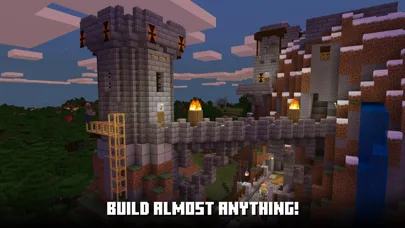
Building is the feature that gives Minecraft its near-infinite longevity. Every block has a practical function, visual texture, or decorative possibility. Combining them allows players to create structures ranging from tiny cottages to entire cities. The grid creates constraints, but those constraints make creativity easier to begin. I do not need professional modeling tools or architectural knowledge. I place one block, then another, and gradually discover the shape. Early buildings are often simple boxes because survival rewards speed and enclosed space. Improvement comes from noticing proportions, depth, color combinations, roofs, windows, pathways, and landscaping.
Minecraft’s block palette has expanded enough to support many styles. Wood types, stone variants, colored materials, glass, plants, metals, lighting, and decorative blocks can create medieval, modern, industrial, fantasy, or deliberately abstract designs. Creative Mode removes survival requirements and provides unlimited access to materials. This turns the game into a pure construction space. Flying makes large projects easier, while command tools and world-editing systems can increase the scale further.
The value of a Minecraft build is not determined by technical complexity. A small house can feel more meaningful than a giant monument because it contains memories of the first nights, dangerous journeys, and materials gathered personally. Building with others adds another layer. Shared towns develop through negotiation, accidental inconsistency, and different creative styles. One player designs roads, another creates farms, and someone inevitably builds a strange tower that becomes the settlement’s most recognizable landmark.
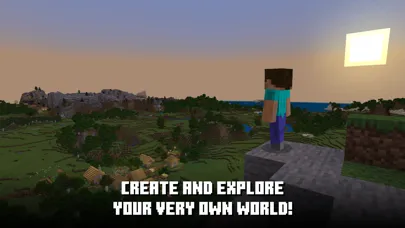
Exploration & World Generation: Curiosity Is the Main Quest
Minecraft worlds are large enough that exploration can remain meaningful for an extremely long time. Landscapes include forests, mountains, deserts, oceans, caves, swamps, snowy regions, villages, ruins, temples, and many other structures. Procedural generation gives each world a different arrangement. Individual pieces become familiar, but their combinations create unique geography. A village beside a dramatic mountain or a ruined portal hidden in a forest can become the basis of an entire story. Exploration rewards curiosity with materials, structures, creatures, and locations that may not exist near the starting point. It also creates practical risk. Traveling far without planning can lead to lost equipment, food shortages, or difficulty finding the way home. Maps, coordinates, compasses, landmarks, and pathways become important tools. I enjoy leaving visible signs of travel, such as torches, bridges, small shelters, or roads connecting distant areas. These structures turn procedural terrain into personal geography.
Villages provide trading, resources, and social activity, though villagers behave more like useful systems than believable communities. Their routines give settlements life, but interaction remains limited. Rare structures create memorable discoveries because they break the natural landscape with evidence of history. Minecraft rarely explains who built them or why they were abandoned. That mystery encourages players to create their own interpretation. The game’s world can also feel empty. Long journeys may pass through repeated terrain with little meaningful interaction. Exploration is strongest when the player already has a reason to search rather than expecting every direction to contain handcrafted content.
The Nether & The End: Progression Beyond the Ordinary World
The Nether transforms the rhythm of Minecraft by introducing a hostile dimension filled with lava, unusual terrain, valuable resources, dangerous creatures, and structures required for later progression. Entering it for the first time feels significant because the ordinary rules of travel and safety change immediately. Water no longer provides the same protection, lava is common, and navigation becomes difficult because many areas look similar. The Nether is also useful for transportation. Distances function differently, allowing experienced players to create fast travel networks between distant locations in the main world. Fortresses, bastions, and unique biomes give the dimension practical variety, although navigating it can still become frustrating. One mistake near lava may erase hours of equipment progression.
The End provides the closest thing Minecraft has to a traditional final objective. Reaching it requires preparation, locating a stronghold, and activating a portal. The Ender Dragon fight is important symbolically, but mechanically it is not the deepest boss encounter in gaming. Its power comes from representing the completion of a self-directed journey. Defeating the dragon does not end the world. New areas, structures, and valuable movement equipment become available. Minecraft treats the ending as another expansion of possibility. This approach fits the game perfectly. A fixed conclusion would feel unnatural in a world built around continuation.
Combat: Functional, Readable, and Less Interesting Than the World Around It
Minecraft’s combat is easy to understand. I attack with melee weapons, use bows or crossbows at range, block certain attacks with shields, and improve survival through armor, potions, enchantments, and movement.
Different versions use different combat timing and balancing, which can make advice inconsistent. Java Edition emphasizes attack cooldowns, while Bedrock combat has its own mechanical behavior.
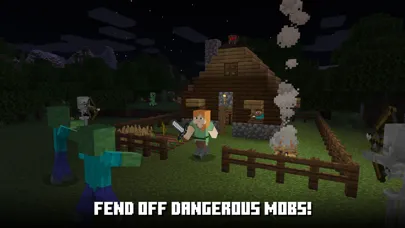
Hostile creatures provide distinct threats. Zombies create steady pressure, skeletons punish exposure, spiders move unpredictably, and Creepers turn poor awareness into sudden destruction.
The Creeper remains one of the game’s best enemies because it attacks more than health. Its explosion can damage a carefully built home or landscape, giving every encounter personal stakes.
Combat becomes more interesting when terrain, darkness, objectives, or multiple enemy types create complications. A single enemy in an open area is rarely challenging. Several enemies near lava or inside a narrow cave can become dangerous quickly.
The system lacks the depth of dedicated action games. Melee encounters often depend on spacing, timing, equipment, and repeated attacks without a wide range of defensive or combo options.
Bosses and high-level enemies add spectacle but remain a smaller part of the experience. Minecraft is not compelling because its combat is exceptional. Combat works because danger gives meaning to preparation, shelter, lighting, and equipment.
Mobs & Ecosystems: Personality Through Simple Behavior
Minecraft’s creatures make the world feel active. Passive animals provide food and materials, neutral mobs respond according to conditions, and hostile creatures control dark spaces.
Simple behavior often creates strong personality. Chickens wander unpredictably, wolves can become companions, cats move through villages, and bees create small environmental routines. Hostile mobs are especially memorable because each teaches a basic survival lesson. Skeletons encourage cover, Creepers reward awareness, Endermen punish careless eye contact, and phantoms encourage sleep.
The game has gradually introduced more complex creatures and ecosystems. Some mobs interact with blocks, environments, or other creatures in ways that create surprising situations. Not every addition feels equally important. Certain creatures provide one narrow resource or exist mainly as atmosphere. That variety still supports the sense that the world contains more than objects waiting for the player.
Taming animals creates attachment despite limited artificial intelligence. A named companion can become emotionally valuable simply because it survived several journeys. That attachment makes pathfinding problems more frustrating. Pets may become trapped, fall into danger, or disappear during travel. The player can lose a companion because the game’s movement systems fail rather than because of a meaningful risk.
Redstone & Automation: A Second Game Hidden Inside the First
Redstone allows players to create powered mechanisms, logic systems, doors, traps, farms, transportation, sorting machines, and extremely complex devices. At a basic level, it behaves like magical electricity. A switch can activate a lamp or open a door. With more knowledge, players can create systems resembling circuits and programmable logic. Redstone dramatically increases Minecraft’s depth because it connects building with engineering. A structure can become functional rather than decorative.
Automated farms reduce repetitive gathering. Sorting systems manage storage, while transportation networks connect distant bases. More advanced players have built calculators, games, music systems, and working computers inside Minecraft. The difficulty is accessibility. Redstone behavior can be confusing, and version differences matter. A design that works in Java Edition may not work identically in Bedrock Edition.
Most players will need guides to build anything beyond simple mechanisms. This does not weaken the creativity, but it highlights the game’s dependence on community education. Redstone is also where Minecraft demonstrates its greatest hidden sophistication. The surface appears simple enough for a child, while the same block system can support engineering projects requiring planning and technical understanding.
Multiplayer, Realms & Community Servers: The World Changes When Other People Enter
Minecraft multiplayer can turn an isolated survival game into a social space. Friends can build together, divide responsibilities, explore, trade, compete, or create informal stories. Small private worlds often provide the most comfortable experience. Shared rules emerge naturally, and players can decide whether resources, buildings, and equipment belong individually or collectively. Realms offers an official way to keep a world available even when the original host is offline. This is convenient for families and small groups, although it requires a recurring payment. Public servers expand Minecraft far beyond the base game. Communities offer minigames, survival economies, role-playing, creative plots, competitive modes, and heavily modified experiences.
These servers demonstrate Minecraft’s flexibility but vary greatly in quality, moderation, monetization, and safety. Parents should understand where younger players are connecting and what communication features are available. Multiplayer also introduces conflict. Players may steal items, damage builds, ignore shared plans, or use technical knowledge to gain disproportionate control. The best multiplayer sessions create stories impossible in solo play. The worst can erase hours of work because one person treats destruction as entertainment. Clear permissions, backups, and agreed rules matter more than the game initially suggests.
Mods, Maps & Community Creativity: Minecraft Beyond Mojang’s Design
The Minecraft community has expanded the game through mods, custom maps, texture packs, shaders, servers, and technical tools. Java Edition is particularly important for modding because players can transform world generation, technology, magic, combat, interface design, performance, and nearly every other system. Some modpacks create experiences so different that they resemble separate games. Others focus on small improvements, such as better inventory tools or performance optimization. Custom maps provide handcrafted adventures, puzzles, parkour courses, survival challenges, and narrative experiences. They demonstrate what creators can achieve using Minecraft’s existing systems.
Bedrock Edition offers add-ons and Marketplace content through a more controlled ecosystem. This improves convenience for some players but provides less freedom and introduces more commercial pressure. Community content gives Minecraft extraordinary longevity. It also creates technical complexity. Mods may conflict, break after updates, require specific versions, or create security risks when downloaded carelessly. The game’s greatest strength is that it supports both players who never install anything and creators who rebuild the experience completely.
Graphics & Art Direction: Simple Blocks, Strong Identity
Minecraft’s block-based visual style is immediately recognizable. Low-resolution textures and geometric forms create a world that remains readable across different devices and hardware levels. The style has aged well because it was never attempting realism. Improvements to lighting, water, distance, and environmental detail can enhance the world without replacing its basic identity. Biomes use color and shape effectively. A dark forest feels different from a desert even though both are built from cubes. Mountains gain scale through silhouette, while caves use darkness and vertical depth to create tension.
The simplicity also supports construction. Players can understand dimensions, alignment, and material changes easily because the world follows a consistent grid. Animations and creature models are intentionally limited. This gives the game charm but may feel stiff compared with newer survival titles.
Shaders can transform lighting dramatically, creating impressive sunsets, reflections, shadows, and atmosphere. They may also reduce performance and make certain visual information less clear. Minecraft proves that technical detail is not the same as visual personality. A simple block landscape can become beautiful because the player understands how it was formed and what happened there.
Audio & Music: Quiet Melodies Inside a Huge Empty World
Minecraft’s music is one of its most emotionally important elements. Soft piano, ambient textures, and restrained melodies may begin unexpectedly while I am building, exploring, or standing inside a familiar base.
The music does not attempt to make every action dramatic. Its quietness leaves room for reflection and gives the world a sense of distance. Environmental audio is equally important. Footsteps change across materials, caves produce unsettling sounds, water suggests hidden openings, and enemy noises provide information before danger is visible. The hiss of a Creeper remains one of gaming’s most effective warning sounds because recognition and panic happen almost simultaneously.
Mining sounds are repetitive by design, yet different blocks remain distinguishable. Breaking stone, placing wood, opening chests, and using tools contribute to the physical rhythm of play. Audio can occasionally behave strangely across walls or vertical spaces. A creature may sound closer than expected, making cave navigation confusing. The overall soundscape remains exceptional because it makes a simple world feel lonely, peaceful, dangerous, and familiar without constant dialogue.
Technical Performance: A Simple-Looking Game With Complicated Problems
Minecraft appears visually modest, but large worlds, complex redstone systems, mobs, simulation distance, lighting, and generated terrain can place significant demands on hardware. Performance varies greatly between devices, versions, settings, and world complexity. A new world may run smoothly while a long-term base filled with farms, animals, storage, and machinery begins slowing down.
Java Edition offers extensive control and modding but often benefits from optimization tools. Bedrock Edition generally targets broader hardware and supports cross-platform play, though it has its own bugs and mechanical differences. Chunk loading can interrupt exploration, especially when moving quickly. Distant terrain may appear late, and unstable performance can become dangerous during flight.
Bugs are a persistent part of Minecraft’s history. Mobs may behave strangely, redstone may fail after updates, items can disappear, and worlds occasionally encounter serious corruption or synchronization problems. Backups are essential for valuable long-term projects. The game encourages emotional investment in worlds that may exist for years, making data loss particularly painful. The split between editions is another annoyance. Players may own Minecraft but still discover that a friend’s server, mod, map, or redstone design belongs to a different ecosystem.
Monetization & Value: One Purchase, Several Very Different Ecosystems
Minecraft’s value is exceptional when measured by possible playtime. Survival, Creative Mode, multiplayer, custom maps, and community content can support hundreds or thousands of hours.
The monetization experience depends heavily on edition and platform. Java Edition relies strongly on community content, much of which is free. Bedrock Edition includes the Marketplace, where players can purchase skins, worlds, textures, add-ons, and other content using premium currency. Marketplace content can be convenient for console and mobile users who cannot install community files easily. It also makes the interface feel more commercial, particularly for younger players attracted to branded packs and colorful character skins. Cosmetics do not usually provide direct survival advantages in ordinary worlds. Certain paid maps or add-ons may contain unique mechanics, but they function as separate experiences rather than power sold inside the base survival mode.
Realms requires a subscription for persistent private hosting. The service is useful, though players comfortable with technical setup may find alternative hosting options. Minecraft avoids the constant battle-pass pressure of many live-service games. Its commercial ecosystem is still much larger than the simple purchase associated with its early years. Parents should review account settings and purchase controls, especially on Bedrock platforms where store access is integrated directly into the game.
Who Should Play Minecraft?
Minecraft is ideal for players who enjoy creativity, exploration, survival, construction, engineering, or open-ended goals. It can support relaxed solo play, family sessions, large community servers, classroom activities, and technically complex automation. Children often appreciate the direct interaction and visual clarity. Adults may find equal value in long-term construction, resource planning, or social worlds. Players who need a strong narrative, clear objectives, and frequent cinematic rewards may find the game directionless. Minecraft provides goals but rarely insists on them.
Those who dislike repetition may become tired of mining, gathering, sorting, farming, and traveling. Automation can reduce these tasks, but building automation creates another form of work. Combat-focused players may prefer a survival game with deeper enemies and weapons. Minecraft’s action supports its world rather than carrying the entire experience. The best approach is to begin with one small personal objective. Build a safe home, find a village, create a farm, or explore one cave. The larger game usually reveals itself naturally from there.
Final Verdict: A World That Becomes Valuable Because I Changed It
Minecraft remains extraordinary because it gives meaning to ordinary virtual space. A hill is not memorable only because the world generator placed it there. It becomes meaningful because I built a house beside it, survived a dangerous night inside it, created a tunnel through it, or used it to navigate home.
The survival loop remains elegant. Gathering wood leads to tools, tools lead to mining, mining leads to equipment, and equipment creates the freedom to explore or build more confidently. Each stage opens possibilities rather than simply replacing weaker statistics.
Building provides the game’s greatest longevity. The same blocks can create a practical shelter, artistic sculpture, automated farm, adventure map, or shared city. Redstone and community modifications expand that creativity far beyond what the original interface suggests.
The combat, inventory systems, technical performance, and player guidance all show their age. Minecraft can be frustrating, inconsistent, and surprisingly dependent on outside knowledge.
None of those weaknesses removes the power of returning to a world after several months and recognizing every path. The buildings may be simple, but they preserve decisions, accidents, ambitions, and unfinished plans. I recommend Minecraft to creative players, survival fans, families, educators, technical builders, explorers, and groups looking for a persistent shared world. Players expecting a carefully directed story should be prepared to create their own purpose.
Personal rating: 10/10.
Minecraft earns that score for its unmatched creative freedom, elegant survival progression, procedural exploration, redstone depth, multiplayer possibilities, community content, timeless visual identity, and ability to make every world feel personal. Its flaws are substantial, but few games have supported so many different forms of play for so long without losing the strength of their central idea.
Minecraft begins by giving me an empty hand and a world made of blocks. Everything that follows—a shelter, mine, village, machine, railway, fortress, friendship, or disaster—exists because I decided to place the next block.
Pros

- Offers extensive creative freedom for building and designing unique worlds
- Highly versatile gameplay with options for both creative and survival modes
- Strong, supportive community that continuously contributes mods and innovative ideas
- Easy accessibility across multiple platforms including PC, mobile, and consoles
- Regular updates that introduce new features and mechanics
- Educational benefits that foster creativity, engineering, and problem-solving skills
Cons

- Performance issues can arise on lower-end devices or during intensive builds
- Mods and cheats, if used improperly, can disrupt the natural challenge and balance of the game
- The vast scale and variety of options can be overwhelming for new players

Leave a comment
Your comment is awaiting moderation. We save your draft here
0 Comments