






Being Good Is Harder Than Stealing
The moment that defines The Bad Guys 2 for me is not its most spectacular robbery, the rocket accelerating toward space, or another perfectly timed escape by Mr. Wolf. It is the uncomfortable period before the adventure begins, when the former criminals discover that becoming good does not mean society will suddenly trust them. They have served their punishment, changed their behavior, and promised to build honest lives. Employers still see sharp teeth, criminal records, and a reputation nobody wants near the cash register. This The Bad Guys 2 review begins there because the sequel’s most interesting question is not whether the gang can perform another impossible heist. It is whether rehabilitation means anything when everyone expects them to fail.
Directed by Pierre Perifel with JP Sans as co-director, The Bad Guys 2 returns to the stylized world of Mr. Wolf, Mr. Snake, Ms. Tarantula, Mr. Shark, and Mr. Piranha.
The group has abandoned professional crime after the events of the first film. Wolf wants to prove that the change was genuine, but respectable society offers little practical support.
Their frustration leaves them vulnerable when a new criminal organization begins manipulating events around them. The Bad Girls—Kitty Kat, Doom, and Pigtail—possess the technical ability, confidence, and criminal ambition the reformed gang once considered their specialty.
The new trio forces the Bad Guys into an escalating plan involving a mysterious mineral, public deception, international locations, elaborate machines, and eventually a robbery carried far beyond Earth’s surface.
The sequel is larger, faster, and more openly ridiculous than the original. It replaces some of the first film’s emotional surprise with nonstop movement and increasingly impossible action.
That expansion produces several excellent sequences. The animation remains stylish, the voice cast understands the rhythm, and the relationship between Wolf and Diane Foxington becomes more emotionally direct.
The film also risks losing the elegant simplicity that made the first adventure work. Too many reversals, inventions, villains, disguises, and giant threats compete for attention.
The Bad Guys 2 remains highly entertaining. Its best moments understand that reform is not one decision. It is a difficult identity maintained while old abilities continue offering the easiest solution.
Plot & Storytelling: The Good Life Refuses to Give the Gang a Chance
The story briefly returns to the Bad Guys’ earlier criminal career, when Wolf leads the team through a stylish operation to steal an extremely valuable vehicle. The sequence reminds us why the group became famous. Each member has a clear role.
Wolf controls the plan and reads people. Snake handles locks, stealth, and improvisation. Tarantula manages digital systems. Shark uses disguise despite being physically impossible to overlook. Piranha provides explosive energy and an alarming relationship with bodily functions.
Their success depends on coordination rather than individual perfection. In the present, the gang is attempting to live legally. The transition is much less glamorous. Wolf treats employment as the next great mission. He believes enough sincerity and effort will convince somebody to offer them a chance.
Potential employers see only danger. A wolf applying for an ordinary position is still a wolf associated with robberies, police chases, and public humiliation. The others respond differently. Shark and Piranha attempt to remain optimistic. Tarantula recognizes how irrational the system is. Snake appears more comfortable with disappointment because he expected society’s rejection.
Their difficulty establishes a meaningful conflict. The gang changed internally, but their public identity remains frozen. Governor Diane Foxington encourages Wolf to continue. She knows more than most people about balancing criminal history with a respectable public role. Their relationship has become warmer, though neither finds emotional honesty easy.
A new criminal known as the Phantom Bandit begins committing high-profile thefts. The methods are advanced enough to attract police attention and familiar enough to make the Bad Guys useful. Commissioner Misty Luggins remains deeply suspicious of the gang. She accepts their assistance reluctantly, prepared to interpret any mistake as evidence of relapse.
Wolf sees the investigation as an opportunity. Catching another criminal may finally prove that the gang deserves public trust. The search leads into a spectacular event involving professional wrestling, public chaos, stolen technology, and another carefully constructed trap. The Bad Guys discover that they have been observed by a new team: Kitty Kat, Pigtail, and Doom.
Kitty Kat is a snow leopard and the strategic leader of the Bad Girls. Pigtail is a highly intelligent wild boar responsible for engineering and large-scale technology. Doom is a raven skilled in deception and emotional manipulation.
They do not merely admire the Bad Guys’ earlier work. They understand the group’s weaknesses. The former criminals are desperate to prove they have changed. That desperation makes them predictable.
The Bad Girls push them toward situations in which lawful behavior appears impossible. Evidence can be altered, public perception can be manipulated, and authorities are already prepared to believe the worst. The operation grows around MacGuffinite, a rare material with powerful magnetic properties.
Kitty Kat’s plan involves using it on a massive scale. The Bad Guys are forced into another job while attempting to protect their freedom and prevent the larger disaster. The gang therefore returns to criminal techniques without returning completely to criminal motivation.
They break into locations, wear disguises, deceive powerful people, and operate outside the law. The difference lies in why they are doing it and who is allowed to define the action. The conflict eventually reaches a rocket and an orbital station. Kitty’s plan is to use magnetic force to draw enormous quantities of gold away from Earth.
The idea is appropriately absurd. It transforms a heist film into a space adventure without abandoning the genre’s central object: somebody still wants to steal an unimaginable amount of wealth.
As the danger increases, divisions appear among the Bad Girls. Doom and Pigtail show greater hesitation, while Kitty becomes unwilling to abandon the plan. The Bad Guys must prevent the theft, rescue one another, confront the public story created around them, and survive the station’s return toward Earth.
The final act is visually exciting but extremely crowded. Romantic resolution, villain conflict, team reconciliation, large-scale action, and future possibilities arrive almost simultaneously. The story lands emotionally because the characters remain likable. Structurally, it could have removed one or two reversals without losing momentum.
Mr. Wolf: Reform Without Recognition
Sam Rockwell continues giving Wolf relaxed confidence, verbal charm, and the slight uncertainty hidden beneath both. Wolf has spent much of his life controlling how people see him. As a criminal, he turned fear into performance. Now he is attempting to create an honest identity, but the same social skill no longer works as easily. People assume charm is manipulation because it once was.
Wolf’s frustration is understandable. He has completed the moral transformation society demanded, yet practical acceptance remains unavailable. The sequel wisely shows why this can become dangerous. When legitimate doors remain closed, returning to familiar methods begins to feel rational. Wolf does not miss hurting people. He misses competence, movement, and the certainty of knowing what to do.
Crime gave him a role. Rehabilitation gives him rules without a clear future. His relationship with Diane provides emotional stability. She believes he has changed because she understands the effort required to live beyond a criminal identity. Their bond also contains a problem. Wolf wants Diane’s respect so strongly that he occasionally hides fear or uncertainty.
He still performs confidence when honesty would be more useful. Kitty Kat recognizes this immediately. She challenges his leadership and knows that threatening his team will push him toward impulsive decisions. Wolf’s central growth involves accepting that being good does not always look respectable. Sometimes the lawful system has already failed to understand the situation.
He must make morally responsible choices without waiting for public approval to certify them. That lesson develops the first film’s message naturally. Wolf originally learned that doing good could feel rewarding. The sequel asks whether he will continue when the reward disappears.
Diane Foxington: The Former Crimson Paw Steps Back Into Action
Zazie Beetz gives Diane intelligence, warmth, control, and the confidence of someone who understands both political institutions and criminal behavior.
Diane remains governor, but she is never reduced to a formal authority standing outside the adventure. Her past as the Crimson Paw gives her abilities the public does not associate with her office. She can fight, infiltrate, improvise, and recognize the structure of a sophisticated theft.
The first film used this revelation to connect her with Wolf. The sequel allows their shared history to become a genuine partnership. Diane believes in the Bad Guys because she knows reform cannot depend on never using an old skill again.
A former thief may use stealth to save someone. A talented liar may use deception against a more dangerous criminal. The ethical difference lies in purpose, consent, and consequence. Her conflict with Kitty Kat is especially effective. Both are highly capable, secretive women with carefully managed identities.
Diane used her criminal skill to create another life. Kitty appears to see skill as proof that she should take whatever she can reach. Their physical confrontation becomes more than a required action scene. It places two possible versions of exceptional ability against each other. Diane’s relationship with Wolf also becomes more direct. Their attraction has existed for some time, but constant danger has allowed both to avoid defining it.
The sequel finally moves them beyond suggestive dialogue and mutual admiration. Their romantic progression is satisfying, though the final emotional payoff arrives inside a crowded climax. I wanted more quiet conversation between them before the space mission. The chemistry is strong enough that the relationship does not need danger in every scene.
Mr. Snake: Suspicion Meets an Unexpected Connection
Marc Maron continues making Snake the gang’s most openly cynical member. Snake expects betrayal, dislikes emotional speeches, and treats optimism as a condition likely to produce disappointment. His loyalty remains unquestionable, even when his language suggests otherwise.
The new film gives him an unexpected connection with Doom. Their personalities overlap in interesting ways. Both use sarcasm defensively. Both distrust easy displays of sincerity. Both appear more comfortable with manipulation than emotional exposure. Doom approaches the group as an enemy, but her relationship with Snake complicates the Bad Girls’ unity.
Their attraction is humorous because neither wants to acknowledge ordinary vulnerability. Snake’s response also reveals growth. He once resisted Wolf’s transformation because kindness threatened the gang’s identity. Now he is capable of recognizing uncertainty inside someone positioned against them.
That does not make him naïve. He remains suspicious and responds badly when he feels manipulated. The subplot occasionally disappears behind the larger heist, but it gives Snake something beyond complaining or opening doors. Maron’s dry delivery remains an excellent contrast with the movie’s rapid visual energy.
Ms. Tarantula: The Hacker Facing More Advanced Technology
Awkwafina returns as Tarantula, the smallest member of the team and frequently the fastest thinker. Her digital ability becomes even more important because the sequel’s central plan depends heavily on advanced engineering, security systems, orbital technology, and magnetic control. Tarantula enjoys technical challenges. She does not treat hacking only as a useful service for Wolf’s plan. It is her form of competition and creativity.
Pigtail gives her an opponent capable of designing systems that cannot be defeated through one quick keyboard joke. Their rivalry could have received more attention. The film introduces an appealing contrast between Tarantula’s improvisational hacking and Pigtail’s large-scale engineering.
Instead, the crowded plot often treats them as operators on opposite sides of the same machine. Tarantula remains one of the film’s most dependable comic characters. Her physical scale allows her to move through environments differently from the others, while her confidence prevents her from becoming visually secondary.
The sequel could do more with her struggle to find honest employment. Somebody with her digital history would face serious suspicion even after reform. That issue is present in the team’s shared problem but rarely examined individually.
Mr. Shark: Disguise as an Act of Pure Confidence
Craig Robinson continues giving Shark enormous warmth and comic enthusiasm.
Shark’s disguises remain funny because they rarely seem convincing in any practical sense. Other characters accept them because he performs each role with complete commitment.
The sequel expands the scale of these situations. Formal events, public spaces, and advanced facilities give Shark new opportunities to behave as though one small costume detail makes a giant shark invisible.
His humor works best when the film refuses to explain it. Shark is also one of the gang’s emotional stabilizers. He enjoys the team, supports Wolf, and rarely treats vulnerability as a threat to his identity.
This makes him less conflicted than Snake but equally important. His interactions with Pigtail are playful because both possess more enthusiasm than their dangerous surroundings seem to justify.
Shark receives limited personal development, however. Like Tarantula and Piranha, he frequently supports Wolf’s arc rather than carrying one of his own. The voice performance and animation keep him entertaining, but another quieter scene about his experience of rehabilitation could have given the character greater depth.
Mr. Piranha: Explosive Loyalty and One Joke Taken Into Space
Anthony Ramos voices Piranha with energy, aggression, and a complete absence of embarrassment. Piranha approaches danger as though physical excitement is automatically preferable to waiting. His loyalty to the gang remains immediate. He may complain or panic, but he does not hesitate when another member needs help.
The sequel continues relying on jokes connected with his digestive system. Moving the story into space allows the filmmakers to create an even more elaborate version. The commitment is impressive. The repetition is also one of the film’s clearest annoyances. One major joke becomes a mechanical part of the final action rather than remaining a brief character detail.
Younger audiences may find the escalation hilarious. I found that it lasted longer than necessary. Piranha still contributes useful chaos. In a team built around precision, his unpredictability can disrupt opponents who have planned for more rational behavior. His relationship with Pigtail and Shark gives the larger ensemble a playful rhythm during the second half.
Kitty Kat: A Mastermind Who Understands Reputation
Danielle Brooks voices Kitty Kat with authority, intelligence, and controlled menace. Kitty is not impressed by the Bad Guys’ reform. She sees a group of talented criminals pretending that a new public identity has removed their instincts. Her plan depends on reputation as much as technology.
The gang’s criminal history makes them easy to frame. Authorities do not need perfect evidence because the story already feels believable. Kitty therefore turns social prejudice into a weapon. She also understands leadership. Like Wolf, she organizes specialists with different personalities and abilities.
The similarity creates a natural rivalry. Both want control, but Wolf has learned to treat his gang as a family rather than equipment. Kitty’s attitude toward Doom and Pigtail gradually reveals the limits of her leadership. She expects loyalty without allowing disagreement. When they begin questioning the plan, she responds through pressure rather than trust.
Her motivation is less developed than her strategy. The movie clearly establishes ambition, intelligence, and unwillingness to lose. It gives less insight into why this particular theft matters so much beyond wealth and reputation.
Kitty remains entertaining because Brooks gives every line purpose. Her calmness becomes especially effective beside the movie’s louder characters. The final act pushes her toward familiar villainous obsession. A more restrained resolution might have preserved the complexity visible earlier.
Doom: Deception Complicated by Genuine Feeling
Natasha Lyonne gives Doom a dry, raspy voice and the relaxed suspicion of someone who never reveals every thought.
As a raven, Doom naturally fits surveillance, mobility, and misdirection. Her skill is deception, but the film makes her most interesting when the performance begins creating real emotional consequences. Her connection with Snake challenges the clean division between the two teams.
Doom can manipulate him because she recognizes his defensive habits. She also appears genuinely attracted to the qualities that make him difficult. The result is a romance based on mutual suspicion. That dynamic is funny and potentially unhealthy, which the movie acknowledges without examining deeply.
Doom eventually becomes less comfortable with Kitty’s willingness to endanger everyone for the plan. Her change does not feel like a complete moral transformation. It feels like the recognition of a boundary. This distinction makes her more believable. She can remain a criminal personality while deciding that Kitty has gone too far.
Pigtail: Engineering With Too Much Enthusiasm for Destruction
Maria Bakalova voices Pigtail with energetic intelligence and comic intensity. Pigtail is responsible for much of the technology allowing the Bad Girls’ plan to become possible. She builds machines on a scale beyond Tarantula’s usual digital operations. Her work connects wrestling-event chaos, transportation, magnetic material, and the orbital stage of the heist.
Pigtail often appears delighted by engineering regardless of who controls the result. This makes her dangerous but not naturally cruel. She enjoys the process of creating an impossible machine. Kitty supplies the purpose.
Her growing discomfort therefore feels reasonable. Technical achievement stops being fun when the plan begins treating lives as disposable. Pigtail’s interactions with Shark, Tarantula, and Piranha give the film some of its most energetic group comedy. Like Doom, she receives a relatively fast moral turn. More time with the Bad Girls before the central operation could have made their internal relationships stronger.
Professor Marmalade: A Familiar Fraud Refusing to Leave the Story
Professor Marmalade returns as another example of reputation being separated from truth. The public image of the charming guinea pig remains absurdly durable despite the evidence of his earlier actions.
His presence allows the sequel to continue mocking the tendency to trust harmless appearances more easily than visibly dangerous animals. The Bad Guys struggle for employment despite genuine reform. Marmalade continues benefiting from assumptions of innocence. This contrast supports the film’s strongest social theme.
His return is funny, though the story is already crowded before adding another antagonist connected with the earlier film. Marmalade occasionally feels included because sequels expect recognizable villains to return rather than because the new plan requires him emotionally. His arrogance remains entertaining, and the character fits naturally into the escalating absurdity of the orbital climax.
Commissioner Luggins: Distrust With Institutional Power
Alex Borstein gives Commissioner Misty Luggins aggressive certainty and enough comic force to make every accusation sound like a declaration of war. Luggins has spent years chasing the Bad Guys. Their reform requires her to reconsider an identity built around stopping them. She resists.
Her suspicion is not entirely irrational. The gang possesses extraordinary criminal skill and repeatedly appears near major thefts. The problem is that she interprets every ambiguous event according to the conclusion she already prefers. Luggins represents institutional distrust more clearly than any individual employer.
She has legal authority, public credibility, and the ability to define the gang’s actions before they can explain themselves. The film uses her mainly for comedy and pursuit. A more serious scene acknowledging why rehabilitation challenges law-enforcement identity could have added depth. Still, her refusal to update her assumptions creates practical stakes around the gang’s struggle to remain good.
The Heists & Action: From Lucha Libre to Outer Space
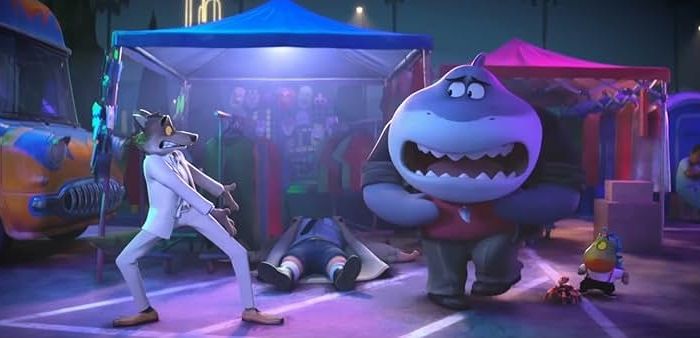
The Bad Guys 2 increases the action substantially. The opening vehicle theft reestablishes the gang’s coordination through speed, movement, and visual confidence. The wrestling sequence is one of the film’s strongest set pieces. The environment combines a large crowd, theatrical performance, bright colors, physical comedy, and undercover confusion.
Animation allows the sequence to shift briefly into more exaggerated visual language as the situation becomes increasingly uncontrollable. The filmmakers understand that a heist is not only a plan. It is rhythm. Characters must move through separate tasks before those movements reconnect at one decisive moment.
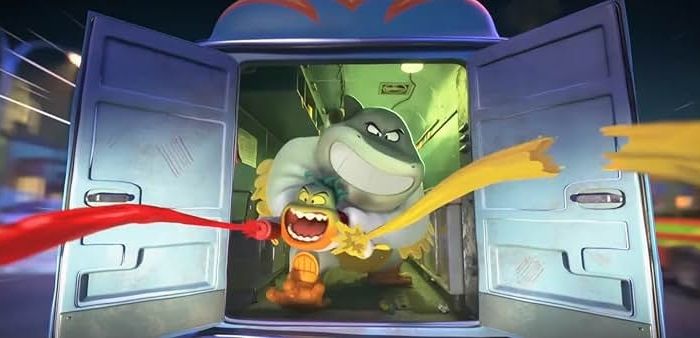
The space material pushes that principle into absurd territory. Rockets, orbital structures, magnetized gold, failing machinery, and reentry transform the final robbery into a global spectacle. The action remains surprisingly readable. Strong silhouettes and distinct colors allow the large ensemble to remain identifiable.
My concern is escalation. Once the gang has prevented a theft involving the planet’s gold from an orbital station, a future adventure will struggle to feel larger without becoming completely disconnected from the franchise’s original street-level charm.
The first movie made a gala theft feel significant because the characters mattered. The sequel occasionally assumes scale will produce significance automatically.
Animation & Visual Design: DreamWorks Keeps the Lines Loose
The animation remains one of the movie’s greatest strengths. The Bad Guys 2 continues the first film’s mixture of computer-generated characters, hand-drawn accents, painterly surfaces, graphic shadows, and exaggerated poses.
The world does not aim for physical realism. It aims for the visual confidence of an illustrated crime comic moving at cinematic speed. Character outlines, facial features, motion streaks, and sudden changes in shape make reactions feel drawn rather than mechanically simulated.
Wolf’s movement remains smooth and controlled. Snake bends through compositions in ways unavailable to ordinary humanoid characters. Shark uses scale for comic contrast. Tarantula moves with rapid precision. The Bad Girls receive equally clear designs.
Kitty’s sharp silhouette and controlled motion communicate authority. Doom’s dark feathers and relaxed posture fit deception. Pigtail’s compact design supports physical comedy and mechanical enthusiasm. Lighting becomes more dramatic than in the original, especially during night sequences, large public events, and the orbital climax.
The film also borrows cinematic language from live-action spy and action movies. Wide lenses, controlled framing, reflections, and rapid camera movement give several scenes the scale of a major espionage production. Visual ambition occasionally becomes overwhelming. The final act combines too many moving objects, effects, characters, and changes in location. Even then, the animation never becomes generic. Every sequence looks connected to the franchise’s particular graphic identity.
Humor & Comedy Style: Criminal Confidence Meets Honest Employment
The movie’s strongest humor grows from the gap between the gang’s exceptional abilities and their inability to perform normal social respectability. They can enter a secure building, manipulate surveillance, and escape a police operation. They cannot complete an ordinary job interview without making everyone uncomfortable.
Wolf’s confidence becomes awkward when nobody wants to be charmed. Snake’s cynicism becomes practical workplace analysis. Shark treats costumes as formal qualifications. The Bad Girls add another comic layer by treating the formerly legendary gang as predictable older professionals. Doom and Snake produce dry romantic humor. Pigtail’s engineering enthusiasm clashes with Kitty’s controlled leadership.
Commissioner Luggins continues using physical intensity and exaggerated suspicion. The film also relies heavily on rapid dialogue, background reactions, transformations, and visual interruptions. Most jokes land because the animation supports the timing.
The weaker material includes repeated bodily humor and moments when characters explain an absurdity that was already funny visually. The film occasionally appears afraid that younger viewers will lose attention if a scene remains quiet for more than a few seconds. That constant stimulation makes the experience lively but reduces contrast. Comedy becomes stronger when not every line is competing to be the joke.
Music, Direction & Pacing: A Sequel Running at Getaway Speed
Daniel Pemberton returns with music combining heist rhythms, percussion, electronic energy, jazz influence, and large action scoring. The soundtrack gives Wolf’s plans a sense of cool control even when the situation is collapsing. Music becomes especially important during sequences that move between multiple team members. Rhythmic continuity keeps separate actions connected.
Pierre Perifel and JP Sans direct with enormous visual confidence. They know how these characters move, interrupt one another, and occupy the frame. The pacing is extremely fast. The first act handles the gang’s rehabilitation struggle well because it allows disappointment to establish the emotional reason they might be pulled back toward crime.
Once the Bad Girls’ operation begins, the film accelerates continuously. New revelations, locations, machines, alliances, and reversals arrive before earlier developments receive much reflection.
The final space section is exciting but overloaded. The story must resolve Kitty’s plan, Doom and Pigtail’s loyalties, Wolf and Diane’s relationship, Marmalade’s involvement, the gang’s public status, and the destruction of the station.
The directors keep the action coherent, but emotional material receives less time than spectacle. A slightly smaller plan could have allowed the sequel’s strongest theme—how difficult honest life becomes after punishment—to remain central throughout.
Themes & Emotional Meaning: A Second Chance Requires Somewhere to Go
The film’s central theme is rehabilitation. Society frequently claims that people who break rules should change. It offers less clarity about what happens after they do. The Bad Guys stop stealing, accept consequences, and attempt legal employment.
Their criminal records make legitimate participation nearly impossible. This creates a cycle. If every honest path remains closed, returning to illegal work becomes more likely. The sequel does not excuse criminal choices. It shows that reform requires more than private intention.
Communities and institutions must allow changed behavior to create a different future.
Reputation is closely connected with this theme. The gang’s appearances make them easy to fear. Marmalade’s harmless appearance allows him to continue receiving public sympathy. The world responds to visible identity more quickly than evidence.
Wolf’s journey also examines motivation. In the first film, doing good gave him an immediate emotional reward. The sequel removes that reward. He must decide whether goodness still matters when it produces unemployment, distrust, and humiliation.
Trust develops through the two teams. Wolf trusts his gang because years of shared experience have made their flaws predictable. Kitty demands obedience from the Bad Girls but does not create the same emotional security. Doom and Pigtail reconsider the plan when loyalty becomes one-directional. The story ultimately argues that a team is not defined only by shared skill. It is defined by whether disagreement is allowed without becoming betrayal.
Critical Reception & Lasting Appeal: Bigger, Faster, and Still Stylish
The Bad Guys 2 received generally positive reviews, with frequent praise for its energetic animation, returning voice cast, comic timing, and ambitious action.
The visual style remained the most consistently admired feature. Critics highlighted the mixture of graphic textures, cinematic framing, rapid movement, and changes in animation language during major set pieces.
The sequel’s increased scale divided reviewers more noticeably. Some considered the space-based climax a joyful extension of the franchise’s cartoon logic. Others felt that the global stakes weakened the smaller character-driven charm of the first film.
The rehabilitation theme also attracted attention. The gang’s difficulty finding work gives the comedy a meaningful connection with prejudice and recidivism.
The movie does not examine those ideas with complete seriousness, but it uses them as more than a temporary setup. The Bad Girls were generally received as entertaining additions, particularly because each creates a different relationship with the established team. The film’s long-term appeal will likely rest on its animation and character chemistry rather than the details of its complicated plot.
Final Verdict: The Gang Is Still Good Even When the Movie Gets Excessive
The Bad Guys 2 is a confident, stylish, and frequently funny sequel that understands why its central characters remain appealing.
They are not lovable merely because they are skilled criminals. They are lovable because their loyalty survives argument, failure, fear, and changing identities.
Sam Rockwell continues making Wolf charming without hiding his insecurity. He wants society to recognize his reform, but the sequel teaches him that moral identity cannot depend entirely on public approval.
Zazie Beetz gives Diane greater importance as both partner and action hero. Their relationship becomes one of the film’s most satisfying elements. Marc Maron’s Snake remains the ideal cynical counterweight to Wolf, while Awkwafina, Craig Robinson, and Anthony Ramos maintain the gang’s rapid comic rhythm.
Danielle Brooks creates a convincing rival leader in Kitty Kat. Natasha Lyonne and Maria Bakalova bring enough personality to Doom and Pigtail that the Bad Girls feel like more than temporary copies of the original team.
The animation is excellent. The film moves with the confidence of a hand-drawn caper, using strong silhouettes, dramatic lighting, visible graphic accents, and delightfully exaggerated physical behavior.
The plot is less controlled. MacGuffinite, framing, multiple villains, romance, wrestling, rockets, magnetic gold, and orbital destruction create an adventure that keeps expanding after it has already become large enough.
I recommend The Bad Guys 2 to families, animation fans, viewers who enjoyed the first film, and anyone looking for a fast heist comedy with stylish action. Those who preferred the original’s simpler character transformation may find the sequel noisier and less emotionally focused.
Personal rating: 8/10.
The Bad Guys 2 earns that score for its voice cast, vivid animation, energetic heists, Wolf and Diane’s development, entertaining Bad Girls, and a worthwhile theme about rehabilitation. It loses points for an overloaded plot, repetitive bodily jokes, lightly developed supporting arcs, and a final act that launches the franchise into space before fully exploring the problems waiting on the ground.
The gang once believed becoming good required one heroic decision. The sequel gives them a harder truth: changing is only the beginning. Staying changed matters most when nobody believes you.
Pros

- Vibrant and detailed animation that brings characters to life
- Well-paced storyline with engaging twists and clever heists
- Blend of comedy and suspense that appeals to both young and mature audiences
- Robust character development that offers depth and nuance
- Technical brilliance in CGI, dynamic camera angles, and special effects
- Thought-provoking narrative exploring themes of redemption and transformation
Cons

- Some plot twists may feel overly complex for younger viewers
- Humor can be subtle, possibly alienating those who prefer more overt comedy
- Certain character arcs could have benefited from additional depth and exploration

Leave a comment
Your comment is awaiting moderation. We save your draft here
0 Comments