



A Ghost Story That Is Much Sadder Than Its Family-Comedy Surface
Casper is often remembered as a gentle Halloween film about a friendly ghost who wants companionship, but revisiting it reminded me how much sadness sits beneath the comedy. The film contains slapstick spirits, exaggerated villains, secret laboratories, haunted-house tricks, and enough visual effects to keep younger viewers entertained. At its center, however, is a lonely child who died too soon and has spent years watching the living move forward without him.
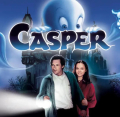
This Casper review focuses on the 1995 live-action film directed by Brad Silberling, starring Christina Ricci as Kat Harvey and Bill Pullman as her father, Dr. James Harvey. The story begins when spoiled heiress Carrigan Crittenden discovers that the old Whipstaff Manor may contain hidden treasure. After several failed attempts to remove the ghosts occupying the house, she hires Dr. Harvey, a therapist who claims he can communicate with spirits and help them complete their unfinished business.
James arrives with Kat, who has grown tired of moving from place to place while her father pursues paranormal work. Inside Whipstaff, they meet Casper, a kind ghost who quickly develops affection for Kat, along with his disruptive uncles Stretch, Stinkie, and Fatso. What follows is part supernatural comedy, part family drama, and part melancholy story about grief, memory, and the impossible desire to reverse death.
The film is uneven. The humor can become noisy, the villains are exaggerated, and the rules of its supernatural world change according to the needs of the current scene. Yet Casper remains emotionally effective because it never treats loneliness as a trivial problem. Beneath the jokes is a sincere question: what does it mean to belong when you no longer have a life to return to?
Casper: A Gentle Spirit Defined by Memory
Casper is immediately different from the other ghosts in Whipstaff Manor. Stretch, Stinkie, and Fatso enjoy frightening people, destroying property, and treating the living as temporary entertainment. Casper wants conversation, friendship, and some form of ordinary connection.
His kindness could have made him bland, but the film gives him enough sadness and curiosity to remain engaging. He is friendly because he understands isolation. He does not approach Kat as someone entitled to her attention; he approaches her as someone who has almost forgotten what it feels like to be seen.
Malachi Pearson’s voice performance gives Casper warmth without making him sound overly childish. He often speaks with quiet hesitation, particularly when discussing his past or trying to understand whether Kat could ever think of him as more than a ghost.
The character’s emotional depth grows when he begins recovering memories of his life. He remembers being a boy named Casper McFadden, living with his inventor father, becoming ill after playing outside, and dying before he had the chance to grow up. The revelation changes the film’s tone because it reminds me that his ghostly appearance is not his true identity. It is the form left behind after a child’s life ended.
Casper’s desire to become human again is therefore more than a romantic wish. He wants to experience the future that was taken from him. He wants to dance, feel warmth, and stand beside Kat without the barrier created by death.
Kat Harvey: A Teenager Tired of Living Beside Grief
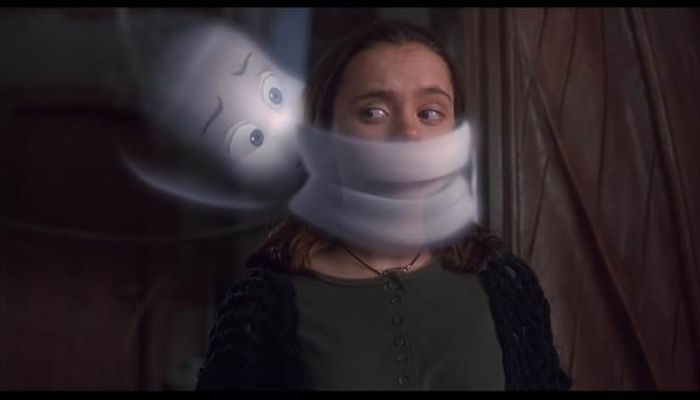
Christina Ricci gives Kat a mix of intelligence, sarcasm, loneliness, and emotional restraint. She has spent years following her father from one supposedly haunted location to another, rarely staying anywhere long enough to build lasting friendships.
Kat’s frustration with James is understandable. He presents their constant travel as meaningful work, but she experiences it as instability. She wants school, friends, privacy, and a life not entirely organized around his grief.
Her relationship with Casper develops naturally because both characters feel separated from ordinary life. Kat is alive, yet she often feels like an outsider. Casper is surrounded by other spirits, yet he remains emotionally alone. Ricci avoids turning Kat into a passive object of Casper’s affection. She questions him, becomes irritated, makes independent decisions, and gradually learns to trust him. Her kindness grows from recognition rather than instant sentimentality.
Kat’s school subplot gives the film a familiar teenage structure. She wants acceptance from classmates and becomes involved in planning a party at Whipstaff. These scenes are lighter than the central grief material, though they occasionally feel disconnected from the film’s stronger emotional ideas. Her best moments come when she stops treating Casper as a supernatural curiosity and begins responding to him as a person. The film’s romance remains innocent and bittersweet because both characters understand that the connection cannot become ordinary.
Dr. James Harvey: Helping Ghosts While Avoiding His Own Loss
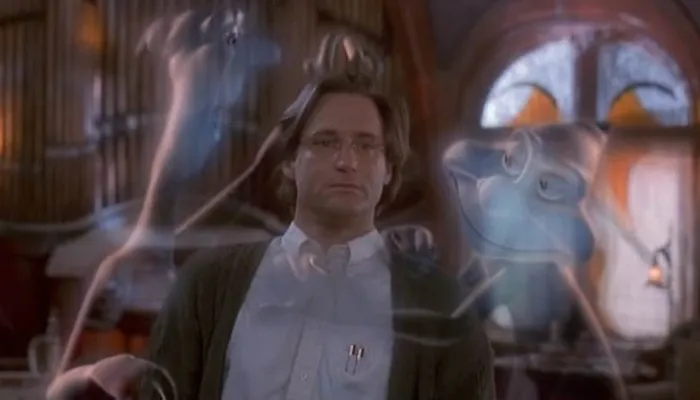
Bill Pullman plays James Harvey with enough warmth and awkward optimism to prevent the character from becoming purely irresponsible. He believes ghosts remain because they have unresolved emotional problems and describes himself as a therapist for the dead.
His work is driven by personal grief. James hopes to find the spirit of his late wife, Amelia, and his professional language often hides how desperate that search has become. Every haunted house offers another possibility that she may be waiting nearby.
This creates conflict with Kat, who feels that her father has allowed a person who died to control the lives of those still living. James believes he is preserving love. Kat experiences his obsession as abandonment.
Pullman handles the shift between comedy and sadness effectively. James can become physically ridiculous during encounters with the Ghostly Trio, then reveal genuine emotional exhaustion in quieter conversations.
The film eventually forces him to confront the difference between remembering Amelia and refusing to continue without her. His arc parallels Casper’s in an interesting way: both characters want to reverse death, but both must recognize that love cannot be preserved by refusing change.
Stretch, Stinkie, and Fatso: Chaos With Occasional Affection
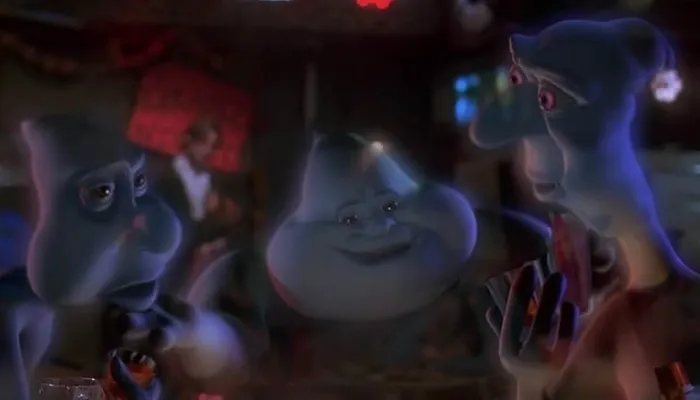
The Ghostly Trio provides most of the broad comedy. Stretch is controlling and aggressive, Stinkie is defined by disgusting jokes, and Fatso responds to nearly everything through appetite and physical exaggeration. Their scenes involve transformation, property destruction, loud arguments, and constant attempts to frighten or humiliate the living. The humor is aimed primarily at younger viewers and can become repetitive, particularly when several jokes depend on noise or bodily functions.
Even so, the three ghosts are more than unrelated comic obstacles. They behave like a dysfunctional family. They insult Casper, exploit his kindness, and resist emotional sincerity, yet they also remain connected to him. The film occasionally reveals that their cruelty is partly defensive. They have built identities around being unpleasant because acknowledging loneliness would require vulnerability. Casper’s gentleness threatens the rules they use to avoid that vulnerability.
The trio becomes more sympathetic when they attempt to help James after his death. Their methods remain chaotic, but the sequence shows that they are capable of loyalty when the situation becomes serious. I still found them exhausting during parts of the film. A more restrained use of their comedy would have made their later moments of concern feel stronger.
Whipstaff Manor: A Haunted House Full of Mechanical Secrets
Whipstaff Manor is one of the film’s most memorable elements. The building combines Gothic architecture, enormous rooms, hidden passages, dusty furniture, dangerous staircases, strange machinery, and the remains of Casper’s father’s inventions. The house feels both supernatural and mechanical. Ghosts move through walls, but many mysteries are connected with physical devices created by J.T. McFadden. This mixture gives the setting a distinctive identity beyond the usual haunted mansion.
Rooms are exaggerated enough to support visual comedy while retaining enough darkness to feel mysterious. High ceilings, long corridors, broken objects, and cold lighting communicate years of abandonment. The secret laboratory beneath the house changes the story from simple ghost removal into a search for resurrection technology. The Lazarus machine represents the film’s central temptation: the idea that death may be reversed if the right mechanism can be found.
The production design is rich enough that I wanted more time exploring the manor’s history. Several spaces appear briefly and disappear before their details become important. Whipstaff works as both home and prison for Casper. It contains his memories and the possibility of becoming human again, but it also represents the place where he has remained stuck for decades.
Carrigan Crittenden and Dibs: Villains Built for Cartoon Logic
Cathy Moriarty plays Carrigan Crittenden as selfish, impatient, and theatrically greedy. She inherits Whipstaff but dismisses it until learning that a treasure may be hidden inside. From that moment, every decision is driven by ownership.
Eric Idle’s Dibs functions as her assistant, verbal opponent, and eventual competitor. Their relationship depends on insults, manipulation, and the expectation that either would betray the other immediately if the reward were large enough. The villains fit the film’s comic tone, but they are less interesting than the Harvey family or Casper. Carrigan’s greed is direct, and Dibs rarely develops beyond nervous opportunism.
Their attempt to use the Lazarus machine gives the final act momentum. Carrigan’s transformation into a ghost allows the film to turn her personality into visual form, making her anger and entitlement physically larger. The subplot remains entertaining, though it sometimes feels like it belongs to a broader comedy than the emotional ghost story surrounding it. The film moves abruptly from sincere grief to cartoon villainy without always smoothing the transition.
The Lazarus Machine: Resurrection as a Dangerous Shortcut
The Lazarus machine is the film’s most important fantasy device. Created by Casper’s father, it was intended to restore the dead to life. The machine requires a limited amount of special fluid, creating a moral question about who deserves the opportunity to return. For Casper, the machine represents everything he lost. Becoming human would allow him to move beyond memory and experience the world directly. His desire is sympathetic because he never had the chance to complete childhood. For James, resurrection represents another form of refusing grief. If the machine can restore one person, it becomes easy to imagine using it to bring Amelia back.
For Carrigan, the machine is simply another tool for possession. Her interest in returning to life contains no larger emotional insight. The device works symbolically because every major character approaches death differently. Casper longs for life, James longs for his wife, Kat wants her father to remain present, and Carrigan wants control. The limitation of the fluid forces a choice. The film’s emotional success depends on Casper making the generous decision to sacrifice his own opportunity for James. That act proves his kindness more clearly than any speech could.
The Dance Scene: One Night of Being Human
The ballroom sequence is the emotional highlight of Casper. Through Amelia’s intervention, Casper is allowed to become human until ten o’clock, giving him a brief chance to attend Kat’s party in physical form. Devon Sawa appears as the human Casper and brings a calm, vulnerable presence to the scene. The transformation could have felt like a simple romantic reward, but the film treats it as something more painful. Casper is not becoming human permanently. He is borrowing a few minutes of the life he should have had.
The dance between Casper and Kat works because it remains gentle. The scene is not presented as a dramatic adult romance. It is about two lonely young people experiencing one normal moment together. James Horner’s music gives the sequence warmth and sadness, allowing the audience to feel the approaching deadline even while the characters smile. The line asking whether Kat can keep Casper becomes memorable because it expresses the film’s central impossibility. She can remember him, care about him, and give him one meaningful night, but she cannot protect him from returning to the form defined by his death.
Visual Effects: Ambitious, Expressive, and Clearly From Their Era
Casper was an important early example of computer-generated characters interacting extensively with live-action performers. The ghosts needed to move through physical environments, transform their bodies, touch objects, and express recognizable emotion. The effects remain impressive in concept, particularly Casper’s facial animation. His eyes, posture, and movement communicate softness and vulnerability in ways the more exaggerated trio does not.
Some textures and lighting now appear artificial. The ghosts can look separated from the rooms around them, especially during brighter scenes. Their transparency and physical interaction are not always consistent. The visual limitations rarely destroy the emotional scenes because the performances establish clear personalities. Casper remains sympathetic even when the rendering shows its age.
The Ghostly Trio uses effects more aggressively, stretching faces and bodies into impossible shapes. These transformations support the cartoon humor but also make several sequences visually busy. The film’s practical sets have aged better than many digital elements. Whipstaff’s physical detail gives the computer-generated characters a strong world to inhabit.
Music and Emotional Atmosphere
James Horner’s score is one of the film’s strongest features. It combines mystery, playfulness, warmth, and sadness without treating the story as either pure comedy or serious tragedy.
The central themes give Casper emotional dignity. The music reminds me that his friendly behavior grows from loss, not merely from a cute personality. Quieter scenes involving Kat, James, and Amelia benefit especially from the score. Horner allows grief to remain present without overwhelming the family-friendly tone. The ballroom music gives the dance sequence much of its lasting emotional power. The scene could easily have become overly sentimental, but the melody keeps it sincere.
The score occasionally pushes emotion strongly, though that approach suits a film comfortable with direct feelings. Casper does not aim for subtle realism. It wants the audience to understand when a moment matters.
Humor and Tonal Imbalance
The film moves between emotional family drama and broad supernatural comedy. At its best, the contrast prevents the story from becoming too heavy. At its weakest, one loud joke interrupts a sincere scene before the emotion has settled.
The trio’s physical comedy dominates the lighter material. Some transformations remain creative, while others depend on dated references or predictable gross-out humor. James’s encounters with the ghosts create several amusing scenes because Bill Pullman reacts with believable frustration rather than attempting to match their cartoon energy.
Carrigan and Dibs contribute verbal comedy, though their constant insults become repetitive. The villains are entertaining in short bursts but less effective during extended scenes. I preferred the film whenever humor emerged from character relationships rather than random transformation. Casper attempting to communicate normally inside an abnormal world is funnier and more touching than another object being thrown across a room.
Grief, Memory, and the Desire to Move Forward
Casper is fundamentally a story about characters who cannot release the dead. Casper remains attached to his lost childhood, James remains attached to Amelia, and Whipstaff remains filled with the unfinished lives of its ghosts.
The film does not suggest that grief should disappear. Amelia’s appearance near the end confirms that love continues, but she also tells James that Kat needs him in the present. This distinction gives the story maturity. Remembering someone is not the same as allowing their absence to prevent every future relationship.
Casper’s situation is more complicated because he is literally present. He can speak, feel, and remember, yet he cannot resume the life he lost. His existence challenges the idea that moving forward means forgetting. The ending offers no complete solution. Casper remains a ghost, but he is no longer entirely unseen or unloved. James accepts that his wife’s memory should guide him rather than control him.
Pacing and Story Structure
The opening introduces Carrigan, Whipstaff, and the ghosts efficiently. James and Kat then enter the house, allowing the central relationships to develop before the treasure and Lazarus plot becomes dominant.
The middle section is less focused. School scenes, ghost therapy, treasure clues, family conflict, villain comedy, and laboratory discovery compete for attention. The film regains emotional clarity once James dies and Casper must decide how to use the Lazarus machine. From that point, the story’s themes and plot finally become the same conflict.
The final party contains several rapid developments, including Carrigan’s return, Amelia’s appearance, Casper’s transformation, and the dance. These moments are memorable but crowded together. A slightly longer or more disciplined version could have given Amelia and Casper’s human form more room. The film often moves away from its best emotional ideas quickly because another comedy sequence is waiting.
Who Should Watch Casper?
Casper is ideal for viewers who enjoy family ghost stories, 1990s fantasy films, haunted-house settings, gentle romance, supernatural comedy, and emotional stories about grief. It works particularly well during the Halloween season for audiences wanting atmosphere without severe horror. Younger viewers may enjoy Casper, the trio’s transformations, Whipstaff Manor, and the school party. Some may find the discussion of death, ghostly imagery, or Carrigan’s transformation unsettling.
Adults may connect more strongly with James’s grief and the sadness behind Casper’s friendliness. The film’s emotional themes become more noticeable with age. Anyone seeking consistent supernatural rules or restrained comedy may struggle. Casper belongs to a style of family filmmaking comfortable with sudden tonal changes and exaggerated performances.
My Rating
I give Casper a personal rating of 8.5/10. The film is messy, sentimental, and tonally uneven, but its emotional core remains surprisingly strong. Casper’s loneliness, Kat’s need for stability, and James’s refusal to release Amelia create a story about people living beside absence in different ways.
The comedy does not always age well, and the visual effects occasionally reveal the technology behind them. Yet Whipstaff Manor, James Horner’s music, Christina Ricci’s performance, and the brief transformation of Casper into a human give the film a lasting identity.
What stays with me most is the sadness of Casper’s kindness. He is friendly not because he has never experienced pain, but because he knows exactly what isolation feels like. The film allows him one dance, one kiss, and one evening of being seen as the boy he once was. It cannot give him his life back, but it gives him something almost as important: a person who chooses to remember him.
Pros

- Heartwarming and nostalgic narrative that appeals to all ages
- Innovative special effects that were revolutionary for its time
- Strong character development with engaging performances
- A unique blend of humor and emotion that transcends typical ghost stories
- Widely accessible through various online streaming and download platforms
- Family-friendly content that balances spooky elements with sentimentality
Cons

- Special effects may appear outdated by modern standards
- Pacing can be slow for viewers accustomed to faster narratives
- Some plot elements might seem overly simplistic compared to contemporary ghost stories

Leave a comment
Your comment is awaiting moderation. We save your draft here
0 Comments