





A Familiar Toy Box Confronts a Completely Different Childhood
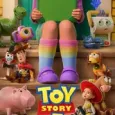
Toy Story 5 begins with a fear that feels more serious than another dangerous journey across a bedroom floor. Woody, Buzz, Jessie, and their friends have survived moving houses, changing owners, donation boxes, daycare rooms, antique stores, and the possibility of being forgotten. This time, the threat does not look like an angry toy or a careless adult. It glows, speaks politely, answers questions instantly, and holds Bonnie’s attention without requiring imagination. Lilypad, a frog-shaped tablet, enters the room and quietly changes the meaning of play.
This Toy Story 5 review focuses on how Pixar returns to a franchise that already appeared to have several natural endings and finds a modern anxiety capable of reopening it. The film asks what traditional toys can offer when a child receives entertainment, education, communication, and endless novelty from one screen. That question could easily have produced a simplistic lecture about technology. Director Andrew Stanton instead builds the conflict around attention, loneliness, social confidence, and the uncomfortable truth that children do not owe their toys permanent devotion.
The fifth film brings Woody back into Bonnie’s world after his departure with Bo Peep and the travelling rescue group. Buzz remains loyal to the room, while Jessie has become its sheriff and practical leader. Their reunion is enjoyable, but the story does not pretend that everything can return to the old arrangement. Woody has changed through freedom, Jessie has accepted responsibility, and Bonnie is growing into a child whose needs cannot be solved through repeating the same games forever.
Toy Story 5 is funny, visually polished, and emotionally sincere. It is also clearly aware that its own existence may appear commercially unnecessary. The film occasionally repeats ideas the franchise has explored before, brings back familiar characters partly for nostalgic comfort, and gives several members of Bonnie’s room little more than brief comic appearances. Its strongest choice is allowing Jessie rather than Woody to carry much of the emotional weight. Her concern about being abandoned by a child connects the new technological conflict with a fear she has carried since Toy Story 2.
Jessie: A Leader Who Cannot Control Growing Up
Jessie has become the sheriff of Bonnie’s room, with Buzz serving as her dependable deputy. She organizes the toys, watches Bonnie’s changing routines, and treats playtime as something that can be protected through enough energy and planning. Joan Cusack once again gives her warmth, speed, and emotional intensity, but this film places a heavier responsibility behind those familiar qualities.
Jessie recognizes the problem before the others. Bonnie spends less time building stories with physical toys and more time interacting with Lilypad. At first, Jessie responds as a leader facing a temporary disruption. She plans activities, encourages the group, and assumes that one successful play session can restore the earlier relationship.
Her determination gradually becomes desperation. Jessie does not only fear losing her position. Emily’s abandonment remains part of her emotional memory, and Bonnie’s growing distance activates the belief that every loving relationship eventually ends with a toy placed somewhere dark and forgotten. The film does not repeat the earlier flashback directly for easy sadness. It allows Jessie’s behavior to reveal that old pain has never completely disappeared.
This makes her conflict with Lilypad more complicated than a competition between old and new entertainment. Jessie is not objectively evaluating Bonnie’s needs. She is defending herself from an experience she cannot bear to repeat. Her attempts to control playtime occasionally prevent her from listening to what Bonnie is actually struggling with.
Jessie’s strongest development comes when she begins separating love from possession. Being important to Bonnie does not mean controlling every activity or preventing change. A toy can support a child without remaining the center of that child’s attention. That lesson sounds similar to themes from earlier films, but Jessie’s history gives it a different emotional texture.
Woody’s Return: Helpful Friend or Symbol of an Earlier Story?
Woody begins the film away from Bonnie’s room, working with Bo Peep and the toy-rescue group. His new life gives him movement, choice, and a purpose not dependent on one owner. A call for help brings him back, reuniting him with Buzz and the old gang.
Tom Hanks gives Woody the same recognizable concern and natural leadership, but the character now carries a different confidence. He is no longer afraid that losing one child will make him meaningless. His experiences outside a bedroom allow him to recognize possibilities Jessie cannot yet imagine.
The film wisely avoids making Woody the automatic leader again. He offers advice, participates in the rescue, and works beside Buzz, but Jessie’s authority remains important. Their occasional disagreement reflects two different forms of experience. Woody understands life after an owner, while Jessie understands Bonnie’s current room more completely.
His return still creates a structural problem. Toy Story 4 gave Woody a clear departure, and bringing him back risks weakening that decision. The film attempts to preserve the earlier ending by treating this as a temporary mission rather than a permanent reversal. Even so, some scenes rely heavily on the emotional comfort of seeing Woody and Buzz together again.
Woody works best when he supports Jessie without taking her story away. His presence becomes a reminder that change may hurt without ending a toy’s capacity for purpose. He cannot promise that Bonnie will return to her old habits. He can show Jessie that existence continues beyond one imagined future.
Buzz Lightyear: Loyalty in a Supporting Role
Buzz is now deputy to Sheriff Jessie, a role that suits his devotion to structure and responsibility. Tim Allen maintains the character’s earnestness, turning even ordinary bedroom management into something resembling an official mission.
Buzz supports Jessie but notices when her determination becomes unhealthy. His loyalty does not require agreeing with every plan, and several of his best scenes involve quietly challenging her assumptions rather than delivering a dramatic speech.
The film also introduces a comic complication involving multiple commemorative Buzz Lightyear figures stuck in toy mode. Their search for Star Command recalls Buzz’s original confusion while creating a group of highly confident obstacles who all believe they understand the mission better than the real Buzz.
The sequence is funny and technically energetic, though it occasionally feels like a nostalgic idea expanded because audiences recognize it instantly. The duplicates allow Buzz to confront an earlier version of himself, but the emotional insight remains lighter than Jessie’s storyline.
Buzz’s friendship with Woody still carries warmth. Their reunion does not require a long explanation because decades of shared history are visible in the performances. I appreciated that the film treats them as old friends comfortable enough to work separately rather than forcing another conflict over leadership.
Lilypad: A New Kind of Toy With a Different Definition of Care
Lilypad is not presented as a simple electronic villain. Voiced by Greta Lee, the tablet speaks with calm confidence and appears genuinely convinced that she understands what is best for Bonnie. She can provide games, information, creative tools, social connections, and immediate responses in ways the physical toys cannot match.
Her threat comes partly from efficiency. Traditional toys require Bonnie to invent voices, stories, rules, and worlds. Lilypad can generate options instantly and adjust them according to her preferences. She removes the empty spaces where imagination once had to work.
The film avoids claiming that every digital activity is harmful. Bonnie uses Lilypad while dealing with social uncertainty and changes in her friendships. The device gives her comfort and a manageable space when direct interaction feels difficult.
Lilypad’s flaw is her belief that measurable engagement equals emotional well-being. She can track attention, offer solutions, and keep Bonnie occupied, but she does not fully understand the difference between distraction and connection. Her recommendations become increasingly controlling because she interprets continued use as evidence that her strategy is correct.
This makes her an effective Pixar antagonist without requiring obvious malice. She does not want Bonnie to suffer. She wants to optimize her experience, and that objective becomes dangerous when it leaves no room for boredom, uncertainty, independent imagination, or relationships that cannot be measured through the screen.
The character occasionally speaks too directly about the film’s theme, especially during later confrontations. Her visual design and behavior already communicate much of the conflict. The story is stronger when Lilypad remains persuasive rather than becoming an obvious warning label.
Bonnie: A Child Whose Changing Needs Drive the Story
Bonnie is older, more independent, and increasingly interested in the social world outside her bedroom. She still cares about her toys, but affection no longer guarantees constant play. Her attention moves between Lilypad, school, new interests, and uncertainty about fitting in.
The film treats her development with more sympathy than I expected. Bonnie is not punished for enjoying technology, and she is not portrayed as ungrateful because Woody, Jessie, and the others no longer occupy every afternoon. Growing up naturally changes how she relates to objects that once defined her imagination.
Her connection with Blaze, a confident child living near a ranch, gives the story a human relationship parallel to the toys’ conflict. Jessie’s mission gradually becomes connected with helping Bonnie form a friendship rather than merely convincing her to return to old play patterns.
This is an important distinction. The toys discover that their role may not be to compete successfully with Lilypad. They may need to create conditions where Bonnie feels secure enough to engage with other people and use imagination on her own terms.
Bonnie remains less fully developed than Andy was across the earlier films because much of her emotional life is observed from the toys’ perspective. I understood her anxiety, but several transitions could have used more direct time with her away from the bedroom.
Blaze and a Different Relationship With Toys
Blaze is a technologically confident child who also retains an interest in animals, model horses, and occasional imaginative play. She represents a more balanced relationship between physical objects and digital tools than either side initially expects.
Her home near a ranch gives the film a new visual environment, including open land, sheds, animals, and equipment far removed from Bonnie’s familiar room. The setting provides Jessie and Bullseye with a particularly meaningful adventure.
Blaze does not appear solely to teach Bonnie a lesson. She has her own confidence, interests, and emotional boundaries. Her friendship with Bonnie develops through shared curiosity rather than one perfect social interaction.
The character could have received more depth, but her presence prevents the film from presenting technology as one universal experience. Children can use screens while still creating stories, caring about physical objects, and forming relationships. The problem is not the existence of a device; it is what happens when one system attempts to replace every other form of engagement.
Bullseye: Loyalty Without Dialogue
Bullseye has always communicated through movement, eyes, and complete devotion. Toy Story 5 gives him a larger role beside Jessie, allowing their bond to carry part of the adventure without verbal explanation.
When Jessie and Bullseye become separated from the group, they encounter a real horse. The comparison is both comic and emotionally useful. Bullseye is shaped like a horse and behaves like one, yet he is still a toy whose entire identity is connected with being available for a child’s story.
The real animal does not understand playtime or toy loyalty. This forces Bullseye’s role to appear strange from another perspective, while also showing the sincerity of his devotion.
His sequences provide physical humor and quiet emotion. The animators use small movements beautifully, especially when Bullseye attempts to understand an animal that resembles him without sharing his purpose.
Smarty Pants and the Forgotten Technology Behind New Technology
Smarty Pants is a toilet-training technology toy who has spent years abandoned in a shed after his original purpose ended. Voiced by Conan O’Brien, he brings fast sarcasm and a slightly exhausted understanding of what happens when children outgrow devices marketed as essential.
His presence complicates the conflict with Lilypad. Technology is not permanently new. Every device eventually becomes outdated, loses power, or gets replaced by a more capable model. Smarty understands abandonment from a perspective the traditional toys initially fail to consider.
The character’s jokes often depend on his embarrassing original function, and the film repeats that idea more than necessary. He becomes more interesting when discussing obsolescence and the way technical products are designed around temporary usefulness.
Smarty helps the toys navigate systems they do not understand, giving him practical importance beyond comic relief. He also allows Lilypad’s confidence to be challenged by another digital object rather than only by nostalgic physical toys.
Forky and Karen Beverly: A Small Comic Story About Chosen Purpose
Forky returns fully comfortable with being a toy, which remains amusing considering how strongly he once identified as trash. Tony Hale gives him the same anxious sincerity, while his relationship with Karen Beverly adds a small domestic comedy to Bonnie’s room.
Their planned marriage reflects the franchise’s increasingly broad definition of toy identity. They were created from disposable materials, given life through a child’s imagination, and now treat that existence as meaningful enough to build a relationship around.
The subplot is charming but brief. It provides comic interruptions rather than a major connection with the technology theme. Forky could have offered an interesting perspective on whether an object’s value depends on traditional design, but the film mostly uses him for familiar reactions.
Toys Versus Technology: A Conflict Without a Simple Winner
The central idea is presented as “Toy meets Tech,” but the film is more thoughtful when it refuses to treat the two categories as moral opposites. Traditional toys encourage physical imagination, cooperation, and stories without predetermined endings. Digital devices can provide knowledge, creativity, accessibility, and communication.
The conflict appears when Lilypad begins controlling Bonnie’s attention rather than supporting her choices. Constant engagement removes moments of boredom, and boredom has historically been one of the spaces where children invent their own games.
Jessie makes a similar mistake from the opposite direction. She attempts to force traditional play because she assumes the older form must be healthier. Both characters believe they know what Bonnie needs without listening carefully enough.
The film’s resolution argues for balance, though it occasionally reaches that conclusion through dialogue more directly than necessary. Its strongest evidence comes from Bonnie and Blaze using both technology and physical toys while building a shared activity neither side could have produced alone.
I appreciated that Pixar did not present one destroyed tablet as the solution. Lilypad remains part of Bonnie’s life, but her authority is reduced. The toys also accept that they cannot demand permanent priority.
Animation: Familiar Characters in a More Detailed World
Toy Story 5 continues Pixar’s tradition of using every sequel to demonstrate how far computer animation has advanced since 1995. Woody’s fabric, Jessie’s hair, Buzz’s plastic, Bullseye’s surfaces, and the dust inside forgotten storage spaces contain an extraordinary level of detail.
Lilypad’s screen and casing are rendered with controlled smoothness that contrasts with the physical imperfections of older toys. Reflections move across her surface, fingerprints appear, and light from the display affects nearby characters.
The ranch sequences are particularly impressive. Grass, weather, animal movement, wood, fabric, and open sunlight give the film a visual scale different from the familiar bedroom environments.
Pixar’s technical polish can occasionally become almost invisible because audiences expect it. The most effective animation remains character acting. Jessie’s attempts to hide panic, Woody’s quiet recognition, and Buzz’s reactions to the duplicate figures depend on subtle timing rather than surface detail.
The action sequences are clear and energetic, though the film sometimes places too many characters inside one rapidly moving environment. A large rescue involving devices, animals, and several toy groups becomes visually crowded before the emotional objective returns to focus.
Randy Newman’s Music and a New Emotional Voice
Randy Newman returns with themes that immediately reconnect the film to the wider franchise. Familiar melodies appear without dominating every scene, providing continuity whenever Woody, Buzz, and Jessie reunite.
The score uses lighter electronic textures around Lilypad, creating a contrast with the warmer orchestral identity of the toys. The distinction is clear without making the device sound automatically sinister.
The new original song associated with Jessie strengthens her emotional position as the film’s central character. Its country influence connects naturally with her history and visual identity while expressing the fear of recognizing that a relationship may be changing before either side is ready.
The soundtrack occasionally leans heavily on nostalgia, particularly during scenes designed around Woody and Buzz. Those musical references work emotionally, but they also remind me how often the film depends on affection built by earlier installments.
Humor: Old Characters, New Problems
Toy Story 5 finds comedy in the toys’ inability to understand touchscreens, notifications, cloud storage, charging cables, and digital assistants. These jokes are predictable but often effective because the characters respond according to established personalities.
Buzz treats every interface like a control system requiring official procedure. Rex becomes anxious about updating software. Hamm immediately recognizes the commercial implications. Forky remains confused by the distinction between trash and expensive technology.
The duplicate Buzz figures create some of the largest physical comedy. Their synchronized confidence becomes increasingly chaotic as each receives different information and interprets the others as potential errors.
Smarty Pants adds adult-oriented sarcasm, while several visual jokes involving the ranch work without dialogue. The humor is generally gentler than in some earlier films, relying more on character familiarity than surprise.
A few jokes feel included mainly to ensure every returning toy receives one recognizable moment. The ensemble is now so large that brief appearances can resemble attendance checks rather than meaningful participation.
The Returning Ensemble: Comfort With Limited Space
Rex, Hamm, Slinky, Mr. Pricklepants, Trixie, Dolly, Forky, and other familiar toys return, but the story cannot develop all of them equally. Most support the room’s reaction to Lilypad or participate in the larger rescue. Their presence gives Bonnie’s room continuity. It would feel strange for Jessie and Buzz to face the new problem without the community established in Toy Story 3 and Toy Story 4.
The limitation is that several characters receive almost no emotional material. They deliver jokes, react to technology, and then disappear behind the central group. Fans may enjoy seeing them while wishing the film had found a clearer purpose for each. Bo Peep’s role is similarly limited because Woody’s return is temporary and tied to a specific mission. This protects his earlier choice but leaves their relationship mostly outside the film’s emotional center.
Pacing and Story Structure
The first act establishes Jessie’s leadership, Bonnie’s growing attachment to Lilypad, and the changing rhythm of the bedroom. This material is patient enough to make the threat emotional before it becomes physical.
The middle section divides the group. Jessie and Bullseye move into a separate adventure, Woody and Buzz investigate missing friends, and Smarty Pants becomes connected with the technological systems surrounding Lilypad. This structure creates variety, though it occasionally makes the film feel like several connected specials rather than one focused journey. The Jessie storyline carries the emotional purpose, while the Buzz duplicates and Forky material provide comic side routes.
The final act reunites the major threads around Bonnie’s social difficulty and Lilypad’s attempt to control the situation. The scale becomes large, but the resolution returns appropriately to one child making a genuine connection. The film runs slightly longer than its story requires. Several action beats could be shortened without losing meaning, particularly during the technological chase near the climax.
Growing Up Without Treating Childhood as a Failure
Every Toy Story film has asked what happens when a child changes. Toy Story 5 approaches the question from a period when childhood itself has changed. Screens, connected devices, and endless digital content now compete with physical play much earlier and more consistently.
The film does not argue that Bonnie’s childhood has become less real because it includes technology. Her emotions, loneliness, and friendships remain genuine. The toys must stop measuring her growth against Andy’s experiences.
This is one of the sequel’s smartest ideas. Woody and the others carry an understanding of childhood shaped by an earlier owner and a different period. Bonnie cannot be expected to reproduce Andy’s relationship with them. Jessie’s acceptance becomes meaningful when she stops asking how to restore the past and begins asking how to remain helpful in the present. A toy’s purpose may change from leading every story to waiting patiently for the moment a child needs tactile comfort or shared imagination.
Is a Fifth Toy Story Necessary?
The film knows that many viewers will ask this question. Toy Story 3 provided a powerful farewell to Andy, while Toy Story 4 gave Woody a new life beyond one child. Another sequel risks turning emotional endings into temporary pauses.
Toy Story 5 justifies itself partly through its technological theme and Jessie’s expanded role. The franchise has always explored obsolescence, and digital entertainment is a natural modern extension of that concern.
It does not completely escape the feeling of commercial continuation. Woody and Buzz return because their presence carries enormous audience affection, and several scenes are constructed around the pleasure of seeing familiar combinations again. The story earns most of its existence through Jessie. Her leadership, fear, and eventual understanding provide an arc that earlier films did not complete. Without that shift in perspective, the technology conflict would feel much thinner.
Who Should Watch Toy Story 5?
Toy Story 5 is an easy recommendation for families, Pixar fans, viewers who grew up with Woody and Buzz, and anyone interested in stories about technology changing childhood. Younger audiences can enjoy the adventure and comedy without understanding every concern about attention or obsolescence.
Adults may respond more strongly to Jessie’s fear of becoming unnecessary and to the film’s refusal to promise permanent relevance. Parents may also recognize the difficulty of balancing screens, imagination, education, and social connection without treating one tool as the complete problem.
New viewers can follow the main plot, but much of the emotional power depends on knowledge of Jessie’s abandonment, Woody’s departure, Buzz’s history, and Bonnie’s earlier relationship with the toys. Anyone who believed Toy Story 4 should remain the final chapter may find Woody’s return distracting. The film makes a reasonable case for continuing, though it cannot remove every sign that the franchise had already said goodbye more than once.
My Rating
I give Toy Story 5 a personal rating of 8.5/10. Pixar finds a relevant new challenge for its characters and wisely places Jessie at the emotional center. Her fear of losing Bonnie connects naturally with her history, while Lilypad creates a conflict more nuanced than toys simply opposing a new device.
The film does not fully solve the problem of continuing a story that has already delivered several excellent endings. Woody’s return is comforting but slightly damaging to the independence he chose in Toy Story 4. Several returning characters also exist mainly to remind me that they are still present.
What makes the sequel worthwhile is its understanding that children, toys, and technology are all capable of changing. Bonnie does not need to reject her tablet to prove that imagination remains alive. Jessie does not need to remain Bonnie’s favorite forever to prove that their relationship mattered. Woody does not need to return permanently to demonstrate that he still cares.
Toy Story 5 is ultimately about learning that relevance is not the same as constant attention. A toy can spend days untouched and still become important during one lonely afternoon. The film recognizes that childhood now contains screens alongside plastic, fabric, cardboard, and invented voices. Its most hopeful idea is that one form of play does not need to erase the others.
Pros

- Compelling blend of nostalgia and modern storytelling.
- Masterful character development for both familiar favorites and new introductions.
- Stunning visual effects and intricate attention to detail in the animation.
- Humorous moments intertwined with heartfelt emotional scenes.
- Innovative narrative that explores contemporary themes and legacy.
- Wide accessibility with multiple streaming and downloading options for family viewing.
Cons

- Some plot points may feel overly sentimental and slow for viewers preferring high-paced action.
- Certain visual choices, while artistic, can sometimes distract from the narrative itself.
- A few subplots appear underdeveloped compared to the film's primary character arcs.

Leave a comment
Your comment is awaiting moderation. We save your draft here
0 Comments