


A Bigger Mario Adventure That Sometimes Moves Too Fast to Feel Magical
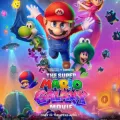
The Super Mario Galaxy Movie wastes almost no time before launching Mario, Luigi, Peach, and Toad beyond the Mushroom Kingdom. The familiar pipes, castles, power-ups, and kart-inspired machinery remain present, but the scale has changed dramatically. Planets hang above endless star fields, gravity bends around tiny worlds, Lumas glow through deep space, and every new destination appears designed to introduce another recognizable piece of Nintendo history before the previous one has fully settled.
My experience with The Super Mario Galaxy Movie was energetic, visually impressive, and occasionally exhausting. The film contains the color, movement, musical references, and cheerful character interactions expected from an Illumination production based on Mario. It also inherits the first movie’s greatest weakness: a reluctance to slow down long enough for its characters and locations to develop emotional weight.
This The Super Mario Galaxy Movie review examines a sequel that is clearly more ambitious than The Super Mario Bros. Movie. It introduces Rosalina, Bowser Jr., Yoshi, the Lumas, new galactic kingdoms, and a conflict that turns Bowser from the central villain into an uneasy participant in a much larger family problem. The movie constantly searches for the next visual surprise, and younger viewers may find that speed irresistible. I often enjoyed the ride while wishing the story trusted wonder more than momentum.
The strongest material involves Rosalina’s connection with Princess Peach, Bowser Jr.’s desperate loyalty to his father, and Mario’s attempt to remain useful in a conflict far beyond the Brooklyn problems he once understood. The weakest sections treat entire planets like brief amusement-park stops, giving me enough detail to recognize them but not enough time to care what happens there.
Mario: A Hero Trying to Keep Up With a Larger Universe
Chris Pratt’s Mario remains confident, enthusiastic, and slightly overwhelmed by the worlds surrounding him. He has become comfortable inside the Mushroom Kingdom, but the galactic conflict immediately places him in unfamiliar territory. Pipes and platforms still behave according to game logic, yet space introduces new rules involving gravity, star travel, and environments that can change direction without warning.
Mario’s instinct is still to act before he fully understands the problem. That decisiveness makes him a useful hero, though it also leads the group into several avoidable dangers. His courage is less about having no fear and more about believing that movement is preferable to helpless observation.
The film tries to give Mario a personal insecurity connected with the size of the mission. He has already helped save one kingdom, but Rosalina and Peach understand cosmic history he has never encountered. For the first time since arriving in this world, he is not automatically the most important person in the room.
This could have produced a deeper character arc about accepting a supporting role. The movie touches the idea but rarely explores it quietly. Mario usually proves his value through another physical challenge before the insecurity can become emotionally complicated.
Pratt’s performance remains warm and accessible. His Mario works best during scenes with Luigi, where the heroic image relaxes and the brothers return to their familiar mixture of encouragement, irritation, and loyalty.
Luigi: More Courageous, but Still the Funniest Person in Danger
Charlie Day once again gives Luigi nervous energy that makes even simple movement sound dangerous. The difference is that Luigi now has experience. He has already survived imprisonment, supernatural threats, and Bowser’s army, so his fear no longer prevents him from participating.
The sequel gives him more active responsibility. Luigi still reacts to danger with panic, but he also makes decisions independently and helps other characters when Mario is unavailable. His courage feels earned because the fear never disappears.
Several of the film’s best jokes come from Luigi attempting to understand galactic logic. He can accept talking mushrooms and magical flowers, but tiny planets with their own gravity apparently cross the line into unreasonable physics.
His bond with Mario remains the emotional foundation of the franchise. Even when the story focuses on Peach, Rosalina, or the Bowser family, the brothers provide a familiar human relationship inside the enormous fantasy setting.
I wanted the film to give Luigi one longer storyline of his own. He contributes meaningfully, but his material is divided among group adventures and comic interruptions. A complete section built around Luigi solving a problem without Mario would have strengthened his development.
Princess Peach and the Discovery of a Lost Family Connection
Anya Taylor-Joy’s Peach remains capable, composed, and far more experienced than Mario in matters of leadership. She does not wait to be rescued and rarely allows unfamiliar danger to interrupt her ability to form a plan.
The introduction of Rosalina gives Peach a more personal conflict than the first film provided. Peach has always known that she did not originate among the Toads, but she has built her identity around the kingdom that raised her. Discovering a connection beyond that world forces her to reconsider what family means.
The movie suggests a sisterly history involving Peach and Rosalina, though the explanation moves quickly. Their relationship is emotionally promising because both women understand isolation differently. Peach was raised inside a loving community while carrying unanswered questions about her origins. Rosalina created a family among the Lumas while living far from ordinary human connection.
Their early conversations contain curiosity, affection, and a degree of discomfort. Peach wants answers, but she does not immediately accept that blood or history should define her more strongly than the life she has already chosen.
The film occasionally reduces this relationship to exposition delivered between action sequences. I understood the importance of the connection, but I wanted more time to watch the sisters discover ordinary similarities and differences rather than discussing only cosmic responsibilities.
Rosalina: A Calm Presence Surrounded by Constant Motion
Brie Larson gives Rosalina a restrained and slightly distant voice that contrasts with the high energy of Mario and his friends. She carries herself like someone accustomed to observing events on a scale much larger than one kingdom.
Rosalina is the adoptive mother of the Lumas and the emotional center of the galactic setting. Her relationship with them gives the film warmth, particularly when their playful behavior interrupts her formal attempts to explain danger.
The character appears powerful, but the film does not use power as her only defining quality. Rosalina carries loneliness, responsibility, and the fear that protecting everyone may require remaining emotionally distant from them.
Her introduction is visually impressive, surrounded by light, stars, and architecture inspired by the Comet Observatory. The design immediately communicates that she belongs to a different scale of Mario mythology.
The problem is that Rosalina often becomes a guide to the next destination. She explains threats, opens paths, and identifies important objects, but the movie gives limited room to her private life beyond the Lumas and Peach.
Larson’s calm delivery works best during emotional scenes. During faster comedy, the character can feel separated from the rest of the ensemble. That distance is partly intentional, though a few more playful interactions would have helped integrate her into the group.
Bowser Jr.: A Small Villain With a Very Personal Mission
Bowser Jr. becomes the central source of conflict because he wants to restore his father’s power and reputation. Benny Safdie gives him a youthful, impatient voice that balances arrogance with genuine need.
His devotion to Bowser makes him more emotionally understandable than a villain interested only in conquest. He has grown up seeing his father as an unbeatable ruler. Finding Bowser weakened and humiliated after the first film damages both his family identity and his understanding of strength.
Bowser Jr. uses advanced machinery, cosmic power, and a shape-shifting mechanical threat to control the direction of the story. His plans are often more ambitious than his emotional maturity can support.
The character is dangerous but also desperate for approval. He wants Bowser to see him as a worthy successor, and that desire makes every failure feel personal. The film uses this insecurity for both humor and conflict.
Bowser Jr. occasionally becomes too noisy. Several scenes depend on shouting, rapid mechanical attacks, and exaggerated frustration. He is more interesting when the movie allows him to speak privately with his father or reveal how little he understands about Bowser’s actual needs.
Bowser: From Romantic Tyrant to Embarrassed Father
Jack Black returns as Bowser, though the character occupies a very different position. After his defeat and reduction in size, he can no longer dominate every room through physical strength. He remains proud, theatrical, and convinced that his earlier plans deserved greater appreciation.
The sequel’s decision to make him a reluctant ally is predictable but entertaining. Mario does not trust him, Peach has no reason to forgive him, and Bowser continues behaving as though cooperation should earn immediate respect.
His relationship with Bowser Jr. gives the character new emotional material. Bowser enjoys being admired, but he is less comfortable confronting what his example has taught his son. Junior believes power, revenge, and public victory will restore their family, while Bowser has begun learning that obsession created his defeat.
Jack Black makes even small reactions entertaining. Bowser’s irritation at being carried, ignored, or mistaken for a harmless creature provides strong physical comedy despite the character’s reduced size.
One disappointment is the limited musical material. Bowser’s songs were among the first film’s most memorable elements, and the sequel does not give Black an equally powerful new number. The father-son story partially replaces the romantic performance, but I still missed the comic intensity of Bowser turning private emotion into a dramatic anthem.
Yoshi: Adorable, Useful, and Occasionally Too Carefully Marketed
Yoshi enters as an immediately lovable companion whose appetite becomes both a practical ability and a repeated joke. Donald Glover gives him a playful vocal personality without making the character speak like an ordinary adult.
His design preserves the round, friendly appearance associated with the games. The animation gives his eyes and body enough expression to communicate emotion even when his dialogue is limited.
Yoshi helps Mario and Luigi navigate several environments, eats objects that should probably not be eaten, and turns dangerous situations into chaotic movement. His abilities make him more than a mascot, though the film is clearly aware of how marketable every reaction and pose will become.
The bond between Yoshi and Luigi is especially charming. Luigi approaches him with a mixture of affection and concern, while Yoshi appears to recognize that the nervous brother is the easiest person to tease.
The film could have given Yoshi a more personal objective. He joins the adventure quickly and remains loyal, but I learned little about his life before meeting the group. His charm is immediate, while his character development remains thin.
The Lumas: Cute Stars With an Important Emotional Function
The Lumas fill Rosalina’s world with movement, curiosity, and warmth. They behave like children, companions, and fragments of living cosmic energy at the same time.
Their designs create beautiful contrast against the darker regions of space. Different colors and personalities help prevent them from appearing like one identical crowd, though only a few receive enough screen time to become individually memorable.
Lumalee returns with the same darkly comic attitude that made the character stand out in the first movie. The sequel uses that pessimism sparingly, which prevents the joke from becoming completely predictable.
The other Lumas are more openly affectionate and frequently call Rosalina their mother. Their relationship demonstrates that family can be created through care rather than biology, directly supporting Peach’s personal storyline.
The film occasionally uses them too aggressively as sources of cuteness. A serious moment may be interrupted by a wide-eyed reaction or another tiny voice. Most of the time, their emotional purpose is strong enough to justify their presence.
Fox McCloud and the Sudden Expansion of Nintendo’s Movie Universe
Fox McCloud’s appearance represents the sequel’s boldest attempt to expand beyond the Mario franchise. His Arwing, military confidence, and familiarity with galactic conflict make him immediately different from the Mushroom Kingdom characters.
Glen Powell gives Fox a controlled heroic voice with enough humor to fit the film’s tone. He behaves like someone who considers space travel ordinary and Mario’s improvisation deeply unprofessional.
Fox helps guide the heroes through several dangerous regions and contributes to one of the movie’s strongest aerial action sequences. His presence creates undeniable excitement for Nintendo fans.
It also raises a structural concern. The movie already contains Rosalina, Bowser Jr., Yoshi, new planets, the Lumas, and the returning cast. Adding a major character from another franchise makes the universe feel larger but gives the central story less room.
Fox occasionally resembles a trailer for a future project rather than a character fully necessary to this one. His scenes are enjoyable, yet I could feel the franchise planning behind them.
The Honeyhive Galaxy and a World That Deserves More Time
The Honeyhive Galaxy is one of the film’s most visually inviting destinations. Giant flowers, floating paths, honey-covered surfaces, unusual gravity, and bee inhabitants create a warm contrast with the colder areas of space.
The Honey Queen provides authority and humor, treating the arrival of Mario’s group with cautious hospitality. Her kingdom feels organized around a complete culture rather than existing only as a background.
Mario’s transformation through the Bee Mushroom gives the film an enjoyable movement sequence. Flying requires careful control rather than unlimited freedom, creating a playful challenge based on the game’s mechanics.
The problem is duration. The location is introduced, explored through one central obstacle, and abandoned before it can become emotionally important. This pattern repeats across several galaxies.
The games encourage players to return to planets, discover hidden paths, and develop familiarity through repeated movement. The film can only provide brief visits, so the galaxy becomes a beautiful attraction rather than a lived-in place.
Gateway Galaxy, Wart, and the Casino Detour
The Gateway Galaxy introduces a more crowded and morally uncertain environment filled with traders, travelers, robots, and criminals. Its casino gives the film a neon-lit change of style and a reason to separate the heroes temporarily.
Wart operates as a local crime boss, bringing another piece of Nintendo history into the story. Luis Guzmán gives him relaxed confidence, making him feel less frantic than Bowser Jr.
The casino sequence contains several amusing references and creative background designs. It also slows the central rescue plot without developing Wart enough to justify the detour fully.
This section illustrates the sequel’s central weakness. It contains enough ideas for a complete short film but compresses them into one stop on a much larger route. The result is entertaining while it happens and surprisingly easy to forget afterward.
Animation That Treats Space Like an Endless Playground
Illumination’s animation is technically polished and constantly active. Small planets allow characters to run upside down, leap between gravity fields, and move through environments without a conventional horizon.
Rosalina’s magic uses soft light and flowing cosmic particles, while Bowser Jr.’s machinery introduces harder shapes, red energy, and mechanical movement. The visual contrast makes their conflict easy to understand even during crowded scenes.
Character animation remains expressive. Luigi’s body reacts to fear before he speaks, Bowser Jr.’s posture reveals insecurity beneath his confidence, and Bowser’s reduced size creates comedy through the difference between his voice and physical condition.
The space backgrounds are often beautiful, but the film rarely stops moving long enough for them to create wonder. New galaxies appear, shine brightly, and disappear behind the next chase.
I wanted more silent visual storytelling. Super Mario Galaxy’s strongest game moments often combine loneliness, music, and distant stars. The movie frequently replaces that atmosphere with dialogue or another rapid joke.
Action and the Problem of Constant Escalation
The film contains platforming chases, zero-gravity movement, Arwing combat, mechanical attacks, transformations, collapsing planets, and battles involving multiple characters at once. The choreography is generally readable despite the scale. Mario’s movement remains grounded in the visual language of the games. He jumps, changes direction in midair, uses power-ups, and learns environmental rules through rapid experimentation.
Luigi’s action depends more on survival and accidental improvisation, while Peach fights with greater control. Rosalina’s abilities operate on a cosmic scale, creating a risk that other characters may appear unnecessary beside her. The screenplay manages this by placing limitations around her powers and dividing the group. These restrictions are functional, though occasionally obvious.
The final confrontation is visually enormous but emotionally simpler than the earlier family scenes. Once every character, machine, Luma, and location becomes part of the action, the spectacle begins overwhelming the personal conflict between Bowser and his son.
Brian Tyler’s Music and the Legacy of the Games
Brian Tyler’s score incorporates familiar Mario themes while expanding into larger orchestral and choral arrangements suited to the galactic setting. The music is often the element that captures the wonder the pacing does not allow the visuals to hold.
Rosalina’s material is gentle, distant, and emotional. The Lumas receive playful musical textures, while Bowser Jr.’s themes combine mechanical percussion with fragments associated with his father.
Game fans will recognize numerous melodies, sometimes appearing only for a few seconds as the characters pass through a location. These references create immediate excitement but can feel like musical collectibles rather than complete thematic development.
The score works best during quieter scenes between Peach and Rosalina or Bowser and Junior. Familiar music gains emotional meaning when attached to relationships rather than introduced only to reward recognition.
Humor: Fast, Friendly, and Rarely Surprising
The comedy follows the style of the first film. Luigi panics, Mario remains optimistic, Toad approaches danger with alarming enthusiasm, Bowser complains, and Yoshi eats something inappropriate. Many jokes work because the voice cast understands the characters. Charlie Day and Jack Black can create humor through delivery even when the written line is simple.
The film includes references aimed at older Nintendo players, while younger viewers receive broad physical comedy and cute character reactions. This balance makes it accessible to families. The weakness is predictability. Several jokes arrive exactly when expected, particularly during serious scenes that the filmmakers appear unwilling to leave quiet. Toad receives less meaningful material than I hoped. Keegan-Michael Key remains energetic, but the character often functions as a loud reaction rather than an essential part of the plot.
Pacing: A Galaxy of Ideas Compressed Into One Film
The movie moves quickly from Rosalina’s capture to the formation of the rescue group, the introduction of Yoshi, multiple galactic stops, Bowser Jr.’s attacks, Fox McCloud’s arrival, and the final confrontation. This momentum prevents boredom. There is always a new environment, character, power-up, or threat waiting within the next few minutes. The cost is emotional attachment. Rosalina’s past, Peach’s family discovery, Bowser Jr.’s insecurity, and Bowser’s changing relationship with his son all deserve more room than they receive.
The first movie also moved quickly, but its objective was simple and its locations were easier to distinguish. The sequel’s cosmic scale makes the speed more noticeable because every galaxy introduces new rules and visual information. I often felt as though I were watching highlights from a longer adventure. The individual scenes are attractive, but the connections between them can feel thin.
Family Becomes the Story’s Central Theme
The film connects several forms of family. Mario and Luigi represent sibling loyalty built through shared history. Peach and Rosalina explore biological connection complicated by separate lives. Rosalina and the Lumas demonstrate adoptive care. Bowser and Bowser Jr. reveal how admiration can become pressure.
These relationships give the movie more emotional unity than its scattered locations initially suggest. Every major character is trying to determine whether family depends on origin, proximity, loyalty, or choice. Peach does not need to abandon the Mushroom Kingdom to acknowledge Rosalina. Rosalina does not become less of a mother to the Lumas because she discovers another relative. Mario and Luigi remain brothers even when their skills and confidence develop differently.
Bowser’s relationship with Junior contains the strongest conflict. His earlier obsession with power and Peach taught his son that domination was a form of greatness. Bowser must decide whether protecting his image matters more than preventing Junior from repeating his mistakes. The message is clear, occasionally too clear. Several characters explain what family means after their actions have already communicated it effectively.
References, Easter Eggs, and the Danger of Recognition Replacing Story
The Super Mario Galaxy Movie contains references to numerous games, characters, musical themes, power-ups, enemies, and pieces of Nintendo history. For fans, spotting them becomes an additional form of entertainment. Some references serve the story naturally. Bee Mario belongs in the Honeyhive Galaxy, Yoshi’s abilities affect action, and the Lumas are essential to Rosalina. Others appear briefly, receive an excited reaction, and disappear. The film sometimes treats recognition as though it were an emotional event on its own.
This approach works best for younger viewers and devoted Nintendo fans who enjoy seeing the game world translated faithfully. It is less satisfying for anyone hoping the sequel will deepen its characters significantly. The appearance of Fox McCloud creates the largest example. It is exciting, visually impressive, and clearly designed to open future possibilities. Whether it belongs naturally inside this Mario story is less certain.
Who Should Watch The Super Mario Galaxy Movie?
The Super Mario Galaxy Movie is an easy recommendation for children, Nintendo fans, families, and viewers who enjoyed the first animated Mario film. It delivers recognizable characters, fast action, bright comedy, and a constant supply of game references.
Fans of Super Mario Galaxy will appreciate Rosalina, the Lumas, gravity-based movement, familiar musical themes, and recreations of several galactic environments. They may also be the viewers most frustrated by how briefly the film visits each world. Adults looking for complex animation storytelling may find the plot thin and the pacing tiring. The emotional ideas are sincere, but they are rarely explored with patience. Viewers sensitive to constant movement, noise, and rapid visual changes may find the film overwhelming. It rarely allows more than a short pause between major events.
My Rating
I give The Super Mario Galaxy Movie a personal rating of 7.5/10. It is beautiful, energetic, affectionate toward Nintendo’s games, and consistently entertaining on a surface level. Rosalina, Yoshi, Bowser Jr., the Lumas, and Fox McCloud give the sequel a much larger range of characters and environments than the first film.
That abundance is also the main problem. The movie rushes through so many galaxies, references, transformations, and action scenes that its emotional ideas struggle to develop. Peach and Rosalina’s connection deserves more time, while Bowser and Junior’s complicated relationship is more interesting than the oversized climax surrounding it.
The film understands that the Mario universe should feel joyful and unpredictable. It is less successful at recreating the quiet wonder that made Super Mario Galaxy memorable. The games could leave Mario standing alone on a tiny planet while music and distant stars created a sense of scale. The movie usually places another joke, chase, or familiar character in that silence before it can become meaningful.
The Super Mario Galaxy Movie remains an enjoyable family adventure and a generous collection of Nintendo imagery. I simply wanted it to trust the galaxy enough to stop rushing through it.
Pros

- Innovative and immersive storyline blending nostalgia with fresh narrative twists
- Stunning visual presentation with vibrant and detailed animation
- Captivating soundtrack that enhances both action and emotional scenes
- Well-developed characters bringing humor and heartfelt moments to the adventure
- Seamless integration of CGI and traditional animation techniques
- Wide accessibility across multiple streaming platforms for diverse audiences
Cons

- Occasional pacing issues that may affect the overall flow
- Complex narrative elements which might be confusing for younger audiences
- Some departures from classic game elements may disappoint long-time purist fans

Leave a comment
Your comment is awaiting moderation. We save your draft here
1 Comments
Your reply is awaiting moderation. We save your draft here