







Choicer Voicer is the kind of game that sneaks up on you. At first glance, it looks like a lightweight choice-based experience with a simple premise, but after a few sessions I found myself paying closer attention to every line, every prompt, and every branching decision. As someone who has spent years with narrative games, party-style puzzlers, and experimental indie projects, I appreciate when a game knows exactly what it wants to be. Choicer Voicer does not try to overwhelm you with spectacle. Instead, it leans into voice-driven interaction, quick decisions, and a playful sense of momentum that makes each session feel a little different.
The most important thing to understand is that this is a game about personality. The structure is built around choosing responses, reacting to prompts, and navigating situations that shift based on how you interact. It is not a big-budget cinematic title, and it does not pretend to be. What it offers is a compact, clever format that rewards curiosity. If you like to explore every branch, test outcomes, and see how much a game can do with a modest set of tools, Choicer Voicer has enough charm to hold your attention. It is also the sort of title people search for when they want to download something unusual, install it quickly, and play without a steep learning curve.
A clean idea with a surprisingly lively rhythm
What works best here is the pacing. Many choice-focused games either move too slowly or bury the player in endless text. Choicer Voicer manages a better balance. It keeps conversations moving, then gives you enough space to think before the next prompt lands. That steady rhythm makes the experience feel active, almost like a verbal duel with the game itself. You are rarely just reading; you are participating.
I also like how the game avoids feeling overly mechanical. Some titles in this space become spreadsheets with dialogue attached. Choicer Voicer has more energy than that. The wording, timing, and presentation all work together to create a sense that your selections matter, even when the consequences are subtle. That subtlety is important. It keeps the game from becoming predictable too quickly, which is a problem I see far too often in smaller interactive releases.
There is a certain old-school appeal in how direct it feels. No bloated onboarding, no unnecessary friction, and no giant wall of systems to learn before you can begin. If you are looking for a game to install and immediately understand, this one does a solid job of welcoming you in.
Voice and choice make the identity
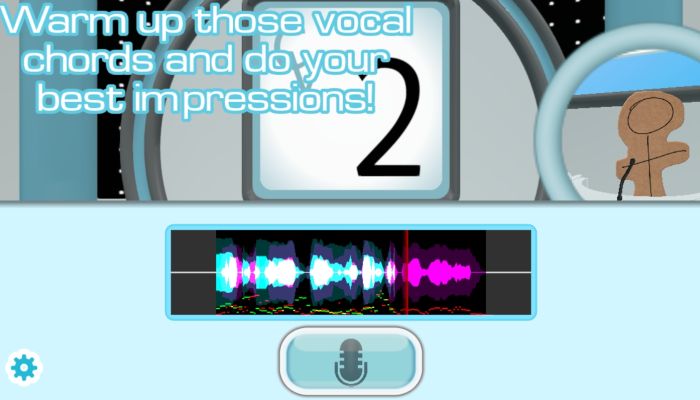
The title is not just decorative. “Voicer” matters here. The game gives the impression that voice is part of the core identity, whether through spoken lines, vocal cues, or a style that emphasizes expression over raw complexity. That gives the whole project a more personal tone than many games in the same category. Even when the content becomes abstract or humorous, there is a sense that the presentation is doing more than simply delivering text boxes.
As a gamer, I always respect when a small game commits to one strong concept and builds around it. Choicer Voicer does that well. It is not trying to be a massive RPG or a sprawling open-world quest. It is a focused interaction game that understands its lane. That focus is one of its strengths, because it helps the player settle into the experience instead of constantly waiting for the “real” game to begin.
There is also replay value built into the idea. Since the game revolves around selection and response, trying different paths is part of the fun. The more you experiment, the more the game reveals about its writing and structure. In that sense, replaying Choicer Voicer is less about grinding and more about discovery. You can free yourself from the pressure of a single “correct” route and just see where the options take you.
Presentation, responsiveness, and first impressions
First impressions matter, especially for smaller games that live or die on their first minutes. Choicer Voicer does a respectable job here. It presents its concept quickly and keeps the interface readable. That’s a bigger deal than it sounds. If a choice game is hard to parse, the mood collapses right away. Here, the player is usually able to get the idea almost immediately and move on to the interesting part: making decisions.
Responsiveness is another key strength. A game like this needs to feel snappy. Delays or awkward transitions can make every decision feel less important. Choicer Voicer generally maintains the brisk tempo it needs, which helps preserve immersion. Even if the overall production scale is modest, the pacing gives the game a sense of confidence.
Visuals are functional rather than flashy, but that is not a drawback in this case. The game’s identity is driven more by interaction than by heavy art direction. That makes it easier to focus on the content, especially if you are the kind of player who values design clarity over visual excess. For anyone browsing platforms for compact indie releases, this is the sort of game that stands out because it knows what it is offering.
Who will enjoy it most?
Choicer Voicer is best suited for players who enjoy narrative experimentation, dialogue systems, and games that can be completed in shorter sessions without feeling disposable. If you like testing outcomes, comparing branches, or revisiting a title just to see what changes, this one should fit your taste. It may also appeal to people who usually prefer to play free or low-commitment games before deciding whether to invest more time in them.
It is less ideal for players who want deep combat systems, massive maps, or long progression loops. That is not a flaw; it is simply a matter of genre expectations. Choicer Voicer is deliberately narrow in scope. The upside is that it does its specific job with focus. The downside is that it will not satisfy someone looking for a huge feature set. If your ideal game involves a lot of rule systems and a mountain of content, this will feel compact rather than expansive.
Still, compact games have their place. In fact, they are often the ones I remember most clearly because they know how to deliver one idea without filler. This one belongs in that category.
Replay value, experimentation, and community curiosity
One reason games like this linger is the community conversation they generate. Players start comparing choices, discussing hidden outcomes, and wondering whether certain paths are optimal or just more entertaining. That kind of curiosity can keep a small game alive long after launch. I would not be surprised if people begin sharing shortcuts, strategies, or even unofficial tips as they search for the best routes through the game.
Of course, with any smaller title, there will also be interest in cheats and mods. As of now, the real value seems to come from the game’s natural choice structure rather than from altering it. Mods may not be a major part of the experience unless the community eventually builds around the game. Cheats, if they exist at all, would likely be more about convenience than transformation. For most players, the intended way to play is probably the best way to appreciate what the game is trying to do.
That said, the flexibility of a choice-driven game makes it easy to return to. You are not locked into a lengthy campaign, and you do not need a big time investment to revisit different outcomes. That makes Choicer Voicer a strong candidate for quick sessions, especially if you want something you can launch, explore, and then come back to later.
Final verdict
Choicer Voicer is a smart little game with a distinct identity. It may not be huge, and it is not trying to compete with blockbuster releases, but it succeeds by staying focused on what it does well: quick decisions, responsive structure, and the satisfying feeling that your voice in the game actually matters. For experienced players, that kind of discipline is refreshing.
If you enjoy interactive stories, branching prompts, and experimental indie design, this is worth your time. It is easy to download, simple to install, and approachable enough to play in short bursts. I would not call it revolutionary, but I would call it memorable in the way that matters most for a compact game: it leaves you wanting to try one more route, one more option, one more run.
In a market crowded with oversized releases and overcomplicated systems, Choicer Voicer earns points by keeping its scope tight and its concept clear. That clarity is its strength, and for the right kind of player, it is exactly what makes the game enjoyable.
How to download Choicer Voicer
Availability & Launch: Choicer Voicer can usually be accessed through its official store page or publisher listing, depending on current release status. If it is offered as a free download, the page will clearly say so before you start. Always use the official source to avoid broken builds or unsafe mirrors.
Platforms: Check the game’s listing for supported platforms before you install. If it is available on PC, Mac, or Android, the download will be provided through the relevant store or launcher. If a platform is not supported, you may need a cloud service or emulator only if the developer explicitly allows it. If you are unsure, confirm compatibility before you play.
Install: Download the file or launcher, run the installer, and follow the on-screen instructions. On mobile, install through the app store, then open the game after permissions are accepted. On PC or Mac, make sure your security settings allow the installer to run, then launch the game from your desktop or client library.
System Requirements: For PC or Mac, this type of game usually runs on modest hardware: a recent dual-core CPU, 4 GB RAM, and integrated graphics are often enough. For Android, a newer mid-range device with enough storage and an updated OS should be fine.
Cheats / Mods: Cheats are usually limited in games like this unless the developer adds them. Mods may exist later if the community grows, but they are not always officially supported. Use only trusted sources if you decide to explore them.
Unblocked Access: If you want to play at school or work, availability depends on network filters and site rules. Some browser-based or cloud options may work in restricted environments, but many installations will be blocked by local settings. Always follow the rules of the network you are using.
Pros

- Engaging choice-based gameplay that keeps each session interactive.
- Fast pacing that avoids unnecessary filler and gets straight to the point.
- Easy to understand, making it approachable for new players.
- Strong focus on personality and voice-driven interaction gives it a distinct identity.
- Replay value is solid because different choices can lead to different outcomes.
- Compact scope makes it ideal for short play sessions.
- Clean presentation helps players focus on the dialogue and decisions.
- Well suited for fans of narrative experiments and indie games.
Cons

- Limited scope may disappoint players looking for deep systems or long campaigns.
- Visual presentation is functional rather than especially flashy.
- Smaller games like this may have fewer community-made mods or cheats available at launch.



Leave a comment
Your comment is awaiting moderation. We save your draft here
0 Comments