





A Digital Dollhouse Without a Rulebook
My first session in Toca Boca World began inside a small apartment with no mission marker, tutorial narrator, or score counter telling me what to do. I opened cupboards, moved food onto a table, changed a character’s outfit, placed another character in the bathroom, and gradually turned an ordinary morning into a chaotic family story. Nothing judged my choices. This Toca Boca World review is therefore less about winning and more about how effectively the game gives players a stage for creating their own stories.
Toca Boca World is an open-ended, single-player role-playing and creativity game developed by Toca Boca. It combines characters, homes, shops, public spaces, pets, furniture, clothing, and interactive objects inside one connected world. The official description emphasizes that there are no scores or time limits, allowing players to explore and invent situations at their own pace.
The first impression is cheerful and immediately approachable. Characters have expressive faces, locations are filled with objects, and almost everything invites interaction. I could move people between rooms, place items in their hands, change their clothing, prepare food, decorate interiors, and invent conversations that existed entirely in my imagination.
That freedom makes the game unusually accessible. I did not need to read detailed instructions or master a complicated control scheme. Most actions are performed by dragging characters and objects directly across the screen. Even players with limited reading ability can understand the basic language of picking up, moving, opening, combining, and arranging.
Toca Boca World does not provide a traditional narrative. There is no villain, final objective, or official campaign. Instead, it offers settings in which I can create a family drama, run a café, organise a school day, open a hair salon, visit a hospital, plan a party, or simply redesign a room repeatedly.
This approach can feel liberating. It can also feel empty. Players who expect the game to provide goals may spend several minutes moving objects around before asking what they are supposed to achieve. The answer is that they must provide the purpose themselves.
That distinction defines the entire experience. Toca Boca World is not a story that I follow. It is a collection of spaces, characters, and props that I use to create a story of my own.
Core Gameplay & Mechanics: Drag, Arrange, Pretend, Repeat
The core controls are built around touch. I drag characters from one position to another, place objects in their hands, tap furniture to reveal interactions, move items between rooms, and use elevators or map icons to travel between locations.
Characters do not move independently in the way they would in a simulation game. They wait for me to position them, give them objects, change their expressions, or move them into another scene. This gives me complete control over the performance, although it also means the world can feel static when I stop interacting.
The basic loop is simple. I choose a location, select characters, arrange a situation, interact with available objects, and decide what happens next. A visit to a restaurant can become a birthday celebration. A trip to the hospital can become an emergency story. A normal apartment can become a studio, school, shop, or secret headquarters.
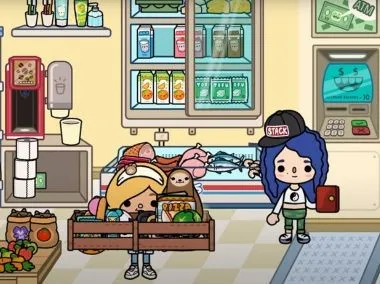
Almost every object functions as a prop. Food can be prepared and served. Clothing can be changed. Items can be stored in bags or cupboards. Characters can sit, sleep, eat, hold pets, use bathroom fixtures, and interact with different pieces of furniture.
The game rarely explains these interactions directly. Discovery is part of the appeal. I often tapped suspicious decorations, opened containers, moved furniture, or combined objects simply to see whether something would happen. Some locations contain hidden rooms, secret items, unusual characters, and small surprises. The Google Play description specifically promotes hidden areas and collectible discoveries as part of exploration.
Character Creator expands the role-playing possibilities. I can adjust hairstyles, facial features, skin tones, clothing, and accessories to build original characters. The tool is simple enough for children to use without assistance, but it contains enough options to create families, friendship groups, teachers, shopkeepers, celebrities, or fictional versions of real people.
The customization system is inclusive without presenting its options as a formal lesson. Different appearances, clothing styles, mobility aids, and personal identities can exist naturally within the same world. The game gives players tools to create a cast that reflects their imagination rather than forcing everyone into one visual template.
Home Designer provides another major creative system. I can select a building, place furniture, change decorations, organize rooms, and build spaces around a specific theme. A house may become practical and realistic, or it may contain a bedroom filled with plants, a kitchen beside a music studio, and a bathroom decorated like a party venue.
Decorating is satisfying because objects can be moved freely. I can arrange shelves carefully, place food inside a refrigerator, create a child’s bedroom, or build a luxurious apartment. The game works almost like an interactive sticker book, except objects remain usable after being placed.
The lack of strict placement rules supports creativity, but it can also make detailed decoration frustrating. Small items may be difficult to select when several objects overlap. I sometimes grabbed the wrong piece of furniture or moved a character when I intended to pick up an accessory.
This is my first major annoyance. Touch controls are intuitive when handling large objects, but precision becomes inconsistent in crowded rooms. Organising a shelf full of small decorations can require repeated attempts because the game selects whatever happens to be closest to my finger.
Moving items between locations is another important part of play. Characters can carry objects, allowing me to transport clothing, food, decorations, or personal belongings from one building to another. This makes the world feel connected rather than divided into isolated scenes.
However, managing many items becomes cumbersome. There is no deep inventory interface designed for organising hundreds of possessions. If I forget where I left a specific object, finding it again may require searching several locations.
The game includes regular gifts distributed through the Post Office. Toca Boca states that players can collect free items every Friday, including furniture, clothing, decorations, and pets. These gifts provide a gentle reason to return without introducing competitive pressure.
There are no traditional failure states. Characters do not permanently lose health, houses do not become unusable, and poor decisions do not end the game. I can reset a scene, move everyone home, or simply reinterpret the mistake as part of the story.
This makes Toca Boca World especially forgiving. A child can experiment without fear of losing progress through a wrong answer. The game encourages curiosity because most interactions are reversible.
The absence of challenge also limits mechanical depth. Once I understand how to move characters, decorate homes, and interact with objects, there is no advanced skill system waiting to be mastered. Long-term enjoyment depends almost entirely on imagination, collecting content, and creating new scenarios.
Graphics, Audio, and Technical Performance: A Playful World Packed With Tiny Details
Toca Boca World uses a colorful hand-drawn visual style with rounded characters, exaggerated expressions, and environments filled with small decorative details. Every location looks like an illustrated playset designed to be touched.
The characters are immediately recognizable. Their faces use simple eyes and mouths, but small changes communicate happiness, surprise, discomfort, or sadness. Hairstyles, clothing, accessories, and body shapes create variety without breaking the overall style.
Locations have clear themes. Apartments feel different from schools, salons, hospitals, cafés, shopping areas, and outdoor spaces. Each environment contains objects suited to its purpose, giving players enough visual information to begin inventing a scenario immediately.
The official Toca Boca page states that the wider game contains more than 90 locations and over 500 characters, alongside Character Creator and Home Designer tools. Access to the entire collection requires additional purchases, but the scale explains why the world can support so many different types of role-play.
Animation is simple but charming. Characters chew food, react to objects, sit on furniture, use equipment, and change expressions. Items may transform when cooked, combined, opened, or placed inside a machine.
These reactions reward experimentation. I often wanted to test every appliance or unusual object because even a small animation could suggest a new story. The game understands that a toy does not need a complex purpose if it responds in an amusing way.
The visual density can become a problem on smaller phone screens. Rooms contain characters, decorations, furniture, clothing, food, and interactive background objects. Selecting one small item among many can be difficult, especially when my hand covers part of the display.
Tablets provide the more comfortable experience. The larger screen makes decoration easier, improves object visibility, and allows several characters to occupy one scene without turning it into a confusing pile.
Audio is gentle and deliberately unobtrusive. Background music supports the playful tone, while objects produce short sounds when used. Appliances, doors, food, pets, and character reactions each provide simple feedback.
The limited voice acting allows players to imagine their own dialogue. Characters may make noises or emotional reactions, but they do not speak long scripted sentences. This leaves room for children to narrate the story themselves.
Repetition becomes noticeable during longer sessions. The same object sounds, eating noises, and short reactions appear frequently. They are not especially irritating, but they lack the variety needed to remain interesting after hours of continuous play.
Technical performance is generally smooth on compatible devices, though the game has grown significantly over time. The current App Store listing shows an installation size of roughly 1 GB, while the Android version was updated as recently as July 8, 2026. Additional purchased locations and continued updates can increase storage demands.
Loading between parts of the world is usually manageable, but larger collections may produce longer transitions. Older devices may also struggle when highly decorated homes contain many characters and objects.
The second major annoyance is occasional progress or item instability. In a game centered on carefully arranged homes and collections, any missing item, reset room, or failed load feels serious. Even a minor technical problem can erase a scene that took a long time to create.
I also noticed that updates can change menus, introduce new shop content, or adjust locations. Regular additions keep the game active, but they may make the interface feel less predictable for younger players who remember where everything used to be.
Monetization & Ads: Safe From Commercial Breaks, Surrounded by Optional Packs
Toca Boca World is free to download and includes a starter selection of locations, characters, and creative tools. Additional buildings, furniture collections, character packs, style items, and themed content are sold through the in-app shop. Both major mobile storefronts identify the game as free with in-app purchases.
The game does not use pay-to-win mechanics because there is no competition to win. Purchased content does not increase character strength or provide an advantage over another player. It expands the range of stories that can be created.
This is an important distinction. A child can enjoy the free content without losing matches to someone who spent more money. The pressure comes from seeing attractive locations and objects that are unavailable, not from mechanical disadvantage.
Toca Boca states that the game contains no third-party advertising. There are no video commercials interrupting play, no pop-up advertisements from outside companies, and no requirement to watch promotions to continue.
That ad-free structure is a major advantage for a children’s game. It keeps the experience focused and reduces the risk of young players being redirected toward unrelated products or external websites during normal play.
The in-app shop still deserves careful attention. Packs are presented with appealing artwork and clear themes. A new house, furniture collection, pet location, or character set can look inexpensive when considered alone.
The problem emerges when purchases accumulate. Toca Boca World has expanded for years, and building a large version of the world can require many separate transactions. The App Store has previously described more than 100 additional purchasable locations, alongside hundreds of pets and characters.
This fragmented structure can become expensive for families. A child may not understand why one hospital, house, or shop is available while another requires payment. Repeated requests for new packs may create more pressure than a single premium purchase would.
Parental purchase controls are therefore essential. The game is designed for young players, but the financial decisions belong to adults. Setting a monthly limit or choosing packs only for special occasions can prevent small purchases from becoming a large total expense.
Free weekly gifts soften the model. They give non-paying players new objects and encourage return visits without requiring money. Events and collaborations also introduce temporary themes and items, though some related content may still be sold through the shop.
I consider the monetization fairer than ad-heavy children’s games, but not inexpensive. The absence of manipulative competition and third-party ads is excellent. The sheer quantity of optional paid content remains the biggest concern.
Who Should Play This? Young Storytellers, Designers, and Curious Families
Toca Boca World is designed primarily for children who enjoy pretend play, character creation, decorating, and storytelling. It works especially well for players who already create stories with dolls, action figures, drawings, or toy houses.
The game does not demand strong reading skills. Touch-first controls, recognizable objects, and visual reactions allow younger players to understand most interactions independently. Google Play specifically describes the controls as suitable across reading abilities.
Children who enjoy interior design may spend hours arranging homes. They can organize kitchens, create themed bedrooms, design shops, or repeatedly change furniture as new ideas appear.
Players interested in character styling will find similar value in clothing and appearance options. Preparing characters for school, a wedding, a holiday, a concert, or a fictional television show can become the entire purpose of a session.
Families can also play together even though the game is officially single-player. A parent or sibling can suggest story ideas, provide character voices, help decorate rooms, or take turns controlling different people.
The lack of online chat and strangers is important for younger users. Official store descriptions present Toca Boca World as a single-player environment with no external player communication, and the game is described as COPPA compliant.
Players seeking objectives, competition, or measurable progress should skip it. There are no championships, combat systems, difficult levels, or strategic economies. Creativity is both the main feature and the main requirement.
Children who prefer constant rewards may also lose interest after exploring the free locations. Weekly gifts provide new items, but they do not replace a structured progression system.
The game is less suitable for very old or low-storage devices. Its size, frequent updates, and detailed locations may create performance or storage issues.
Parents uncomfortable with repeated in-app purchase requests should approach with clear boundaries. The game itself is calm and child-friendly, but its large shop can become a recurring source of negotiation.
Final Verdict: One of the Best Digital Playsets, With Boundaries Required
Toca Boca World is not a conventional video game, and judging it as one would judge a platformer or role-playing adventure misses its purpose. It is closer to a large digital dollhouse that combines interior design, character styling, exploration, and improvised storytelling.
I enjoyed the freedom to create situations without being interrupted by instructions. A simple scene could evolve naturally because one object suggested another idea. Preparing breakfast became a family argument. Visiting a shop became a fashion event. Redecorating a bedroom became a complete moving-day story.
The game’s touch controls are understandable, its visual language is friendly, and its locations are filled with enough details to encourage curiosity. Character Creator and Home Designer provide useful tools rather than superficial menus.
Its safety model is equally valuable. Toca Boca World is single-player, contains no third-party advertisements, and avoids communication with strangers. For families choosing a creative mobile game, those features matter as much as graphics or content volume.
The main weakness is monetization through expansion. The free version provides a genuine starting point, but much of the game’s variety exists in optional paid packs. Families should decide how purchases will be handled before the shop becomes part of every session.
The lack of objectives will also divide players. Imaginative children may find almost unlimited value because they continually invent new stories. Players waiting for the game to entertain them through missions may become bored quickly.
Technical issues are not constant, but they matter because players can invest significant time into decorating spaces. Better item organisation and more reliable restoration tools would make the creative process safer.
I recommend Toca Boca World for young storytellers, aspiring designers, families seeking ad-free creative play, and players who enjoy building scenes more than completing challenges. It is less suitable for anyone seeking competition, complex mechanics, or a clear ending.
Personal rating: 8.5/10.
Toca Boca World earns that rating for its open-ended creativity, approachable controls, expressive art, character customization, Home Designer, interactive locations, weekly gifts, and strong child-safety approach. It loses points for costly content fragmentation, imprecise object handling, limited structured progression, and occasional technical concerns.
At its best, Toca Boca World does not tell children what story to experience. It hands them a cast, a home, a pile of unusual objects, and enough freedom to make the story themselves.
Pros

- Immersive creative gameplay with endless exploration opportunities
- Vibrant and appealing visual design that engages players of all ages
- Robust customization options and mod support that encourage community-driven content
- Ease of download and play across multiple platforms with minimal system requirements
- User-friendly interface with a manageable learning curve and helpful tutorials
- Active community engagement and frequent updates that keep the game fresh
Cons

- Occasional compatibility issues on lower-end devices
- Limited multiplayer features compared to other large-scale online games
- Some players might find the open-world structure lacking clear, guided objectives


Leave a comment
Your comment is awaiting moderation. We save your draft here
0 Comments