






A Spider-Man Story Forced to Begin Without Peter Parker
Spider-Man: Brand New Day arrives with one of the most promising starting points any modern superhero sequel could receive. At the end of Spider-Man: No Way Home, Peter Parker saved the people he loved by allowing the entire world to forget that he existed. He lost Aunt May, his relationship with MJ, his friendship with Ned, his connection to the Avengers, and nearly every form of emotional support that once separated him from the lonelier versions of Spider-Man seen in earlier stories.
This Spider-Man: Brand New Day preview is based on the official premise, trailers, confirmed cast, and information available before the film’s theatrical release. I cannot honestly rate the finished movie or describe scenes that have not yet been publicly shown. What I can examine is the direction promised by the material: a more isolated Peter Parker fighting crime full-time in New York while watching his former friends continue their lives without him.
The title is appropriate because Peter is not merely facing another villain. He is trying to build an identity after sacrificing his civilian life. The world still knows Spider-Man, but nobody remembers the young man beneath the mask. That distinction creates the possibility of a smaller, more personal film following the enormous multiverse spectacle of No Way Home.
Director Destin Daniel Cretton appears to be moving Peter toward street-level crime while retaining connections to the wider Marvel Cinematic Universe. The presence of the Punisher, Hulk, Scorpion, and several mysterious new characters suggests that “street level” may still become surprisingly crowded. The success of the film will depend on whether those additions deepen Peter’s loneliness or distract from it.
Peter Parker After the Spell
Tom Holland’s Peter has always been surrounded by people. Tony Stark gave him advanced technology and a connection to the Avengers. Ned helped him during missions, MJ became both his emotional partner and practical ally, and Aunt May provided the moral center of his life. Brand New Day removes that support system.
The official premise presents Peter as a full-time Spider-Man living in a world that no longer remembers him. That phrasing is important. Spider-Man is not simply an activity he performs after school or work. It may now be the only identity that still connects him to other people.
This situation could create the most psychologically interesting version of Holland’s character. Peter saved MJ and Ned by removing himself from their lives, but he must still see them moving forward without him. He knows their history while they experience him as a stranger.
The danger is that the film may use this loneliness only as a temporary opening condition before rebuilding another large group around him. Jon Bernthal’s Punisher, Mark Ruffalo’s Bruce Banner, Sadie Sink’s mystery character, and Michael Mando’s returning Mac Gargan could make the story feel populated quickly.
A stronger version would allow Peter’s isolation to remain uncomfortable. The spell should not be treated like a convenient reset that removes old supporting characters while creating new ones. It should influence how he speaks, trusts, fights, and decides whether helping someone gives him the right to enter their life.
Tom Holland’s Most Difficult Spider-Man Performance
Tom Holland has already played several recognizable versions of Peter Parker. He was an enthusiastic teenager recruited by Tony Stark, a frightened hero trying to survive Thanos, a grieving student searching for guidance, and a desperate young man willing to damage reality to restore his ordinary life.
Brand New Day requires something different. Peter is older, more experienced, and completely alone. Holland must preserve the character’s humor without making his loss feel temporary. Spider-Man can continue joking during fights, but Peter should not behave as though the ending of No Way Home had no lasting psychological effect.
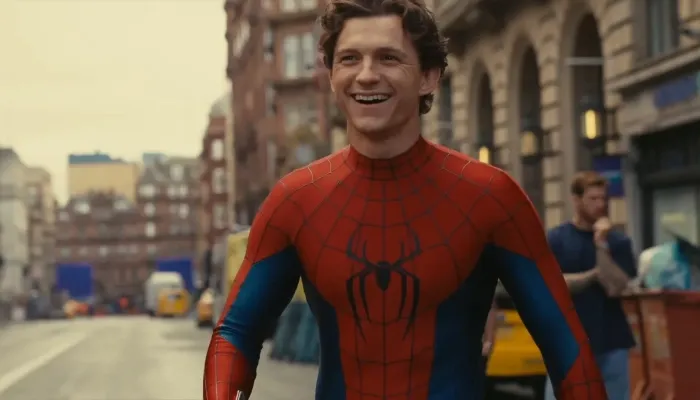
The new homemade-looking suit shown around this stage of the story symbolizes independence. Peter no longer has Stark technology solving practical problems for him. He must create equipment, manage injuries, pay rent, investigate crime, and make decisions without contacting a more experienced hero.
Holland’s strongest moments in the previous film came when Peter’s optimism finally broke. His confrontation with the Green Goblin showed anger the MCU version had rarely expressed. Brand New Day reportedly places Peter under enough pressure to cause another change he may not be able to control.
That “transformation” is one of the most intriguing parts of the official description. It could refer to a physical change, an emotional deterioration, a new ability, or a combination of all three. The trailers appear designed to encourage speculation without providing a complete explanation.
MJ and the Pain of Being Remembered by Only One Person
Zendaya’s return confirms that MJ remains part of the story, but her relationship with Peter cannot continue normally. She does not remember their romance, the attacks they survived, or the promise that Peter would find her after Doctor Strange’s spell.
No Way Home ended with Peter choosing not to tell her the truth after noticing that she had been injured. He decided that distance would keep her safe. The decision was loving but also controlling, because MJ did not receive the opportunity to decide whether the risk was worth taking.
Brand New Day can examine the consequences of that choice. Peter may believe he is protecting MJ, yet watching her create a new life could transform sacrifice into resentment. He remembers a relationship that she cannot confirm ever existed.
The film should avoid turning MJ into a prize waiting for her memories to return. Her current identity and decisions deserve respect even if Peter’s pain remains understandable. A romance rebuilt from the beginning would be more meaningful than one restored through a convenient magical reversal.
Zendaya and Holland have strong chemistry, but the new situation requires restraint. A glance or unfinished conversation may carry more emotional weight than another large declaration. The most painful scenes may involve Peter recognizing familiar habits in someone who no longer recognizes him.
Ned Leeds and a Friendship Removed From History
Jacob Batalon also returns as Ned, whose friendship with Peter helped define the earlier trilogy. Ned was not merely comic support. He knew Peter’s identity, assisted during dangerous missions, and eventually developed limited magical abilities.
Like MJ, he now lives without any memory of Peter. The difference is that Ned and Peter shared years of ordinary friendship before the larger superhero conflicts. Losing that relationship removes part of Peter’s childhood, not only one romantic connection.
The film has an opportunity to show how Peter responds when Ned forms new friendships or follows a future that no longer includes him. Jealousy would be understandable, but Peter cannot demand loyalty from someone who has no memory of making that commitment.
I hope Ned receives more than a brief appearance used to remind Peter what he lost. His independent life could show whether the spell genuinely improved the futures Peter was trying to protect.
The Punisher: A Street-Level Ally Who Challenges Peter’s Morality
Jon Bernthal’s return as Frank Castle immediately changes the tone of the film. The Punisher approaches crime through punishment, fear, and permanent force. Spider-Man believes people can be stopped without surrendering the possibility of change.
Their conflict should be ideological rather than only physical. Peter has recently experienced grief, rage, and the desire to make an enemy suffer. That history makes Frank’s worldview more dangerous because Peter may understand it better than he wants to admit.
Bernthal’s version of the Punisher is intense, direct, and emotionally damaged. Placing him beside Holland’s younger Spider-Man could create valuable tension if the film allows serious conversations between action scenes.
Frank may see Peter’s refusal to cross certain moral boundaries as naïve. Peter may see Frank as evidence of what happens when loss becomes the only principle guiding a person. Neither character needs to convince the other completely for the relationship to become meaningful.
The concern is tonal balance. The Punisher comes from stories involving harsher violence than the MCU Spider-Man films usually present. Brand New Day must preserve his severity without making him feel artificially softened or turning the entire movie into a different genre.
Bruce Banner and the Risk of Another Senior Hero
Mark Ruffalo’s inclusion raises more questions. Peter’s earlier trilogy repeatedly connected him with older MCU figures: Tony Stark, Nick Fury, Doctor Strange, and Happy Hogan. Returning to another established Avenger could weaken the promise of an independent Spider-Man story.
Bruce Banner may serve a different purpose if Peter’s mysterious transformation involves altered biology or unstable powers. Bruce understands what it means to fear a physical change that responds to emotional pressure.
That parallel could make him a useful mentor without repeating Tony Stark’s role. Bruce cannot solve Peter’s problem by giving him better equipment. His own history involves learning that control, suppression, and acceptance are not the same thing.
The relationship will work best if Bruce remains one part of the story rather than its solution. Peter needs guidance, but the central decisions should belong to him.
Mac Gargan and the Return of Scorpion
Michael Mando’s return as Mac Gargan addresses one of the longest unresolved threads in the MCU Spider-Man films. Gargan appeared in Spider-Man: Homecoming as a criminal injured during Spider-Man’s intervention and later attempted to discover the hero’s identity.
Bringing him back makes sense in a story focused on street-level consequences. Gargan represents an enemy created partly by Peter’s earlier actions rather than a cosmic threat arriving from another universe.
Scorpion can challenge Spider-Man physically while maintaining a personal grudge. His mechanical equipment, criminal connections, and obsession with exposing the hero fit a Peter who has no public identity left to protect in the ordinary sense.
The film must give Gargan enough personality beyond revenge. After such a long absence, a basic return based only on anger would feel thin. Michael Mando is capable of presenting patience, menace, and psychological instability, so the role has strong potential.
Sadie Sink and the Mystery Character Problem
Sadie Sink’s casting generated immediate speculation because her role was initially kept secret. That secrecy can be useful marketing, but it also creates expectations that may become larger than the character herself.
Her character could be connected with Peter’s new civilian life, the central threat, a future superhero group, or the transformation mentioned in the official premise. Until the film is released, any specific identity remains speculation unless confirmed directly by the studio.
Sink has demonstrated that she can handle emotional isolation, sharp dialogue, and large genre material. She could work particularly well opposite Holland if her character recognizes the parts of Peter he is trying to hide.
The film should allow the role to matter within this story rather than treating it entirely as setup for another franchise. Marvel productions sometimes introduce characters whose future importance overwhelms their present function.
A Villain No One Can See
The official description refers to a powerful new threat that nobody can see. This is more interesting than another villain whose primary advantage is greater physical strength.
An invisible enemy could force Peter to rely on instinct, investigation, and the spider-sense rather than visual information. It could also connect with the emotional premise. Peter himself has become socially invisible because nobody remembers the person beneath the mask.
The villain may therefore function as more than a technical problem. A threat that cannot be seen can create paranoia, false accusations, and uncertainty about whether Peter’s perceptions remain reliable during his transformation.
The trailers appear to emphasize psychological pressure alongside physical danger. That combination could give director Destin Daniel Cretton an opportunity to stage action differently from the portal-heavy spectacle of No Way Home.
Destin Daniel Cretton and a New Directorial Tone
Destin Daniel Cretton takes over directing duties after Jon Watts handled Holland’s first three solo films. Cretton previously demonstrated in Shang-Chi and the Legend of the Ten Rings that he can combine personal family conflict with clear, energetic action.
That experience suits Brand New Day. Peter’s story needs intimate emotional scenes, street-level movement, and larger superhero encounters without allowing one element to erase the others.
Cretton’s action often emphasizes physical rhythm and understandable geography. Spider-Man benefits from choreography that shows where he is moving, what he is avoiding, and how the environment affects his decisions.
The challenge is managing the large cast. Punisher, Hulk, MJ, Ned, Scorpion, Sadie Sink’s character, and the unseen villain could each support significant subplots. The director must prevent the film from becoming another crossover event disguised as a solo chapter.
New York Should Matter Again
Spider-Man is at his most distinctive when New York feels like more than a background. Peter should interact with apartments, rooftops, alleys, shops, emergency workers, local criminals, and ordinary residents who recognize Spider-Man without knowing Peter Parker.
The new status quo creates an opportunity to show him functioning as a neighborhood hero. He can stop crimes that would never attract the Avengers while building a relationship with a city that knows only his masked identity.
That anonymity may initially feel liberating. Peter can dedicate himself entirely to helping people without worrying that enemies will target his friends. Over time, the absence of a civilian identity may become psychologically destructive.
A strong version of the film will make New York both community and temptation. Spider-Man may receive gratitude every night while Peter returns to an empty apartment where nobody knows his name.
The Suit and a Return to Self-Reliance
The suit introduced at the end of No Way Home represented a return to Peter’s own craftsmanship. Its brighter colors and simpler design separated him from Stark technology and reflected the more traditional Spider-Man identity he was beginning to build.
Brand New Day can use the suit practically rather than only symbolically. Peter should need to repair it, create web fluid, manage limited resources, and solve problems without a computerized assistant providing information.
This self-reliance is essential to the new chapter. Earlier films sometimes made Peter’s abilities appear secondary to advanced equipment. A more independent version can emphasize intelligence, improvisation, agility, and spider-sense.
The visual effects will need to preserve physical weight. Spider-Man’s movement is most convincing when I understand the force of each swing and the danger of missing one connection point. Endless digital movement without environmental consequence would weaken the smaller tone promised by the story.
Humor After Personal Loss
Spider-Man should remain funny. Humor is part of how Peter distracts enemies, controls fear, and creates emotional distance during dangerous encounters. The question is how that humor changes after No Way Home.
A lonelier Peter may sound sharper or more tired. His jokes could become less about youthful excitement and more about preventing silence from revealing how isolated he feels.
The film should avoid filling every serious pause with a joke. Marvel productions are often criticized for interrupting emotional moments before they settle. Peter’s new situation deserves enough quiet space to feel permanent.
Comedy involving the Punisher could work through contrast rather than turning Frank into a cheerful partner. Peter talking constantly while Frank refuses to respond may be funnier than any elaborate gag.
Music and the Memory of Peter Parker
Michael Giacchino’s musical identity for Holland’s Spider-Man has moved between youthful excitement, heroic confidence, and increasingly heavy emotion. Brand New Day provides an opportunity to reshape those themes around isolation.
Familiar melodies connected with MJ, Ned, or Aunt May could return in altered forms when Peter sees the life he lost. The music can remember relationships even when the characters cannot.
A smaller orchestral approach might suit the street-level material, while the transformation and larger threat could introduce less stable textures. The score should help distinguish Peter Parker’s loneliness from Spider-Man’s public energy.
What Could Go Wrong?
The largest risk is overcrowding. A film about Peter living alone could become another MCU assembly containing several heroes, villains, cameos, and future-franchise introductions.
Bruce Banner may recreate the older-mentor structure the story appears ready to leave behind. The Punisher may pull the tone too far toward harsher violence. Sadie Sink’s mystery role may receive more marketing importance than dramatic depth.
The transformation plot could also become a distraction if it gives Peter temporary new powers without connecting them to his emotional condition. Superhero sequels often introduce stronger abilities simply to create larger action.
Another concern is the treatment of MJ and Ned. Restoring their memories too easily would weaken No Way Home’s ending. Keeping them present only to make Peter sad would reduce characters who previously possessed their own personalities and choices.
The final flaw may be Marvel’s familiar need to advertise the next event. Brand New Day should resolve a meaningful personal conflict rather than ending primarily as preparation for another Avengers film.
Why the Film Still Has Exceptional Potential
Despite those risks, the foundation is excellent. Peter Parker has never been more independent, more emotionally exposed, or more completely responsible for defining what Spider-Man means.
Tom Holland has enough history in the role to show a character changed by years of loss. Destin Daniel Cretton has experience combining personal drama with physical action. Jon Bernthal can challenge Peter’s morality, while Mark Ruffalo may provide insight into an unstable transformation.
New York can return to the center, Mac Gargan can finally complete an unfinished villain arc, and MJ and Ned can force Peter to examine whether sacrifice gives him the right to make permanent decisions for others.
The strongest possible version of Brand New Day will not try to recreate the emotional scale of No Way Home. It will accept that losing one friendship inside a small apartment can hurt more than watching another multiverse collapse.
Who Should Watch Spider-Man: Brand New Day?
The film is designed for viewers who followed Tom Holland’s Spider-Man trilogy and understand the ending of No Way Home. Knowledge of the wider MCU will also help with the Punisher and Bruce Banner, although Peter’s personal situation should remain accessible.
Fans hoping for a street-level Spider-Man story have strong reasons to be interested. The new status quo removes Stark resources and places Peter back inside New York as an anonymous hero.
Viewers tired of interconnected superhero storytelling may remain cautious because the cast includes several established MCU characters. The finished film will need to prove that these appearances support Peter rather than overwhelm him.
My Expectations Before Release
Spider-Man: Brand New Day is one of the most promising Spider-Man setups the MCU has created. Peter no longer has technology, public connections, family support, or friends who remember him. For the first time in Holland’s series, he must decide who Peter Parker is without allowing another hero, mentor, or institution to define the answer.
I am particularly interested in the conflict between Spider-Man and the Punisher, the long-delayed return of Mac Gargan, and the emotional consequences of seeing MJ and Ned move forward. The unseen threat and Peter’s mysterious transformation could add psychological tension if they remain connected with his grief and isolation.
My main concern is the number of characters. Brand New Day should feel like Peter’s film rather than a meeting point between several Marvel projects. No amount of cameos or spectacular action can replace the emotional clarity of one young man returning home after saving the city and realizing that nobody will notice whether he arrives safely.
The film has the opportunity to present Spider-Man as both more independent and more vulnerable than ever. Peter may finally become the self-reliant neighborhood hero audiences have wanted, but that freedom carries a painful cost. The world has forgotten Peter Parker. Brand New Day must show whether Peter can build a new life without forgetting himself.
Pros

- Strong character development and internal conflict exploration
- Visually stunning cinematography and innovative special effects
- Excellent balance between high-energy action and thoughtful narrative
- Deep thematic exploration of identity, responsibility, and personal growth
- Innovative narrative structure with seamless integration of internal dialogue and action sequences
- Powerful soundtrack that enhances the emotional impact of key scenes
Cons

- Complex narrative may confuse viewers unfamiliar with comic book lore
- Pacing issues arise due to extended introspective moments
- Heavy reliance on CGI in some scenes may detract from the overall authenticity

Leave a comment
Your comment is awaiting moderation. We save your draft here
0 Comments