




A Blocky World Built From Extremely Human Chaos
The moment that defines A Minecraft Movie for me is not the first appearance of a Creeper, a Piglin army, or a perfectly square tree. It is Steve looking across the Overworld with the expression of someone who has finally found a place where every strange idea can become real. For him, Minecraft is not merely a landscape. It is freedom through construction. This A Minecraft Movie review begins there because the film works best when it understands the game’s simplest appeal: survival matters, but creating something of your own matters even more.
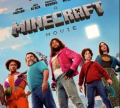
Released in 2025 and directed by Jared Hess, A Minecraft Movie transforms Mojang’s open-ended sandbox game into a live-action fantasy comedy. Jack Black plays Steve, an enthusiastic builder who has spent years inside the Overworld. Jason Momoa stars as Garrett “The Garbage Man” Garrison, a former gaming celebrity whose confidence has survived far longer than his success.
The main human group also includes siblings Henry and Natalie, along with Dawn, a local real-estate agent and aspiring business owner. After entering the Overworld through a magical object, they must learn its rules, survive hostile creatures, and stop the Piglin ruler Malgosha from gaining control of a powerful artifact.
Adapting Minecraft is a difficult task because the game does not provide one fixed protagonist or central story. Players gather resources, build shelters, explore caves, fight creatures, farm, craft tools, and decide for themselves what the experience should become.
The movie responds by creating an outsider adventure. Ordinary people enter the world, learn its mechanics, and discover that creativity can be more useful than conventional strength.
This approach is sensible. The execution is far less controlled. The film is loud, fast, strange, and committed to jokes that often seem designed to become short online clips before they function as scenes. Jack Black understands the assignment completely. Jason Momoa embraces ridiculous physical comedy. Several Minecraft references are translated cleverly into action.
At the same time, the story gives its younger characters less emotional space than they deserve, the digital environments frequently look artificial beside the actors, and the villain never becomes more interesting than a reason for the heroes to reach the final battle.
A Minecraft Movie is not a careful cinematic interpretation of a quiet creative game. It is a chaotic comedy wearing diamond armor. Sometimes that approach is genuinely funny. Sometimes it feels like someone placed every available block without checking whether the structure needed a door.
Plot & Storytelling: A Portal Opens Into the Overworld
The story begins with Steve describing a childhood defined by curiosity and the desire to mine. As an adult, he enters a forbidden mine and discovers artifacts capable of opening a portal into another dimension.
That dimension is the Overworld, a place where terrain, animals, materials, and crafted objects follow the recognizable block-based logic of Minecraft.
Steve quickly embraces the possibilities. He builds structures, befriends animals, explores biomes, and treats the world as a place where imagination can become physical.
His freedom is interrupted when he discovers the Nether, a darker realm controlled by Piglins. Their ruler, Malgosha, despises creativity and wants to transform the Overworld into a place of obedience and industrial control.
Steve hides the Orb of Dominance and the Earth Crystal, preventing Malgosha from opening a permanent route into the Overworld. He sends his loyal wolf Dennis away with the artifacts before being captured.
Years later, Garrett Garrison operates a failing store filled with gaming memorabilia. He was once known as “The Garbage Man,” a championship gamer whose identity remains trapped in one moment of childhood success. Garrett purchases the contents of a storage unit and discovers the Orb and Crystal among the items.
At the same time, Henry and Natalie move to the small town of Chuglass. Natalie is attempting to create stability after major family loss, while Henry struggles to fit into a new school. Henry is intelligent, imaginative, and interested in building unusual devices. His creativity makes him a target for students who interpret difference as weakness.
Dawn enters their lives through housing and local business connections. She has several ambitions and enough optimism to keep pursuing them despite repeated setbacks. The Orb activates and leads the group toward the abandoned mine. Garrett, Henry, Natalie, and Dawn are pulled through the portal into the Overworld.
Their first encounters establish the world’s survival rules quickly. Night brings hostile creatures. Shelter must be created from available materials. Crafting requires combining resources correctly. Steve rescues them and explains that the Orb must be protected. Malgosha’s forces are searching for it, and damage to the portal has made returning home more complicated.
The group begins traveling through the Overworld, encountering familiar creatures and locations along the way. Henry responds naturally to crafting. He understands that the world rewards experimentation and begins using his imagination as a practical survival tool.
Garrett reacts differently. He wants weapons, treasure, recognition, and proof that he remains the impressive figure he remembers. Steve and Garrett immediately compete for leadership. Both are loud, proud, and convinced that their experience gives them authority.
Their rivalry provides much of the comedy, but it also delays the emotional development of the younger characters. The story eventually separates parts of the group. Steve and Garrett continue their search while Henry, Natalie, and Dawn face different dangers.
Piglins invade the Overworld, Malgosha gains greater access to the surface, and the heroes must recover control of the artifacts before the entire dimension is changed. The climax uses crafting as the central solution. Henry’s creativity becomes essential because the enemy understands force more clearly than invention. The final battle brings together structures, minecarts, weapons, creatures, explosions, and multiple references to familiar Minecraft strategies.
The immediate conflict is resolved, Steve gains another opportunity to protect the Overworld, and the human characters return with greater confidence about the lives they want to build.
The narrative is functional, but it often feels like a guided tour through recognizable game elements. One location introduces crafting, another provides mobs, another delivers a rare item, and another prepares the final confrontation.
The movie connects these sections through character goals, though the emotional line is much thinner than the visual adventure.
Steve: Jack Black Turns Crafting Into a Performance
Jack Black plays Steve with complete commitment. He does not approach the role as a quiet player avatar or reserved survival expert.
His Steve is enthusiastic, theatrical, impulsive, and emotionally attached to every strange feature of the Overworld. Black’s performance turns explanations into jokes. A simple item name can become a dramatic announcement, while ordinary crafting is treated like artistic revelation. This approach gives the film energy. It also means Steve operates at maximum intensity during scenes that might benefit from calm.
The character’s backstory presents him as someone who felt limited in the ordinary world. The Overworld gives him a place where curiosity is not merely tolerated but rewarded. This creates a useful emotional connection with Henry. Both understand the satisfaction of making something that did not exist before.
Steve should therefore become Henry’s natural mentor. The film develops this idea only partially because so much attention is given to his comic conflict with Garrett. His relationship with Dennis provides a warmer side. Steve does not treat the wolf only as a useful companion. Their separation carries genuine emotional importance.
Steve’s imprisonment by the Piglins also introduces regret. His discovery of the Nether helped create the danger now threatening the Overworld. The movie does not explore that responsibility deeply. Steve remains more energetic guide than conflicted guardian.
Black is still the film’s most recognizable force. His expressions, songs, sudden movements, and exaggerated delivery fit the artificial world surprisingly well. The performance will divide viewers. Those who enjoy Jack Black’s full comic style may find him irresistible. Others may feel that Steve becomes another version of the actor’s familiar loud, musically inclined screen persona.
Garrett Garrison: A Former Champion Living Inside One Old Victory
Jason Momoa’s Garrett is the film’s strangest and funniest human character. His clothes, hair, posture, and confidence make him look like someone who designed his entire adulthood around a gaming photograph from decades earlier.
Garrett was once successful. The problem is that he continues treating that success as proof that admiration should remain permanent. Momoa plays him without fear of looking foolish. He shouts, poses, panics, competes with Steve, and reacts to danger with confidence that frequently disappears at the exact wrong moment.
The performance works because Garrett is not secretly a perfect action hero. He has physical presence but limited practical understanding of the Overworld. His emotional conflict concerns relevance. Garrett believes his best moment has already happened and tries to preserve the identity attached to it.
The Overworld gives him another opportunity to perform heroism, but he initially approaches every challenge as a route back to public recognition. His relationship with Henry gradually changes that motivation. Garrett begins taking responsibility for someone who does not care about his old championship reputation.
This is a familiar redemption arc, but Momoa gives it enough comic vulnerability to remain engaging.
Garrett’s apparent willingness to sacrifice himself creates one of the film’s more sincere moments. Unfortunately, the surrounding tone makes it difficult for the emotion to settle. The character frequently returns to jokes before the audience can process what he has learned. Still, Garrett represents one of the movie’s clearest themes. A past achievement can become a prison when someone stops imagining a future not built around it.
Henry and Natalie: The Emotional Story That Needed More Room
Henry is positioned as the young character most naturally connected with Minecraft’s creative philosophy. Sebastian Hansen plays him as intelligent, awkward, curious, and increasingly frustrated by environments that treat imagination as a problem.
His school difficulties are familiar. Other students mock what they do not understand, while adults struggle to recognize the practical value of his inventions. The Overworld changes the context completely. Ideas become tools, and experimentation becomes necessary for survival. Henry’s growth should be the central arc. He begins unsure whether creativity gives him any real place in the world and ends by using it to protect others.
The film communicates this clearly but does not spend enough quiet time with him. Steve and Garrett’s comic performances dominate many group scenes. Henry often becomes the person who understands a mechanic or builds the required object, rather than a fully explored teenager processing grief, displacement, and social isolation. Natalie’s role is even more underdeveloped.
Emma Myers gives her warmth, practicality, and visible concern for Henry. Natalie has taken on substantial responsibility and is trying to provide stability while managing her own uncertain future.
Her relationship with Henry contains affection and tension. She wants to protect him but can become focused on safety at the expense of understanding what excites him. The Overworld could have allowed Natalie to recognize that Henry’s imagination is not a dangerous distraction. It is one of his strongest abilities.
That realization exists, but the screenplay moves through it quickly. Natalie also deserves a goal beyond caring for her brother. The film hints at the life she is trying to build but gives Garrett and Steve far more individual comic material. This is my first major criticism. The characters with the clearest emotional foundation receive less attention than the two loud adult men surrounding them.
Dawn: Optimism in Search of a Clearer Purpose
Danielle Brooks plays Dawn with confidence, warmth, and practical humor. Dawn enters the story as someone balancing multiple jobs and business ideas. She possesses the kind of optimism that survives repeated evidence that a plan may not work.
In the Overworld, this flexibility becomes useful. Dawn adapts quickly, accepts impossible information, and contributes without needing to control the group. Brooks gives her reactions enough personality to prevent Dawn from disappearing entirely inside the ensemble. The screenplay still struggles to define her role. She is not as connected with the central artifact as Steve, as emotionally linked with Henry as Natalie, or as dominant in the comedy as Garrett.
Her presence supports the group and provides several entertaining moments, but she rarely drives the story. A stronger version could have connected Dawn’s entrepreneurial ambitions with Minecraft’s resource gathering and creation systems. She understands turning limited materials into opportunity, which should make the Overworld especially meaningful to her. Instead, the film leaves much of that potential unexplored.
Malgosha and the Piglins: Control Without Much Personality
Malgosha rules the Piglins from the Nether and wants to gain permanent access to the Overworld. Rachel House voices the character with authority, irritation, and contempt for creative freedom. Malgosha’s ideology is simple. She dislikes imagination because imagination makes people unpredictable.
The Overworld allows individuals to build, alter environments, and create solutions. Malgosha prefers order, obedience, and a world shaped according to one command. This gives her a thematic connection with Henry and Steve. Their creativity represents everything she cannot control. The idea is useful, but the character remains thin. Malgosha rarely becomes more than a hostile ruler delivering threats from a dark fortress.
The film could have explored why the Piglins see the Overworld as dangerous or desirable beyond conquest. Their society is visually clear but emotionally limited. They march, attack, capture characters, and operate machinery. Malgosha’s personal history with creativity is mentioned but not developed enough to create sympathy or complexity.
Her final conflict therefore functions as spectacle rather than meaningful confrontation. The Piglins remain effective visual enemies, especially for younger viewers familiar with the game. They create clear danger without becoming frightening enough to overwhelm the comedy.
Minecraft Mechanics: Crafting Becomes the Movie’s Superpower
A Minecraft Movie succeeds most clearly when it translates game mechanics into physical storytelling. Crafting is presented as a process of combining materials through imagination and practical understanding.
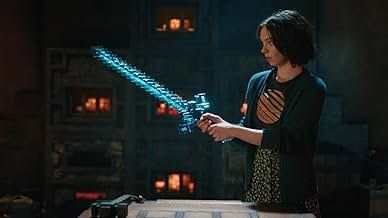
The crafting table becomes more than a recognizable object. It is the place where knowledge turns raw resources into tools. Henry’s natural ability with it supports his character arc. He is valuable not because he suddenly becomes physically powerful but because he can see possibilities others miss. The film includes familiar objects such as pickaxes, swords, buckets, minecarts, redstone-related devices, armor, food, and building materials.
Mobs appear throughout the journey. Creepers, Skeletons, Zombies, Endermen, Piglins, Villagers, wolves, chickens, and other creatures help establish the world. The day-and-night cycle creates immediate stakes. Darkness changes the environment from playful exploration into survival. This mechanic is explained quickly and clearly for viewers who have never played the game.
Building also becomes part of the action. Characters can create defensive structures or unexpected machines rapidly if they possess the right materials. The movie takes large liberties with exact game logic. Objects are sometimes crafted or used according to cinematic convenience rather than strict player rules. That flexibility is understandable. A perfectly accurate adaptation could become slow or overly technical.
The main issue is inconsistency. The film occasionally treats crafting as a disciplined system and elsewhere as a magical ability limited only by the needs of the joke. Minecraft fans may enjoy recognizing items while noticing that rules change from scene to scene. The spirit of the game survives more clearly than mechanical precision. Creativity, exploration, survival, resourcefulness, and collaborative building all matter.
Humor & Comedy Style: Loud Reactions in a Square Landscape
The film’s humor depends heavily on performance. Jack Black and Jason Momoa behave as though every scene is a competition to discover who can make the stranger choice.
Black uses songs, intense eye contact, dramatic item names, and physical enthusiasm. Momoa relies on vanity, panic, heroic posing, and the contrast between Garrett’s appearance and actual competence. Their chemistry is often funny because neither character accepts a secondary position easily. The famous reaction to ordinary Minecraft objects is intentionally excessive. A chicken jockey, a bucket, or a rare item may be treated like the arrival of a celebrity.
Some viewers will enjoy the complete lack of restraint. Others may find the joke exhausting because the film repeats the structure: recognizable object appears, character announces it loudly, action follows.
The movie also includes internet-aware humor designed around moments fans already associate with trailers and audience reactions. This gives the experience a communal, meme-friendly energy. It can also make scenes feel assembled from anticipated applause points. The quieter comedy works better for me. Characters misunderstanding block physics, reacting to Villagers, or attempting to survive the first night creates humor from the world itself.
Several jokes are extended beyond their strongest moment. Jack Black’s songs and Momoa’s heroic reactions occasionally continue after the comic idea has already landed. This is my second major complaint. The movie is afraid that lowering the volume may reduce attention, even when silence could make the next joke more effective.
Visual Design & Effects: Recognizable Blocks With Uneven Physical Reality
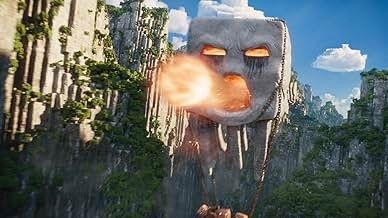
The Overworld is immediately recognizable. Mountains, trees, animals, clouds, water, villages, and caves preserve the square geometry of Minecraft. This creates a difficult visual challenge. The world must remain block-based while supporting human performers with realistic movement. Some environments work well. Wide landscapes, minecart routes, forests, and villages communicate scale while maintaining the game’s design.
The problem becomes more visible during close physical interaction. Actors sometimes appear placed in front of digital scenery rather than occupying the same environment.
Lighting and texture vary between scenes. In stronger moments, the block surfaces reflect light convincingly and characters appear grounded. In weaker moments, the Overworld resembles a highly detailed background built around live-action performers who belong to another visual language.
Animals and mobs face the same challenge. Their designs are faithful enough for recognition but given additional texture, movement, and expression. The Creepers remain effective because their simple shape translates naturally. Piglins and Villagers can appear more artificial when they must interact emotionally with actors.
Steve’s long history inside the Overworld raises another visual question. Jack Black remains fully human rather than adopting the square appearance of the game’s original avatar. This choice allows his performance to remain visible but emphasizes the separation between humans and the environment.
The production design is colorful and active. The Nether uses darker red and black tones, industrial structures, lava, chains, and fortress imagery. The contrast with the Overworld is clear but predictable. Creative freedom is bright; oppressive control is dark. The film looks expensive, though expense does not always create visual harmony.
Music, Direction & Pacing: Maximum Energy With Few Resting Places
Mark Mothersbaugh’s score supports the adventure with playful rhythms, fantasy themes, electronic details, and larger action music. The soundtrack also acknowledges the game’s quieter musical identity, though the film’s overall energy leaves limited space for calm reflection. Minecraft is often associated with exploration, repetition, atmosphere, and peaceful construction. The movie prefers shouting, pursuit, and rapid movement.
Jared Hess brings his interest in eccentric outsiders and socially awkward confidence to the project. Garrett clearly belongs in a Hess comedy. His clothing, self-created reputation, failed business, and stubborn pride feel built around a character who does not recognize how other people see him.
Steve also fits the director’s taste for intense individuals who treat unusual passions with complete seriousness. The pacing is fast from the moment the human group reaches the Overworld. New locations, threats, creatures, and jokes arrive continuously. This keeps younger audiences engaged but weakens emotional development.
Henry and Natalie need more ordinary conversation. Garrett needs time to confront why his old success matters so much. Steve needs more reflection about the danger he brought into the Overworld.
The final act becomes especially crowded. Piglin forces, vehicles, crafted devices, creature attacks, the Orb, and multiple personal resolutions compete inside one large sequence. The action remains understandable, but the emotional stakes are less powerful than the visual noise.
Themes & Emotional Meaning: Build Something Better Than the Role You Inherited
The film’s central theme is creativity. The Overworld rewards people who can imagine a solution before it exists. Henry begins in a world where invention makes him unusual. Inside Minecraft, the same quality becomes essential. This is a positive message for younger viewers. Intelligence does not need to look conventional to become valuable. Steve represents creativity as escape. He discovers a place where no authority can tell him what should or should not be built. His freedom is meaningful, but the film also shows that creation produces responsibility. Opening routes between dimensions can create danger.
Garrett’s arc concerns identity and nostalgia. He built his adult personality around a childhood victory because nothing later felt equally important. The Overworld gives him a chance to create a new story rather than continue selling the old one. Family and responsibility appear through Henry and Natalie. Natalie wants safety because their lives have already become unstable. Henry wants room to experiment because safety without self-expression feels like another form of confinement. The story argues that support should include allowing someone to take meaningful risks. Malgosha represents control as the opposite of creativity. She wants predictable subjects, fixed outcomes, and a world where invention cannot challenge authority.
The message is direct but appropriate for Minecraft. A sandbox game depends on the belief that the player should be able to reshape the environment. The film also values collaboration. The heroes succeed when builders, fighters, guides, and supporters combine their abilities. No one person creates the final solution alone, even if Henry’s imagination provides its foundation.
Adapting the Game: Fan Service Versus Creative Freedom
A Minecraft Movie faces an unusual adaptation problem because Minecraft has no single correct story. Millions of players have built personal worlds, created private goals, and developed different relationships with the game. The movie cannot reproduce that freedom completely. Cinema requires a fixed sequence of events.
Its solution is to make the Overworld itself the main adapted character. Rules, creatures, materials, sounds, and landscapes become the recognizable foundation. This works better than attempting to turn one famous player storyline into official mythology. The film includes enough references to reward fans without requiring extensive knowledge. A new viewer can understand that Creepers explode, night is dangerous, and crafting creates useful objects.
Experienced players will recognize more details, item behavior, creature designs, and visual jokes. The problem is that recognition occasionally replaces storytelling. A familiar object appears mainly so the audience can react to seeing it. The strongest references affect character decisions. Henry using crafting creatively matters because it reflects who he is. The weakest references function as announcements with no larger purpose.
The film captures multiplayer chaos better than solitary exploration. It resembles a loud group session in which several people attempt different plans at once. It captures less of the game’s peaceful side: building slowly, watching the landscape, organizing a home, or discovering something without immediate danger. Steve’s early enjoyment provides brief glimpses of that feeling. I wanted more.
Critical Reception & Audience Response: A Divisive Film That Became a Major Event
A Minecraft Movie received a mixed critical response. Reviewers often praised Jack Black and Jason Momoa’s commitment, the recognizable game references, and the film’s energetic appeal for younger audiences.
Criticism focused on the thin story, uneven visual effects, loud humor, underdeveloped characters, and dependence on fan recognition. Audience response was significantly more enthusiastic, particularly among children, teenagers, families, and longtime players. Certain lines and scenes became major online phenomena. Theater audiences turned recognizable moments into shared events, repeating dialogue and reacting loudly to specific reveals.
This behavior became part of the movie’s cultural identity. The film was not only watched; it was performed socially by audiences already familiar with its jokes. Its enormous commercial success demonstrated the global strength of the Minecraft brand.
The difference between critical and audience reaction is easy to understand. Critics often evaluated the film as narrative cinema, while many fans approached it as a celebratory experience built around recognition and communal humor.
Both perspectives are valid. The movie is structurally weak in several areas while still offering substantial entertainment to its target audience. Its lasting reputation will likely depend on whether the meme-driven energy remains amusing after the initial cultural moment passes. The performances and game references may age better than jokes built around repeated online exposure.
Final Verdict: An Entertaining Adaptation That Builds Too Fast
A Minecraft Movie is messy, loud, artificial, and more entertaining than its weakest elements suggest. The film understands that Minecraft cannot be adapted through plot alone. Its appeal comes from the possibility of turning imagination into structure. Henry represents that idea most clearly. He enters the Overworld carrying the insecurity of a child whose creativity has rarely been treated as useful.
Inside the game’s logic, his ability to imagine becomes the group’s greatest advantage. Jack Black makes Steve an energetic guide whose excitement communicates genuine affection for the world. The performance is excessive but rarely indifferent.
Jason Momoa gives Garrett the film’s funniest physical comedy. His character’s obsession with an old gaming identity also provides one of the story’s clearer emotional arcs. Danielle Brooks and Emma Myers bring warmth to Dawn and Natalie, though neither receives enough material.
The Overworld is visually recognizable, filled with creatures, tools, blocks, and mechanics that fans will identify immediately. The live-action and digital elements do not blend consistently. Some landscapes look impressive, while close interactions can appear weightless or staged.
Malgosha provides clear danger but little personality. Her opposition to creativity supports the theme without making her a memorable villain. The humor is the most divisive element. Several jokes are genuinely funny because the actors commit completely. Others rely on shouting familiar words and waiting for audience recognition.
I recommend A Minecraft Movie to younger viewers, families, Minecraft fans, Jack Black fans, and audiences seeking a chaotic fantasy comedy rather than a careful dramatic adaptation. Viewers hoping for the game’s quieter atmosphere, deep character writing, or consistent visual realism may find the experience exhausting.
Personal rating: 7/10.
A Minecraft Movie earns that score for committed performances, enjoyable game references, colorful environments, an accessible crafting system, and a positive message about creative confidence. It loses points for uneven visual effects, a thin villain, underused younger characters, repetitive loud humor, and a final act that adds more blocks than its emotional foundation can support.
Minecraft gives every player an empty space and asks what they want to make. The movie’s answer is chaotic, imperfect, and structurally questionable—but it is never afraid to build something strange.


Leave a comment
Your comment is awaiting moderation. We save your draft here
0 Comments