





Roblox Has a Surprisingly Serious Arena Shooter
Roblox RIVALS does not waste much time pretending to be a relaxed social experience. I enter a bright lobby, select or challenge an opponent, choose a loadout, and find myself inside a compact arena where one missed shot can decide the entire round. Matches move quickly, defeated players do not normally respawn until the next round, and the first side to collect five victories takes the duel. This Roblox RIVALS review begins with that speed because the game succeeds by removing almost everything between the player and another firefight.
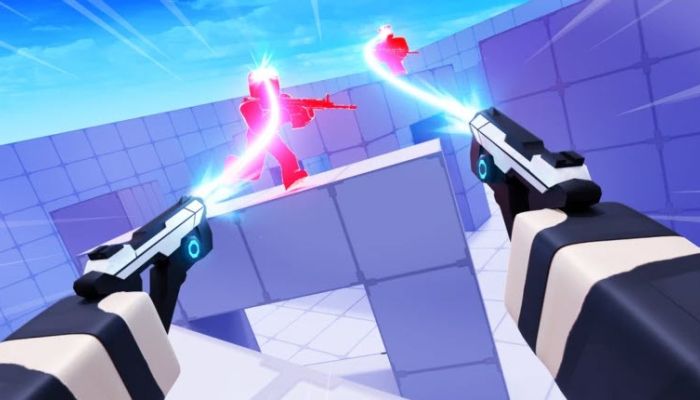
The presentation is colorful and unmistakably connected with Roblox, yet the shooting feels considerably more focused than I expected from a platform experience. Weapons have recognizable roles, movement supports aggressive plays, maps encourage quick route learning, and the small team sizes make individual decisions visible. In a 1v1 duel, I cannot blame a disorganized squad. Every missed opportunity belongs to me.
RIVALS is easy to understand but uncomfortable to master. I can equip a rifle, secondary weapon, melee option, and utility item within minutes. Learning when to slide, jump, reposition, switch weapons, use explosives, hold an angle, or abandon a bad engagement takes much longer. The first-to-five structure gives me several chances to adjust, but it also allows one opponent to expose the same weakness repeatedly.
That competitive clarity is the game’s greatest strength. It is also the source of its harshest moments. Experienced players can remove new users almost instantly, certain weapon combinations feel oppressive on specific maps, and the progression systems place many desirable tools behind keys, contracts, passes, bundles, or long-term play. The game is not simply a test of aim when one player has access to a broader collection of tactical options.
RIVALS remains one of the strongest shooters available through Roblox because its developers understand that short rounds need responsive controls, readable maps, and immediate rematches. It occasionally surrounds that excellent core with too many currencies, cosmetics, reward tracks, limited offers, and loud interface elements, but the act of entering another duel remains difficult to resist.
First to Five, No Time to Relax
The standard RIVALS duel places between one and five players on each side. A round begins with both teams spawning at opposite positions, and the objective is usually direct elimination. The team that removes every opponent wins the round, and the first team to reach five round victories wins the match. This format creates a useful balance between speed and adaptation. A single round can end in seconds, but losing it does not immediately end the match. I can change my opening route, select a different weapon, delay a push, or use utility more carefully during the next attempt.
The round structure produces psychological pressure. Winning the first two rounds makes the opponent appear predictable, while losing the next two reveals that they have started reading my habits. A 4–4 score turns one brief engagement into the conclusion of several minutes of adjustment. There is no long economic purchasing phase comparable with Counter-Strike. My loadout remains the primary expression of preparation, allowing the game to concentrate on movement and execution rather than managing money between rounds.
This makes RIVALS approachable for players who enjoy tactical tension but dislike extended matches. A failed duel ends quickly enough that restarting does not feel like a major commitment. The lack of respawning during core rounds gives each life value. Charging into the center without information may create one spectacular elimination, but it may also leave the team outnumbered immediately.
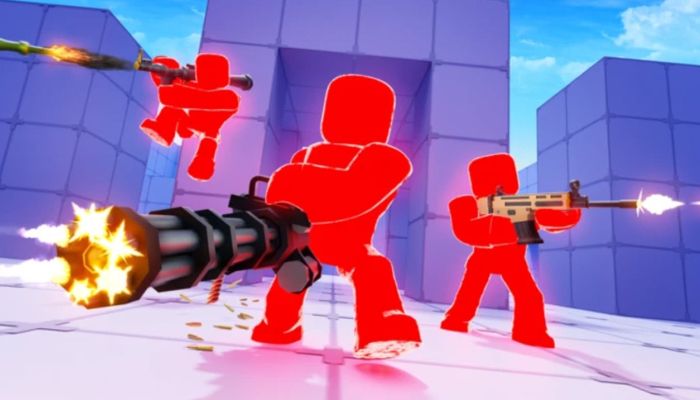
Larger 5v5 matches are naturally more chaotic. Utility, projectiles, movement abilities, and several weapon types can overlap in tight spaces. Individual mistakes matter slightly less, but positioning becomes harder to read. For me, 1v1 and 2v2 represent the game at its clearest. These formats expose mechanical skill and decision-making without turning every doorway into a crowd of visual effects.
Loadouts: Four Slots Define Every Approach
A standard loadout contains four categories: primary, secondary, melee, and utility. This simple structure creates substantial variety because each slot solves a different part of an engagement. Primary weapons usually determine the preferred combat distance. Automatic rifles provide flexibility, shotguns reward close pressure, sniper-style weapons control long sightlines, and other specialized options create more unusual strategies.
The secondary slot is not merely an emergency weapon. A fast pistol or powerful close-range alternative can finish an injured opponent after the primary weapon runs dry. Switching is often faster and safer than completing a reload in the middle of a duel. Melee weapons contribute movement, sudden close-range pressure, or special mechanics depending on the selected item. They can appear secondary to firearms until a skilled player uses one to cross space unexpectedly or punish someone trapped during a reload.
Utility items introduce disruption. Grenades force movement, healing tools extend survival, deployable or traversal equipment creates new angles, and defensive options can interrupt an opponent’s preferred weapon. The strongest loadouts feel coherent. A long-range primary benefits from a secondary capable of surviving close pressure. An aggressive shotgun setup may need utility that helps reach the opponent safely.
Poor combinations leave obvious gaps. Carrying several tools suited to one distance can make the player powerful under ideal conditions and almost helpless when the map or enemy refuses to cooperate. This loadout system gives RIVALS more depth than a shooter where everyone begins with the same equipment. It also introduces balance and progression concerns because access to additional weapons expands the number of strategies available.
Gunplay: Fast Feedback and Very Little Mercy
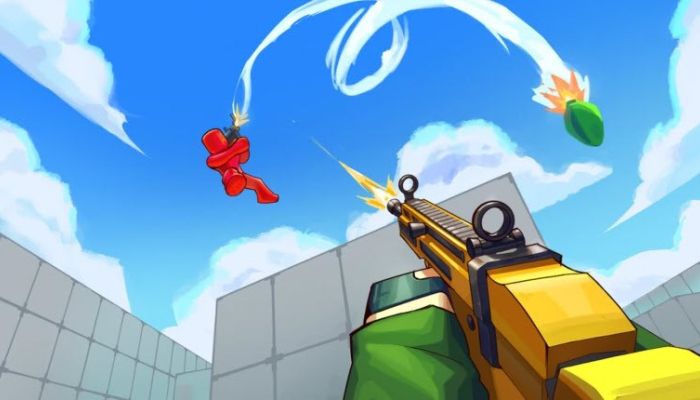
RIVALS uses quick, direct shooting with strong visual and audio feedback. Weapon fire feels responsive, successful hits are easy to recognize, and eliminations happen quickly enough that accuracy matters from the first moment of contact. Crosshair placement is essential. Players who keep their aim near likely head or body positions can respond immediately, while those looking at the ground must make larger corrections before firing.
Automatic weapons reward recoil control and tracking. Holding the trigger without understanding movement may work against beginners but becomes unreliable against players who strafe, jump, slide, and use cover effectively. Precision weapons create greater risk. A successful shot can decide a round instantly, but missing may expose the player during a long delay or weapon switch.
Shotguns are powerful on compact maps where corners and vertical routes allow sudden contact. They become less dependable when the opponent maintains distance and refuses to enter predictable spaces. Projectile weapons require anticipation rather than ordinary hitscan aiming. They can be extremely satisfying when I predict movement correctly, though network delay may make close misses difficult to interpret.
The short time-to-defeat creates one of the game’s main frustrations. A new player may be eliminated before understanding where the attack began. Repeated deaths can feel like a lesson delivered without enough time to read it. RIVALS needs that speed to keep its rounds tense. Slower combat would allow more reaction but might reduce the clarity of positioning and opening shots.
Movement: Sliding Turns Every Arena Into a Chase
Movement separates average RIVALS players from dangerous ones. Running directly across open space is easy to punish, so effective players combine strafing, jumping, sliding, route changes, and weapon-specific mobility. Sliding is particularly important. It changes the player’s height, preserves speed, and makes ordinary crosshair placement less reliable. Sliding around a corner can create enough disruption to land the first shot.
Jumping provides another way to change the expected target position, although excessive jumping can become predictable. A player repeating the same movement pattern is still easy to track after the opponent adjusts. Melee and utility items may provide additional dashes, grappling, launching, teleportation, or other traversal depending on the current equipment pool. These tools allow players to reach angles that ordinary movement cannot access safely.
The best movement remains purposeful. Sliding constantly without considering the map may send me directly into an opponent’s aim. Jumping during every shot can reduce my own accuracy more than theirs. Movement also changes according to weapon choice. A sniper wants enough distance to observe approaches, while a shotgun user may use every available mechanic to remove that distance.
On mobile devices, advanced movement can become much harder because several actions compete for limited screen space. Controller players also need comfortable bindings to slide, aim, fire, jump, and switch tools without losing control. The game provides cross-platform access, but equal availability does not create identical input conditions. Strong aim assistance, device-specific settings, and matchmaking balance remain sensitive subjects in any competitive shooter supporting several control methods.
Maps: Small Arenas With Strong Tactical Identities
RIVALS maps are usually compact enough to learn quickly. This suits the short-round format because players need to understand major routes after only a few attempts. Small duel maps emphasize immediate contact. Both players often know the likely opening positions, turning the first seconds into a contest of timing and prediction. Larger maps provide longer sightlines, multiple levels, side routes, jump pads, cover pieces, and wider opportunities for utility. These spaces suit team modes better but can create slower 1v1 rounds when both players avoid risk.
A good map supports several weapon types without making one dominant. Long sightlines should have alternate approaches, while close interiors need enough exits to prevent shotgun users from controlling every encounter automatically. Verticality gives movement tools greater value. High ground can provide information and safer shots, although exposed elevated positions may become predictable targets.
The visual themes are bright and readable. Strong colors help separate floors, walls, hazards, and interactive objects, even when the environments are deliberately stylized. Some arenas become exhausting when specific weapon combinations exploit their layout. A narrow map may make explosive or close-range options overwhelming, while a broad open map can make precision weapons feel unavoidable.
Map voting helps players influence the next match, but popular arenas may repeat too frequently. A larger catalogue creates variety only when the matchmaking rotation uses it effectively. I appreciate how quickly the best maps become familiar. Within several rounds, I begin recognizing opening angles, escape routes, and places where opponents expect me to appear. The duel then becomes a contest over known space rather than random wandering.
1v1 Duels: The Purest and Most Stressful Mode
The 1v1 format represents RIVALS in its most personal form. There are no teammates to distract the opponent, provide healing, or compensate for a mistake. Every round becomes a direct comparison of aim, movement, loadout, and adaptation.
This clarity makes victories satisfying. Outsmarting one opponent across several rounds creates a stronger sense of improvement than being carried through a crowded team match. It also makes defeat uncomfortable. A stronger player can control the pace completely, forcing me into the same losing interaction until the match ends.
The first round provides information. I learn whether the opponent rushes, waits, uses a sniper, throws utility immediately, or relies on movement to enter close range. Later rounds become a conversation conducted through routes and weapons. I may pretend to repeat an opening before changing direction, save utility for the moment they expect aggression, or select a counter to their preferred distance.
Loadout differences are more visible in 1v1. One unusual weapon can change the entire match because there are no additional players to create alternative pressure. The format is excellent for practice but unfriendly to complete beginners. A training queue or stronger skill-based placement could reduce matches where one person learns nothing beyond how quickly they can lose.
Team Modes: Cooperation Mixed With Public-Lobby Chaos
Team matches expand the importance of positioning and coordination. A player who deals damage without securing an elimination may still create an opening for a teammate. Crossfire becomes powerful. Two players controlling different angles force opponents to expose themselves regardless of where they move.
Utility is also more valuable because one grenade or area-control item can affect several targets. Healing and defensive tools gain purpose when they preserve an entire team’s advantage. Communication creates a major difference. Friends using voice or clear signals can coordinate pushes, identify enemy locations, and focus dangerous targets. Public groups are less reliable. Some teammates rush alone, remain inactive, ignore useful positions, or refuse to adapt their loadout even when the enemy strategy is obvious.
The short rounds prevent poor teamwork from becoming a long punishment. A disorganized match ends quickly, and another team can be found without losing an entire evening. Visual noise is the main issue in larger formats. Several players may jump, slide, throw explosives, activate movement tools, and fire unusual weapons inside one compact area. Reading the source of damage becomes difficult. The game is mechanically sharpest in smaller teams, but 5v5 offers a more forgiving social experience for players who dislike the pressure of direct duels.
Alternative & Arcade Modes: Useful Breaks From Serious Duels
RIVALS has expanded beyond its original duel structure through arcade activities, team deathmatch-style formats, free-for-all competition, experimental maps, event modes, and limited rule variations. These modes provide a useful break from first-to-five elimination. Respawning allows players to practice weapons without waiting for the next round after every mistake. Free-for-all creates constant pressure because attacks can arrive from several directions. It is less tactical than a duel but useful for improving reactions and target switching.
Team deathmatch rewards sustained combat rather than preserving one life. Players can test aggressive movement and unfamiliar equipment with fewer consequences. Special event modes may introduce restricted loadouts, environmental mechanics, disappearing floors, or other rules. These activities are entertaining precisely because they do not need to preserve the balance of ranked competition. The weakness is fragmentation. Every additional queue divides players and makes the overall experience harder to understand for newcomers.
Arcade modes may also provide less useful progression depending on current rules. When rewards or task advancement are restricted, players can feel pressured to return to standard matches even when they prefer the experimental mode. RIVALS should continue using arcade content as a laboratory. The core duel format benefits when unusual ideas can be tested elsewhere before affecting serious competition.
Progression, Keys & Weapon Unlocks: Motivation With Friction
Players earn keys and other rewards through play, tasks, codes, events, passes, contracts, or purchases. Keys can be used to unlock weapons and cosmetic content depending on the current system. The progression provides a reason to continue beyond improving mechanical skill. Completing several matches may move me closer to a new weapon capable of supporting a different strategy. Beginner tasks help explain basic systems while supplying early rewards. They encourage players to visit the shooting range, test equipment, and understand the interface.
Contracts create longer objectives connected with weapons, wins, or specific activities. A good contract encourages me to use equipment I already enjoy while working toward a visible reward. The problem is that weapon access affects gameplay rather than appearance alone. A player with a larger collection can choose more counters and experiment with more combinations.
Default weapons remain capable of winning. Accurate shooting and movement matter more than owning a rare skin or expensive item. Access still influences flexibility, particularly when a certain map favors a specialized utility or weapon.
Grinding keys may feel slow when the desired item costs substantially more than early rewards provide. This creates pressure to use codes, complete time-limited events, purchase bundles, or remain active through seasonal systems. A cleaner competitive structure would separate basic weapon availability from cosmetic collection more clearly. Every player should be able to reach the full tactical toolkit through reasonable play without feeling that the store is the efficient solution.
Ranked Play: A Strong Goal With High Entry Pressure
Ranked modes give skilled players a reason to move beyond ordinary win streaks. Rating systems, divisions, seasonal rewards, and leaderboard positions create visible competitive progression. The strongest benefit is match purpose. A ranked round carries more weight because every decision influences placement and future opponents.
Entry requirements can reduce inexperienced accounts and discourage casual cheating. Account verification, minimum levels, or other restrictions may improve match quality, though they also create barriers for legitimate players. Ranked balance depends on map rotation, weapon availability, input differences, and anti-cheat reliability. One exploit or overtuned item becomes more damaging when rating is attached to the result.
Seasonal resets provide another reason to return. They can also make previous effort feel temporary, especially when rewards matter more than the process of climbing. I appreciate ranked play as an optional destination rather than the default experience. RIVALS is already intense in casual 1v1 matches; not every session needs additional pressure. The mode would benefit from detailed performance information. Accuracy, damage, utility effectiveness, map records, and weapon statistics could help players understand why they are winning or losing.
Shooting Range & Practice: Helpful Foundations That Need More Analysis
The shooting range allows players to test weapons, inspect behavior, adjust controls, and become comfortable before entering public duels. This is essential because the weapon catalogue contains options with different recoil, projectile speed, damage, reload timing, and special mechanics.
Testing a weapon prevents spending valuable keys without understanding whether it suits my preferred style. It also allows new players to experiment without being removed immediately by experienced opponents. Movement practice is equally important. A useful training space should support sliding, jumping, weapon switching, utility use, and route repetition rather than only shooting stationary targets.
The range could provide stronger analytical tools. Damage numbers, time-to-defeat comparisons, recoil displays, distance measurements, and moving target presets would help serious players improve. Replay systems or aim records would also make training more meaningful. Practicing is easier when the game identifies whether my weakness is reaction, tracking, precision, or movement. The current tools provide a reasonable introduction, but the competitive ceiling deserves deeper support.
Cosmetics & Presentation: A Reward System Built to Stay Visible
RIVALS contains weapon skins, wraps, charms, finishers, emotes, and other cosmetic items. These rewards give players ways to personalize equipment without changing basic statistics. Weapon skins receive the most attention because the player sees them constantly in first person. A distinctive design can make a familiar weapon feel new even when its performance remains identical.
Finishers add visual celebration after an elimination. They can be entertaining but may also feel excessive when one player is already frustrated by losing a close round. Charms and wraps provide smaller customization. They are less intrusive and work well as contract, event, or milestone rewards. Emotes support lobby interaction and post-match expression. As with any competitive game, celebratory animations can feel playful to one player and deliberately irritating to another.
The number of cosmetic sources can become difficult to track. Daily shops, cases, passes, bundles, seasonal rewards, events, ranked milestones, UGC purchases, and codes may all provide different items. Scarcity increases desirability. Limited-time products encourage quick decisions, especially among younger users who fear missing a favorite design. The cosmetics do not directly improve aim or damage. Their surrounding acquisition systems still occupy a large part of the interface and progression economy.
Graphics & Art Direction: Clean Arenas Over Realistic Detail
RIVALS uses a bright, simplified art direction appropriate for Roblox. Maps rely on clear shapes, strong colors, and readable silhouettes rather than realistic materials. This visual clarity supports competitive play. Enemies stand out against most backgrounds, and important routes can be recognized quickly. Weapon models are detailed enough to have personality without becoming visually heavy. Skins introduce much more elaborate effects, patterns, or animation depending on rarity. Movement effects make sliding, dashing, and special weapons feel fast. During larger matches, these same effects can become distracting.
Maps often resemble compact training arenas, toy-like cities, studios, museums, industrial spaces, or experimental environments. Their artificial structure fits a game focused on direct combat rather than world simulation. Character avatars introduce inconsistency because Roblox supports an enormous range of appearances. Unusual proportions, accessories, dynamic heads, and layered clothing can affect visual readability.
Competitive systems need to normalize extreme avatar features so that expensive or unusual cosmetics do not provide practical advantages. RIVALS has continued adjusting how avatars appear inside duels for this reason. The art style will not impress players seeking realistic military atmosphere. It succeeds by making combat information fast to read.
Audio Design: Strong Weapon Feedback, Repeated Competitive Noise
Weapons use distinct firing, reload, impact, and elimination sounds. This helps identify what an opponent is using before I see them directly. Footsteps and movement audio provide important information, particularly in 1v1 matches where one sound can reveal a route change. Explosives, projectiles, healing items, and special weapons add their own cues. Learning these sounds is part of competitive improvement.
The audio mix can become crowded during larger matches. Several weapons, movement effects, finishers, and explosions may overlap until positional information is difficult to isolate. Menu and reward sounds maintain constant energy. Unlocking an item, completing a contract, or progressing a pass receives immediate celebration.
That excitement becomes tiring when every small action produces a notification. The interface rarely feels calm. Music is less important during direct matches because awareness depends on gameplay sounds. Lowering unnecessary audio can improve concentration. The game would benefit from more granular controls for cosmetic effects, announcer volume, menu sounds, and special finishers.
Technical Performance & Cross-Platform Play: Impressive Reach With Unequal Conditions
RIVALS supports desktop computers, phones, tablets, Xbox consoles, and PlayStation 5. This broad availability helps maintain a large audience and allows friends to play across different devices.
Performance depends on hardware, Roblox settings, network quality, and the number of effects visible during a match. Small arenas generally allow smooth frame rates on reasonable devices. Mobile players face the greatest interface challenge. A touchscreen must support aiming, firing, jumping, sliding, switching weapons, using utility, reloading, and camera movement simultaneously. Custom button placement and opacity settings help, but physical controls remain easier for many players during advanced movement.
Console players benefit from controllers and large displays but may compete against mouse users with faster precision. Input balance and aim assistance require continuous adjustment. Network delay is highly visible because fights end quickly. A shot that appears accurate locally may fail because the opponent’s position has already changed on the server.
Occasional desynchronization, hit-registration uncertainty, animation errors, or weapon disappearance can damage trust. A competitive shooter depends on players believing that every result follows consistent rules. Updates regularly address bugs and balance problems. The live-service pace also means new issues can appear whenever weapons, maps, effects, or interfaces are changed.
Cheating & Competitive Integrity: A Permanent Threat to Short Duels
RIVALS publicly emphasizes permanent penalties for cheating, exploiting glitches, and artificial win farming. This strict position is necessary because one dishonest player can destroy an entire duel.
Aimbots, movement exploits, impossible information, and manipulated progression are especially harmful in 1v1 matches. There is no team variance capable of hiding the advantage. Anti-cheat systems must avoid both missed violations and false punishment. Competitive communities quickly lose trust when obvious cheaters remain active or legitimate players fear unexplained bans.
Smurf accounts create another issue. A skilled player using a new account may appear identical to a beginner in matchmaking, producing extremely uneven matches without technically cheating. Win farming can distort leaderboards and streak systems. Restrictions against using alternate accounts or friends for artificial progression help preserve visible achievements.
Reporting should be quick but not encourage angry players to report every opponent who performs well. Match replays and server-side evidence would make moderation decisions easier to trust. No online shooter eliminates cheating completely. RIVALS benefits from short matches because I can leave quickly, but losing a streak or ranked rating to suspicious behavior remains frustrating.
Monetization: Free Access With Paid Convenience and Constant Temptation
RIVALS is free to play through Roblox. The core duel modes, standard weapons, maps, and progression can be accessed without an initial purchase. Spending appears through Robux-based bundles, passes, cosmetics, cases, seasonal content, UGC items, and other rotating offers. The exact catalogue changes as updates and events arrive. Cosmetic purchases do not directly improve weapon statistics. A rare skin does not make bullets deal more damage. The more sensitive issue is access to gameplay equipment. When bundles, passes, or progression shortcuts provide faster access to weapons or utility, paying players gain flexibility sooner.
That advantage is not equivalent to purchasing automatic victory. Mechanical skill remains decisive, and default equipment can defeat expensive loadouts. The distinction may not comfort a new player facing an unfamiliar weapon they cannot yet afford with earned keys. Tactical access affects preparation even when damage values are balanced. Season passes combine rewards with limited time. They encourage regular activity and can turn casual play into a schedule of tasks.
UGC rewards connect Roblox avatar purchases with in-game milestones. This is clever cross-promotion but adds another path through which spending creates collection progress. Parents should use Roblox purchasing controls. RIVALS presents many desirable items through bright interfaces, limited availability, rarity labels, and visible social status. The game is playable without payment. Remaining completely unaffected by its store requires more discipline than the clean shooting mechanics suggest.
Who Should Play Roblox RIVALS?
RIVALS is ideal for players who enjoy fast FPS duels, compact maps, aim practice, movement mechanics, short matches, and visible competitive improvement. Roblox users wanting a serious shooter without leaving the platform should find one of its most polished options here. The 1v1 mode suits players who enjoy direct responsibility and do not mind losing repeatedly while learning. Team modes are more comfortable for friends and younger players who prefer shared pressure. Players interested in collecting skins, wraps, finishers, and charms receive extensive progression outside combat.
Anyone who dislikes rapid eliminations, competitive taunting, weapon grinding, or live-service stores may become frustrated quickly. Mobile users can participate fully but should expect a more demanding control experience. Players seeking a relaxed social Roblox game should also understand that RIVALS is built around winning direct confrontations.
Final Verdict: One of Roblox’s Best Shooters, but Not Its Most Relaxed Game
Roblox RIVALS succeeds because it understands the value of a clean competitive loop. I enter a duel, select four pieces of equipment, fight through short rounds, and receive an immediate opportunity to adjust after every loss. There is little downtime and almost no confusion about what determines victory. The gunplay feels sharp enough to support serious practice. Movement prevents firefights from becoming static, while compact maps allow players to learn routes quickly and begin predicting one another.
The first-to-five format is excellent. It gives the stronger player enough time to prove consistency while still allowing adaptation and comebacks. Loadouts create meaningful variety, though progression complicates competitive fairness. Default weapons remain capable, but access to a broader collection gives experienced or paying players more tactical choices.
The 1v1 mode is the purest expression of the game and its harshest environment. Team modes reduce personal pressure but introduce public-lobby chaos and visual clutter. Technically, RIVALS is impressive across computers, consoles, and mobile devices. Input differences, network delay, hit registration, and cheating remain unavoidable concerns for a shooter operating at this speed.
The monetization is not direct pay-to-win, but it is persistent. Keys, passes, bundles, cases, cosmetics, contracts, UGC rewards, and limited items surround a game whose best feature is much simpler than its store: two players entering an arena to discover who adapts first. I recommend Roblox RIVALS to competitive FPS fans, Roblox players looking for polished gunplay, groups seeking short team matches, and anyone motivated by aim improvement and win streaks. Players wanting a calm progression experience should approach carefully.
Personal rating: 8.5/10.
Roblox RIVALS earns that score for its responsive shooting, excellent first-to-five structure, meaningful loadouts, fast movement, compact maps, broad device support, and strong replay value. It loses points for harsh beginner matchmaking, progression-based weapon access, crowded monetization, visual noise, input inequality, and occasional uncertainty caused by network or balance issues.
The game is at its best when every external system disappears. No pass, bundle, charm, or finish animation matters once the round begins. There is only a small arena, one opponent, four tools, and a few seconds to prove that I learned something from the previous defeat.
Pros

- Free to download and play
- Accessible on multiple devices such as PC, Mac, and Android
- Intuitive and responsive control mechanics
- Visually appealing graphics optimized for various devices
- Multiple gameplay modes catering to different play styles
- An engaged community that continuously contributes to updates and mods
Cons

- Potential imbalance when using cheats or mods
- Occasional performance issues on lower-end devices
- Learning curve may be challenging for absolute beginners
Leave a comment
Your comment is awaiting moderation. We save your draft here
0 Comments