





My Most Valuable Employee Has Legs and Can Be Stolen
Roblox Steal a Brainrot teaches its central lesson very quickly: ownership is temporary. I buy a strange meme-inspired creature, watch it walk toward my base, and begin earning money from its existence. For a few moments, the system feels like an ordinary tycoon. Then another player runs through the entrance, grabs the creature, and attempts to carry it back to their own collection while I chase them with a slap tool.
That mixture of passive income, theft, defense, and deliberate irritation defines this Roblox Steal a Brainrot review. The game is built around collecting bizarre Brainrot characters, placing them inside a base, using their income to purchase stronger or rarer additions, and protecting them from everyone else on the server. Progress is not only about earning faster. It is about becoming valuable enough that other players want what I have.
Steal a Brainrot looks absurd because its characters come from internet meme culture, exaggerated artificial voices, surreal animal combinations, and deliberately nonsensical names. Under that chaotic presentation is a highly effective social game. Every base displays its owner’s progress publicly, so wealth creates both status and danger. A rare Brainrot becomes an investment, trophy, and invitation for theft at the same time.
The opening progression is easy to understand. I buy inexpensive characters, collect income, wait for better options to appear, and expand the collection. The tension begins when I leave the safety of my base. While I am shopping or attempting a theft, someone else may be studying my defenses.
The game’s strongest moments come from this constant uncertainty. A successful robbery feels exciting because another person actively tries to stop me. Defending a rare unit feels more personal than protecting an ordinary number on a leaderboard. Even failure can be funny when a carefully planned theft ends with three players slapping one another beside a locked entrance.
Its weakest moments come from the same design. Losing an expensive Brainrot can erase meaningful progress, stronger players may dominate a server, and paid items or temporary advantages can make defensive encounters feel less equal. The repetitive income loop also becomes visible once the novelty of the characters fades.
Steal a Brainrot is not a deep strategy game, but it is an extremely effective machine for producing rivalry, panic, greed, and short stories involving creatures that should never have become valuable in the first place.
Core Gameplay Loop: Buy, Earn, Steal, Defend, Repeat
The main loop begins with purchasing a Brainrot from the central conveyor or acquisition area. Once bought, the character travels toward my base and occupies an available space. It then generates money automatically. I collect that income and use it to buy additional characters. More expensive Brainrots generally create greater earnings, allowing access to stronger purchases and faster progression. This is the familiar tycoon foundation. The game would be functional but ordinary if the loop ended there. The defining mechanic is that other players can steal Brainrots. They enter another base, select an available target, pick it up, and attempt to carry it back to their own territory.
Carrying one usually makes the thief vulnerable. Movement may be limited, defensive tools become harder to use, and the original owner can chase them across the shared area. A theft is not complete merely because the character has been touched. The thief must survive the return journey and deliver it successfully. This creates a visible escape sequence where nearby players immediately understand what is happening.
Defenders can use locks, temporary protection, slaps, purchased tools, and physical interception to stop the escape. Attackers can wait for shields to expire, distract the owner, use movement advantages, or choose a moment when the base is unattended. This creates a satisfying circular economy. Better characters earn more money, but better characters also attract more attention. Progress produces vulnerability instead of removing it completely.
The loop remains understandable across short sessions. I can join, collect income, attempt one theft, defend the base, and leave without needing to complete a long match. Long sessions reveal more repetition. Much of the game involves watching the conveyor, collecting money, waiting for protection timers, and judging whether another player’s base is worth the risk.
Brainrot Characters: Memes Turned Into Economic Assets
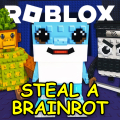
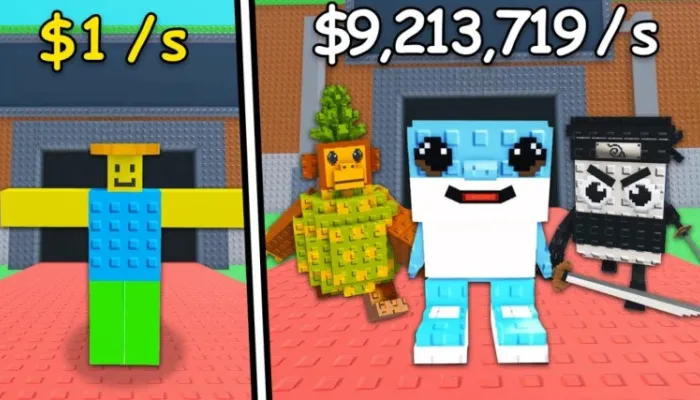
The Brainrots are the game’s visual and cultural foundation. They are intentionally strange characters based on internet trends, artificial-sounding names, absurd animal combinations, and designs created to be immediately recognizable in short videos. Their lack of logic is part of the appeal. A normal fantasy creature would not create the same comic effect when carried across the map by a thief. These characters look as though they escaped from a collection of unrelated memes and were assigned salaries.
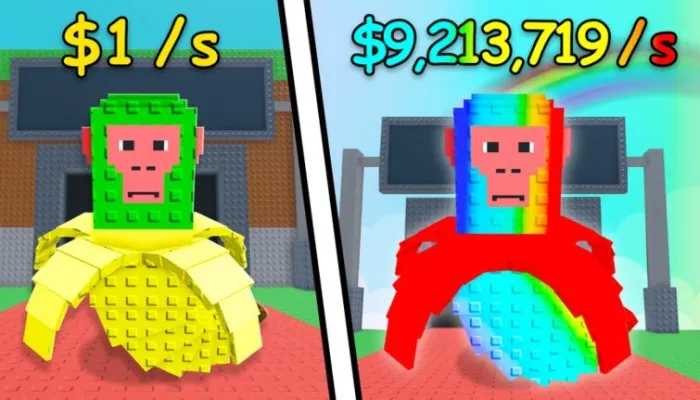
Different rarity levels create a natural hierarchy. Common Brainrots help establish early income, while rarer characters become major collection goals. The visual distinction is important because players need to recognize valuable targets quickly. A rare unit must look unusual enough that someone passing the base immediately understands its importance. Variants, mutations, event versions, or special appearances further expand the collection. They encourage players to keep watching for limited opportunities even after the basic rarity ladder becomes familiar.
The characters provide personality without complex behavior. Most function primarily as animated income generators rather than companions with advanced artificial intelligence. That simplicity is appropriate for the game’s loop. I am not training them, developing relationships, or selecting abilities. Their value comes from rarity, income, appearance, and social status.
The meme references may age quickly. A character that feels hilarious during one trend can seem confusing months later. Frequent updates help, but the game’s identity depends heavily on internet culture that constantly replaces itself. For younger players already familiar with Brainrot humor, the collection is immediately appealing. Players outside that culture may see random models making strange noises and wonder why everyone is fighting over them.
The Conveyor and Purchasing System: Waiting for the Right Opportunity
New Brainrots usually appear in a shared purchasing area, creating competition before they even reach a base. Players watch available characters, compare prices, and attempt to buy desirable units before someone else does. This system gives shopping a social element. I am not browsing a private menu where supply exists only for me. Other players can see the same opportunity. A rare appearance may cause several people to move toward the conveyor simultaneously. Whoever has enough money and reacts first gains the advantage.
That urgency makes income important beyond long-term accumulation. Keeping money available may be smarter than spending everything on minor upgrades, because a valuable character can appear unexpectedly. The purchasing area also pulls players away from their bases. Every trip creates a defensive risk. Someone may wait until I leave before attempting a theft. This conflict between shopping and protection is one of the game’s better decisions. Progress requires attention to two locations at once.
Waiting can become tedious when the available selection remains weak. The game needs enough variation and event activity to prevent the conveyor from feeling like a slot machine that produces mostly uninteresting results. Luck plays a major role. One player may encounter an excellent purchase at the perfect time, while another waits through many ordinary characters. That randomness creates excitement but weakens the sense that progress follows only from intelligent play.
Base Design and Defense: A Home Built to Display Temptation
Every player receives a base that stores Brainrots and generates income. The space functions as a tycoon, collection display, defensive position, and public statement of progress. New players begin with modest collections and limited protection. Established players may display several rare units, making their bases obvious targets. The openness is intentional. Hiding every valuable character would reduce theft opportunities and social tension. The game wants wealth to be visible. Defensive systems usually involve temporary locking, shields, owner-controlled protection, gear, and physical intervention. These tools delay thieves rather than creating permanent safety. Timing becomes important. A base may be secure for a limited period, then vulnerable while the protection recharges or expires.
A strong defender watches nearby movement rather than only standing beside the income collector. Players often approach casually, wait for a distraction, and attack when the owner appears focused elsewhere. The base can feel less like a home and more like a shop where every customer may attempt to leave with the merchandise. I wanted more construction control. Custom traps, alternative layouts, defensive upgrades, doors, routes, and visual customization could create deeper strategic differences between bases.
Most defensive variety comes from tools and timing rather than architecture. Once I understand the standard layout, stealing from different players can feel mechanically similar. The lack of complex building keeps the game accessible, but it limits long-term tactical depth.
Stealing: The Mechanic That Creates Every Good Story
Entering another base and attempting to take a valuable Brainrot is the game’s central risk. The action is simple, but the social context creates tension. Before entering, I study the owner. Are they collecting money? Watching the conveyor? Fighting with another player? Standing beside the most valuable unit? A good theft often depends on patience. Rushing directly toward the rarest character usually makes the plan obvious. Distraction is useful. Another thief may enter first, forcing the owner to chase them while I target a different unit. Temporary alliances can form without any formal team system.
Once I pick up the Brainrot, subtlety disappears. The objective becomes escape. The distance between bases feels much longer while carrying something valuable. Every turn creates the possibility of a slap, collision, stolen return, or interference from a third player. Other users may attack simply because the chase looks entertaining. A robbery involving two people can become a server-wide event within seconds.
Successful delivery provides an immediate sense of victory because the reward appears physically inside my own collection. Failure can be brutal. I may lose time, expose my own base, and return with nothing while the defender celebrates. Stealing works because it turns passive tycoon wealth into an object players can contest directly. The game would lose most of its personality without this mechanic.
Slaps and Troll Gear: Defense Through Deliberate Annoyance
Slap tools and troll equipment allow players to interrupt thieves, push opponents, create movement advantages, or cause general disorder. The slap mechanic is simple and visually funny. One hit can send a player away from the route they intended to use, buying enough time to recover a stolen character. Timing matters because missing leaves a short opportunity for the thief to escape. Landing a successful slap near the base entrance can completely reverse the situation.
Troll gear expands the possibilities through traps, movement effects, disruptions, and other advantages depending on the current item selection. These tools create the game’s most chaotic moments. Several players may slap one another repeatedly while nobody remembers which Brainrot started the conflict. The comedy becomes frustration when equipment feels unavoidable or excessively strong. A player with superior paid or high-level gear may stop theft attempts without requiring much positioning skill.
Crowded servers amplify the problem. Being hit by someone unrelated to the robbery can destroy a careful plan. The tools need short cooldowns and clear counterplay. Without those limits, encounters become contests over who owns the strongest disruption rather than who planned the better theft. I enjoy the slap as a basic universal mechanic because it keeps defense readable. More elaborate troll items are entertaining in moderation but risk overwhelming the clean core loop.
Rebirth: Starting Again for Permanent Growth
Rebirth allows players to reset significant progress in exchange for permanent advantages. This is a familiar Roblox tycoon structure designed to create long-term progression beyond one completed base.
The reset may remove money, Brainrots, or temporary development while providing multipliers, expanded capacity, improved earning potential, or access to additional progression. The decision creates a useful tension. Continuing with the current collection feels comfortable, but rebirth promises faster future growth. Early rebirths usually feel rewarding because the permanent bonuses are noticeable. Rebuilding takes less time, and previously expensive characters become easier to reach. Later resets can become mechanical. I repeat the same opening purchases and collection process because the game requires another cycle.
The emotional difficulty depends on whether valuable Brainrots are lost. Resetting ordinary income generators is easy; sacrificing rare or event characters feels much worse. A strong rebirth system should unlock new possibilities rather than only increase numbers. Additional base slots, defensive options, mechanics, or areas make a reset feel like genuine expansion. Pure multipliers eventually turn progression into watching the same income rise more quickly. Rebirth works well for dedicated players who enjoy optimization. Casual collectors may dislike any system asking them to abandon characters they worked to obtain.
Progression and Rarity: Wealth Creates Better Targets
Progression operates through money generation, rarity collection, rebirth bonuses, base capacity, gear access, and participation in updates or events. The early game moves quickly because each new purchase noticeably increases income. This creates a strong first-session experience. Mid-game progression becomes more dependent on rare appearances, theft, or efficient reinvestment. Buying every available character is not always the best strategy. Late-game goals revolve around extremely rare Brainrots, special traits, limited versions, trading, rebirth milestones, and social status. The rarity ladder provides clear motivation but can create a widening gap between players. A wealthy base generates money faster, allowing even stronger purchases.
Theft offers a potential shortcut. A new or mid-level player can gain a valuable unit through skill, timing, or luck rather than waiting through the entire economic ladder. The defender’s advantages may make that shortcut difficult. Experienced owners usually understand every common approach and possess stronger gear. The economy therefore balances between upward mobility and dominance. The possibility of stealing keeps the game from becoming a purely automatic wealth simulator, but it does not guarantee equal opportunity.
Multiplayer Psychology: Trust Nobody Near the Entrance
Steal a Brainrot is less about formal teamwork and more about reading intentions. Players rarely approach a valuable base accidentally. Someone standing outside may be waiting for the shield to expire. A player pretending to browse the conveyor may be watching when the owner leaves. Temporary cooperation emerges naturally. Two users may attack the strongest base together because neither can succeed alone.
That alliance usually ends the moment one of them obtains the desired Brainrot. Revenge becomes a powerful motivation. After losing a rare character, a player may spend the next several minutes targeting the thief’s base rather than pursuing efficient progression. This personal conflict makes servers memorable. I begin recognizing individuals not by their usernames but by what they stole and how they defended it.
The same intensity can create toxic behavior. Players may taunt, follow, repeatedly target beginners, or use the mechanics mainly to upset others. Roblox moderation and account controls remain important, especially for younger audiences. The game encourages conflict by design, even when the visual presentation remains comedic. The best servers treat theft as playful competition. The worst turn one loss into prolonged harassment.
Trading and Collection Culture: Value Extends Beyond One Server
As the game’s collection grows, trading becomes increasingly important to the wider community. Players compare rarity, traits, event availability, and perceived value. Trading allows collectors to obtain desired Brainrots without depending entirely on conveyor luck or direct theft. It also introduces risks. Young players may not understand changing values, social pressure, impersonation, or dishonest offers. An official and secure interface is essential. Any exchange system should display both sides clearly, require confirmation, and prevent last-second substitution.
The community often creates unofficial value lists. These can help but should not be treated as fixed truth because updates, duplication, supply, and popularity change demand. A character may become expensive because it is mechanically profitable, visually popular, temporarily unavailable, or simply fashionable. The social collection layer extends the game beyond one session. Players discuss updates, coordinate trades, and display rare acquisitions. It also makes losses more emotionally significant. A stolen character may have community value far beyond the money it generates inside the base.
Events and Updates: The Game Depends on Constant Novelty
Live events introduce new Brainrots, traits, mechanics, boosts, or limited opportunities. They are important because the basic tycoon loop would become repetitive without regular changes. New characters refresh the conveyor and give established players another reason to continue collecting. Event periods often increase server activity. Everyone wants the same limited rewards, making bases more valuable and theft attempts more frequent. Developer-driven events can also produce large reward bursts, unusual spawning conditions, or deliberately chaotic server behavior. These moments are entertaining because they temporarily disrupt the normal economy. They can also create fear of missing out.
Players may feel required to join at specific times or remain online during updates to avoid losing access to rare content. Limited availability benefits collection culture but can make the experience unfriendly to users with restricted schedules. The game should preserve alternate paths for obtaining important characters later, even if event versions remain visually exclusive. Frequent updates keep Steal a Brainrot culturally relevant. They also make balance unstable, since every powerful new unit or item can change income and trading values quickly.
Graphics and Art Direction: Intentionally Ugly, Immediately Recognizable
The game uses bright colors, simple bases, readable objects, and exaggerated Brainrot models. It is designed for immediate recognition rather than artistic subtlety. Characters often look strange on purpose. Their mismatched bodies, artificial expressions, and absurd names reflect meme culture more than conventional creature design. The central area is visually simple enough that I can locate bases, the conveyor, players, and stolen Brainrots quickly. Rare units usually use stronger effects, larger models, unusual colors, or more elaborate animation. This makes value visible but can create visual clutter inside advanced bases.
Several high-rarity characters placed together may fill the screen with effects. Identifying one specific target becomes difficult. Player gear adds further noise. Slap animations, trails, traps, event effects, and movement items can turn a chase into a wall of particles. The style suits short videos and social media because a viewer understands the joke immediately. It is less appealing during long sessions if the loud presentation becomes tiring. The game’s visual identity is inseparable from Brainrot culture. Anyone who dislikes that aesthetic will probably not be persuaded by the mechanics alone.
Audio Design: Repetition as Part of the Meme
Brainrot characters often use recognizable phrases, artificial voices, songs, or sound effects. These cues help players identify them without looking directly. The audio contributes enormously to the comedy during the first sessions. A base filled with several creatures becomes a collection of overlapping nonsense. That same feature becomes one of the greatest long-term annoyances. Repeated phrases lose their humor quickly, especially when several characters activate nearby.
A valuable unit may produce a sound I hear continuously while collecting income. Attachment and irritation develop simultaneously. Slaps, theft warnings, purchases, and reward events use clear sound cues. These signals are useful because the player needs to react quickly when a base is threatened. The overall mix can become extremely crowded. Music, character phrases, gear effects, and several players may overlap without enough separation. More detailed audio controls would help. I may want theft alerts at full volume while reducing repeated character voices substantially. The sound design succeeds as meme delivery but is less successful as an environment for extended play.
Technical Performance and Device Support
Steal a Brainrot supports computers, mobile devices, and tablets. Its relatively compact map allows broad accessibility across different hardware levels. Performance depends on player count, the number of Brainrots displayed, active effects, device power, and network quality. Advanced bases can contain many animated characters and particle effects. Mobile devices may experience lower frame rates or slower loading near heavily populated areas. Touch controls are adequate for collecting income and purchasing characters. Chasing a thief, aiming slap tools, and navigating crowded fights can feel less precise than using a keyboard or controller.
Network delay affects theft significantly. A player may appear outside slap range while the server registers them closer, or a stolen character may change ownership after a visually confusing interaction. Because valuable progress is involved, even minor synchronization problems feel serious. Joining a server can also produce loading delays where bases or characters appear gradually. Attempting theft before every element is visible creates unfair confusion. The game’s simple structure generally performs well, but high-value interactions require stronger reliability than an ordinary casual tycoon.
Monetization: Convenience Becomes Power Quickly
Steal a Brainrot is free to access through Roblox, but Robux purchases can influence convenience, equipment, income, defense, movement, or access depending on the current store. Cosmetic products are the least concerning. A visual trail or character effect does not automatically help steal from another base.
Paid troll gear, protection tools, income benefits, or purchase shortcuts affect gameplay more directly. Even a temporary advantage can determine whether a rare Brainrot reaches another base. The game may remain technically playable without payment, but spending can reduce waiting and strengthen the ability to protect progress. This creates pressure because losses are personal and visible. After someone steals a valuable unit, a defensive purchase begins to look more attractive. Limited bundles and event products add fear of missing out. Younger players may interpret them as necessary because other users display the advantages publicly.
Private servers can also alter the experience by reducing competition, though they may remove the core tension that makes the game interesting. The strongest monetization would focus on visual customization, base themes, harmless animations, and collection display. Selling too much defensive or economic power undermines the social contest. Parents should review Roblox spending controls because the combination of rarity, loss, and revenge can encourage impulsive purchases.
Who Should Play Roblox Steal a Brainrot?
Steal a Brainrot is best suited to players who enjoy social tycoons, meme culture, collection games, light PvP, short sessions, and the possibility of taking progress directly from other users. It works especially well with friends who understand that theft is part of the joke and will not treat every loss as a serious conflict.
Collectors receive strong motivation through rarity, traits, event characters, and base displays. Players who enjoy defending territory may appreciate watching other users, timing shields, and stopping escape attempts. Anyone who becomes deeply upset after losing virtual progress should approach carefully. Theft is not a rare accident; it is the central mechanic. Players seeking detailed combat, complex base construction, narrative quests, or strategic economic simulation will find the systems shallow. People unfamiliar with Brainrot memes may also struggle to understand the attraction of the characters.
Final Verdict: Greed Is the Most Reliable Multiplayer Mechanic
Roblox Steal a Brainrot succeeds because it understands that a tycoon becomes more exciting when another player can reach into it. Passive income creates progress, but theft gives that progress emotional value.
Brainrots work well as collectible assets because they are visually absurd, culturally recognizable, and easy to compare. A rare character standing inside a base communicates status without requiring a detailed statistics screen. The purchasing and income systems are simple. The real complexity comes from human behavior. Players wait near entrances, pretend to leave, coordinate temporary attacks, pursue revenge, and target whoever appears distracted.
Theft creates the game’s best moments. Carrying a valuable Brainrot across the shared area while the owner and several unrelated players chase me is ridiculous, tense, and immediately understandable. The same design produces serious frustration. Progress can disappear, experienced players can dominate beginners, and paid tools risk giving wealth outside the game too much influence inside it.
Rebirth and updates provide long-term goals, though the underlying tycoon loop eventually repeats. The game depends on new Brainrots, events, traits, and social conflict to remain fresh. I recommend Steal a Brainrot to Roblox players who enjoy chaotic social competition, collecting rare characters, defending visible wealth, and laughing when plans collapse. Players who prefer protected progress or fair symmetrical PvP should stay away.
Personal rating: 8/10.
Steal a Brainrot earns that score for its excellent theft mechanic, immediate progression, memorable player conflict, recognizable characters, strong collection appeal, and ability to turn a basic tycoon into a social battleground. It loses points for repetitive systems, paid convenience, uneven player power, technical uncertainty, limited base strategy, and the emotional punishment of losing rare progress.
The game’s smartest decision is making every valuable Brainrot visible. I know other players are looking at my best character, calculating the distance to the exit, and waiting for me to leave. The only question is whether I notice them first.
Pros

- Accessible free download and installation
- Creative and innovative puzzle gameplay
- Robust community integration fostering vibrant discussions
- Multi-platform support ensures smooth performance across devices
- Customization through mods and cheats adds replayability
- Fusion of retro aesthetics with modern design elements
Cons

- Occasional technical issues on older or less powerful systems
- Inconsistent narrative depth in certain segments
- Limited tutorial guidance which may challenge new players

Leave a comment
Your comment is awaiting moderation. We save your draft here
0 Comments