






Gru Trades Villainy for Birthday Parties
The moment that defines Despicable Me 2 for me is not a secret-agent chase, a laboratory explosion, or a crowd of purple Minions destroying everything nearby. It is Gru standing in the middle of a children’s birthday party dressed as a fairy princess because the hired entertainer failed to appear. He is uncomfortable, embarrassed, and completely committed to making Agnes happy. This Despicable Me 2 review begins there because the sequel’s central joke is also its emotional foundation: the former supervillain has not become less intense. He has simply redirected that intensity toward fatherhood.
Released in 2013 and directed by Pierre Coffin and Chris Renaud, Despicable Me 2 continues Gru’s life after adopting Margo, Edith, and Agnes. His underground laboratory remains, the Minions remain chaotic, and Dr. Nefario continues inventing questionable technology. The difference is that Gru no longer wants to conquer or steal anything.
He produces jams and jellies, manages school activities, worries about Margo’s romantic interests, and tries to build a stable home. His new life is sincere, but it lacks the dramatic purpose that once defined him.
That changes when Anti-Villain League agent Lucy Wilde recruits Gru to identify a criminal operating inside a shopping mall. Gru’s knowledge of villain behavior makes him useful, even if his social skills make him a difficult partner.
The investigation gradually connects with disappearing Minions, a stolen mutagen, restaurant owner Eduardo Pérez, and Eduardo’s charming teenage son Antonio.
Despicable Me 2 is lighter and more romantic than the first film. It spends less time on Gru’s transformation because that work has already happened. Instead, it asks whether he can build a life that includes love, partnership, and public responsibility without losing the strange personality that made him entertaining.
The answer is mostly yes. The sequel is colorful, funny, and carried by Steve Carell and Kristen Wiig. Its plot is less emotionally focused than the original, and its villain mystery is easy to solve long before Gru recognizes the truth.
Still, the film understands that Gru’s greatest challenge is no longer becoming a father. It is accepting that family can continue changing after he finally learned how to protect it.
Plot & Storytelling: A Shopping Mall Hides a Supervillain Operation
The story opens with a secret Arctic research facility being lifted into the sky by a mysterious flying machine. The facility contains PX-41, a chemical capable of transforming ordinary creatures into aggressive purple monsters.
The Anti-Villain League begins searching for the person responsible. Director Silas Ramsbottom decides that a former villain may recognize methods and behavior that professional agents overlook.
Lucy Wilde is sent to recruit Gru. Her introduction immediately establishes the film’s comic partnership. She enters his home, uses an unusual weapon to immobilize him, and transports him away with complete confidence.
Gru refuses the assignment initially. He claims to be finished with villainy and wants to focus on his family and jelly business. His domestic life is affectionate but increasingly routine. Dr. Nefario becomes frustrated by the absence of ambitious criminal work and leaves after receiving an offer from another employer.
Gru also faces pressure from neighbor Jillian, who keeps arranging dates for him. His resistance is stronger than simple disinterest. A childhood flashback reveals that an early attempt to approach a girl ended in humiliation. The memory has shaped his adult avoidance of romance. Gru can confront armed enemies more comfortably than emotional vulnerability.
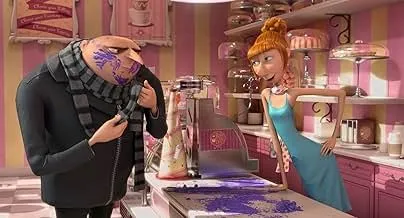
He eventually accepts the Anti-Villain League mission and is assigned to work with Lucy in Paradise Mall. They operate a bakery called Bake My Day while investigating several business owners.
The main suspects include wig-store owner Floyd Eagle-san and restaurant owner Eduardo Pérez. Gru immediately believes Eduardo is El Macho, a legendary villain presumed dead after riding a shark carrying explosives into a volcano.
Silas dismisses the theory because Gru has no proof. Lucy remains more open but expects them to investigate everyone. The mall setting gives the sequel a compact comic environment. Gru and Lucy move between stores, conduct surveillance, break into businesses, and attempt to appear like ordinary employees.
Their partnership develops through these missions. Lucy is energetic, physically capable, and socially fearless. Gru is suspicious, controlling, and increasingly impressed by her. At home, another problem develops. Margo meets Antonio, Eduardo’s confident son, and becomes immediately attracted to him. Gru reacts with extreme hostility. He follows them, watches their conversations, and treats Antonio like a criminal target despite having little evidence of wrongdoing.
His behavior is excessive but emotionally recognizable. Gru spent much of his life without close relationships and now responds to any threat of change by trying to control it.
Meanwhile, Minions begin disappearing. They are kidnapped individually and taken to a secret facility, where PX-41 transforms them into purple, aggressive versions of themselves.
The mystery’s answer becomes obvious relatively early. Eduardo is El Macho, Dr. Nefario is working for him, and the transformed Minions are intended to form an unstoppable army.
The film delays Gru’s confirmation by temporarily accusing Floyd Eagle-san. Once that suspect is arrested, Silas closes the investigation and separates Gru from Lucy. Lucy is reassigned to Australia, creating the film’s romantic turning point. Gru has realized he cares about her but cannot express it before she leaves.
She eventually returns after recognizing her own feelings. Unfortunately, El Macho captures her before she can reach Gru. The final act takes place inside Eduardo’s hidden lair during a large Cinco de Mayo celebration. Gru infiltrates the party with several unaffected Minions and attempts to rescue Lucy. Dr. Nefario has secretly developed an antidote for the mutagen, using Gru’s failed jelly as the delivery material. The heroes restore the transformed Minions, defeat El Macho, and save Lucy from being launched toward a volcano.
The ending shifts from action to marriage. Gru and Lucy become a couple, and Lucy joins the family as a mother to Margo, Edith, and Agnes. The conclusion is joyful and satisfying, though it arrives quickly considering how little time Lucy has spent with the girls as a complete family unit.
Gru: Fatherhood Has Made Him Softer, Not Calmer
Gru remains the franchise’s strongest character because domestic life does not erase his theatrical personality. Steve Carell continues using the exaggerated accent, long pauses, and sudden changes in volume that make Gru immediately recognizable. The character has changed significantly since the first film. He now prioritizes the girls instinctively and no longer treats affection as a weakness.
That growth is visible during small moments. He organizes Agnes’ party, helps with school events, cooks breakfast, and listens to the girls’ problems even when he responds awkwardly. The sequel’s challenge is finding a new emotional conflict after Gru has already accepted fatherhood.
The screenplay chooses fear of romantic vulnerability and fear of family change. Both fit the character, though neither carries the same emotional weight as his original transformation. Gru’s childhood memory explains why he avoids dating. He approached a girl, received ridicule, and learned that expressing interest creates humiliation. The flashback is played broadly, but the insecurity remains believable. Gru has built his identity around control, and romance requires uncertainty.
Lucy disrupts that control. She can match him physically, surprise him strategically, and respond to his strange behavior without fear. Gru’s relationship with Margo introduces another challenge. He wants her to grow while resisting every sign that she is becoming independent. His treatment of Antonio is funny but frequently unreasonable. Gru assumes bad intentions partly because he recognizes the confidence he lacked at that age.
This is my first major criticism. The protective-father comedy repeats too often, and the film rarely allows Margo to explain her perspective in depth. Gru is eventually proven partly correct because Antonio behaves selfishly, but that resolution protects Gru from confronting how controlling he became.
His romantic development is more satisfying. Gru gradually shifts from avoiding every arranged date to imagining a future with Lucy. He remains awkward, but awkwardness becomes part of the relationship rather than something he must eliminate.
Lucy Wilde: The Partner Who Refuses to Be Intimidated
Lucy is the sequel’s most important new character. Kristen Wiig gives her enthusiasm, confidence, warmth, and comic unpredictability. She enters Gru’s life through force, immobilizing him and transporting him to the Anti-Villain League without waiting for cooperation.
That introduction could make her seem careless, but the film quickly establishes that she is competent and committed to the mission. Lucy enjoys fieldwork. She approaches danger with excitement and adapts quickly when a plan fails. This energy contrasts with Gru’s suspicion. He expects betrayal and hidden motives, while Lucy responds to most problems as opportunities for improvisation.
Their partnership works because neither becomes a conventional straight character. Lucy is as strange as Gru, only in a more socially open way. She uses unusual gadgets, performs exaggerated undercover behavior, and accepts the Minions’ chaos almost immediately. Lucy’s attraction to Gru develops through respect. She sees that he is intelligent, protective, and more emotionally generous than his appearance suggests.
Gru is attracted to her confidence but also frightened by how naturally she fits into his home. The film gives Lucy strong action scenes, including the restaurant break-in and final rescue attempt. She is not simply waiting to become Gru’s romantic reward.
However, her relationship with the girls receives limited development. Agnes likes her immediately, but Margo and Edith have fewer meaningful interactions with her. This is my second major concern. The ending presents Lucy as a new mother, yet the film spends far more time building her connection with Gru than her place inside the entire family. Kristen Wiig’s performance makes the transition emotionally pleasant, but the screenplay needs more domestic scenes before the wedding.
Margo, Edith, and Agnes: The Family Begins Changing Again
The girls remain essential to Gru’s emotional identity, though their roles are less balanced than in the first film.
Margo receives the largest subplot through her attraction to Antonio. Miranda Cosgrove gives her a mixture of confidence and adolescent uncertainty.
Her interest in him represents a natural stage of growing up. Gru interprets it as an immediate threat because he has little experience allowing the girls to develop lives outside his protection.
Margo’s disappointment when Antonio shifts his attention elsewhere is emotionally understandable. The film resolves the situation quickly and mainly uses it to justify Gru’s suspicions.
A stronger version would have given Margo more agency during the conflict. She could have recognized Antonio’s behavior herself rather than relying on Gru’s intervention.
Edith remains physically adventurous and openly amused by chaos. Dana Gaier gives her sharp reactions, but the screenplay provides limited personal development. She often functions as the daughter most willing to enjoy Gru’s strange world without questioning it. Agnes remains the emotional center of the children. Elsie Fisher voices her with optimism and direct affection.
Her desire for a mother gives the romantic storyline additional importance. She does not pressure Gru aggressively, but her school performance reveals the absence she feels.
The scene in which Agnes recites a poem about mothers is sweet without becoming excessively heavy. Gru recognizes that his love does not remove every role the girls may still want in their lives.
The sequel keeps the family warm and believable. Its weakness is that the girls are often used to support Gru’s romantic development rather than receiving equally complete arcs.
Eduardo Pérez and El Macho: A Villain Too Obvious to Hide
Eduardo presents himself as the warm, theatrical owner of Salsa & Salsa. Benjamin Bratt gives him charm, volume, confidence, and comic menace.
Gru suspects him immediately because he recognizes Eduardo as El Macho, a famous villain from the past. The supposed death of El Macho is one of the film’s funniest villain stories. He reportedly rode a shark carrying explosives into an active volcano. The image communicates everything about his personality. El Macho does not merely commit crimes. He wants every act to become a legend.
His restaurant persona is barely a disguise. He remains physically imposing, dramatically affectionate, and surrounded by visual clues connecting him with Mexican wrestling and villainous performance. The mystery therefore lacks suspense. The audience is encouraged to suspect him almost immediately, and the film offers no equally convincing alternative.
Floyd Eagle-san functions as a temporary distraction, but his arrest never feels like a genuine resolution. El Macho’s real plan involves PX-41 and the kidnapped Minions. He wants to create a powerful army and invites Gru to join him.
The invitation is important because El Macho assumes villainy remains Gru’s true identity. He interprets family life as retirement rather than transformation. Gru’s refusal confirms that he no longer sees criminal glory as meaningful.
El Macho is entertaining, but his plan receives limited practical detail. The purple Minions are destructive, yet the larger purpose of the army remains vague beyond domination.
His final transformation with PX-41 gives Gru a physical opponent during the climax. It also reduces a theatrical human villain to another monster fight.
Benjamin Bratt’s performance remains enjoyable enough to carry the character, even when the screenplay never develops him beyond ego, spectacle, and ambition.
Dr. Nefario: Loyalty Tested by Boredom
Dr. Nefario begins the film dissatisfied with Gru’s new business. Russell Brand continues voicing him with dry irritation and aging-scientist energy. The jelly operation gives Nefario no sense of scientific excitement. He misses dangerous inventions and ambitious criminal projects.
His decision to leave for another employer is understandable within the character’s history. Gru changed his life completely, but Nefario did not undergo the same emotional transformation. Working for El Macho gives him access to large laboratories, secret plans, and dangerous chemistry.
However, Nefario’s loyalty to Gru remains stronger than his interest in villainy. He eventually recognizes that El Macho’s plan threatens the family and Minions he considers his own community. The antidote made from Gru’s jelly gives the failed business a useful purpose. Something commercially unsuccessful becomes essential during the rescue.
Nefario’s return is satisfying but underdeveloped. The film could have explored whether he also needs a new purpose inside Gru’s changed household. Instead, he leaves, regrets the choice, and returns when the plot requires the antidote.
The Minions: From Yellow Assistants to Purple Monsters
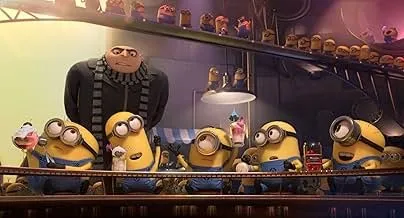
The Minions receive a larger role in Despicable Me 2. They continue working in Gru’s home, assisting with experiments, handling domestic tasks, and creating accidents. Their disappearance becomes part of the central mystery. One by one, they are kidnapped and transported to El Macho’s laboratory. PX-41 transforms them into purple creatures with wild hair, sharp teeth, aggressive movement, and extreme appetite.
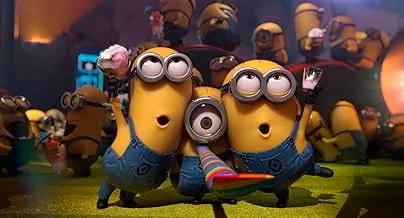
The Evil Minions are an effective visual variation. Their familiar body shape remains visible beneath a much less controlled personality. The transformation also creates an interesting reversal. The Minions are usually chaotic but loyal. PX-41 removes the loyalty and leaves only destructive impulse.
Their behavior provides broad physical comedy. They attack objects, chase characters, consume almost anything, and overwhelm the final party. The antidote sequence becomes a large-scale visual joke as Gru and the unaffected Minions cover them with jelly.
The movie gives individual Minions slightly more recognizable moments, though most remain part of the crowd. Their popularity is obvious, and the sequel increases their screen time accordingly. This works for comedy but occasionally pulls attention away from the family and investigation.
Some Minion sequences feel inserted primarily because the characters are entertaining rather than because the story requires them. Still, the purple transformation gives them a clear function in the plot and creates one of the sequel’s most memorable visual ideas.
Humor & Comedy Style: Romance, Parenting, and Purple Chaos
Despicable Me 2 uses physical comedy, character reactions, Minion language, romantic awkwardness, parental anxiety, and villain spectacle. The strongest jokes come from Gru’s inability to behave normally in emotional situations. He can conduct surveillance or enter a guarded restaurant confidently. A conversation about dating makes him panic. His arranged date with Shannon is a good example. Gru attempts to remain polite while the evening becomes increasingly uncomfortable. Lucy’s intervention turns the sequence into physical comedy and gives their partnership additional warmth. The birthday-party opening also works because Gru’s embarrassment never outweighs his commitment to Agnes.
Margo’s relationship with Antonio provides repeated protective-father jokes. Some are effective, especially when Gru’s suspicion affects his undercover work. Others repeat the same idea without adding much. Gru stares, follows, threatens, or imagines Antonio’s removal several times.
The Minions provide faster visual comedy. Their language, costumes, reactions, and transformed behavior allow jokes to continue without slowing the plot. El Macho’s theatrical personality supports parody. His legend, restaurant, dancing, and secret lair are all exaggerated deliberately. The humor remains accessible to children while offering enough romantic and social awkwardness for adults.
A few jokes rely on stereotypes connected with Eduardo’s Mexican identity and performance. The film generally presents him as one exaggerated individual, but some material feels broader than necessary.
Visual Design & Animation: A Brighter, Busier World
Despicable Me 2 expands the visual world beyond Gru’s home and laboratory. Paradise Mall becomes the main new location, combining bright storefronts, food areas, decorative spaces, and hidden criminal activity.
The mall setting works because it places Gru’s Gothic appearance inside an environment built around cheerful public consumption. Bake My Day uses bright colors and playful food design, contrasting with the darker technology beneath Gru’s home.
Eduardo’s restaurant contains warm colors, elaborate decoration, music, dancing, and enough visual movement to hide secret passages naturally. The Anti-Villain League headquarters uses clean surfaces, advanced transportation, and controlled technology. Its design reflects official authority rather than Gru’s improvised mechanical style. Character animation remains expressive. Gru’s posture, eyebrows, hands, and mouth communicate discomfort clearly. Lucy moves with greater flexibility and speed, matching her energetic personality.
The purple Minions are the visual highlight. Their color, hair, teeth, and irregular movement distinguish them immediately from the familiar yellow group. Action scenes are easy to follow, particularly the mall investigation and final infiltration.
The animation has aged well overall. Textures are simpler than in newer films, but the character designs remain strong enough to preserve personality. The film’s main visual weakness is crowding during the climax. Purple Minions, party guests, vehicles, jelly weapons, Lucy’s rocket, and El Macho’s transformation compete for attention. The sequence remains readable but sacrifices some comic precision for scale.
Music, Direction & Pacing: Pharrell Williams Gives the Sequel Its Bounce
Heitor Pereira returns to score the film, while Pharrell Williams contributes songs that shape its playful identity. “Happy” became the movie’s most recognizable musical element and later developed an enormous cultural life beyond the film.
Inside the story, the song supports Gru’s growing romantic excitement. His walk through the neighborhood turns ordinary surroundings into a personal celebration. The sequence is effective because Gru’s happiness looks unusual on him. The character who once moved through the world with suspicion becomes visibly open. The music also supports Minion performances and party scenes, using rhythm as part of the visual comedy.
Pierre Coffin and Chris Renaud direct with faster comic pacing than the first film. The sequel has less emotional setup to complete and moves quickly into the investigation. The mall structure keeps the middle focused geographically. Gru and Lucy can investigate multiple suspects without the plot feeling disconnected. The romantic storyline develops clearly, though Lucy’s sudden reassignment creates an artificial separation before the climax. The villain mystery is the weakest structural element. Gru identifies Eduardo immediately, and the false suspect never generates genuine uncertainty.
The directors compensate by emphasizing character chemistry rather than suspense. The pleasure comes from watching Gru and Lucy investigate together, not discovering who the villain is.
The final act becomes crowded but energetic. The rescue, antidote, El Macho fight, volcano threat, and wedding all arrive within a relatively short period.
Themes & Emotional Meaning: Family Must Be Allowed to Grow
Despicable Me 2 explores the fear that family change may become family loss. Gru has finally built the home he wanted without realizing he wanted it. He now treats stability as something that must be protected from every outside influence.
Margo’s interest in Antonio frightens him because it proves the girls will not remain dependent on him forever. Lucy creates a different kind of change. Accepting her means admitting that the family may become larger and that Gru may need emotional support himself.
His instinct is to manage every problem alone. Romance requires partnership rather than control. Agnes’ desire for a mother gives this theme additional clarity. Gru has provided love and safety, but family needs cannot always be reduced to what one person can supply.
The film avoids suggesting that a mother is necessary for every family to be complete. Lucy becomes important because she fits this specific household, not because Gru’s earlier family was invalid. Identity is another theme. El Macho believes Gru remains a villain beneath the domestic routine. The Anti-Villain League also values Gru primarily because of his criminal knowledge.
Gru must decide whether his past defines his future role. He uses villain skills to protect people rather than dominate them. Dr. Nefario faces a similar question. Scientific ambition once depended on criminal spectacle. He must learn whether loyalty and family can become enough. The purple Minions provide a simple visual version of identity without moral choice. A chemical changes behavior, but the original personalities can be restored.
The movie’s overall message is optimistic: personal change does not require erasing the past, and family remains stable not by avoiding change but by welcoming the right people into it.
Critical Reception & Lasting Reputation: A Crowd-Pleasing Sequel
Despicable Me 2 received generally positive reviews for its humor, animation, voice performances, Minions, and the romantic chemistry between Gru and Lucy.
Critics often praised Steve Carell’s continued commitment to Gru and Kristen Wiig’s energetic introduction as Lucy.
The film’s lighter tone was viewed as both strength and limitation. It offered frequent comedy and accessible family entertainment but lacked some of the emotional freshness of Gru’s transformation in the original.
The villain received mixed reactions. El Macho was colorful and entertaining, though the mystery surrounding his identity was considered predictable. The purple Minions became one of the sequel’s most popular elements. Their design and behavior expanded the franchise’s merchandising and comic possibilities. Commercially, the film was enormously successful. It confirmed Despicable Me as a major animation franchise and increased the Minions’ cultural visibility substantially.
“Happy” became a global hit and eventually overshadowed its original use inside the movie.
The sequel’s reputation remains strong among families and franchise fans. Many viewers appreciate it as one of the more balanced entries, combining Gru’s family, Minion comedy, romance, and a clear villain plot. Others prefer the original’s emotional focus or later films’ larger spectacle.
Despicable Me 2 works best as a continuation rather than an independent reinvention. Its pleasure depends on seeing how familiar characters adapt after the first film’s ending.
Final Verdict: Gru Finds a Partner as Strange as He Is
Despicable Me 2 is a strong sequel because it does not undo Gru’s development. He remains a committed father and uses the skills of his old life for a different purpose. The film understands that his next challenge cannot simply be another lesson about loving the girls. Gru must learn to accept change inside the family he fought to create.
Margo is growing up. Agnes wants a maternal presence. Dr. Nefario needs a new professional purpose. Gru himself is lonely, even if he refuses to describe the feeling directly.
Lucy Wilde is an excellent solution because she does not enter the story as a calm person assigned to repair him. She is enthusiastic, physically fearless, socially unusual, and completely comfortable with absurd technology. Kristen Wiig gives Lucy enough personality to stand beside Steve Carell rather than becoming secondary to him.
El Macho is entertaining but obvious. His restaurant persona, dramatic history, and physical confidence make him memorable, while the investigation around him rarely creates suspense.
The purple Minions offer dependable visual comedy and give the climax a recognizable identity. Their increased presence occasionally pushes the family story aside. The animation remains bright and expressive, while Heitor Pereira and Pharrell Williams give the sequel a playful musical rhythm.
The movie’s largest weakness is emotional compression. Margo’s disappointment, Nefario’s return, Lucy’s rescue, El Macho’s defeat, and the wedding are resolved quickly.
Even so, the final family celebration feels earned at a basic emotional level. Gru has found someone who understands both his unusual past and the home he now wants to protect.
I recommend Despicable Me 2 to families, fans of Gru and the Minions, viewers who enjoy animated romantic comedy, and anyone looking for a light sequel that respects its protagonist’s earlier growth.
Personal rating: 8/10.
Despicable Me 2 earns that score for Steve Carell and Kristen Wiig’s chemistry, Gru’s believable development, colorful animation, purple Minion comedy, Pharrell Williams’ music, and a warm expansion of the family. It loses points for a predictable villain, repetitive parenting jokes, underused daughters, a lightly developed Nefario subplot, and a rushed transition from partnership to marriage.
Gru once believed that becoming attached to other people would make him vulnerable. Despicable Me 2 gives him a better answer: vulnerability is not the weakness that destroys his plans. It is the reason he finally has a life worth protecting.

Leave a comment
Your comment is awaiting moderation. We save your draft here
0 Comments