







First Impressions: One Tap, One Pipe, One Immediate Failure
My first meaningful attempt lasted only a few seconds. I tapped the screen, watched the small yellow bird jump sharply into the air, panicked as it began to fall, tapped again too late, and flew directly into the first green pipe. The score remained at zero. That humiliating opening captures the entire appeal of this Flappy Bird review: a game with one input, one objective, and an almost unlimited ability to expose poor timing.
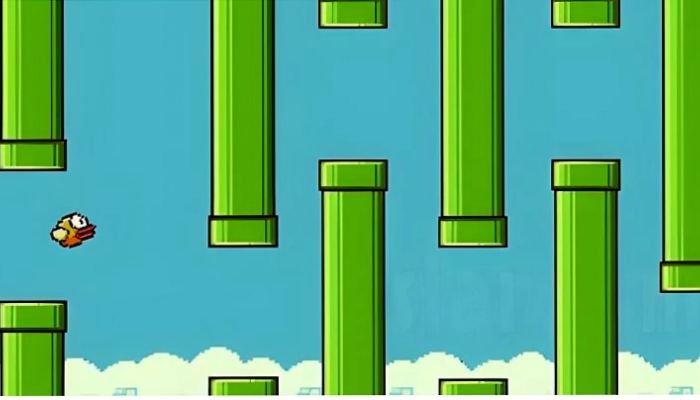
At first glance, Flappy Bird barely seems substantial enough to review. There is no character selection, campaign map, equipment screen, tutorial sequence, or branching progression system. The bird moves automatically from left to right while pairs of pipes scroll toward it. My only responsibility is to tap the screen and keep the bird airborne long enough to pass through the gaps. That is the complete premise.
Yet the lack of complexity does not make the game easy. It makes every mistake feel personal. There are no confusing button combinations to blame and no poorly explained systems hiding behind the interface. When the bird hits a pipe, falls into the ground, or clips the edge of an obstacle, I know exactly who caused the failure.
My early sessions followed a predictable emotional pattern. I would fail immediately, restart, improve slightly, become overconfident, and then crash in an embarrassingly avoidable way. A run lasting ten seconds suddenly felt valuable because the previous five attempts had ended almost as soon as they began. Passing one additional pipe became a meaningful achievement.
That compressed structure is Flappy Bird’s greatest strength. It turns tiny improvements into visible progress. It also creates one of its first major annoyances: the game can feel less like entertainment and more like a test of patience. The difference between “one more try” and “why am I still doing this?” is very small.
Core Gameplay & Mechanics: Fighting Gravity One Tap at a Time
Flappy Bird is built around a single-touch control scheme. Every tap gives the bird an immediate upward push. The bird then loses momentum and begins falling under constant gravity. There is no separate button for gliding, braking, diving, or changing horizontal speed. The world moves toward the bird at a fixed pace, leaving vertical positioning as the only variable I can directly control.
The tap itself feels stronger than newcomers may expect. The bird does not float gently upward. It kicks into the air, rotates slightly, slows near the top of its movement, and then tips downward as gravity takes control. Successful play depends on understanding this repeating arc. Tapping too rapidly sends the bird toward the upper pipe. Waiting too long creates a steep fall that may be impossible to correct before the lower pipe or ground arrives.
This produces a distinctive rhythm. I am not simply tapping whenever the bird appears low on the screen. I am anticipating where it will be when it reaches the next gap. The correct input often needs to happen before the danger looks immediate. That predictive element gives the game more mechanical substance than its basic appearance suggests.
Each pair of pipes contains a narrow opening at a different vertical position. Passing cleanly through a gap awards one point. There are no partial points, style bonuses, collectibles, checkpoints, or score multipliers. The score is simply the number of pipe pairs survived during the current run. A score of five means five successful gaps. A score of twenty means twenty moments when a single mistimed tap could have ended everything.
Collision detection is intentionally unforgiving. The bird’s body must clear both the upper and lower pipe, and even a slight contact ends the attempt. This precision makes successful runs satisfying, but it can also produce deaths that feel visually questionable. On several types of approach, the bird appears close enough to pass, yet its collision boundary catches the corner of a pipe. That is the second major annoyance: failure can occasionally feel harsher than the artwork suggests.
The difficulty curve is unusual because the core mechanics do not evolve. Pipes do not introduce new materials, moving sections, enemies, or environmental hazards. Instead, the game becomes harder through sustained concentration. The first pipe is mechanically similar to the fiftieth, but surviving fifty consecutive timing checks is far more demanding than surviving one.
This means the real challenge is consistency. I might understand the correct tapping rhythm after only a few attempts, but reproducing it without interruption is another matter. A moment of hesitation, an unnecessary double tap, or a glance away from the screen can destroy an otherwise excellent run.
The restart loop is extremely fast. Failure leads back to another attempt with little delay. That speed matters because it prevents frustration from cooling down. I can lose, recognize the mistake, and begin correcting it almost instantly. The design keeps the emotional connection between failure and retry unusually strong.
At the same time, the absence of meaningful variation limits the game’s long-term depth. Once I understand the physics, the experience becomes a pursuit of execution rather than discovery. I am not learning new systems after an hour. I am performing the same task with greater accuracy. Players who enjoy mechanical mastery may appreciate that purity. Players who need novelty will probably lose interest quickly.
Graphics, Audio, and Technical Performance: Simple, Clear, and Repetitive
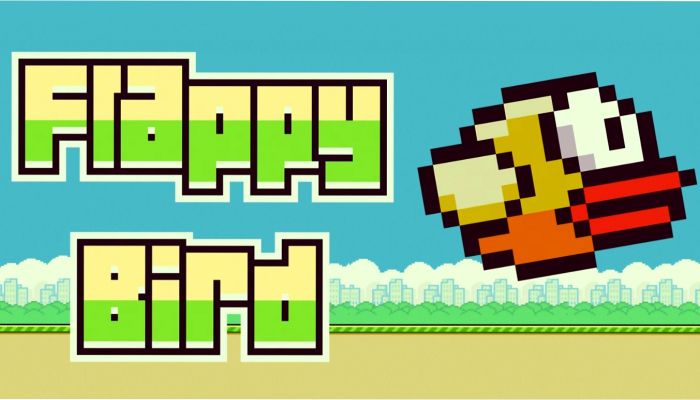
Flappy Bird uses compact pixel-style graphics influenced by the visual language of early console platform games. The bird is bright, rounded, and easy to identify against the background. Green pipes dominate the obstacle field, while clouds, buildings, and a scrolling ground layer give the scene enough movement to avoid looking completely static.
The presentation succeeds because every essential element is readable. I can instantly distinguish the bird from the background, judge the approximate boundaries of each pipe, and see where the next gap is positioned. There are no elaborate effects covering the play area and no decorative objects that can be mistaken for hazards. In a game where decisions are made within fractions of a second, that clarity is essential.
The bird’s animation is minimal but functional. Its wings flap, its body changes angle as it rises or falls, and its downward rotation communicates increasing danger. The animation does not provide a realistic simulation of flight, but realism is not the goal. What matters is whether I can understand the bird’s momentum at a glance.
Visually, however, the game becomes repetitive almost immediately. The same pipe design appears throughout every run. Backgrounds offer limited variety, and the game does not introduce new areas as the score rises. After several sessions, there is little left to notice. The art supports the mechanics, but it does not reward extended observation.
The audio follows the same minimalist philosophy. Taps, successful pipe crossings, and collisions produce short, recognizable sound effects. The scoring sound provides a useful burst of positive feedback, especially during a strong run. Hearing several scoring cues in sequence reinforces the rhythm and makes progress feel more tangible.
The collision sound is blunt and effective. It clearly separates active play from failure, removing any uncertainty about whether the run is over. Still, repeated attempts can make the soundscape irritating. When I fail several times in quick succession, the same impact and restart cues become part of the frustration rather than a neutral layer of feedback.
Technical performance is one of the game’s strongest areas. Flappy Bird was designed for modest mobile hardware and places very little demand on the device. Load times are brief, menus respond quickly, and the transition from launch to active play is almost immediate. That accessibility is important because the game is built for short sessions.
The simple visuals also help maintain smooth performance. There are few moving objects, no large environments, and no complex effects competing for resources. A stable frame rate is especially important here because even a small interruption could affect timing. The original experience is remembered more for its difficulty than for technical instability.
The main technical concern is not conventional performance but visual precision. Because the collision rules are strict and the sprites are small, some deaths can appear ambiguous. The game may be functioning correctly while still giving the impression that the bird barely touched—or did not visibly touch—a pipe. A clearer collision outline or slightly more generous boundary could have reduced that frustration.
Monetization & Ads: Free Access Without Pay-to-Win Pressure
The original Flappy Bird release followed a straightforward free-to-play model supported by advertising. It did not sell stronger birds, extra lives, slower pipes, permanent upgrades, or premium abilities. Every player faced the same obstacles with the same control scheme. High scores came from practice rather than spending.
That distinction matters. Many mobile games connect frustration to monetization, offering paid shortcuts immediately after failure. Flappy Bird does not ask me to purchase a rescue after hitting a pipe. It does not suggest buying improved flight control or spending currency to continue the run. When I fail, the only real solution is to restart and perform better.
As a result, the game is not pay-to-win. Money does not provide a competitive advantage, and the core challenge remains intact for every player. From a fairness perspective, that is a major positive. The game may be punishing, but it is not manipulating the difficulty to sell mechanical relief.
Advertising is the trade-off. The presence of ads in a minimalist game can feel more noticeable because the interface contains so little else. When the game screen is otherwise clean, even a small banner occupies a meaningful portion of the visual space. Ads can also weaken the retro presentation by placing modern promotional graphics beside the pixel artwork.
However, the original monetization approach is still restrained compared with systems built around constant interstitial videos, multiple currencies, limited energy, loot boxes, or subscription prompts. Flappy Bird’s basic loop remains playable without purchases. The game does not lock attempts behind timers and does not require payment after a set number of failures.
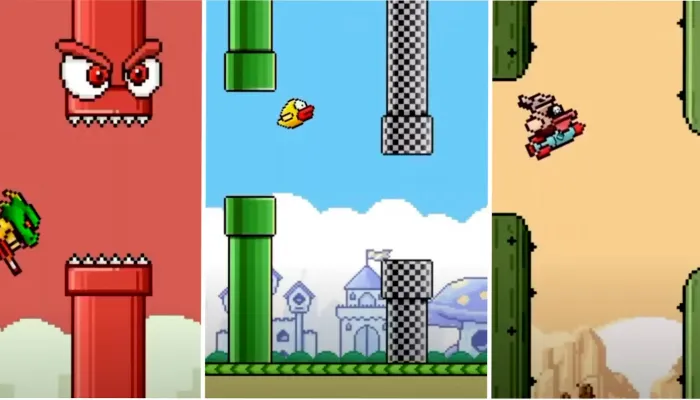
Players should also be cautious when encountering unofficial copies or later imitations. Flappy Bird’s popularity produced many clones, and their monetization practices may differ sharply from those of the original release. A modern copy using the same concept could contain aggressive full-screen advertising, tracking systems, or unnecessary in-app purchases. Those practices should not automatically be attributed to the original game.
Judged on its original structure, Flappy Bird is highly friendly to players who do not want to spend money. The cost is visual advertising rather than mechanical disadvantage. That is a fair arrangement, even though the ads can still be distracting.
Who Should Play This? The Right Audience for Repeated Failure
Flappy Bird is best suited to players who enjoy immediate mechanical challenges. It asks for almost no preparation. I do not need to memorize a story, organize an inventory, study a skill tree, or complete a tutorial. I can open the game, attempt a run, and understand the objective within seconds.
Score chasers are the most obvious audience. The scoring system is perfectly transparent, making personal improvement easy to measure. Beating a previous record by one point can feel significant because each point represents another obstacle survived. The game also works well for friendly competition, since comparing scores requires no explanation of character levels or equipment advantages.
Players who enjoy rhythm-like timing may also appreciate the control system. Although Flappy Bird is not a music game, successful play develops a cadence. I begin to recognize when to tap, when to wait, and how to correct the bird’s descent before reaching a gap. The satisfaction comes from turning unstable movement into a controlled sequence.
It is also well suited to very short sessions. A single attempt may last only seconds, and even a successful run rarely requires a major time commitment. That makes the game convenient during brief breaks, commutes, or moments when starting a larger game would be impractical.
However, anyone seeking variety should probably skip it. There are no meaningful level themes, new abilities, boss encounters, narrative developments, or strategic builds. The same central action continues from the beginning of a run until failure. The only significant change is the score.
Players with low tolerance for repeated failure may find the experience unpleasant. Flappy Bird does not soften defeat with generous checkpoints or consolation rewards. A strong run ends instantly after one mistake. Nothing from that attempt carries forward except the player’s experience and perhaps a new high score.
The game may also be a poor choice for players who become overly fixated on competitive scores. Its fast restart structure is highly effective at encouraging repeated attempts. “One more run” can easily become twenty. The sessions are short, but the repetition can consume more time than expected.
For the right audience, the simplicity is refreshing. For the wrong audience, it feels empty. Flappy Bird does not try to satisfy both groups, and that focus is part of why it became so memorable.
Pros

- Minimalist design that promotes quick, easy-to-learn gameplay
- High replay value that keeps players coming back
- Accessible across multiple platforms and devices
- Simple mechanics that truly test precision and timing
- Cultivates a competitive social environment with high score challenges
- Retro aesthetic that appeals to fans of classic arcade games
Cons

- Steep learning curve that can be overly frustrating
- Lacks depth in story or varied gameplay
- Repetitive mechanics may wear thin for longer play sessions

Leave a comment
Your comment is awaiting moderation. We save your draft here
0 Comments