


Introduction & First Impressions: Fortnite Finds a New Kind of Battle
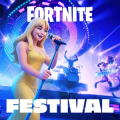
Fortnite Festival creates an unusual first impression because everything surrounding the performance looks like Fortnite, but the skills I normally associate with the game suddenly become irrelevant. Building speed does not matter. Weapon accuracy does not matter. Memorizing the Battle Royale map will not help me. I stand on a stage with several other familiar Fortnite characters, select an instrument, and try to press notes in time while a licensed song plays around us.
That immediate shift is the reason this Fortnite Festival review cannot treat the mode as a small musical distraction. Developed with Harmonix, the studio associated with Guitar Hero, Rock Band, and other rhythm games, Festival is effectively a modern band game operating inside Fortnite’s enormous platform. It supports solo performances, cooperative groups, competitive score chasing, guitar-controller parts, improvised music loops, seasonal artists, cosmetic instruments, and a growing library of Jam Tracks.
The basic idea is familiar. Notes travel toward a target line, and I press the corresponding controls at the correct moment. Accurate timing increases my multiplier, builds score, and earns stars. Missing notes breaks the streak and can reduce the band’s final result.
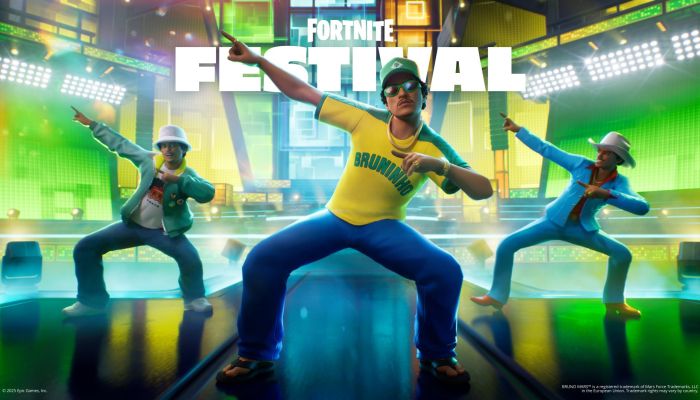
The surrounding Fortnite structure changes how that familiar rhythm formula feels. I can perform as characters from superhero films, anime, games, musicians, and original Fortnite seasons. One player may appear as a serious rock performer while another arrives dressed as an oversized banana. The contrast should damage the atmosphere, yet it becomes part of Festival’s identity.
The mode is accessible, technically polished, and supported by a broad music catalogue. It is also deeply tied to Fortnite’s store, seasonal progression, rotating availability, and expensive individual tracks. The performance mechanics are strong enough to stand independently, but the commercial structure constantly reminds me that the virtual music library is also a collection of products.
Main Stage: Building a Setlist and Performing as a Band
Main Stage is the central Fortnite Festival experience. Before performing, I enter a backstage area where the group selects songs, instruments, difficulty levels, and cosmetic equipment. A setlist can contain several tracks, allowing the session to feel closer to a short concert than one isolated rhythm challenge. Each player chooses a part such as Lead, Bass, Drums, or Vocals. Pro Lead and Pro Bass provide additional chart styles intended especially for guitar controllers, although the exact support and control options have expanded over time. The same song can feel completely different depending on the selected part.
Vocals do not require actual singing. They translate the vocal melody into rhythmic button inputs, making them mechanically accessible even for players who would never use a microphone in a karaoke game. Lead usually follows guitar, keyboard, or another prominent melodic part, while Bass focuses on lower rhythmic patterns. Drums frequently produce denser charts that demand stronger coordination. The backstage process is quick once everyone knows what they want. Public groups can take longer because one player may browse the entire available catalogue while the others wait. There is no elegant solution when a stranger refuses to finalize the setlist, and the social pause can become more irritating than a difficult song.
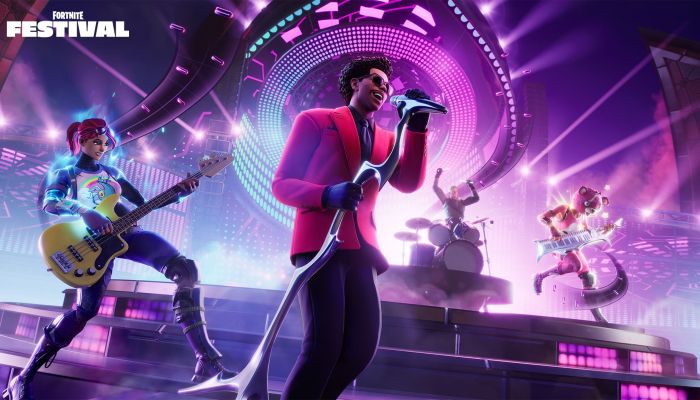
Once the performance begins, the group appears on a large animated stage. Camera angles move between performers, lighting reacts to the music, and Fortnite characters play cosmetic instruments matched to their selected roles. The presentation creates the fantasy of a band even though every person is concentrating on a separate note highway.
Individual accuracy contributes to the shared band score. This gives cooperative sessions a useful balance between personal performance and group success. I can improve my own percentage while still feeling that the final star rating belongs to the entire team. The format is easy to enter and difficult to master. Playing one song on an accessible difficulty requires little preparation. Chasing flawless expert-level performances, maximizing overdrive, and competing on leaderboards can demand extensive practice.
Rhythm Mechanics: Simple Inputs With Demanding Timing
Fortnite Festival uses a lane-based rhythm system. Notes move toward the strike line, and I press the matching input when they reach it. Some notes must be held, others appear in quick sequences, and higher difficulties introduce more lanes and increasingly complex patterns. The basic controls are clear enough for new players to understand within one song. Lower difficulties reduce the number of inputs and simplify rhythms, allowing players to focus on the relationship between sound and visual timing.
Medium and Hard difficulties increase density gradually. Expert introduces five-lane charts and expects faster recognition, stronger finger independence, and fewer moments of hesitation. A song that feels comfortable on one instrument may become exhausting on another. The note charts usually reflect the music convincingly. Drum patterns follow percussion, Lead emphasizes recognizable melodic lines, and Vocal charts track syllables or phrasing. Good charting creates the sensation that I am performing part of the song rather than pressing unrelated buttons.
Timing is divided into accuracy levels. Notes struck near the ideal moment provide stronger results, while late or early inputs may still count without delivering the same score quality. This gives expert players another layer beyond simply avoiding misses. Maintaining a streak builds the score multiplier. One mistake can therefore cost more than the value of a single note because it also removes the multiplier accumulated across the previous section. That pressure becomes especially intense near the end of a nearly flawless performance.
Overdrive acts as the main temporary score boost. Special note phrases charge it, and activating the stored energy increases scoring for a limited period. Coordinated groups can use overdrive during valuable sections to maximize the shared result. The mechanic is straightforward, but efficient activation requires chart knowledge. Using overdrive immediately may feel satisfying, while saving it for a dense section often produces a better score. Competitive play therefore combines reflexes with planning and memorization.
Instruments & Difficulty: One Song Can Contain Several Different Games
Instrument selection has a major effect on difficulty. A song marked as challenging overall may contain a simple Bass part and an extremely dense Lead or Drum chart. The mode displays part-specific intensity indicators, which helps players choose intelligently before performing. Lead is often the most immediately recognizable role because it follows famous riffs, melodies, keyboard sequences, and solos. It can alternate between long held notes and sudden bursts that require rapid movement across lanes.
Bass charts vary dramatically. Some provide repetitive patterns suitable for beginners, while funk, metal, electronic, and technically complex tracks can make the part surprisingly demanding. Drums frequently create the greatest physical challenge on ordinary controllers. Rapid alternating inputs, repeated notes, and irregular rhythms can tire my hands during longer setlists. Pro drum support and features such as double-kick charts can raise the mechanical ceiling much further for properly equipped players.
Vocals are often approachable but not automatically easy. Fast rap sections, unusual phrasing, and dense pop melodies may create some of the hardest charts in the catalogue. Switching instruments between songs is one of the mode’s best conveniences. I do not need to commit to one role for an entire session. A difficult Drum song can be followed by a relaxed Bass performance without leaving the group.
Difficulty is also selected individually. An expert player can perform alongside a beginner using an easier setting, allowing families and mixed-skill groups to share the same song. This flexibility is essential because rhythm-game experience varies enormously between players. The main limitation is that lower-difficulty charts can become too empty. Long gaps may leave beginners waiting rather than participating, particularly on songs whose chosen instrument is quiet in certain sections.
Controller Play & Pro Parts: Accessible Buttons Meet Plastic Instruments
Fortnite Festival can be played with an ordinary gamepad or keyboard, making it far more accessible than rhythm games that require specialized hardware. Standard inputs work well, and button remapping allows players to create a layout suited to their hands. On a controller, lower difficulties feel natural because each lane corresponds with a clear button. Expert charts require more careful mapping, especially when five lanes must be covered without uncomfortable finger movement.
Keyboard controls provide direct access to several inputs and may suit players already comfortable with rhythm games on computers. The visual relationship between lane and key can be learned quickly, though repeated patterns may create hand strain during long sessions. Pro Lead and Pro Bass attempt to recreate the strumming and fret-based experience associated with Guitar Hero and Rock Band. Supported guitar controllers offer the most authentic version, requiring fret inputs and strum timing rather than ordinary button taps.
The addition of plastic-instrument support significantly increases Festival’s value for veteran rhythm-game players. Old hardware compatibility can be inconsistent, however, and not every controller works automatically on every platform. Obtaining a suitable new guitar controller can also be expensive. The mode itself is free, but the best hardware experience may require a purchase costing far more than a conventional game.
Pro parts are not necessary for enjoying Festival. They provide a different skill path rather than a direct advantage over standard charts, with separate leaderboard contexts helping preserve fair comparison. Players using ordinary controllers still receive a complete rhythm game. Those with compatible instruments gain a closer successor to the living-room band experiences that became less common after the peak of Guitar Hero and Rock Band.
Jam Tracks: Songs as Gameplay, Cosmetics, and Portable Music Items
Jam Tracks are the central musical items in Fortnite Festival. Owning one allows it to be selected in Main Stage, used for loops in Jam Stage, and equipped in other supported parts of Fortnite. This cross-mode use makes Jam Tracks more flexible than ordinary song purchases in older rhythm games. A track can function as performance content, lobby music, an improvised loop, and selected musical presentation elsewhere in the platform.
Each track contains multiple separated parts. Main Stage uses the full charted performance, while Jam Stage allows players to activate loops such as Lead, Bass, Drums, or Vocals independently. The song library covers many genres and decades. Pop, rock, hip-hop, electronic music, metal, alternative, country, and music created for Fortnite can appear beside one another. The catalogue is strongest when it includes both major current releases and older songs with interesting instrument charts.
Musical taste remains a personal limitation. A season focused on one artist may feel exciting to fans and almost irrelevant to everyone else. The rotating featured selection provides free temporary access to some tracks, but permanent availability depends on ownership or another player bringing a song into the group. This sharing system is generous. When someone in the party owns a Jam Track, the group can usually include it in the setlist. Friends can therefore combine libraries without every person purchasing the same songs.
Public matchmaking creates a similar benefit when another player selects a track I do not own. It also means my preferred songs may never be chosen if the group controls the setlist collectively. Licensing shapes the catalogue heavily. Tracks may rotate through the store, and music rights can affect future availability. Fortnite’s scale provides access to major artists, but it also turns the library into a continuously managed commercial catalogue rather than a stable collection included with one purchase.
Jam Stage: A Digital Mashup Playground With Limited Direction
Jam Stage removes the scrolling note charts and focuses on musical experimentation. Players select loops from owned Jam Tracks and combine them in shared spaces. Up to four performers can contribute different parts. One player may use vocals from a pop song, another can add drums from a rock track, while the remaining players introduce bass and lead loops from completely different sources.
The system automatically handles tempo and key adjustments well enough to make unlikely combinations function. This does not guarantee that every mashup sounds good, but it lowers the technical barrier to experimentation. Changing tempo, key, instrument, and loop creates a playful form of music construction. I can discover transitions that are genuinely catchy or create combinations that sound deliberately terrible.
The strongest Jam Stage moments occur when strangers listen to one another and adjust their selections gradually. A chaotic collection of loops can become a surprisingly coherent performance through small changes. The mode offers little direction, scoring, or long-term purpose. There is no meaningful audience system, advanced arrangement timeline, recording studio, or detailed production interface.
As a result, Jam Stage often feels like a demonstration of a brilliant tool rather than a complete game. I enjoy it briefly, experiment with several songs, and then return to Main Stage because the structured challenge provides a clearer reason to continue. A stronger version could allow players to save mashups, create complete arrangements, share sessions, or build custom performance spaces. The current system proves that Fortnite can function as a collaborative music toy but stops before offering deeper creative control.
Battle Stage & Competitive Formats: Rhythm Performance as Elimination
Festival’s competitive formats attempt to turn score performance into direct competition. Battle Stage historically placed multiple players into a sequence of songs, eliminating lower-scoring performers until one remained. The idea fits Fortnite naturally. A familiar rhythm-game structure receives the survival format associated with the larger platform.
Players perform the same song but may choose different instruments and difficulty settings. Scoring adjustments attempt to keep those choices reasonably competitive, while attacks or disruptive effects can pressure opponents. The format creates more immediate tension than ordinary leaderboard competition. Instead of comparing a score after the performance, I can see my position changing during the song.
It is also less precise as a measure of pure rhythm skill. Instrument balance, chart density, attack timing, and lobby composition may influence the result alongside accuracy. I enjoy competitive Festival most as an occasional change rather than the primary mode. Main Stage provides a cleaner relationship between performance and score, while Battle formats create entertaining disorder.
Availability and prominence can change over time as Epic rotates or revises Festival experiences. This live-service flexibility keeps the mode capable of experimentation but makes its complete identity less stable. Players seeking a permanent, standardized competitive rhythm platform may find the shifting structure frustrating. Fortnite treats modes as parts of an evolving ecosystem rather than museum pieces that remain untouched forever.
Music Catalogue: Impressive Variety With Predictable Gaps
A rhythm game depends on its songs, and Fortnite Festival has developed a broad catalogue capable of supporting very different audiences. Major pop artists sit beside rock bands, electronic producers, rappers, metal performers, older classics, and original Fortnite music. The seasonal Icon structure gives individual artists a period of visual and musical prominence. Outfits, instruments, emotes, stages, and pass rewards create a small festival environment around the selected performer.
This approach gives each season a clear personality. It also makes artist selection unusually important. A player who dislikes the headliner may find that the Music Pass and much of the promotional material offer little emotional value. The catalogue occasionally prioritizes commercial popularity over interesting rhythm charts. A famous song may attract players while producing repetitive gameplay on several parts.
Less obvious tracks can become better game content because their percussion, bass lines, solos, or vocal rhythms create more engaging charts. Festival is most successful when licensing appeal and mechanical value align. The rotating featured songs allow players to try music without purchasing everything. The selection changes, so the free experience varies from day to day or week to week.
Permanent ownership becomes costly for anyone attempting to build a large personal library. Individual Jam Tracks may appear reasonably priced in isolation, but purchasing dozens quickly exceeds the cost of several full games. The mode would benefit from larger discounted music packs, stronger genre bundles, or a subscription-style library option. Such systems would need careful licensing agreements, yet they could make exploration more affordable.
Scoring, Stars & Leaderboards: The Search for One Cleaner Performance
Completing a song awards stars based on total score. Strong performances can reach five stars, while the highest skill levels allow an additional gold-star result. Stars give casual players a clear objective without requiring leaderboard competition. Improving from three stars to five feels meaningful because the change usually reflects better timing, fewer mistakes, and more efficient overdrive use.
Percentage accuracy provides another straightforward measure. A score near one hundred percent can still contain timing differences, so players chasing perfection must consider more than simple note completion. Flawless completion becomes the clearest personal achievement. Finishing a difficult chart without missing any notes creates an immediate reason to replay songs that are already familiar. Leaderboards compare scores with friends and the broader player base. They extend the game for competitive players who enjoy optimizing activation paths and improving small timing errors.
Score chasing reveals chart differences more sharply. Two songs with similar visual difficulty may demand very different endurance, pattern recognition, or hand movement. The leaderboard system could provide better analytical tools. Detailed breakdowns of missed notes, timing consistency, difficult sections, and overdrive efficiency would help players understand how to improve. Practice options also need greater depth. Restarting a complete song to work on one difficult solo is inefficient. Section selection, adjustable speed, looped practice, and chart previews would make Festival more welcoming to serious improvement.
Progression & Music Pass: Rewards Beyond Musical Skill
Festival progression is tied to quests, seasonal passes, experience, and broader Fortnite systems. Performing songs can unlock cosmetics, instruments, Jam Tracks, outfits, and other rewards. The Music Pass provides a themed progression route associated with the current season or featured artist. Its rewards may include free items and a premium path available through Fortnite’s monetization structure. This creates an additional reason to play, but progress is not based only on performance quality. Quests may encourage particular modes, instruments, songs, or general activity.
The structure helps casual players earn rewards without mastering expert charts. It can also make Festival feel like another checklist inside Fortnite rather than a rhythm game rewarding musical improvement directly. Some quests encourage useful experimentation. A player may try an unfamiliar instrument or visit Jam Stage because the seasonal objectives provide a small push. Others create repetitive behavior. Playing songs for progress rather than enjoyment can turn a strong music library into background for completing tasks.
Fortnite’s shared account ecosystem means certain experience and cosmetic rewards connect with the wider platform. Players who enjoy several modes gain more value because Festival progress contributes to an identity used across Battle Royale, LEGO experiences, and other activities. The mode still needs stronger permanent progression based on rhythm achievement. Instrument mastery badges, song-specific challenges, career milestones, and detailed statistics could make long-term improvement feel more visible outside seasonal passes.
Visual Presentation: A Concert Built From Fortnite’s Entire Locker
Fortnite Festival uses the player’s existing character collection as its performers. This produces a visual range no dedicated rhythm game could easily match. A band can include musicians, superheroes, animated characters, game icons, original Fortnite outfits, and deliberately ridiculous costumes. The lack of visual consistency becomes part of the fun.
Stages use dramatic lighting, large screens, moving platforms, effects, fireworks, and crowds. Camera direction changes throughout songs, creating a performance that looks energetic even when the players are concentrating on static note lanes. The character animations are broad enough to fit almost any song. Performers move confidently, interact with instruments, and react during quieter or more intense sections.
Some animations repeat across many tracks. After enough sessions, the illusion of a unique concert weakens because performers use familiar gestures regardless of genre or musical mood. A heavy metal performance, emotional ballad, electronic track, and relaxed pop song may share similar stage behavior. More genre-specific animation and venue variation would help.
The note highway remains readable against the busy background. Players can adjust certain visual settings and calibration options, but the stage effects occasionally become distracting during difficult charts. Cosmetic instruments are visually appealing, though they have no effect on chart behavior or sound. A rare guitar does not improve timing and should be understood purely as stage customization.
Audio Quality & Calibration: Timing Must Feel Trustworthy
Rhythm games depend on accurate synchronization between sound, visual notes, display response, and controller input. Fortnite Festival includes calibration tools because television processing, wireless audio, controllers, and platform settings can introduce delay. A poorly calibrated setup makes the game feel unfair. I may hear a beat clearly while the ideal visual timing appears slightly earlier or later.
The tune-up process helps align input and audiovisual delay, though finding the perfect values may require several attempts. Automatic assumptions are not always sufficient across varied home setups. Headphones often provide the cleanest experience because they reduce environmental noise and may avoid some television audio processing. Wireless devices can introduce their own latency, so the best option depends on hardware.
Song mixing is generally strong. The selected part becomes easy to follow, and mistakes can alter or reduce its sound, reinforcing the relationship between input and music. This feedback is useful but can become distracting after one error. Hearing a familiar riff disappear briefly communicates failure more strongly than a visual message alone.
Public performance audio remains consistent even when characters and stages become visually absurd. The music is treated seriously, which gives the rhythm mechanics a stable foundation. Occasional audio bugs, delayed starts, desynchronization, or missing sections can ruin a run. These problems are not constant, but rhythm games have little tolerance for technical uncertainty because every input depends on trust.
Technical Performance: Reliable Foundations With Live-Service Complications
Fortnite Festival benefits from running inside a mature cross-platform ecosystem. Matchmaking, parties, account progression, cosmetics, and controller support are connected with the broader Fortnite client. Performance is generally smooth on suitable hardware because the stages are controlled environments rather than enormous Battle Royale maps. Stable frame rate remains important for reading dense charts accurately.
Loading delays can occur when entering backstage areas, synchronizing party members, or preparing a setlist. One player with a connection problem may hold the entire group before a performance begins. Public groups sometimes lose members between songs. The remaining band can continue, but the visual and scoring experience becomes less satisfying when half the stage suddenly empties.
Input settings may behave differently across devices or controller types. Players who switch between ordinary gamepads and guitar controllers must ensure that the correct layout and mode are active. Updates can modify charts, scoring, controller compatibility, and available experiences. These improvements keep Festival alive but occasionally disrupt muscle memory or established leaderboard expectations.
The largest technical weakness is the Fortnite client itself. Someone interested only in Festival must install and navigate a platform containing Battle Royale, creator islands, LEGO modes, shops, quests, social systems, and promotional panels. Festival is elegant once the song begins. Reaching that song can involve more interface than a dedicated rhythm game would require.
Monetization: Free Performance With an Expensive Personal Library
Fortnite Festival is free to access, and featured Jam Tracks allow players to perform without purchasing an initial music collection. Friends can also share access to owned tracks while they remain together in the group. There is no pay-to-win advantage in buying songs or instrument cosmetics. A purchased guitar does not increase score, widen timing windows, or simplify a chart.
Spending affects variety. A player with a larger Jam Track library can create more setlists, use more Jam Stage loops, and keep favorite songs available when they leave the free rotation. Individual track pricing becomes the central concern. One purchase may feel reasonable, but a serious rhythm-game library can contain hundreds of songs. Applying a separate price to each one creates an enormous total cost.
The Music Pass offers another layer of spending through artist-themed rewards and tracks. Fortnite Crew and wider passes may alter the exact value structure over time, but the general pressure remains familiar: seasonal cosmetics are most desirable before the season ends. Instrument cosmetics are purely visual and available through passes or the Item Shop. They are easier to ignore than songs because they do not change the music available.
Artist outfits and emotes create stronger emotional pressure. Fans may want the performer, matching instrument, themed animation, and associated songs, turning one musical season into a large collection of separate purchases. The game is generous as a free sampler and expensive as a permanent music platform. I can enjoy it without paying, but owning a broad catalogue requires careful limits.
Who Should Play Fortnite Festival?
Fortnite Festival is ideal for rhythm-game fans, Fortnite players interested in noncompetitive experiences, families with mixed skill levels, and groups looking for a cooperative music game without purchasing specialized hardware. Former Guitar Hero and Rock Band players should try it, especially if they own a compatible controller. Pro Lead and Pro Bass provide a stronger connection with traditional plastic-instrument play.
Beginners benefit from adjustable difficulty and independent instrument selection. A child on Easy can perform beside an experienced player on Expert without forcing either into the other’s comfort level. Score chasers receive leaderboards, flawless goals, instrument-specific charts, and increasingly difficult songs. The mode needs better practice tools, but the underlying chart system supports serious improvement.
Jam Stage suits players who enjoy casual mashups more than competitive accuracy. Its creative potential is strong, though the lack of saving and arrangement tools limits long sessions. People interested only in one narrow genre may find the rotating library inconsistent. Players who dislike live-service stores or seasonal passes may also prefer rhythm games with complete fixed soundtracks.
Final Verdict: Fortnite Festival Deserves to Exist Beyond Its Platform
Fortnite Festival is one of the strongest experiences inside Fortnite because its main activity does not depend on novelty alone. Under the celebrity outfits, seasonal promotion, and enormous cosmetic store is a genuinely capable rhythm game created with a clear understanding of the genre.
Main Stage offers the best balance of accessibility and depth. Beginners can follow simple charts, experienced players can chase expert-level accuracy, and mixed groups can perform together without selecting the same difficulty.
Instrument variety keeps songs from becoming one fixed challenge. A relaxed Bass chart may be followed by demanding Drums or a fast Vocal section, while Pro parts provide another path for guitar-controller players.
Jam Stage is inventive but underdeveloped. Mixing loops from different songs can produce wonderful accidents, yet the mode needs recording, saving, arrangement, and sharing tools to become a complete creative platform.
The presentation benefits enormously from Fortnite’s locker. Watching an improbable group of characters perform a serious song gives Festival a personality that more realistic band games cannot reproduce.
The commercial design is harder to celebrate. Individual Jam Tracks provide useful cross-mode functionality, but their cumulative cost makes a large permanent library difficult to justify. Music Passes, outfits, instruments, and rotating artist cosmetics add several additional layers of temptation.
Technical performance is generally reliable once a performance starts. Calibration, group waiting, live-service changes, and the crowded Fortnite interface create avoidable friction around that strong core. I recommend Fortnite Festival to rhythm-game fans, Fortnite groups, families, casual music players, and former Guitar Hero or Rock Band audiences looking for a modern cross-platform alternative.
Personal rating: 8.5/10.
Fortnite Festival earns that score for its responsive rhythm mechanics, varied instrument charts, flexible difficulty system, party-based song sharing, guitar-controller support, polished stages, and broad catalogue. It loses points for expensive track ownership, limited practice tools, shallow Jam Stage progression, repetitive animations, and a live-service interface that often feels louder than the music.
Festival works because the strangest visual combinations disappear once the first notes arrive. A superhero, cartoon banana, pop star, and armored warrior can stand on the same stage, but the challenge remains wonderfully simple: listen carefully, find the rhythm, and do not miss the next note.
Pros

- Offers a vibrant and engaging festival experience that refreshes traditional gameplay
- Integrates community-driven custom mods and unique quest designs
- Provides optimized performance across a wide range of devices
- Features dynamic visuals and an immersive audio-visual presentation
- Accessible free of charge and unblocked in various settings
- Encourages social interaction and team-based collaborations
Cons

- Limited-time event may lead to FOMO among players
- New challenges might be too demanding for casual gamers
- Requires a stable internet connection and up-to-date hardware for optimal performance
Leave a comment
Your comment is awaiting moderation. We save your draft here
0 Comments