







Fortnite Before It Became a Universe
Dropping into Fortnite OG feels less like loading a separate game mode and more like opening an old save file that has been carefully rebuilt inside a modern engine. The terrain is simpler, the roads feel emptier, and familiar locations are separated by stretches of open ground that would probably be filled with movement items, NPCs, special abilities, or collaboration content in contemporary Battle Royale. During my first matches, I was surprised by how exposed I felt. A distant gunshot mattered, every shield item seemed valuable, and rotating into the next storm circle required actual planning rather than one convenient mobility tool.
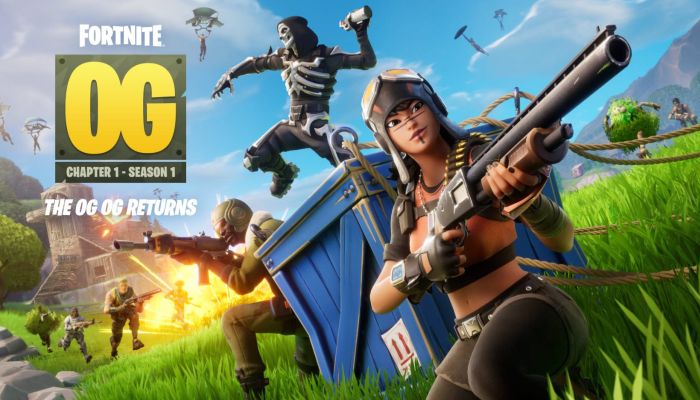
This Fortnite OG review is therefore not simply a celebration of nostalgia. The mode recreates the island, equipment, and general rhythm associated with Fortnite’s original Chapter 1 seasons while retaining selected modern conveniences. Epic turned Fortnite OG into an ongoing part of the Fortnite ecosystem in December 2024, with classic seasons and content returning over time rather than existing as one brief anniversary event.
That combination produces a strange but compelling experience. Fortnite OG is older Fortnite reconstructed by a studio that already knows what the game eventually became. It offers classic weapons and locations, but it cannot fully reproduce the uncertainty of 2017, when players were still discovering how building, positioning, and weapon combinations should work.
Veterans bring years of mechanical knowledge back to a map originally designed for less experienced players. Newcomers arrive with sliding, sprinting, advanced building habits, and expectations shaped by faster modern seasons. The result is not a museum. It is a competitive remix of Fortnite’s past.
Simpler Tools Make Every Decision More Visible
The central loop remains classic Fortnite Battle Royale. I leave the Battle Bus, choose a landing point, collect weapons and healing items, gather materials when playing the building mode, and attempt to survive until only one player or team remains. That description applies to nearly every version of Fortnite, but the OG loot pool and map design change how each stage feels.
Early fights are often decided by basic equipment rather than elaborate special items. An assault rifle, pump-style shotgun, submachine gun, explosives, healing items, and a few materials can form a complete loadout. I spend less time comparing weapons with complicated secondary abilities and more time considering range, ammunition, rarity, and available inventory space.
Shotguns remain particularly important. Close-range fights can end quickly, rewarding accurate opening shots and confident movement. When older combinations or powerful legacy weapons return, balance can become unforgiving. A player who remembers the optimal rhythm has a substantial advantage over someone approaching the mode as casual nostalgia.
Building restores the identity that originally separated Fortnite from other battle royale games. A few walls and ramps can turn empty ground into temporary safety. More advanced players can transform one missed shot into a rapidly growing structure, creating the familiar skill gap that has always divided opinions about Fortnite.
I appreciate building most when it remains practical. Constructing cover during a rotation, taking a roof, protecting a teammate, or creating a firing angle gives each encounter tactical flexibility. I enjoy it less when a short exchange immediately becomes a mechanical contest involving rapid edits and towering structures. That issue is not unique to OG, but the relatively open map makes the difference between casual and expert builders especially visible.
Zero Build offers a useful alternative. Without constructed cover, terrain becomes more important, and old locations must support a style they were not originally designed around. Hills, trees, buildings, natural dips, and storm timing become the primary defensive tools. The mode is accessible, but certain open areas feel harsher because the classic island was created when every player could build protection instantly.
Modern movement softens this problem. Tactical sprinting, sliding, mantling, and other retained conveniences prevent Fortnite OG from feeling completely stiff. Purists may argue that these mechanics reduce authenticity, but I prefer the compromise. Recreating every old limitation would produce historical accuracy at the cost of responsive play.
The OG Map: Memorable Because It Leaves Room Between Ideas
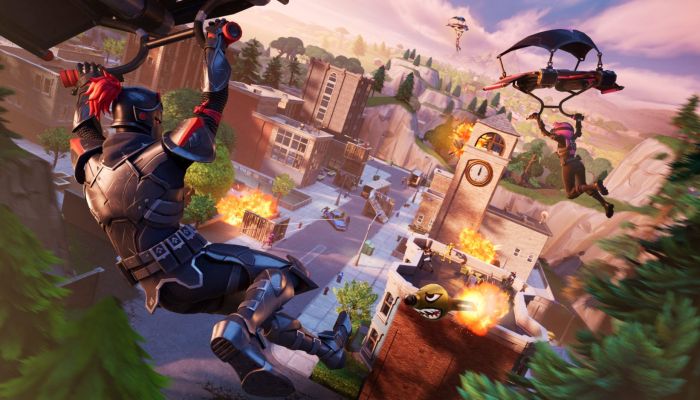
The classic island is less visually dense than later Fortnite maps. Named locations are easy to understand, and each has a direct identity. Residential areas provide houses and close-range looting. Industrial zones offer warehouses, containers, and long sightlines. Forests restrict vision, while farms spread loot across larger spaces.
What surprised me most was the amount of negative space. Modern Fortnite frequently places activities, characters, vehicles, landmarks, and environmental storytelling almost everywhere. OG allows quiet stretches to exist. Crossing one of them can feel tense because there is little cover and no guarantee that an escape item will appear when needed.
That emptiness gives locations more importance. Choosing where to land is not only a question of preferred scenery. It affects the quality of loot, the likely number of opponents, the route into future storm circles, and whether transportation will be available.
Classic destinations such as Pleasant Park, Retail Row, Dusty Depot, Lucky Landing, and later seasonal additions remain memorable because their layouts are readable. I can understand a location after a few visits without memorizing dozens of locked rooms, underground routes, and specialized mechanics.
Seasonal progression also prevents the island from remaining frozen. As OG revisits Chapter 1 periods, returning locations, equipment, and environmental events alter the map over time. For example, Epic’s Chapter 1 Season 3 recreation brought back Lucky Landing and the approaching comet, while the Season 5 period restored the desert biome, Paradise Palms, rifts, and All Terrain Karts.
The rotating structure creates anticipation, but it has a downside. A favorite version of the map may not remain available permanently. Fortnite OG is presented as a continuing mode, yet the specific season inside that mode still changes. Nostalgia arrives on a schedule.
Weapons, Loot, and Combat Rhythm: Scarcity Restores Tension
Fortnite OG works because the loot pool usually feels understandable. Weapons have clear jobs, and most items can be evaluated quickly. Assault rifles cover medium-range fighting, shotguns dominate close encounters, sniper rifles punish exposed movement, and explosives pressure structures or defensive positions.
Older weapons are not automatically better balanced. Some were removed or changed for good reasons. Guided missiles, heavy snipers, compact submachine guns, double-barrel shotguns, portable rifts, and various explosives can create exciting moments while also producing frustrating deaths. Epic has used the rotating seasons to reintroduce equipment gradually, which helps the mode preserve change without dumping the entire history of Fortnite into one loot pool.
Healing scarcity changes how I approach fights. Taking damage may affect several later encounters because immediate recovery is not always guaranteed. I am more willing to avoid a pointless battle when my shields are limited, especially if the storm is already forcing movement.
That restraint is one of OG’s greatest improvements over faster modern variants. Not every player interaction needs to become an instant attack. Sometimes watching another team rotate, preserving ammunition, or waiting for a better position is the correct decision. The slower tempo also makes sound more informative. Footsteps, gunfire, building, vehicles, and opened containers help create a mental picture of nearby activity. When the map is not constantly producing visual effects and special events, basic information becomes easier to read.
The first major annoyance is inconsistent combat nostalgia. Players often describe OG as a return to a more casual period, but the current audience has years of experience. The map may be old, yet the opponents are not. A recognizable location does not protect me from someone who can edit several structures before I have finished deciding which wall they own.
Visual Style, Audio, and Technical Performance: Clean, Familiar, Occasionally Imperfect
The OG island retains Fortnite’s colorful, exaggerated style. Trees, cliffs, houses, weapons, and vehicles have simple shapes that remain readable from a distance. The visual design looks less busy than current Battle Royale seasons, which makes enemies and constructed cover easier to identify.
I especially like the older color balance. Green fields, blue skies, purple storms, and brightly painted buildings create a playful setting without covering every surface in effects. The island feels like a game space first and a continuously updated entertainment platform second. Audio remains essential. Weapon sounds communicate range and threat clearly, while gliders and footsteps can reveal an opponent before I see them. The familiar lobby and environmental sounds contribute heavily to the nostalgic effect because memory is not visual alone.
Performance is generally strong on appropriate hardware, but Fortnite’s enormous live-service structure can still introduce hitches, matchmaking issues, visual bugs, or unexpected interactions after updates. Community members documented hundreds of OG-specific problems during 2025, and Epic acknowledged that some were already being addressed or newly flagged.
I encountered occasional moments where objects behaved strangely, audio direction felt uncertain, or an interaction did not match my expectation from the original version. These problems rarely destroyed an entire session, but they weakened the illusion that Epic had perfectly preserved the old game.
That is my second major annoyance: Fortnite OG sometimes occupies an uncomfortable space between recreation and approximation. A weapon may return with different surrounding systems, a location may look familiar while modern movement changes how it plays, and small technical inconsistencies can remind me that this is a reconstruction rather than the untouched original.
Nostalgia Versus Reality: You Cannot Recreate an Entire Community’s First Year
Fortnite OG is often discussed as though Epic has restored a lost experience. It has restored many assets, locations, weapons, visual cues, and seasonal events. It cannot restore the original player culture. Early Fortnite was exciting partly because nobody understood it fully. Building techniques were developing, optimal routes were uncertain, and even strange mistakes could become memorable squad stories. Today, tutorials, competitive play, streaming, and years of accumulated knowledge shape every lobby.
This does not make OG dishonest. It simply means nostalgia should be treated as one ingredient rather than the complete product. I enjoy revisiting old areas, but I cannot become the player I was before learning how Fortnite works. The mode is strongest when it accepts this reality and combines classic design with selected modern improvements. It becomes weaker when authenticity is treated as a marketing promise that every detail cannot satisfy equally.
New players may actually have an advantage in appreciating the mode objectively. They can judge the clear map, direct loot, and slower rotation without comparing every tree or weapon value with a memory formed years earlier. Veterans receive the emotional pleasure of recognition. Newcomers receive a relatively readable version of Fortnite. Both groups still need to accept that OG is competitive, evolving, and connected with the same large ecosystem as the main game.
Monetization & OG Pass: Free Gameplay With Familiar Cosmetic Pressure
Fortnite OG is free to access as part of Fortnite. Spending money does not provide stronger weapons, additional health, or direct competitive advantages. A player can enter matches, use the same loot pool, and win without purchasing cosmetic items. The primary monetization comes from outfits, emotes, harvesting tools, wraps, bundles, the Fortnite Crew subscription, and the separate OG Pass. Epic’s support documentation lists the OG Pass at 800 V-Bucks or as part of Fortnite Crew, with progression shared through XP earned across eligible Fortnite experiences.
The system is not pay-to-win, but it is extremely effective at creating cosmetic desire. OG seasons appeal directly to memory, and remixed classic outfits can feel more emotionally valuable than unrelated store items. Epic has also brought back historically notable cosmetics through OG-themed shop systems, sometimes connecting access with XP requirements. I appreciate that pass progression is not restricted entirely to OG matches. Playing other Fortnite experiences can still contribute, reducing the pressure to remain in one mode after it stops being enjoyable.
The larger problem is fragmentation. Fortnite can offer several passes and rotating cosmetic stores simultaneously. Players who enjoy Battle Royale, OG, LEGO Fortnite, Festival, and collaborations may feel surrounded by separate purchase opportunities.
None is necessary for competitive play, but the interface and reward structure constantly remind players what they have not unlocked. Younger audiences may need clear spending limits because nostalgia is being monetized as deliberately as any new collaboration.
Who Should Play Fortnite OG?
Fortnite OG is ideal for returning players who miss the Chapter 1 island, direct weapon roles, recognizable points of interest, and matches with fewer special systems. It also suits players who enjoy tactical rotations, resource management, classic building, and a battle royale structure that allows quieter periods between encounters.
Zero Build players can still enjoy the map, though certain open regions expose how strongly the original design depended on constructed cover. Players who prefer constant mobility, bosses, mythic abilities, dense NPC systems, or major crossover mechanics may find OG empty.
Competitive builders may enjoy how clearly the mode rewards mechanical skill. Casual veterans expecting every lobby to resemble 2018 may be shocked by how efficient modern opponents have become.
I would recommend approaching it as a living retro mode rather than a perfect time capsule. The strongest experience comes from accepting both sides: the island is old, but the match happening on it is completely current.
Final Verdict: Fortnite’s Past Still Works Because It Was Built on Strong Foundations
Fortnite OG proves that the original Battle Royale structure remains effective without the enormous collection of systems added over later chapters. A clear map, basic weapons, uncertain rotations, destructible environments, and building mechanics are enough to produce tense and memorable matches.
I enjoyed how frequently the mode made me consider ordinary decisions. Should I cross open ground now or wait for another team to move first? Is one extra weapon worth losing healing items? Do I spend materials during this fight or preserve them for the final circles? Those questions can become obscured when a season contains abundant mobility and powerful special equipment.
The classic island also retains personality. Its locations are less elaborate than modern areas, but they are easy to learn and strategically distinct. Seasonal updates prevent the map from feeling permanently frozen, while the modern movement system keeps basic navigation responsive. Fortnite OG is not the untouched game from 2017. Current players are more skilled, the technology is different, several quality-of-life features remain, and Epic is operating the mode inside a far larger commercial platform. Treating it as a perfect historical restoration will create disappointment.
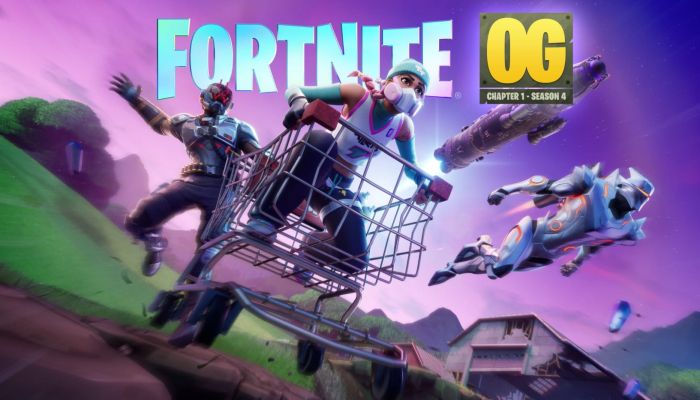
As a playable reinterpretation, however, it succeeds. It reminds me that Fortnite became popular before celebrity concerts, cinematic crossovers, and an entire library of user-created experiences. The original attraction was a colorful island where a simple journey from one house to the next could become a firefight, a desperate construction project, or a ridiculous escape involving a shopping cart.
Personal rating: 8.5/10.
Fortnite OG earns that score for its readable map, focused loot pool, tactical rotations, strong visual identity, flexible Build and Zero Build options, and the enduring quality of Fortnite’s basic battle royale design. It loses points for inconsistent legacy balance, occasional technical problems, severe skill gaps, aggressive cosmetic pressure, and the unavoidable truth that Epic can restore old content but cannot restore the period when everyone was discovering it together.
Fortnite OG is most convincing when it stops trying to prove that the past was perfect. The old island was awkward, exposed, unbalanced, and often frustrating. It was also exciting because every match created room for improvisation. That part still survives.
Pros

- Vibrant community integration that fosters social engagement
- High level of customization and personalization options
- Smooth performance and compatibility across various devices
- Rewarding progression system that motivates players
- Robust mod support allowing creative player modifications
- Impressive sound and visual aesthetics that enhance immersion
- Innovative gameplay that merges classic elements with modern mechanics
Cons

- Occasional performance inconsistencies on lower-end devices
- Steep learning curve for newcomers adapting to layered mechanics
- Potential balance issues due to heavy mod support in competitive modes
Leave a comment
Your comment is awaiting moderation. We save your draft here
0 Comments