







Coming Home to a City That No Longer Feels Like Home
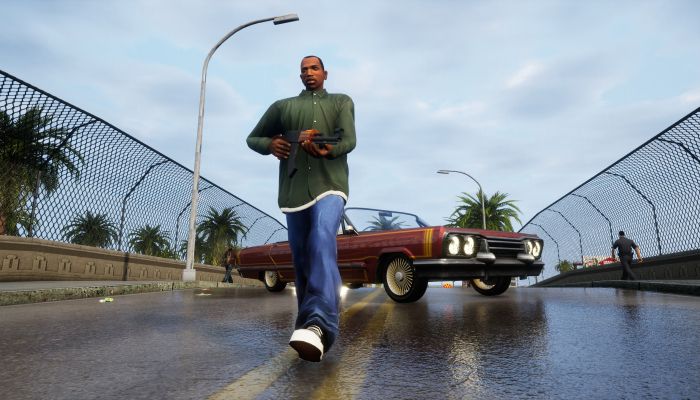
The moment that defines Grand Theft Auto: San Andreas for me is not stealing a fighter jet, escaping from the police, or driving through the desert at full speed. It is Carl Johnson returning to Grove Street after five years away and realizing that almost everything familiar has weakened. His mother is gone, his brother resents him, old friends have changed, and the neighborhood he remembers is losing ground to rival gangs and drugs. This Grand Theft Auto: San Andreas review begins there because the game’s enormous scale works only because its story starts with something small and personal: a man returning home and discovering that home needs to be rebuilt.
Released in 2004, San Andreas expanded Rockstar’s three-dimensional Grand Theft Auto formula far beyond the compact cities of Grand Theft Auto III and Vice City. The game offers three major urban areas—Los Santos, San Fierro, and Las Venturas—surrounded by countryside, forests, mountains, deserts, small towns, military zones, highways, and airfields.
I can follow Carl Johnson’s story, compete for gang territory, improve physical statistics, customize clothing and hair, purchase properties, develop relationships, work different side jobs, gamble, race, fly aircraft, modify cars, and spend hours moving through the state without advancing the main plot.
The ambition remains extraordinary. Few games from the same period attempted to combine crime drama, road movie, gang conflict, political corruption, casino operations, military infiltration, comedy, personal customization, and open-world simulation inside one continuous experience.
That ambition produces inconsistency. Some missions are memorable for the wrong reasons, combat feels dated, artificial intelligence often creates chaos, and several systems are broader than they are deep. The map can also feel emptier than memory suggests during long drives between objectives.
Even with those flaws, Grand Theft Auto: San Andreas remains one of Rockstar’s defining achievements. It offers a world large enough to support absurd freedom while keeping Carl Johnson’s relationships at the center of the journey.
Carl Johnson Returns to Los Santos
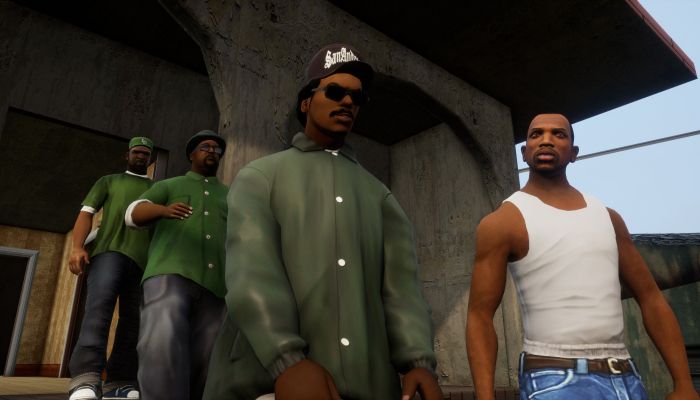
Carl “CJ” Johnson returns to Los Santos after learning that his mother has died. He left the city five years earlier, partly to escape the pressure, violence, and grief connected with Grove Street. His return begins badly. Corrupt police officers Frank Tenpenny, Eddie Pulaski, and Jimmy Hernandez intercept him almost immediately. They take his money, threaten him, and frame him as a useful criminal tool. CJ eventually reaches Grove Street and reunites with his brother Sean, better known as Sweet, his sister Kendl, and childhood friends Big Smoke and Ryder. Sweet is angry that CJ left. Grove Street Families have lost territory, internal unity has weakened, and rival groups have gained influence. CJ begins helping restore the gang’s presence. Early missions involve defending the neighborhood, recruiting members, confronting rival gangs, and rebuilding trust with Sweet.
The story initially feels focused on Los Santos. CJ’s concerns are local: family, territory, respect, and the circumstances surrounding his mother’s death. This stability collapses when betrayal becomes clear. Big Smoke and Ryder are connected with Tenpenny and rival criminal interests. A major confrontation leaves Sweet imprisoned and CJ removed from Los Santos. Tenpenny forces him into rural assignments, using Sweet’s safety as leverage. This transition is one of the game’s boldest structural choices. Just as Los Santos becomes familiar, the story sends CJ into the countryside.
He works with Catalina, an aggressive criminal who involves him in a series of robberies. He also meets conspiracy theorist The Truth and begins developing a business relationship with Cesar Vialpando, Kendl’s partner. CJ later reaches San Fierro, where he builds a garage, develops new alliances, and targets the organization supplying drugs to Los Santos. The story then moves toward the desert and Las Venturas. CJ learns to fly, works around government secrets, participates in casino operations, and becomes involved with Triad leader Wu Zi Mu.
By the time he returns to Los Santos, CJ is no longer merely a former gang member trying to regain respect. He owns businesses, controls valuable operations, and has relationships across the state. The final section brings the scale back to Grove Street. Sweet is released, but he refuses to accept wealth as a substitute for restoring the neighborhood. CJ must confront the damage created by Smoke, Tenpenny, drugs, betrayal, and his own absence. The story becomes uneven as it expands, but the circular structure is effective. CJ travels across the entire state before understanding that success means little if he cannot decide what home should become.
Carl Johnson: A Flexible Protagonist With a Strong Emotional Core
Young Maylay gives CJ humor, frustration, loyalty, anger, and a believable discomfort around people who underestimate him. CJ is more adaptable than Tommy Vercetti. Tommy enters Vice City already confident about the type of criminal authority he wants. CJ changes according to circumstance. He can be a gang member in Los Santos, reluctant robber in the countryside, garage owner in San Fierro, pilot in the desert, and casino partner in Las Venturas. This flexibility suits an open-world protagonist. The player can spend hours exercising, gambling, modifying cars, dating, flying, or purchasing property without making CJ’s story identity feel completely broken.
His central motivation is family. He wants Sweet’s respect, feels responsible for leaving, and attempts to protect Kendl even when he struggles to accept her independence. CJ is not morally heroic. He commits serious crimes and often follows dangerous instructions. The story gives him more emotional awareness than many people around him.
He notices hypocrisy, questions unreasonable plans, and becomes increasingly capable of identifying when someone is using him. His relationship with Sweet is especially important. Sweet represents loyalty to Grove Street but also an inability to imagine life beyond it. CJ’s broader success proves that he can grow outside the neighborhood. Sweet’s criticism forces him to ask whether growth has become another form of escape. The game occasionally stretches CJ’s abilities beyond credibility. He becomes a pilot, casino operator, special agent, street racer, military infiltrator, and expert in nearly every form of transportation. This exaggeration is part of the Grand Theft Auto fantasy. CJ’s personality remains grounded enough that the increasingly absurd missions still feel connected to one character.
Sweet Johnson: Loyalty That Becomes a Limitation
Sweet is the emotional authority of the Johnson family after their mother’s death. Faizon Love gives him anger, pride, pain, and the intensity of someone who believes loyalty must be proven continuously. His resentment toward CJ has a clear foundation. CJ left while the family and neighborhood were struggling.
Sweet stayed, absorbed the responsibility, and watched Grove Street decline. The problem is that his definition of loyalty becomes narrow. He sees leaving as betrayal and treats outside success with suspicion. When CJ returns with money, property, and powerful connections, Sweet does not automatically celebrate. He believes the neighborhood remains abandoned. This creates one of the story’s most useful conflicts. Sweet is correct that CJ cannot purchase emotional repair. He is also too rigid to recognize that survival and growth may require leaving old structures behind.
Sweet’s attachment to Grove Street gives the final act purpose. The game does not end with CJ enjoying wealth in Las Venturas. He returns because the original family conflict remains unresolved. The character can become frustrating because he often dismisses CJ’s accomplishments. That frustration is intentional but occasionally repetitive. Sweet represents home as responsibility rather than comfort. CJ must decide how much of that responsibility he accepts without allowing it to control his entire identity.
Big Smoke: Friendship Hidden Behind Appetite and Ambition
Big Smoke is one of the game’s most memorable characters because his humor makes the eventual betrayal more effective. Clifton Powell voices him with warmth, confidence, exaggeration, and the ability to turn a simple conversation into a performance. Smoke appears supportive when CJ returns. He provides familiarity, jokes, and a connection with the neighborhood’s earlier days. His enormous fast-food order became famous because it captures his personality: appetite, confidence, and complete disregard for what everyone else expected. The appetite is also symbolic. Smoke wants more than Grove Street can offer. He sees money, influence, and protection in alliances with Tenpenny and rival organizations. Loyalty becomes less valuable than access to a larger system.
The game gives several signs that he is hiding something, though the final confirmation still works because CJ wants to believe in the friendship. Smoke’s betrayal is not explored as deeply as it could be. We understand ambition and self-preservation, but the story spends limited time examining how he justified the damage to his own community. His final confrontation contains regret, pride, and self-awareness. Smoke recognizes what he became without accepting a path back. He remains effective because he is not introduced as an obvious villain. He is funny, familiar, and connected with a version of home CJ wanted to recover.
Ryder: A Strong Personality With an Uneven Betrayal
Ryder is aggressive, insulting, unpredictable, and constantly determined to prove that everyone else is less capable than he is. MC Eiht gives him excellent comic hostility and a distinctive rhythm. Ryder complains about CJ, mocks Sweet, and treats every plan as an opportunity to establish superiority. His early missions involve acquiring weapons and strengthening Grove Street. These jobs make him appear committed to the gang despite his difficult personality. The later revelation that he is also working against Grove Street is less developed than Smoke’s betrayal.
The story does not give Ryder enough space to explain his motive or confront CJ meaningfully. His departure feels more like a plot requirement than a complete character turn. This is one of San Andreas’ missed opportunities. Ryder’s insecurity, resentment, and need for status could have supported a stronger explanation. Instead, his personality remains more memorable than the conclusion of his arc.
Officer Tenpenny: Corruption Protected by the System
Samuel L. Jackson gives Frank Tenpenny calm authority, sarcasm, and the confidence of a man who believes consequences apply only to other people. Tenpenny leads the corrupt C.R.A.S.H. unit alongside Pulaski and Hernandez. He uses police power to manipulate gangs, remove enemies, protect criminal operations, and force CJ into dangerous work.
He does not behave like an ordinary street criminal wearing a uniform. His authority changes the meaning of every threat. CJ cannot simply refuse because Tenpenny controls evidence, access to Sweet, and the ability to create legal danger. Tenpenny’s greatest weapon is institutional protection. Even when his behavior becomes visible, proving responsibility remains difficult. Samuel L. Jackson avoids making him constantly loud. Tenpenny often sounds amused because he assumes the outcome is already controlled.
Pulaski is more openly hateful and violent, while Hernandez shows enough discomfort to reveal that participation still requires choice. The final unrest in Los Santos connects Tenpenny’s corruption with public anger. The story reflects a city where official authority has become another criminal organization. Tenpenny is one of the series’ strongest antagonists because defeating him physically is not the same as defeating the structure that protected him.
Kendl Johnson and Cesar Vialpando: Family Beyond Grove Street
Kendl refuses to accept Sweet’s control over her relationships and decisions. She is practical, ambitious, and more willing than her brothers to imagine a life outside Grove Street. Her relationship with Cesar initially creates conflict because he belongs to another gang. CJ approaches him with suspicion but gradually recognizes his loyalty. Cesar becomes one of CJ’s most dependable allies. He helps reveal Smoke and Ryder’s betrayal, supports the San Fierro garage, and remains connected with Kendl without treating her as an extension of CJ.
Their partnership gives the story a healthier version of loyalty. Cesar does not need CJ to remain weak or local in order to trust him. Kendl also helps turn the garage into a business, showing competence beyond family conflict. The game could give her more direct involvement in later operations. She often becomes part of CJ and Cesar’s shared motivation rather than carrying a complete independent arc. Even so, Kendl and Cesar demonstrate that family can expand through chosen trust rather than only blood or neighborhood identity.
The State of San Andreas: Three Cities and the Roads Between Them
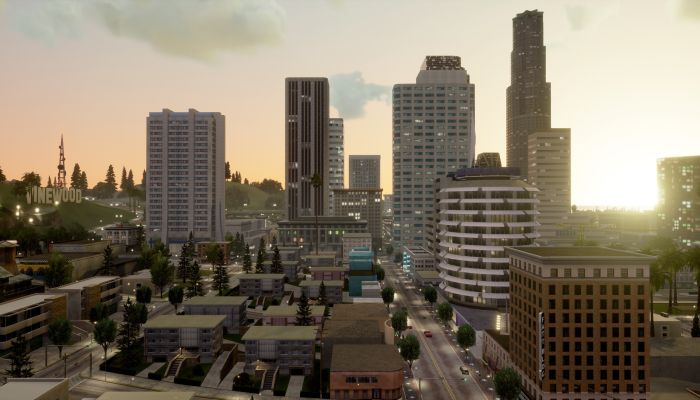
San Andreas offers one of the most ambitious maps of its generation. Los Santos draws from Los Angeles, San Fierro from San Francisco, and Las Venturas from Las Vegas. The surrounding countryside, desert, forests, mountains, rivers, highways, and towns connect these cities into a state rather than three isolated maps. Los Santos is defined by neighborhoods, freeways, commercial districts, hills, beaches, and gang territories. It feels socially divided and politically tense. San Fierro uses steep streets, bridges, docks, industrial areas, tram lines, and cooler weather. Driving there requires more attention because elevation changes can turn speed into danger.
Las Venturas is bright, commercial, and structured around casinos, hotels, wide roads, and desert excess. The city feels less intimate than Los Santos but supports the story’s largest business fantasy. The countryside provides farms, small towns, dirt roads, forests, and isolated buildings. Its slower rhythm creates a strong contrast after the crowded opening city. The desert supports military secrets, aircraft, abandoned structures, and wide open routes. It can feel empty, but that emptiness helps create scale.
Mount Chiliad remains one of the map’s most recognizable landmarks. Reaching the top provides both a physical challenge and a view demonstrating how much the world connects. The map is large enough that travel sometimes becomes tedious. Long routes can interrupt story momentum, especially when a mission fails after a lengthy drive. Its greatest strength is geographic memory. Each region contains enough identity that returning after several hours elsewhere feels meaningful.
Missions: Extraordinary Variety With Uneven Quality
San Andreas contains one of the most varied mission collections in the series. Objectives involve gang confrontations, robberies, street races, stealth, swimming, aircraft, trains, casinos, military facilities, rural chases, construction equipment, photography, remote vehicles, and large assaults. The variety prevents the campaign from feeling mechanically narrow. A mission may begin as a drive, become a chase, and end with a completely different vehicle or weapon. The best missions combine character, location, and mechanics. The casino robbery, the return to Los Santos, the Area 69 operation, and several major gang conflicts feel like events rather than routine tasks. The game is also famous for frustrating missions. “Wrong Side of the Tracks” became a cultural reference because following a train while Smoke attempts to hit enemies can fail for reasons that are not communicated clearly. “Supply Lines…” uses a remote-controlled aircraft with fuel limitations and awkward controls. Flight-school missions can block progression for players who struggle with the aircraft physics.
The absence of generous checkpoints makes these problems worse. A late failure may require repeating travel, setup, and earlier stages. Mission design often assumes that the player will learn through failure. This can produce satisfaction after eventual success, but it can also make the game feel less respectful of time. The campaign’s ambition is undeniable. Its inconsistency is the cost of attempting so many different ideas with systems not equally suited to all of them.
Driving, Motorcycles, Aircraft & Other Vehicles: A State Built Around Movement
San Andreas expands vehicle variety dramatically. Cars, motorcycles, bicycles, trucks, boats, helicopters, airplanes, trains, construction equipment, military vehicles, and unusual machines all become available. Driving remains arcade-focused. Cars differ in speed, weight, traction, durability, and handling, while traffic creates unpredictable situations. Motorcycles provide speed and flexibility but expose CJ directly during collisions. Bicycles are slower and require physical effort, yet they fit the early neighborhood setting perfectly. Aircraft become essential during later progression. Learning to fly changes the entire map because mountains, cities, and desert routes can be crossed directly. The flight controls are not equally comfortable across versions. Small corrections can become difficult, particularly during missions requiring precise rings, landings, or low-altitude movement.
Vehicle modification adds another layer. Certain garages allow visual and performance customization, connecting car culture with Los Santos’ identity. Driving skill can also improve through repeated use, making vehicles easier to control. This RPG-style progression rewards ordinary play without requiring a separate skill menu. The wide selection gives the open world long-term variety. A route that feels slow in a car can become enjoyable on a motorcycle or aircraft.
Combat & Gang Warfare: Greater Flexibility, Familiar Roughness
Combat improves on Vice City through better movement, aiming options, weapon skills, stealth possibilities, and the ability to crouch or move more effectively during firefights. Weapon categories include pistols, shotguns, submachine guns, assault rifles, rifles, explosives, heavy weapons, and melee tools. Repeated use improves CJ’s skill with particular weapons. Higher skill can increase accuracy, movement, and handling, creating a practical relationship between experience and performance. Targeting remains imperfect. Lock-on may select the wrong person, and camera behavior can become awkward in crowded spaces.
There is still no complete modern cover system. Cars, walls, corners, and terrain must be used manually. Gang warfare allows Grove Street to capture territory after a certain point in the story. Starting a conflict creates waves of rival gang members, and success changes the neighborhood’s color on the map. This system makes territorial power visible and gives the player a reason to recruit allies.
It also becomes repetitive. Enemy waves follow a predictable pattern, and regained territory may be attacked later, creating maintenance rather than meaningful strategy. Gang members can follow CJ, enter vehicles, and assist in fights. Their artificial intelligence is unreliable, but the sense of moving through Los Santos with a group supports the story’s identity.
RPG Systems & Customization: Building a Version of CJ
San Andreas introduces physical statistics and customization more extensively than earlier entries. CJ can gain muscle through exercise, increase stamina through running or cycling, gain weight through food, and lose it through activity or neglect. These changes affect appearance, dialogue, movement, and certain capabilities. They make CJ feel connected with the player’s habits. The system is impressive conceptually but occasionally intrusive. Eating becomes a maintenance task, and extreme statistics can require repetitive activity to change.
Clothing stores allow outfits to be assembled from individual pieces. Haircuts, facial hair, tattoos, and accessories provide additional customization. Different areas offer different styles, connecting appearance with location and progression. CJ’s respect and attractiveness statistics influence some interactions. These systems show their age through simplified assumptions and occasionally awkward design. Dating provides optional relationships with several characters. Successful outings may unlock practical rewards, though the activities become repetitive quickly. The customization is broad rather than deeply simulated. Its importance comes from allowing one player’s CJ to look and behave differently from another’s.
Radio Stations, Music & Audio: A State Connected by Sound
San Andreas offers a wide radio selection covering hip-hop, funk, rock, country, alternative music, electronic styles, reggae, soul, house, and talk programming associated with the early 1990s setting.
The soundtrack helps separate regions. Country music feels natural during rural drives, while West Coast hip-hop strengthens the identity of Los Santos. Radio hosts, advertisements, news reports, and talk programming build a fictional culture around the state. News updates react to story events, giving the impression that CJ’s actions are becoming part of public life. The music creates some of the game’s strongest memories. Long drives become enjoyable when the right station matches the landscape.
Licensing differences affect later versions, and some tracks may be missing depending on release. This matters because the soundtrack is central to the period atmosphere. Voice acting is extensive and memorable. Young Maylay, Samuel L. Jackson, James Woods, David Cross, Peter Fonda, Ice-T, Charlie Murphy, Chris Penn, and others give the story a wide range of personalities. Audio quality is limited by the original technology, but the performances carry the material effectively.
Side Activities & Extra Systems: Almost Every Vehicle Becomes a Job
San Andreas includes taxi driving, firefighting, ambulance missions, vigilante work, burglary, trucking, quarry operations, valet parking, courier tasks, racing, gambling, vehicle export, schools, gyms, collectibles, stunt jumps, and property ownership. These activities make the state feel full of alternative goals. Some provide money, while others unlock practical rewards or improve statistics. Burglary is especially interesting because it creates a stealth-based nighttime activity separate from the main story. Driving, boat, motorcycle, and flight schools provide structured challenges. They are useful for learning but can become frustrating when high rankings require near-perfect performance.
Casinos allow gambling through several games. The luck statistic affects outcomes, adding another unusual RPG element. Collectibles vary by region, encouraging thorough exploration. Graffiti tags, snapshots, horseshoes, and oysters provide different forms of completion. The game’s breadth is impressive, though many activities rely on repetition. Completing them all can turn a playful world into a checklist. The best side systems connect naturally with the map. The weakest feel included mainly to increase the number of available activities.
Graphics & Art Direction: Limited Technology, Strong Regional Character
San Andreas uses a warmer and more varied palette than Grand Theft Auto III. Los Santos features orange light, urban haze, palm trees, concrete channels, and neighborhood streets. San Fierro uses cooler fog, steep roads, water, and dense construction. Las Venturas adds neon, desert brightness, and casino architecture. Character models are simple, facial animation is limited, and environmental geometry appears basic by modern standards. The art direction compensates through color, weather, distance, and recognizable silhouettes. The map’s scale required compromises. Rural areas can appear empty, and repeated textures are visible across large regions.
CJ’s changing body and clothing were technically impressive for the period. The model adjusts according to weight and muscle without requiring a separate character. Modern remasters may improve resolution and controls but can alter atmosphere, introduce visual inconsistencies, or expose the simplicity of the original assets. The original presentation remains effective because it communicates place clearly. Each major region feels different before the map label appears.
Technical Performance & Modern Versions: A Classic With Uneven Preservation
San Andreas has appeared on many platforms, and the quality varies substantially. Original console versions preserve the intended atmosphere but use older controls, limited resolution, and slower interfaces.
PC versions support modification and community fixes but may require technical setup on current systems. Mobile editions offer portability while simplifying or changing parts of the control scheme and visual presentation. Later remastered versions may include improved targeting, navigation, restart options, lighting, and resolution. They have also experienced criticism for bugs, altered character models, missing music, inconsistent rain effects, and performance problems.
The base game contains its own technical issues. Vehicles can behave unpredictably, mission scripts may fail, companions may become stuck, and large fights can strain performance. Save files should be handled carefully. Long-term completion makes data loss especially painful. The division between releases means there is no universally perfect version. Players must decide whether they value authenticity, convenience, mod support, portability, or modern controls most.
Cultural Impact & Legacy: The Open World as a Complete Lifestyle
San Andreas expanded expectations for what an open-world game could contain. It was not enough to provide missions and vehicles. Players could change CJ’s appearance, statistics, relationships, property, skills, and position within the state. The three-city structure created a sense of journey rarely matched at the time. The game’s humor, radio, characters, dialogue, and mission failures became part of gaming culture. Lines and scenes continue circulating because the personalities are immediately recognizable.
Its representation of gang culture, policing, race, corruption, and urban unrest attracted both praise and criticism. The story uses satire and crime-film exaggeration while drawing from real social tensions. Some portrayals remain broad, and several jokes or systems have aged poorly. The game is most effective when focusing on CJ’s family and the structures exploiting Los Santos. Its influence appears across later open-world games through character customization, side activities, map variety, skill development, and business ownership. Rockstar itself moved toward more focused realism in later entries, but San Andreas remains the company’s great experiment in abundance.
Monetization & Overall Value: One Purchase, an Entire State
Grand Theft Auto: San Andreas was designed as a complete single-player game rather than a recurring live-service platform. The campaign, cities, vehicles, businesses, side activities, customization, radio stations, and progression systems are included without battle passes or premium currencies. Modern access varies through digital stores, collections, subscriptions, mobile releases, or remastered editions.
The primary purchasing issue is version quality, not in-game spending. Money earned inside the world supports clothing, weapons, food, properties, gambling, vehicle modification, and other practical systems. The value remains exceptional. A player can complete the story, pursue full completion, explore, experiment with cheats, install modifications on supported platforms, or return simply to drive through the state. The game’s age creates friction, but its amount of content remains remarkable.
Who Should Play Grand Theft Auto: San Andreas?
San Andreas is best suited to players who enjoy large open worlds, crime stories, character customization, driving, exploration, side activities, and long campaigns. Fans of later Grand Theft Auto entries may appreciate the greater mechanical variety and less restrained absurdity. Players interested in the series’ history will find many systems that influenced later games, even when those systems were not continued directly. Those who prioritize modern shooting, reliable checkpoints, realistic artificial intelligence, and concise mission design may struggle. Completionists should expect repetitive territory conflicts, collectibles, schools, and side jobs. New players should save frequently, prepare before difficult missions, and accept that some controls require adaptation.
Final Verdict: Rockstar’s Most Ambitious Open-World Playground
Grand Theft Auto: San Andreas remains extraordinary because it combines personal drama with an enormous sense of possibility. CJ begins by returning to one damaged neighborhood and eventually crosses cities, mountains, deserts, casinos, military facilities, and criminal organizations. Young Maylay gives CJ enough warmth and frustration to hold the story together. His relationship with Sweet prevents the campaign from becoming only a rise-to-power fantasy.
Big Smoke provides humor and betrayal, while Samuel L. Jackson makes Tenpenny one of the series’ most memorable figures of institutional corruption. The state itself remains a remarkable achievement. Los Santos, San Fierro, Las Venturas, countryside, forest, and desert create a journey that feels much larger than the technical map measurements suggest.
The soundtrack gives every region personality. Vehicle variety, RPG systems, customization, gang warfare, businesses, and side activities support an amount of freedom few games of the period attempted. The rough edges are impossible to ignore. Combat has aged, mission restarts are harsh, artificial intelligence causes avoidable failures, and several activities value repetition more than skill.
These limitations reduce comfort without erasing ambition. San Andreas remains one of the rare games where I can begin a session with a clear story objective and finish hours later after modifying a car, flying over the desert, purchasing a property, and forgetting the original plan entirely. I recommend Grand Theft Auto: San Andreas to open-world fans, players interested in Rockstar’s history, crime-story audiences, customization enthusiasts, and anyone willing to adapt to older controls in exchange for exceptional freedom.
Personal rating: 9.5/10.
Grand Theft Auto: San Andreas earns that score for CJ’s journey, its three-city state, extraordinary vehicle selection, memorable soundtrack, customization systems, side activities, supporting cast, and unmatched sense of open-world possibility. It loses half a point for dated combat, harsh mission restarts, uneven technical versions, unreliable artificial intelligence, and systems that occasionally become chores.
CJ returns to Los Santos believing he needs to repair one family and one neighborhood. San Andreas keeps expanding until he has crossed an entire state, built several lives, and discovered that coming home means more than returning to the same street. It means deciding what parts of that street deserve to survive.
Pros

- Immersive open-world exploration that offers endless opportunities to engage with the environment
- Rich narrative that integrates social commentary and cultural themes seamlessly
- Highly customizable gameplay through community mods and in-game cheats
- Diverse mission structure that combines story-driven quests with spontaneous side activities
- Strong community support that continually revitalizes the game with new content
- Cross-platform availability allows gamers to enjoy the experience on various devices
Cons

- Outdated graphics compared to modern gaming standards
- Potential technical issues when running on current hardware or operating systems
- The steep narrative and mission structure may not resonate with players seeking more casual gameplay

Leave a comment
Your comment is awaiting moderation. We save your draft here
0 Comments