
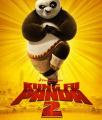




Po Faces the Part of His Story He Cannot Laugh Away
The moment that defines Kung Fu Panda 2 for me is not Po defeating an army, catching a cannonball, or delivering one of his enthusiastic speeches about kung fu. It is the instant when a small visual detail from his childhood breaks through the confidence he has built. A symbol, a flash of red, and the sound of metal are enough to stop him completely. This Kung Fu Panda 2 review begins there because the sequel understands that Po’s greatest enemy is not Lord Shen’s weapon. It is the memory he has spent his entire life avoiding without realizing it.
Released in 2011 and directed by Jennifer Yuh Nelson, Kung Fu Panda 2 continues Po’s journey after he becomes the Dragon Warrior. He now protects the Valley of Peace alongside Tigress, Monkey, Mantis, Viper, and Crane.
Po has achieved the dream that seemed impossible in the first film. He trains with the Furious Five, earns public admiration, and treats kung fu with the same combination of sincerity and uncontrolled enthusiasm that defined him from the beginning. His apparent confidence hides one unanswered question: where did he come from?
That question becomes connected with Lord Shen, a white peacock prince who has created cannons capable of defeating kung fu masters. Shen wants to conquer China and erase the prophecy that once predicted his fall.
The film expands the original’s world while making the story more personal. It includes larger battles, darker history, political ambition, and a villain tied directly to Po’s earliest trauma. Kung Fu Panda 2 is funnier than its subject matter might suggest and more emotionally serious than its bright designs imply. Jack Black remains energetic, Gary Oldman gives Shen elegant menace, and Hans Zimmer and John Powell provide one of the strongest scores in the series.
The movie’s main weakness is that several members of the Furious Five remain underdeveloped. The final act also moves through emotional resolution faster than the trauma being explored realistically deserves. Even so, Kung Fu Panda 2 is one of DreamWorks Animation’s finest sequels because it does not repeat Po’s first lesson. It gives him a more difficult one: becoming the Dragon Warrior does not mean the past can no longer hurt him.
Plot & Storytelling: A New Weapon Threatens the Age of Kung Fu
The story begins years before Po becomes the Dragon Warrior. Lord Shen is the son of rulers who brought prosperity to Gongmen City through the invention of fireworks. Shen sees a different possibility in the explosive powder. Instead of celebration, he imagines military power. A fortune-telling goat warns him that if he continues on this path, he will be defeated by a warrior of black and white.
Shen interprets the prophecy through fear. Rather than changing direction, he attempts to remove every possible threat. He orders an attack on a village of pandas. The violence forces Po’s biological parents to make an impossible decision. His mother hides the infant Po inside a crate of radishes and distracts the pursuing wolves, allowing the crate to travel away from the destroyed village. Shen’s parents are horrified by his actions and exile him from Gongmen City. He leaves while promising to return. Years later, Po is training with the Furious Five under Master Shifu. His fighting has improved significantly, though his appetite, excitement, and tendency to improvise remain unchanged.
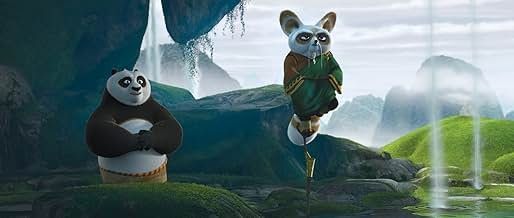
Shifu introduces the concept of inner peace. He demonstrates that complete emotional stillness can redirect external force. Po immediately wants to learn the technique, but Shifu explains that inner peace cannot be gained through one physical exercise. It comes from resolving conflict within oneself. Their lesson is interrupted when wolf bandits attack a village and steal metal for Shen’s cannons. Po and the Five stop the raid, but Po sees a symbol on the wolf leader’s armor. The image triggers a fragmented childhood memory. He freezes during combat, allowing the wolves to escape. The incident leaves Po confused. Mr. Ping has always been his father, but Po can no longer ignore the obvious physical difference between a goose and a panda.
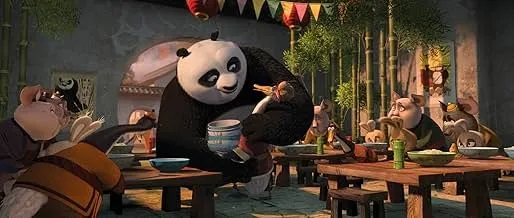
He asks Mr. Ping where he came from. Mr. Ping finally explains that he found Po as a baby inside a radish crate behind the restaurant. The adoption story is affectionate and funny, but it also confirms that Po’s past contains a missing family and an unexplained separation. Before Po can process the revelation fully, Shifu sends him and the Furious Five to Gongmen City. Shen has returned, taken control, defeated several kung fu masters, and imprisoned Masters Ox and Croc. Master Thundering Rhino is lost while attempting to stop Shen’s cannon.
The cannon changes the balance of power. Kung fu depends on skill, timing, and physical discipline, while Shen’s weapon can destroy from a distance with little concern for the opponent’s mastery. Po initially approaches the mission with familiar enthusiasm. He sees Gongmen City as another heroic adventure and assumes defeating Shen will follow the structure of earlier battles. The city reveals a more serious reality. Shen controls military production, occupies the palace, and plans to launch a fleet against the rest of China. The group attempts to reach him through disguise and stealth. Their plan collapses into a chase, though they eventually confront Shen inside the palace. Shen recognizes Po as a surviving panda. He uses that knowledge to destabilize him.
Po’s memories return in fragments during the battle. He sees his mother, the village, the wolves, and Shen’s role in the attack. His confusion allows Shen to gain control. The heroes escape temporarily, but Po becomes increasingly determined to learn the complete truth. Tigress warns him that emotional distraction is endangering the mission. Po continues pursuing Shen because he believes defeating the villain will explain who he is. During the next confrontation, Shen fires a cannon directly at Po. The blast throws him into a river, and the Furious Five believe he has died.
Po is found by the Soothsayer, the same goat who delivered the prophecy to Shen’s family. She brings him to the remains of the panda village. There, Po remembers what happened. The memory is painful, but it also contains love. His mother did not abandon him because he was unwanted. She gave up her own safety to protect him. Po begins understanding that his life cannot be defined only by the worst event in his past. He returns to Gongmen City as Shen prepares to launch the fleet. The Furious Five have been captured, and the remaining kung fu masters initially refuse to fight. Po’s return inspires resistance. The heroes work together to disrupt the fleet, but Shen’s cannons still overpower them.
Po finally achieves inner peace. Standing alone against the ships, he redirects the cannonballs through controlled movement. The technique transforms the weapon’s force into the means of destroying Shen’s fleet. Po offers Shen an opportunity to let go of the past. Shen refuses. Their final fight ends when Shen’s damaged weapon falls toward him. He does not move away, accepting the destruction created by his own obsession. Po returns home to Mr. Ping and confirms that he understands him as his father, regardless of their biological difference. The final scene reveals that other pandas survived and that Po’s biological father senses his son is alive, preparing the next stage of the story.
Po: The Dragon Warrior Learns That Pain Is Not Identity
Po remains an excellent protagonist because his humor never makes his emotions shallow. Jack Black gives him speed, warmth, excitement, fear, and enough vulnerability to prevent the character from becoming a collection of jokes. Po begins the sequel more physically confident. He belongs beside the Furious Five and no longer questions whether he deserves the Dragon Warrior title during every fight.
The new insecurity concerns origin rather than ability. Po has built a complete emotional life with Mr. Ping, Shifu, and the Five. Learning that another family existed does not make those relationships false. It does create a painful gap in his understanding of himself. His reaction is not intellectually organized. Memories arrive as images and physical panic before he has language for them.
The film represents trauma through interruption. Po may be fighting effectively, then lose awareness of the present when one symbol connects with the past. This makes his freezing during battle understandable and dangerous. Tigress and Shifu cannot solve the problem for him because Po does not yet know what he is remembering. His initial response is to chase the answer through Shen. He believes the person responsible for his pain must also provide the explanation that will remove it.
The Soothsayer helps him recognize that Shen can explain what happened but cannot determine what the event means for the rest of Po’s life. Po’s inner peace is not forgetting the village or forgiving Shen automatically. It is accepting that the memory belongs to him without allowing it to control every action. The film communicates this through the image of a drop of water moving across his body and returning to the earth.
Po’s final cannonball sequence works because emotional and physical development become the same act. He cannot redirect the weapon until he stops fighting his own history. His conversation with Shen also shows growth. Po offers the villain a choice because he understands that both of them were shaped by the same event differently. Shen built his life around preventing the prophecy. Po builds his future after accepting that the past cannot be changed.
Lord Shen: Fear Wearing the Shape of Elegance
Lord Shen is one of DreamWorks Animation’s strongest villains because his physical beauty contrasts with emotional emptiness. Gary Oldman voices him with controlled intelligence, sarcasm, panic, and sudden cruelty. Shen rarely needs to shout. His quiet voice often makes his threats more disturbing because he treats violence like a matter of design and efficiency. His white feathers, red eyes, metallic blades, and flowing tail give him an elegant silhouette. During combat, the tail becomes both decoration and weapon. Shen moves like a performer who has turned every action into proof of superiority. His central motivation is fear of powerlessness. The prophecy does not force him toward destruction. His attempt to control it creates the conditions of his defeat.
Shen attacks the panda village because he cannot tolerate uncertainty. If one black-and-white warrior might defeat him, he decides that everyone matching the description must be removed. His parents’ rejection becomes another wound he refuses to examine honestly. He interprets exile as betrayal rather than consequence.
The Soothsayer understands him better than his soldiers do. She repeatedly tells Shen that his choices, not fate, are creating his future. He keeps her nearby partly because he wants to defeat the truth she represents. Shen’s cannons reflect his philosophy. He wants force that removes the need for vulnerability, discipline, or close contact.
Kung fu requires a fighter to enter the same space as an opponent. The cannon allows destruction from safety. His obsession with replacing kung fu is therefore personal. He wants technology capable of making every form of mastery irrelevant. Shen and Po are linked through the panda attack. Both carry the past, but only one is willing to reinterpret it.
Po discovers love inside the memory. Shen discovers only humiliation and threat. His ending is effective because Po gives him a clear alternative. Shen could stop, accept responsibility, and continue living. He chooses one final attack. When the cannon collapses toward him, he looks at it and remains still. The moment suggests that Shen would rather be destroyed by his identity than imagine a life beyond it.
Tigress: Strength Learning to Make Room for Care
Tigress receives more emotional development than she had in the first film. Angelina Jolie gives her restraint, authority, and subtle warmth. Tigress rarely expresses affection directly, but her actions reveal how much Po matters to her. She notices his distraction immediately and understands that it may endanger the team.
Her criticism is not coldness. She is trying to protect him and the others from a conflict he cannot yet control. The prison escape and later conversations show that Tigress has become more comfortable treating Po as an equal. She respects his skill even when she questions his judgment. One small moment involving physical contact reveals substantial growth. Tigress has spent much of her life controlling every emotion, yet she allows concern to become visible.
Her relationship with Po is not presented as romance. It is built around trust, shared danger, and an understanding that neither needs to become less unusual for the other. Tigress also acts as field leader when Po becomes emotionally unstable. She can make difficult tactical decisions without humiliating him. The film still limits her independent story. We learn little about how Shen’s attack on kung fu culture affects her personally. Considering her lifelong dedication to the discipline, the threat should carry deeper emotional significance. Even so, Tigress becomes the most fully realized member of the Furious Five and an essential part of Po’s support system.
Mr. Ping: Parenthood Beyond Biology
Mr. Ping’s role is smaller than in the first film but emotionally crucial. James Hong gives him humor, anxiety, affection, and a believable fear that the truth may change his relationship with Po. When Po asks where he came from, Mr. Ping cannot avoid the conversation any longer.
He tells the story of finding a baby panda inside a radish crate. At first, he searched for the parents. As time passed, feeding, protecting, and loving the child transformed the situation. Po became his son through daily care rather than species or biology. The story preserves humor through the restaurant details, but Mr. Ping’s fear remains visible. He worries that Po’s interest in his origins means the family they built is no longer enough.
Po’s final return gives the film one of its warmest scenes. He tells Mr. Ping that he understands who his father is. This does not erase the biological family or the mystery of the surviving pandas. It confirms that discovering one connection does not remove another. The sequel handles adoption thoughtfully by allowing curiosity and loyalty to coexist. Po does not need to reject his origins to love Mr. Ping. He does not need to replace Mr. Ping to learn where he came from.
Master Shifu: Inner Peace Cannot Be Assigned as Homework
Master Shifu has a more limited role in the sequel, but his lesson shapes the entire story. Dustin Hoffman voices him with greater calm than in the first film. Shifu has changed after accepting Po as the Dragon Warrior. He no longer trains through constant frustration. His challenge is helping Po reach an emotional understanding that cannot be taught through physical repetition. Shifu demonstrates inner peace by redirecting a drop of water. Po immediately wants instructions, expecting the skill to function like another kung fu technique. Shifu explains that each person reaches it differently. His own peace came after resolving the conflict surrounding Po’s selection.
This is important because Shifu cannot provide Po with one universal answer. He can name the destination without determining the path. The film might have benefited from another conversation between them after Po’s memories become stronger. Shifu understands family confusion, guilt, and failed expectations through his relationship with Tai Lung. His absence from the central emotional journey leaves useful thematic material unexplored. Still, his lesson gives Po the framework needed to understand the Soothsayer’s guidance later.
The Soothsayer: Truth Without Control
Michelle Yeoh voices the Soothsayer with calm humor and direct intelligence. She once served Shen’s family and delivered the prophecy that shaped his decisions. Unlike many prophetic characters, she does not treat the future as fixed. She repeatedly emphasizes that choices determine whether the warning becomes reality. Her relationship with Shen is unusually intimate for a hero-adjacent character and villain.
She knows the frightened child beneath his theatrical authority and refuses to behave as though his cruelty makes him impossible to understand. This does not mean she excuses him. She tells him clearly that the pain he causes belongs to his choices. With Po, the Soothsayer becomes a guide rather than a source of prophecy. She helps him return to the destroyed village and remain present while the memory develops.
Her advice is simple: Po’s story may not have had a happy beginning, but the beginning does not define the whole person. The line could sound overly motivational in a weaker scene. The imagery, silence, and Po’s vulnerability give it weight. She does not remove his pain. She helps him look at it directly.
The Furious Five: Excellent Teamwork, Limited Individual Stories
Monkey, Mantis, Viper, and Crane continue supporting Po and Tigress during the mission. Jackie Chan, Seth Rogen, Lucy Liu, and David Cross give the characters recognizable personalities, though the screenplay provides limited individual development.
Monkey contributes physical flexibility and light humor. Mantis offers aggressive confidence despite his size. Viper remains calm and supportive. Crane provides aerial movement and tactical help. Their teamwork is more important than separate arcs. The group fights like people accustomed to one another’s timing. Action sequences use their different bodies effectively. Crane moves allies through the air, Viper restrains enemies, Mantis attacks mechanical weaknesses, and Monkey uses speed and reach.
The problem is emotional distance. Shen’s campaign threatens the entire tradition they have dedicated their lives to, yet only Tigress receives enough personal reaction. The Five often function as skilled support surrounding Po’s story. This keeps the narrative focused, but it also leaves several talented performers and appealing characters underused.
Action & Fight Choreography: Kung Fu Against Industrial Warfare
Kung Fu Panda 2 expands the action substantially while preserving character-based movement. Po fights through momentum, improvisation, body weight, and unexpected rhythm. Tigress uses controlled direct power. Monkey is flexible, Viper flows around opponents, Mantis targets small points, and Crane controls vertical space.
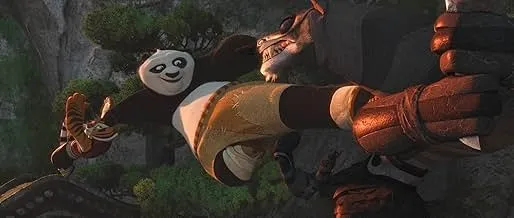
Shen’s movement is entirely different. He uses blades hidden inside his feathers, rapid turns, and elegant distance. The wolf army fights as a group, relying on numbers, weapons, and industrial organization. The cannons change the action because traditional skill cannot stop the first blast directly. Master Thundering Rhino’s defeat establishes the danger. A respected master is removed not through superior kung fu but through technology that ignores his advantage.
This creates a meaningful conflict rather than simply increasing the villain’s power. The prison escape and city chase combine comedy with clear geography. The characters move through streets, rooftops, towers, carts, and fireworks without making the action difficult to follow.
The final harbor battle is the visual high point. Small kung fu fighters move against enormous ships and cannons. Po’s redirection of the cannonballs transforms Shifu’s peaceful water exercise into large-scale defense. The scene is dramatic because it does not abandon the film’s philosophy during the spectacle. Inner peace becomes action rather than a speech given before action.
Visual Design & Animation: Painted Memories Inside a Metal War
Kung Fu Panda 2 is visually richer and darker than the first film. Gongmen City combines Chinese architectural influences, bridges, towers, waterways, workshops, and the industrial structures built for Shen’s weapons. The city once represented culture and kung fu tradition. Shen converts it into a military production center.
His palace uses red, black, white, and metallic surfaces. The colors reflect his body and create the sense that he has redesigned the city around himself. Po and the Furious Five retain warmer tones and softer shapes. The contrast between Po’s round body and Shen’s sharp silhouette communicates their different approaches before either speaks.
The film uses hand-drawn and stylized imagery for memories and dream sequences. Po’s childhood appears through simplified shapes, red backgrounds, shadows, and limited movement. This approach avoids presenting the attack through realistic detail while preserving its emotional violence. It also distinguishes memory from current reality. Po does not remember a complete documentary record. He experiences fragments, colors, sounds, and faces.
The Soothsayer’s scenes in the panda village use softer natural colors and more open space. The harbor climax becomes visually dense, but strong silhouettes and color separation keep the action readable. Fire, water, metal, feathers, fur, and smoke interact convincingly. The animation remains expressive during quiet scenes. Po’s face shifts between comic openness and childlike fear without making the emotional transition feel false.
Music & Sound: Percussion, Strings, and the Weight of Memory
Hans Zimmer and John Powell return with a score that expands the first film’s musical identity. Chinese instruments, orchestral themes, percussion, choral elements, and character motifs combine without making the score feel divided into separate cultural layers. Shen receives elegant and threatening music. Strings and metallic sounds reflect his controlled movement and weapon production.
Po’s themes remain warmer and more playful, though the music becomes quieter and more fragile during his memories. The inner-peace sequence uses restraint. The score allows water, breathing, and movement to remain central. During the final cannonball confrontation, the music grows without losing the emotional theme established earlier.
Sound design gives Shen’s weapons enormous force. Cannon blasts are loud enough to feel fundamentally different from punches, kicks, and blades. The mechanical noise of production also changes Gongmen City’s atmosphere. Metal and machinery replace the natural rhythm associated with kung fu training. Gary Oldman’s controlled voice benefits from the quieter sound around Shen. The film rarely needs to make him loud to make him threatening.
Direction & Pacing: Jennifer Yuh Nelson Lets Darkness Enter Without Taking Over
Jennifer Yuh Nelson directs the film with impressive control over tone. The story includes genocide, adoption, grief, industrial warfare, and a villain obsessed with changing fate. It remains a family adventure without treating those ideas carelessly. Humor is used to preserve Po’s personality rather than erase serious scenes.
After the childhood memory becomes clear, the film allows silence and sadness to remain. It does not immediately interrupt Po with a food joke. The opening moves quickly through Shen’s history, Po’s new status, the inner-peace lesson, the village attack, and the adoption reveal. This efficiency keeps the story active but compresses several emotional transitions.
The middle balances investigation, action, and memory effectively. Each encounter with Shen reveals more of the past and makes Po less stable. The final act resolves Po’s inner conflict and the external war in close succession. This creates strong momentum, though Po reaches inner peace faster than real trauma would allow.
The movie is using a symbolic structure, not a clinical one. Even within that framework, one additional quiet scene could have strengthened the change. Nelson’s greatest achievement is preserving Po’s comic identity inside a story that could easily have become emotionally incompatible with him. He remains funny because humor is part of how he survives, not because the movie refuses to take him seriously.
Themes & Emotional Meaning: The Past Explains You Without Owning You
Kung Fu Panda 2 is primarily about the relationship between past experience and present identity. Po has lived a happy life with Mr. Ping, but happiness does not remove the need to understand where he came from. His memories reveal violence, loss, and sacrifice. The discovery could lead him to define himself entirely through victimhood or revenge.
Shen expects that response. He believes revealing the truth will break Po permanently. Po reaches a different conclusion. The beginning matters, but it is not the complete story. Mr. Ping, Shifu, the Furious Five, and Po’s own choices are equally real parts of his identity.
Inner peace therefore does not mean emotional emptiness. It means allowing contradictory truths to exist together. Po lost one family and found another. His childhood contains terror and love. His pain is real, and so is the joy that followed it. Shen represents the opposite response. He treats prophecy and exile as permanent definitions.
Every choice becomes an attempt to prove that the future cannot control him, even as fear controls everything he does. Technology and tradition form another theme. Shen believes cannons will make kung fu irrelevant. The film does not reject invention automatically. The danger lies in using technology to remove human responsibility and dominate from a distance.
Po defeats the cannon not by pretending it is weak but by transforming its force through discipline. The sequel also explores parenthood. Mr. Ping’s care is not invalidated by biology, while Po’s curiosity about his origins is not a rejection of adoption. That balance gives the story unusual emotional maturity.
Critical Reception & Lasting Reputation: A Sequel That Deepened the Series
Kung Fu Panda 2 received strong reviews for its animation, action, voice performances, emotional story, visual direction, and darker but controlled tone. Critics frequently praised Gary Oldman’s performance as Lord Shen. The villain’s elegance, fear, and personal connection with Po made him one of the franchise’s most memorable antagonists.
Jennifer Yuh Nelson’s direction also received substantial recognition. The film expanded the world and stakes without losing the central character relationships. The sequel was nominated for the Academy Award for Best Animated Feature and achieved major commercial success. Audience response remained strong, particularly among viewers who appreciated the deeper exploration of Po’s origins.
The film is often compared favorably with the original. Some prefer the first movie’s tighter underdog structure and stronger use of the entire training environment. Others consider the sequel superior because of Shen, the emotional complexity, and the visual ambition.
Its reputation has remained excellent. The treatment of trauma, adoption, and identity continues to resonate with adult viewers who first encountered the film as children. The final reveal of surviving pandas also created anticipation for the next installment without making the current story feel incomplete.
Final Verdict: Po Finds Peace Without Forgetting
Kung Fu Panda 2 is one of the rare animated sequels that expands spectacle while making the protagonist’s conflict more intimate. Po begins the film as a successful Dragon Warrior. The question is no longer whether he can perform kung fu. It is whether the identity he built can survive the truth about his beginning.
Jack Black gives Po enough comic energy to remain familiar while allowing fear and grief to reshape the performance. Gary Oldman makes Lord Shen an exceptional villain. He is graceful, intelligent, frightened, and completely trapped by the future he tried to prevent. Angelina Jolie gives Tigress quiet emotional strength, while James Hong makes Mr. Ping’s love feel secure even when the character fears being replaced.
Michelle Yeoh’s Soothsayer provides guidance without removing Po’s responsibility for his own healing. The animation is outstanding. Gongmen City, Shen’s feathers, the stylized panda memories, the industrial weaponry, and the harbor battle create a world larger than the first film without losing clarity.
Hans Zimmer and John Powell’s score adds emotional weight to both the memories and action. The film’s message is simple but not shallow. A painful beginning can explain fear, anger, and confusion without becoming the final definition of a life. Po does not defeat Shen by forgetting what happened. He wins after remembering the love inside the same memory.
I recommend Kung Fu Panda 2 to families, animation fans, martial-arts viewers, and anyone interested in stories about trauma, adoption, identity, revenge, and emotional recovery.
Personal rating: 9.5/10.
Kung Fu Panda 2 earns that score for Po’s powerful character arc, Lord Shen’s exceptional villainy, Jennifer Yuh Nelson’s direction, expressive animation, strong action choreography, and a memorable score. It loses half a point for underused members of the Furious Five, compressed healing, and supporting themes that could have received more time.
Po spends much of the film searching for the event that explains who he is. Inner peace arrives when he understands that no single event—not even the worst one—has the right to tell his entire story.
Pros

- Visually stunning and meticulously crafted animation that creates a vibrant and immersive world.
- An innovative blend of traditional martial arts philosophy with modern narrative techniques.
- Deep character development that invites introspection and personal reflection.
- Masterful use of sound and music that enhances emotional nuances and storytelling.
- A balanced mix of humor, action, and philosophical depth that caters to a wide audience.
- Creative choreography in action sequences that mirror character growth and inner struggles.
Cons

- The layered narrative and visual metaphors might be too complex for viewers seeking straightforward storytelling.
- Pacing may feel uneven for those expecting constant high-energy action without reflective pauses.
- Some traditional elements and familiar tropes might not resonate with audiences looking for more contemporary themes.

Leave a comment
Your comment is awaiting moderation. We save your draft here
0 Comments