







LEGO Fortnite Finally Gets a Proper Superhero Mode
LEGO Fortnite Expeditions makes its intentions clear almost immediately. I am not dropped into a huge wilderness with an empty inventory and asked to collect wood before building a shelter. Instead, I arrive at a superhero academy, choose a combat class, join other players, and travel into compact missions filled with enemies, objectives, destructible scenery, and oversized comic-book effects. The familiar LEGO presentation remains, but the rhythm is closer to a cooperative action game than a survival sandbox.
This LEGO Fortnite Expeditions review begins with that distinction because the mode is easy to misunderstand. Expeditions is not a large expansion that simply adds superhero abilities to LEGO Fortnite Odyssey. It is a separate PvE experience built around repeatable missions, class progression, team composition, loot, ability upgrades, and short sessions. Players who enjoy constructing villages and gathering resources may find the limited building disappointing, while those who considered Odyssey too slow may finally discover the LEGO Fortnite experience they wanted.
My early missions were energetic and approachable. Enemies appeared in manageable waves, objectives were clearly marked, and abilities created enough spectacle to make my small LEGO character feel genuinely powerful. I could launch attacks across a battlefield, move rapidly between targets, support teammates, and smash through groups without memorizing an enormous combat system.
The simplicity is part of the attraction, but it also creates the mode’s main problem. Once I had completed several missions and understood the available objectives, repetition became visible quickly. New classes and upgrades changed how I fought, yet the basic structure often returned to defending equipment, defeating waves, rescuing civilians, collecting resources, and attacking another Spire.
Expeditions is polished, charming, and easy to recommend for cooperative family play. It is less convincing as a deep long-term action RPG because its mission variety, enemy behaviors, and progression systems are not yet rich enough to support endless repetition without relying on future updates.
Drop In, Save People, Break Everything
The main gameplay loop begins at Supernova Academy, a shared hub where players can select hero classes, manage upgrades, collect assignments, interact with characters, and access missions. The academy gives the experience a stronger sense of place than a plain matchmaking menu. Other heroes move through the area, terminals communicate clear functions, and the school theme turns progression into superhero training.
From the mission terminal, I can select a specific operation or use a quick-play option. Missions support teams of up to four players, although matchmaking can fill empty positions when a complete group is unavailable. Solo participation is possible, but Expeditions feels designed around several heroes combining different abilities.
A typical operation sends the team into one of several combat zones. Objectives may involve protecting a device, activating communication equipment, defeating enemy waves, rescuing trapped citizens, collecting important materials, opening chests, or destroying structures associated with Daigo’s plan. Optional activities encourage exploration away from the main route, though the maps remain much more compact than Odyssey’s open world.
Combat begins quickly and rarely stops for long. Enemies arrive in groups, ranged attackers take positions around the area, heavy units push directly toward players, and dangerous targets require ability use rather than simple button mashing. The best encounters create enough pressure that the team must divide attention between survival and objective protection.
The structure is accessible because mission instructions are direct. I rarely felt confused about what needed to happen next. Markers identify allies, targets, objectives, and rewards, while the interface keeps ability cooldowns visible.
That clarity suits younger players and casual groups. It also makes the missions predictable. After a few sessions, I could often identify the next stage before the game announced it. A defended machine usually leads to another wave, a newly opened route leads toward a stronger group, and a large arena usually signals a final encounter.
The Most Important Source of Variety
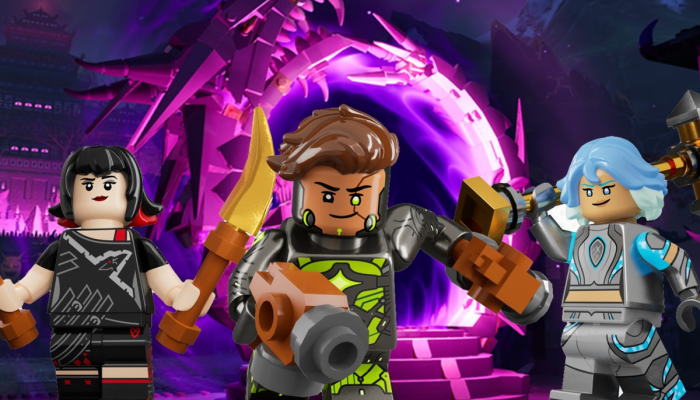
Hero classes provide Expeditions with its strongest progression system. Each class changes movement, offensive tools, defensive options, and the way I contribute to a team. I can switch classes while at the academy, which encourages experimentation without forcing one permanent character choice.
The Shadow Caller combines damage, support, and unusual mobility. Its abilities allow me to attack groups while helping nearby allies, then use a shadow-based transformation to escape dangerous situations. I enjoyed the flexibility because I could contribute even when another player dealt more direct damage. The Hunter focuses more clearly on ranged pressure and accurate targeting. This style works well for players who prefer controlling space from a safer distance rather than entering the center of every enemy group. The class can feel extremely effective when teammates hold enemy attention, although it becomes less comfortable when several heavy units close the distance simultaneously.
The Rift Ripper uses destructive rift energy and area-based attacks. This class is visually impressive and especially satisfying during dense enemy waves. Creating powerful zones and improving nearby combat performance gives it a strong identity within coordinated teams. Classes earn Hero XP through combat and successful missions. Leveling provides skill points that can be invested into class-specific upgrades. These improvements may increase damage, strengthen defenses, improve cooldowns, or change the practical function of an ability.
I appreciate that upgrades create choices rather than only raising one universal number. A flexible class can often be pushed toward greater damage or stronger support, allowing two players using the same class to contribute differently. The progression tree is not enormous, however. After the initial excitement of unlocking abilities and key improvements, later upgrades can feel more numerical than transformative. The mode needs additional classes, alternative abilities, and more dramatic build choices if it is expected to support months of repeated play.
Accessible Superpowers With Limited Mechanical Depth
Combat uses familiar Fortnite controls adapted for LEGO characters and class abilities. Movement is responsive, attacks are easy to understand, and cooldown-based powers create a steady rhythm of basic damage followed by larger bursts. Enemies communicate attacks clearly enough for younger players to react. Heavy strikes often have visible preparation, projectiles can be avoided through movement, and dangerous areas are usually marked. Dodging and repositioning matter, but Expeditions does not demand the precision of a difficult action RPG.
Abilities are the central attraction. Launching an explosive attack into a group of LEGO enemies creates flying pieces, bright effects, and immediate visual feedback. Support skills are also easy to recognize because health, protection, and team buffs appear clearly. The combat works best when enemy groups contain different roles. Ranged units force movement, melee fighters create pressure, and heavy enemies punish players who remain in one position. When several threats overlap near an objective, the mode becomes lively and briefly tactical. Individual weapons feel less important than the classes. Gear can improve performance, but the identity of a build comes mainly from abilities and upgrades. Players expecting a detailed weapon-looting system may find the equipment layer thin.
Basic attacks can also become repetitive. Many encounters involve moving toward a group, using the strongest available abilities, attacking while cooldowns recover, and repeating the process. Team coordination helps, but most public matches do not require careful planning. The low difficulty makes Expeditions welcoming, although it reduces long-term tension. A stronger set of difficulty options, mission modifiers, elite enemy combinations, and more mechanically demanding bosses would give experienced groups a better reason to master their classes.
Teamwork & Matchmaking: Better With Friends, Functional With Strangers
Expeditions is clearly designed for cooperation. Different classes can cover weaknesses, revive fallen players, control separate routes, and combine area attacks against dense waves. A coordinated team can complete objectives efficiently while still exploring for optional rewards.
Playing with friends produces the strongest version of the mode. Communication makes class selection more meaningful, and deciding who protects an objective or rescues civilians creates a small amount of tactical structure. The short missions also make Expeditions easy to include in a casual evening without requiring the commitment of a long survival session.
Public matchmaking is convenient but inconsistent. Some players follow objectives and stay close to the team, while others rush toward every chest, ignore civilians, or remain at the edge of the battlefield. The forgiving difficulty prevents most groups from collapsing completely, yet poor cooperation can make missions slower and less satisfying. The game could provide better communication tools for younger audiences and players avoiding voice chat. Simple contextual signals such as defend here, follow me, ability ready, or help this civilian would improve teamwork without creating social pressure.
Shared rewards reduce arguments over loot. I rarely felt that another player had permanently stolen the one item required for my progression. That is important in a family-friendly cooperative game. The shared academy is pleasant but not deeply social. I can see other players and move around the environment, yet the available interaction is limited. It functions more as a lively lobby than as a meaningful multiplayer community space.
Mission Locations: Colorful Arenas That Need More Variety
The launch locations give Expeditions several recognizable environments. Utopia City uses streets, buildings, vehicles, and civilian-rescue scenarios. The Spire Excavation Site emphasizes strange crystals, machinery, and Daigo’s operations. Busted Bridge creates battles around damaged infrastructure and narrower movement routes.
Each location is visually readable, and LEGO destruction gives the areas an appealing physical quality. Objects break into pieces, attacks disturb the environment, and the combination of Fortnite effects with brick-built scenery produces a playful action atmosphere. Utopia City is the strongest setting for civilian objectives because its streets make the threat feel connected with an inhabited world. Moving between buildings and open intersections also supports a mixture of close and ranged combat.
The excavation areas offer clearer enemy territory but can become visually repetitive. Crystal structures, excavation equipment, and dark forces create a consistent theme without always providing memorable tactical differences. Busted Bridge has an amusing superhero-story identity, though its layout can make missions feel more linear. Limited routes focus the action but reduce exploration.
The larger problem is that mission structure matters more than location. Protecting another generator can feel familiar even when the surrounding buildings change. New maps will help, but the game also needs objectives that alter movement, class roles, and decision-making more substantially. Environmental hazards, branching routes, moving vehicles, escort missions with player control, puzzle rooms, and missions where the team must split temporarily could add meaningful variety. Merely placing another defense objective in a new biome would not solve repetition fully.
Enemies & Bosses: Clear Roles, Repeated Behaviors
Daigo’s forces include crystal-like Spires, lighter demon guards, heavily armored units, ranged attackers, and stronger named enemies. Their designs fit the supernatural superhero theme and remain easy to identify during crowded battles.
Light enemies create numbers and pressure. They are satisfying to remove with area attacks but rarely dangerous alone. Heavy guards survive longer, use more disruptive attacks, and require greater attention. Ranged enemies are often the most irritating because they attack from outside the immediate group. They force players to stop focusing only on the nearest target and look around the arena.
Spire-related structures act as both visual symbols and gameplay objectives. Destroying them feels appropriately heroic, but the repeated animation and attack pattern become familiar quickly. Named opponents offer more spectacle, though boss design still depends heavily on enemy waves, large health pools, area attacks, and predictable attack windows. The fights are enjoyable but rarely surprising.
I wanted bosses that forced specific class cooperation. A protected enemy could require one player to disable barriers while another interrupts an attack. A mobile boss could create routes that only certain movement abilities handle efficiently. The current enemy roster provides a solid foundation rather than a complete long-term ecosystem. New enemy families will be essential because repeated wave combat exposes limited behaviors more quickly than open-world exploration would.
Progression & Academy Assignments: Constant Rewards, Modest Transformation
Completing missions provides experience, class progression, resources, and advancement through assignments. The academy presents these systems through instructors, terminals, and school-themed tasks, making progression more charming than a list of disconnected challenges. Academy Assignments give short objectives that encourage players to use particular abilities, defeat enemies, complete missions, or explore different activities. They provide direction for anyone uncertain what to do next.
Community Projects add a shared layer. Player activity contributes toward broader goals that can unlock benefits or further content for the entire community. The idea fits the superhero academy theme because everyone appears to be working toward the same larger defense effort. In practice, community progression can feel distant. My individual contribution is small, and the result often appears as another meter increasing somewhere in the interface. More visible changes to the academy or missions would make these projects feel physically meaningful. Class progression is more satisfying because rewards affect immediate play. Unlocking a stronger ability or improving survivability is noticeable during the next mission.
The rate of progress is generous early and slower later. This is typical of a live-service structure, but repeated missions become more obvious when the next useful upgrade is several levels away. Expeditions needs an endgame beyond completing the same missions more efficiently. Difficult challenge tiers, rotating weekly operations, class-specific trials, unique boss rewards, and cooperative achievement goals could give advanced players stronger motivation.
Graphics & LEGO Presentation: Bright, Destructible, and Easy to Read
The visual presentation combines Fortnite’s effects with LEGO minifigures, brick-built objects, and playful destruction. Characters retain recognizable outfit details while being adapted into LEGO form, allowing a large part of a player’s existing Fortnite locker to remain useful. Animations communicate superhero power clearly. Characters leap, fire projectiles, transform, and move across the battlefield with exaggerated energy. Enemies break apart in a way that feels dramatic without becoming disturbing.
The academy is colorful and polished. Hero terminals, training areas, faculty members, and shared spaces establish the school fantasy effectively. The design feels welcoming rather than militarized, which fits the younger audience. Mission environments are readable even when several attacks occur at once. Strong colors separate enemies, objectives, allies, and dangerous effects. The screen can still become cluttered during four-player ability combinations, especially around large Spires.
LEGO destruction is satisfying but less flexible than the building systems in Odyssey. Expeditions uses bricks primarily as visual material rather than creative construction. Players hoping to rebuild damaged locations or design defensive structures will be disappointed. The lack of building helps maintain combat speed. It also removes the feature most closely associated with LEGO. The mode occasionally feels like a Fortnite superhero mission wearing LEGO models rather than a game built around the creative logic of LEGO pieces.
Audio & Music: Cheerful Heroism Without Excessive Intensity
The soundtrack uses energetic heroic music that supports combat without making the experience feel threatening. Supernova Academy has a brighter and more welcoming atmosphere, while missions add stronger percussion and dramatic cues. Abilities have clear audio identities. I can often recognize a powerful attack or support effect before looking directly at the user. Enemy warnings, objective alarms, and mission instructions remain understandable during most fights.
LEGO destruction produces light clicking and breaking sounds that make environmental damage satisfying. The effects preserve the toy-like tone even when the screen fills with enemies. Character dialogue adds personality to the academy and missions, although repeated lines become noticeable during long sessions. Mission instructions are useful initially but can feel unnecessary after completing the same objective several times.
The audio mix occasionally becomes crowded when multiple players activate abilities while enemies attack an objective. Important warnings may be hidden beneath explosions, music, and voice lines. The soundtrack does its job effectively, but I did not leave with one particularly memorable theme. The game relies more on the general sound of cheerful superhero action than on distinct musical identity.
Technical Performance: Smooth Action Inside Fortnite’s Larger Platform
Expeditions runs inside Fortnite, so performance depends partly on the same engine, hardware settings, network conditions, and update schedule as the wider platform. On suitable hardware, the missions feel responsive and loading between the academy and combat areas is reasonably quick. Frame-rate stability matters when enemy waves become dense. Bright ability effects, destruction, projectiles, and several players can create busy scenes, but the LEGO visual style allows detail to remain relatively clean.
Network delay occasionally affects hit feedback, revives, and movement around hazards. The forgiving difficulty makes these problems less damaging than they would be in competitive Battle Royale, though a delayed response can still cause an unnecessary defeat. Matchmaking can place me into missions already in progress. This is useful for maintaining active groups, but joining during a later objective may create confusion about assignments, rewards, or team composition.
I encountered small issues involving enemies becoming stuck, objective markers behaving strangely, or effects remaining visible longer than expected. None destroyed the overall experience, but repeated missions make small technical problems easier to notice. Fortnite’s frequent updates are both an advantage and a risk. Epic can add classes, locations, missions, and fixes quickly, but changes elsewhere in the platform can also introduce unexpected problems.
Monetization & Cosmetic Integration: Free Combat Surrounded by Fortnite’s Store
LEGO Fortnite Expeditions is free to access through Fortnite. The core missions, academy, classes, and combat progression do not require a separate purchase. Players can use compatible Fortnite outfits in LEGO Style, allowing existing cosmetic collections to carry into the mode. This is one of the strongest benefits of being part of Fortnite rather than a separate release. Purchasing an outfit does not directly increase damage, health, ability strength, or mission rewards. The combat system is therefore not pay-to-win in the usual sense.
The wider Fortnite monetization structure remains constantly visible. The Item Shop, passes, Crew subscription, bundles, and limited-time cosmetics create pressure even when Expeditions itself does not sell power. Superhero-themed outfits fit the academy naturally and may feel more desirable because they match the mode’s fantasy. Younger players can easily interpret an expensive cosmetic as part of becoming the right kind of hero, even when the free default options function identically.
Fortnite’s interface also contains numerous quests and progression tracks across its different experiences. Players may feel pulled between Expeditions, Battle Royale, Odyssey, Brick Life, Festival, and other modes when trying to complete rewards efficiently. The absence of paid combat advantages keeps the mode fair. Parents should still use spending controls because cosmetic promotion is integrated deeply into the platform surrounding the family-friendly experience.
Who Should Play LEGO Fortnite Expeditions?
LEGO Fortnite Expeditions is best suited to families, younger Fortnite players, casual cooperative groups, and anyone who enjoys superhero action without competitive pressure. Missions are short enough for relaxed sessions, while class progression provides an understandable reason to continue.
Players who like ability-based PvE games but find traditional action RPGs too complicated may appreciate the simple builds and readable combat. The mode also works well as an introduction to cooperative roles because damage, mobility, defense, and support are easy to recognize. Odyssey players looking for faster battles may enjoy the change. Those who primarily love gathering resources, constructing villages, and inventing machines should not expect the same freedom.
Experienced action-game players may find the early missions too easy and the objectives too repetitive. Playing with less coordinated public groups can create additional challenge, but that is not a satisfying substitute for well-designed difficulty settings. The game is also less attractive to solo players. Matchmaking allows participation without friends, yet the strongest moments come from combining abilities and communicating during objectives.
Final Verdict: A Fun Superhero Academy That Still Needs a Larger Curriculum
LEGO Fortnite Expeditions is a confident cooperative action mode that understands the appeal of immediate superhero power. It replaces Odyssey’s slow preparation with short missions, class abilities, clear objectives, and constant combat. I can enter the academy, select a class, join a team, and begin breaking apart enemy forces within minutes.
The hero classes are the strongest part of the experience. Different mobility, support, and damage options create recognizable roles without requiring complicated character builds. Progression gives each mission a practical purpose, while the ability to switch classes prevents one early decision from controlling the entire account.
The combat is satisfying but simple. Bright attacks, destructible LEGO enemies, and readable objectives make the mode accessible, though repeated waves expose the limited enemy behaviors quickly. Stronger bosses, mission modifiers, and advanced difficulty tiers would improve its long-term appeal. Supernova Academy provides a pleasant shared base, but its social possibilities remain modest. Community Projects are a promising idea that need more visible effects on the world.
The lack of building is both understandable and disappointing. Expeditions moves faster because nobody stops to construct a large base during an enemy attack. At the same time, LEGO becomes mostly an art style instead of a creative gameplay system. I recommend LEGO Fortnite Expeditions to families, younger players, casual Fortnite groups, and anyone looking for a friendly cooperative PvE mode. Players seeking deep builds, difficult bosses, or extensive endgame progression may enjoy the opening hours but require substantial future updates to remain invested.
Personal rating: 8/10.
LEGO Fortnite Expeditions earns that score for its accessible class system, smooth cooperative missions, charming academy, readable combat, playful destruction, and fair free-to-play access. It loses points for repetitive objectives, limited enemy design, weak endgame depth, inconsistent public teamwork, and the decision to make LEGO construction almost irrelevant during the main activity.
The mode already succeeds at making me feel like a superhero student. Its next challenge is making graduation seem far enough away that I still have something meaningful to learn.
Pros

- Innovative blend of LEGO creativity with Fortnite action
- Intuitive and engaging building mechanics
- Vibrant visual design that captures the essence of both franchises
- Dynamic soundtrack adapting to gameplay changes
- Robust multiplayer integration with cooperative and competitive modes
- Wide platform accessibility including PC, Mac, Android, and consoles
Cons

- Steep learning curve for newcomers to either style
- Abrupt transitions between building sequences and combat
- Occasional mod compatibility issues that can disrupt gameplay



Leave a comment
Your comment is awaiting moderation. We save your draft here
0 Comments