






Minecraft’s Night Suddenly Feels Hostile Again
Minecraft stopped frightening me consistently a long time ago. Once I understand how lighting works, carry decent armor, place a bed near my base, and learn the sounds made by ordinary hostile creatures, darkness becomes an inconvenience rather than a genuine threat. Minecraft Horror Circus Add-On attempts to reverse that comfort by filling compatible Bedrock worlds with unnatural clowns, dense nighttime fog, unusual weapons, and a Blood Moon event capable of turning an ordinary survival routine into an emergency.
That change is immediately noticeable. A familiar forest feels less predictable when fog shortens my view and a strange silhouette moves between the trees. A path I have used safely for several nights suddenly becomes dangerous because I cannot see what waits beyond the next torch. This Minecraft Horror Circus Add-On review focuses on that disruption because the add-on is most effective when it changes how I behave inside a world I thought I understood.
Horror Circus is not a separate adventure map with a fixed haunted carnival, scripted protagonist, and linear ending. It is a Marketplace add-on created by Pixell Studio for Minecraft: Bedrock Edition. Its systems can be introduced into compatible worlds, allowing the circus-themed horror elements to exist beside ordinary mining, building, farming, exploration, and crafting.
The package introduces frightening clown enemies with individual powers, exclusive armor sets, unusual weapons, dynamic fog, and the Blood Moon event. These additions create more combat variety than a simple horror texture pack, while the world integration gives them greater long-term potential than a short scripted map.
The experience also depends heavily on tolerance for Bedrock add-on behavior. Custom enemies can struggle with terrain, visual effects may reduce performance on weaker devices, and horror becomes less effective once I understand every creature’s attack pattern. The clown theme is deliberately exaggerated, so players looking for subtle psychological fear may find the presentation more theatrical than disturbing.
Even with those limitations, Horror Circus succeeds at making nighttime relevant again. I begin checking doors, carrying backup equipment, and reconsidering journeys that I would normally complete without preparation. Minecraft remains recognizable, but darkness regains some of the uncertainty that made my earliest survival worlds memorable.
Core Gameplay: Ordinary Survival Interrupted by Circus Nightmares
The add-on does not replace Minecraft’s primary loop. I still gather resources, build shelter, prepare food, mine ores, improve equipment, and explore generated terrain. Horror Circus places additional danger around those familiar activities rather than creating a completely separate progression structure.
This integration is one of its strongest features. I do not need to abandon a developed world and enter a short promotional map. The clowns, atmosphere, equipment, and events can become part of a longer survival campaign, assuming the selected world and other behavior packs remain compatible.
During the day, preparation feels largely familiar. I collect materials, repair tools, organize storage, and decide whether I have enough supplies for the next expedition. The difference is that night now carries a stronger threat. Dynamic fog reduces awareness, while custom enemies make ordinary defensive habits less reliable.
A basic wall and several torches may protect me from standard zombies or skeletons, but unusual clown powers can demand different responses. Enemies with mobility, ranged pressure, increased durability, or disruptive effects force me to think beyond simply standing behind a doorway with a sword.
The add-on is most effective in Survival Mode because resources and consequences matter. An unexpected enemy is more frightening when I can lose valuable equipment, damage a base, or become trapped far from shelter. Creative Mode allows easy testing, but unlimited power removes most tension.
I found the strongest rhythm came from alternating preparation and exposure. Daylight became the period for reinforcing defenses, crafting specialized gear, and scouting the surrounding region. Night became the test of whether those precautions were sufficient.
This structure gives Horror Circus a natural place inside Minecraft. It does not need a long story because the player creates personal incidents: a clown appearing beside a farm, a Blood Moon beginning during a mining trip, or a fog-covered return journey with damaged armor and almost no food.
The Clowns: Monsters Designed to Break Familiar Habits
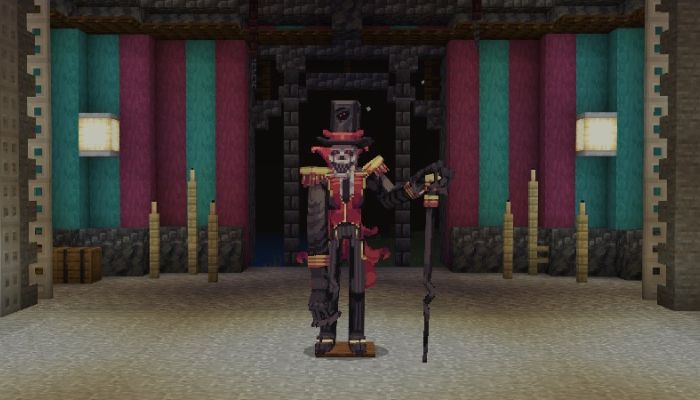
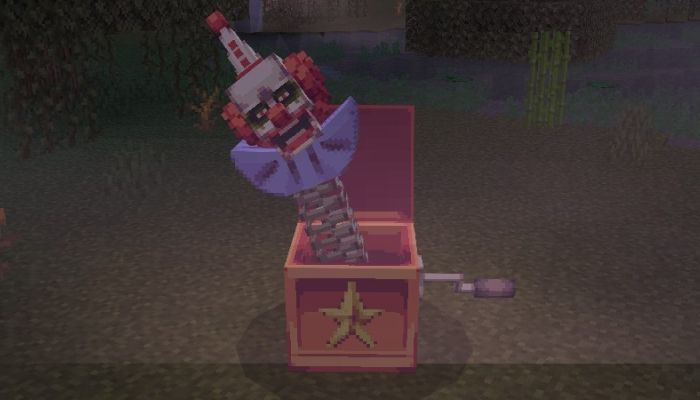
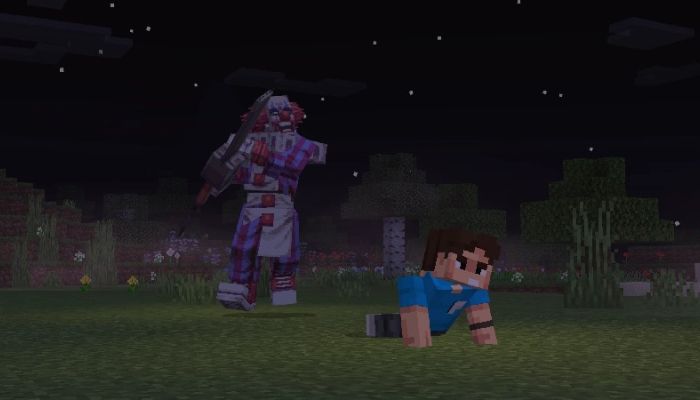
The central creatures are bizarre circus clowns with distinct powers. Their designs use bright colors, distorted faces, exaggerated costumes, and unnatural proportions to create enemies that look deliberately out of place inside Minecraft’s ordinary ecosystem. That visual contrast is effective. Zombies, skeletons, and spiders belong to the world’s established rules. A hostile circus performer standing in a quiet forest feels like an intrusion.
The clowns are more memorable when their behavior supports their appearance. Different powers make encounters less predictable than fighting another creature with increased health. Some may pressure the player at range, close distance rapidly, apply dangerous effects, or survive long enough to make retreat necessary. Variety matters because horror weakens through repetition. One frightening model appearing every night would soon become another resource-delivery mob. A selection of enemies with different silhouettes and attacks keeps me from solving every encounter with one routine.
The designs lean toward theatrical monster horror rather than realism. Large smiles, bright clothing, and exaggerated features create the feeling of a corrupted circus attraction. Players already uncomfortable around clowns may find the enemies particularly effective, while others may see them as entertaining fantasy creatures. Combat readability can become difficult in fog. This is partially intentional, but there is a limit between uncertainty and confusion. If I cannot identify the enemy’s attack because several effects overlap in darkness, failure may feel less like horror and more like missing information.
Enemy spawning also affects balance. Too few clowns make the add-on feel cosmetic. Too many can overwhelm ordinary survival, particularly during early progression before specialized armor or weapons are available. The best encounters are uncommon enough to remain events but frequent enough to influence preparation. When every night becomes a constant crowd of clowns, atmosphere turns into routine combat.
Dynamic Fog: The Add-On’s Most Important Atmospheric Tool
Dynamic nighttime fog changes the world before any monster appears. Visibility becomes limited, familiar landmarks disappear, and open terrain feels more enclosed.
Minecraft normally allows me to read danger from a distance. I can identify hostile mobs, locate my house, plan a route around a ravine, or see a village illuminated beyond a field. Fog removes that confidence. A small reduction in visibility creates more tension than simply increasing enemy health. I begin listening carefully, watching silhouettes, and placing navigation markers closer together.
The effect works particularly well in forests, swamps, abandoned settlements, and uneven terrain. Trees appear suddenly, water becomes difficult to judge, and distant movement may be either an enemy or an ordinary animal. Fog also improves base atmosphere. A house with warm interior lighting feels safer when the outside world has almost disappeared. Windows become useful points of observation rather than decoration.
The mechanic has practical drawbacks. Players with visual impairments may find navigation uncomfortable, and darker displays can make the effect excessively difficult to read. Device settings, texture packs, and other graphical add-ons may also change its intensity. Frequent fog can become tiring during long survival sessions. Horror depends partly on contrast. Clear nights make fog events more noticeable, while constant limited visibility may encourage players to sleep through darkness instead of engaging with the system.
Performance is another concern. Atmospheric effects can affect frame rate differently across mobile devices, consoles, and computers. The add-on’s visual ambition should be tested before introducing it into a valuable long-term world. Despite those issues, the fog is essential. Without it, the clowns would be unusual combat mobs. With it, the entire nighttime world becomes part of the threat.
The Blood Moon: When Preparation Becomes Necessary
The Blood Moon event provides the add-on with a larger survival challenge. Instead of treating every night as equal, the system can produce a period when the world feels more hostile and ordinary routines become dangerous. A successful Blood Moon should change behavior before combat begins. The sky, lighting, fog, sounds, or increased enemy presence communicate that staying outside without preparation is a poor decision.
This creates useful anticipation. I may repair armor, collect food, reinforce doors, block vulnerable windows, prepare ranged weapons, and ensure that valuable items are stored safely. The event gives defensive construction more meaning. Minecraft bases often become decorative once ordinary enemies can no longer reach the player. A stronger nighttime event encourages walls, towers, controlled entrances, elevated firing positions, and protected escape routes.
It can also become an opportunity rather than only a threat. Players seeking exclusive drops or a stronger combat challenge may deliberately remain outside and hunt enemies. The quality of the event depends on scaling. Early players should feel threatened without facing an impossible wall of enemies, while established players need enough pressure to justify advanced equipment.
If the Blood Moon appears too frequently, it becomes exhausting. If it is extremely rare, players may not encounter the add-on’s signature event for a long time. The event is strongest when it produces stories rather than guaranteed destruction. Surviving with damaged walls, depleted supplies, and one final weapon creates excitement. Losing an entire base because enemies spawned unpredictably inside protected spaces would feel unfair.
Exclusive Weapons: Necessary Tools or Easy Solutions?
Horror Circus introduces exclusive weapons intended to help players confront its custom enemies. This is important because adding stronger monsters without expanding player options would create imbalance. The weapons also support the theme. Circus-inspired or horror-styled equipment makes the add-on feel mechanically coherent rather than placing clown enemies beside completely ordinary swords.
New weapon designs provide a reason to explore the add-on’s crafting or reward systems. Finding materials becomes connected with preparation for future encounters. The most satisfying weapons create tactical differences. A ranged tool may help against enemies that punish close contact, while an area-focused weapon can manage groups during a Blood Moon.
Balance remains important. If the new equipment is dramatically stronger than Netherite gear or enchanted bows, ordinary Minecraft progression loses value. Players may ignore the base game’s weapon system once the add-on’s recipes become available. The opposite problem is also possible. If exclusive weapons are difficult to craft but only slightly better than ordinary equipment, they become decorative collectibles rather than useful survival tools.
Durability and repair requirements determine long-term practicality. A powerful weapon that cannot be maintained easily may be reserved for Blood Moon emergencies, which can create a meaningful sense of scarcity. I prefer specialized equipment over universal upgrades. A weapon should be excellent against one type of circus enemy without replacing every sword, bow, or axe in the game. The add-on benefits most when its weapons expand preparation choices instead of providing one obvious answer to every encounter.
Armor Sets: Protection With a Strong Visual Identity
Exclusive armor gives players another progression goal while reinforcing the horror-circus theme. Wearing it makes the character look prepared for this particular threat rather than simply stronger in a general sense. Armor sets are especially useful in multiplayer role-playing. Different players can appear as hunters, survivors, or corrupted circus figures depending on the visual design.
The practical effects matter more in Survival Mode. Specialized protection may help against clown powers, environmental effects, or the increased pressure of Blood Moon events. As with weapons, armor balance determines whether the system complements Minecraft or replaces it. Strong defense should require meaningful materials or dangerous encounters.
Visual design may not suit every world. A medieval castle, peaceful cottage settlement, or realistic survival server can look tonally inconsistent when players begin wearing theatrical horror equipment. That contrast may be exactly what some users want. Minecraft already allows unrelated themes to coexist, and Horror Circus is not trying to remain subtle.
Armor can also hide custom skins, which may disappoint players using a carefully selected horror character appearance. This is ordinary Minecraft behavior but still affects presentation. The strongest equipment systems provide reasons to own several sets. One may support ordinary survival, another the Blood Moon, and another exploration in fog. A single set that dominates every situation would reduce long-term variety.
Building a Defensible Base: Horror Gives Architecture a Purpose
Horror Circus encourages a different approach to construction. Instead of treating a base only as storage and decoration, I begin thinking about sightlines, controlled entry points, emergency exits, and safe areas. Walls become useful when custom enemies apply more pressure than ordinary mobs. Fences, iron doors, elevated walkways, and narrow defensive routes can help manage attacks.
Lighting remains important, even when the add-on’s enemies do not follow exactly the same spawning rules as standard hostile creatures. A bright interior provides visual clarity while the fog hides the surrounding area. Watchtowers become especially valuable. Elevation can reveal silhouettes above low fog and provide a safer position for ranged combat.
A protected storage room prevents one failed night from removing every valuable resource. I also prefer keeping spare armor, food, and weapons near the main entrance rather than scattered across decorative chests. The add-on inspires themed building projects naturally. Haunted fairgrounds, abandoned tents, ticket booths, cages, performance arenas, carnival rides, and survivor shelters all suit its visual identity.
It does not need to include a prefabricated circus for players to create one. Existing Minecraft blocks already support colorful tents, striped patterns, redstone attractions, and dark backstage areas. A custom circus can also become an arena where players intentionally trigger or face the add-on’s enemies. This gives builders and combat-focused players a shared project.
Exploration: Familiar Biomes Become Less Predictable
Horror Circus changes exploration most effectively after sunset. A route through an ordinary biome becomes dangerous because reduced visibility hides terrain and custom creatures. Forests are particularly effective. Trees limit movement, leaves hide silhouettes, and narrow gaps make retreat difficult. Open plains provide better visibility but fewer places to escape. Fog creates the impression that danger may be approaching from any direction.
Villages can become temporary safe locations or vulnerable targets, depending on enemy behavior. Protecting villagers adds practical stakes to nighttime encounters. Caves are less naturally suited to the circus atmosphere because they already contain darkness and restricted movement. Custom enemies inside caves may still create strong surprise encounters, though large clown models can struggle with narrow tunnels.
Long-distance travel becomes more demanding because landmarks disappear at night. Compasses, maps, coordinates, marked paths, and small shelters become more valuable. The add-on encourages me to plan journeys around daylight. That can restore a survival rhythm that experienced players often ignore.
The downside is reduced spontaneity. Constantly stopping because night approaches may feel restrictive, especially when the player has already mastered ordinary Minecraft. Sleeping remains a potential way to avoid much of the content. The add-on works best for players willing to experience dangerous nights rather than treating a bed as the solution to every threat.
Combat Difficulty: Fear Gradually Becomes Pattern Recognition
The first encounters are the most effective because I do not understand the enemies. I cannot immediately identify range, speed, health, powers, or the safest response. After several fights, fear becomes knowledge. I learn which clown should be targeted first, which attack needs distance, and which weapon ends the encounter most efficiently.
This transition is inevitable in any survival-horror system. Long-term value depends on whether enemy combinations remain interesting after individual behavior becomes familiar. Mixed groups are more effective than isolated enemies. One creature may force movement while another punishes open ground. Fog makes that combination harder to read.
Environmental interaction can also preserve tension. Fighting near water, cliffs, farms, or wooden structures creates risks beyond health loss. Ordinary Minecraft combat remains mechanically simple. Swords, shields, bows, movement, and timing provide useful tools, but the game is not built around highly technical evasive combat.
Custom powers must therefore remain readable and reasonably avoidable. An enemy that removes health through an unclear effect may feel cheap rather than frightening. Difficulty options or world settings would improve accessibility. Younger players may want the atmosphere without severe combat, while experienced users may want Blood Moon events capable of challenging enchanted equipment.
Multiplayer: A Better Horror Experience With Friends
Horror Circus is well suited to multiplayer because fear and comedy often appear together. One player may panic at a silhouette while another runs toward it with completely unjustified confidence. Cooperative preparation gives each person a role. One player gathers food, another crafts weapons, another reinforces walls, and another explores for resources. Blood Moon events can become organized survival nights. A group may defend different entrances, share ammunition, repair structures, and revive or protect weaker players.
The add-on also supports horror role-playing. One player can design a circus, another prepare a survivor settlement, and the group can create its own objectives around escape, rescue, or defense. More players naturally reduce difficulty. A clown that threatens one poorly equipped survivor may disappear quickly under attacks from four prepared users. Increasing enemy count can restore pressure but may affect performance. Multiple custom mobs, fog, particles, and multiplayer synchronization create greater technical demands.
Communication improves fairness because players can warn one another about enemy positions hidden in fog. Without voice chat, markers and prepared signals become useful. Parental and server settings remain important for younger users. The add-on is horror-themed, although its blocky presentation is less graphic than many dedicated horror games.
Visual Design: Bright Circus Colors Used as Warning Signs
The add-on uses the contrast between cheerful circus imagery and hostile behavior effectively. Bright costumes, painted faces, stripes, and exaggerated accessories normally suggest entertainment. Here, they become immediate warnings. Minecraft’s geometric style prevents the clowns from appearing realistic, but realism is not necessary. Large smiles and distorted proportions can feel unsettling precisely because they remain simplified.
The dynamic fog contributes more to fear than detailed textures. A technically simple creature becomes threatening when only part of its silhouette is visible. Night lighting can create strong scenes around player-built structures. Warm windows, red moonlight, dark fields, and moving shapes support the theatrical horror theme. During direct combat, visual effects may become busy. Fog, enemy powers, weapon effects, fire, and several players can reduce readability.
The add-on’s armor and weapons maintain thematic consistency, though some designs may appear too decorative for players who prefer restrained survival equipment. The presentation works best when used in a world built around the theme. A custom carnival or abandoned settlement gives the enemies a visual context. In a normal world, the clowns appear as unexplained intruders. That can be equally effective because their lack of belonging becomes part of the horror.
Audio & Atmosphere: The Threat Often Begins Before It Is Visible
Sound is crucial when fog limits sight. Footsteps, laughter, attack cues, ambient effects, and creature noises can warn me that something is nearby before I identify it. Distinct audio helps separate custom enemies. If every clown makes the same noise, the player loses valuable information and the creatures feel less individual.
Sudden sounds can create effective surprise without requiring enemies to appear directly in front of the camera. Restraint is important because constant loud effects become irritating rather than frightening. Minecraft’s ordinary ambient sounds already support horror well. Cave noises, rain, footsteps, distant mobs, and quiet music create space for the add-on’s effects.
A fog-covered night is often most effective when little happens for several minutes. The possibility of an encounter creates tension, and one distant sound becomes more meaningful. Repeated clown laughter or music can eventually weaken the effect. Once I hear the same cue dozens of times, it becomes a practical warning rather than an emotional one. Separate volume settings for add-on creatures would improve comfort, especially in bases where enemies remain nearby for extended periods.
Technical Performance and Compatibility: Test Before Entering a Valuable World
Horror Circus is a Bedrock Marketplace add-on, so it is intended for supported Windows PCs, consoles, mobile devices, and other platforms that provide access to Bedrock content. Performance depends on device power, render distance, world complexity, active behavior packs, enemy count, and visual effects. Dynamic fog may reduce performance or visual clarity on weaker hardware. Blood Moon events can create additional strain if many custom creatures appear simultaneously.
Pathfinding remains a likely source of strange behavior. Custom mobs must navigate forests, water, cliffs, doors, fences, caves, and player-built structures using Minecraft’s existing systems. Enemies may become trapped, fail to reach elevated positions, or behave unpredictably around narrow spaces. This can reduce fear when a terrifying clown spends several minutes walking into a fence.
Multiple add-ons can create compatibility problems. Another pack may modify spawning, fog, weapons, health, animations, or world behavior in ways that conflict with Horror Circus. Minecraft updates can also affect Marketplace content. A previously stable behavior pack may require an update after changes to Bedrock’s scripting or entity systems. I would activate the add-on in a new test world before adding it to a long-term save. Valuable worlds should be backed up whenever custom entities, events, and environmental effects are introduced.
Monetization & Value: A Paid Add-On With More Than Cosmetic Content
Horror Circus is sold through Minecraft Marketplace for Minecoins. It requires Minecraft: Bedrock Edition and access to the Marketplace. The add-on contains functional systems rather than only skins. Custom enemies, special abilities, weapons, armor, fog, and Blood Moon events provide a meaningful change to survival. That makes the package easier to justify than a cosmetic set at a similar price. Players can use the content across compatible worlds instead of completing one short map and never returning.
It is not pay-to-win in a public competitive sense because world owners choose whether to activate the add-on. Everyone joining that world experiences the same rules according to the host’s configuration. The value depends on long-term enemy variety. If the clowns and Blood Moon remain interesting across several worlds, the price is reasonable. If the player becomes tired of the theme after one evening, the package offers less value than a handcrafted adventure map.
Bedrock Marketplace restrictions remain relevant. Java Edition users cannot install the official purchase directly through the same system. Parents should also consider whether the horror theme suits the intended player. Minecraft’s blocky visuals reduce realism but do not remove frightening faces, darkness, pursuit, or surprise encounters.
Who Should Play Minecraft Horror Circus Add-On?
Horror Circus is best suited to Bedrock players who want ordinary survival to feel more dangerous, enjoy clown horror, build themed worlds, or need stronger nighttime events. Experienced Minecraft users who no longer fear standard mobs may appreciate the additional uncertainty and equipment progression. Multiplayer groups can gain strong value by organizing Blood Moon defenses, building survivor bases, or creating horror role-playing scenarios. Builders may enjoy designing abandoned carnivals, fortified camps, performance arenas, and laboratories connected with the clown creatures.
Younger players sensitive to frightening faces, darkness, fog, or pursuit should approach carefully. The visual style remains blocky, but the intention is still to create fear. Players seeking a linear narrative, voiced characters, puzzles, or a complete haunted-circus campaign should understand that this is a survival add-on rather than a scripted adventure. Java Edition players and users who dislike Marketplace purchases should skip the official package.
Final Verdict: A Good Reason to Fear Minecraft’s Darkness Again
Minecraft Horror Circus Add-On succeeds by attacking player confidence. It takes familiar nights and removes the certainty that ordinary walls, torches, and equipment will solve every problem.
Dynamic fog is the most effective feature because it changes the entire environment before combat begins. The world becomes smaller, landmarks disappear, and every distant silhouette deserves attention.
The clown enemies provide the add-on with personality. Their unusual designs and powers distinguish them from ordinary hostile mobs, while exclusive weapons and armor give players practical reasons to confront the new danger.
The Blood Moon adds a welcome larger event. Preparing a base, collecting supplies, and surviving an unusually dangerous night creates a clear objective inside Minecraft’s open-ended structure.
The add-on remains limited by the systems supporting it. Custom mob pathfinding can fail, repeated encounters reduce fear, and strong equipment may disturb ordinary survival balance. Players hoping for a story-driven haunted carnival will also need to create that narrative themselves.
I recommend Minecraft Horror Circus Add-On to Bedrock survival players, horror fans, multiplayer groups, and builders searching for a darker theme. It is especially effective for experienced users who have stopped treating nighttime as a serious threat.
Personal rating: 8/10.
Minecraft Horror Circus Add-On earns that score for its dynamic fog, Blood Moon event, distinctive clown enemies, specialized equipment, survival integration, and ability to refresh familiar worlds. It loses points for possible pathfinding problems, uneven difficulty, reduced fear after repeated encounters, performance concerns, and the absence of a structured narrative.
The add-on’s best moments occur before I know exactly what is approaching. Fog covers the road, something laughs beyond the trees, and the safe entrance to my base suddenly feels much farther away than it did during daylight.
Pros

- Innovative and immersive horror theme enhances the classic Minecraft experience
- Engaging narrative that encourages exploration and discovery
- Creative puzzles and challenges that add depth to gameplay
- Stunning visuals and sound design that create an eerie atmosphere
- Seamless integration with vanilla Minecraft, minimizing conflicts
- Active community support and regular updates ensure longevity
Cons

- Installation may be challenging for users unfamiliar with mods
- Potential conflicts with other mods or cheats if not managed carefully
- The horror theme may not appeal to all Minecraft players

Leave a comment
Your comment is awaiting moderation. We save your draft here
0 Comments