






Minecraft Feels Different From the Back of a Dragon
Minecraft worlds have always encouraged me to look toward distant mountains, forests, oceans, and structures, but Minecraft How to Train Your Dragon changes the way I reach them. Instead of walking for several in-game days, constructing a railway, or waiting until late progression for an elytra, I can earn the trust of a dragon, climb onto its back, and rise above the landscape. A familiar survival world suddenly becomes a collection of valleys, rivers, villages, and caves viewed from an entirely new angle.
That transformation is the central subject of this Minecraft How to Train Your Dragon review. The add-on is not a separate full game or a linear recreation of the film. It is paid Marketplace content for Minecraft: Bedrock Edition that introduces dragons into ordinary compatible worlds. These creatures have different personalities, needs, behaviors, attacks, and movement abilities. Players can find them in the environment, build trust through careful interaction, tame them, create equipment, and eventually use them as flying companions.
The concept works naturally because Minecraft already revolves around forming personal relationships with generated worlds. A dragon becomes more than a fast vehicle when I remember where I found it, what food I used to earn its trust, and which dangerous journey we completed together. The add-on gives exploration a stronger emotional center without replacing Minecraft’s gathering, construction, crafting, and survival systems.
It also introduces significant balance questions. Flight can make ordinary transportation almost irrelevant, dragon attacks may reduce the danger of common enemies, and powerful companions can accelerate progression before a survival world is ready for them. The artificial intelligence is not always dependable either. A dragon that looks majestic in open skies can become frustrating near trees, buildings, caves, or awkward terrain.
Even with those problems, this is a far more substantial collaboration than a skin pack. It succeeds because the dragons are functional creatures rather than static decorations. They eat, rest, defend territory, respond to the player, and gradually reveal stronger abilities as the relationship develops.
Core Gameplay & Add-On Structure: Dragons Inside a Normal Minecraft World
The add-on is designed to operate within Minecraft: Bedrock Edition. I still create or load a world, gather resources, craft tools, build shelter, mine, farm, and survive hostile nights. The difference is that dragons now appear across the environment and become part of that ordinary progression.
This approach gives the content more flexibility than a fixed adventure map. I can use the dragons in a new survival world, introduce them into a creative project, or build an entire settlement around dragon training and flight. The add-on does not require me to follow a single campaign route or remain inside one specially designed island. Finding a dragon is only the beginning. The creatures are not immediately obedient mounts waiting for the first player to arrive. They have behaviors and personalities that influence how they react to food, attention, weapons, nearby creatures, and the environment.
Approaching carelessly can provoke an attack or cause the dragon to avoid me. Carrying a visible weapon is especially unwise because the creature may interpret the approach as hostile. Building trust requires patience, suitable food, and repeated positive interaction. Once a dragon accepts the player, it becomes possible to ride it. Continued bonding improves the relationship further, allowing longer flights, stronger performance, and access to abilities that were unavailable initially.
This gradual process is important. Immediate access to unlimited flight would make the add-on feel like a simple vehicle pack. Requiring trust gives each dragon a small progression arc and makes the first successful takeoff feel earned. The system still moves faster than Minecraft’s ordinary late-game mobility. A player can potentially gain aerial travel long before obtaining an elytra. Whether that feels exciting or unbalanced depends on the type of world being created.
Dragon Species: Different Creatures Rather Than Recolored Mounts
The add-on includes several recognizable species from How to Train Your Dragon, including the Night Fury, Gronckle, Deadly Nadder, Hideous Zippleback, and Monstrous Nightmare. Each uses a distinct model, movement style, personality, and offensive ability.
This variety prevents the dragons from feeling like one creature copied into different colors. The species differ visibly in body shape, wings, heads, size, and animation. Their practical behavior also changes enough to encourage choosing a companion based on more than appearance. The Night Fury is the obvious attraction. Toothless is closely associated with speed, agility, and precise aerial movement, making this species the natural choice for players who care most about exploration and fast travel. The Gronckle feels heavier and less elegant, but that physical weight gives it charm. Its ability to spit lava supports a more destructive style and makes it useful during combat or environmental experimentation.
The Deadly Nadder has a sharper silhouette and a more dangerous visual identity. Its poisonous nature gives it a different combat role from dragons focused primarily on fire. The Hideous Zippleback stands out because of its two-headed design. It feels less like an ordinary flying animal and more like a creature requiring cooperation between two personalities inside one body.
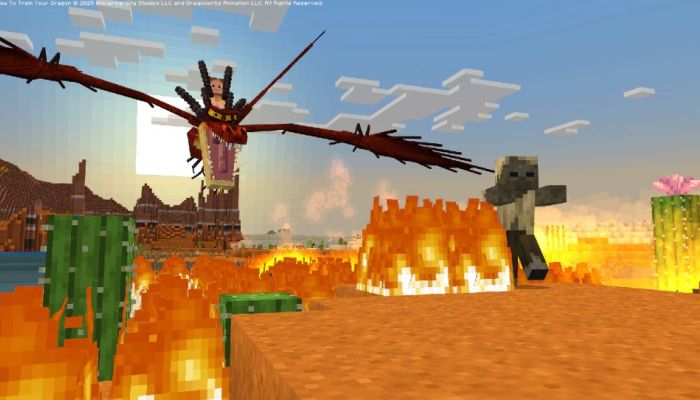
The Monstrous Nightmare delivers the most dramatic fire-based fantasy. Its ability to ignite areas can be effective against enemies but also dangerous near forests, wooden buildings, farms, or anything else I hoped to keep intact. The species selection gives the add-on replay value because finding and training one dragon does not reveal everything. I may prefer one for travel, another for combat, and another simply because its movement and personality fit a particular settlement.
Bonding & Trust: The Best Part of the Experience
The trust system is the feature that gives the add-on emotional value. Dragons are not ordinary livestock that can be controlled after one simple interaction. They require food, patience, and behavior that does not immediately communicate danger. Offering the right food gradually creates a bond. The process resembles taming familiar Minecraft creatures but feels more substantial because dragons have stronger personalities and more advanced abilities.
I appreciate that the add-on discourages approaching with a weapon drawn. This small rule reinforces the How to Train Your Dragon theme effectively. The central fantasy is not defeating dragons until they become obedient. It is learning how to approach them without fear or aggression. Different creatures may respond according to hunger, energy, or attention. Some appear more interested in food, while others may need rest or interaction before becoming cooperative. This creates small stories. A dragon found during a long expedition may not be ready to trust me immediately, forcing me to establish a temporary camp, gather suitable food, and return several times.
The relationship grows further through riding. Flight is not merely the reward after taming; it also becomes part of the continued bonding process. The more I travel with a dragon, the more capable the partnership becomes. The system is still simplified. I am not managing a deep emotional simulation with long-term memories, training routines, fear responses, and complex commands. Most progress comes from repeatable actions rather than nuanced understanding. Even so, it is more engaging than pressing one button to claim a mount. The add-on understands that the fantasy depends on trust being earned.
Flight Mechanics: Freedom Arrives Earlier Than Expected
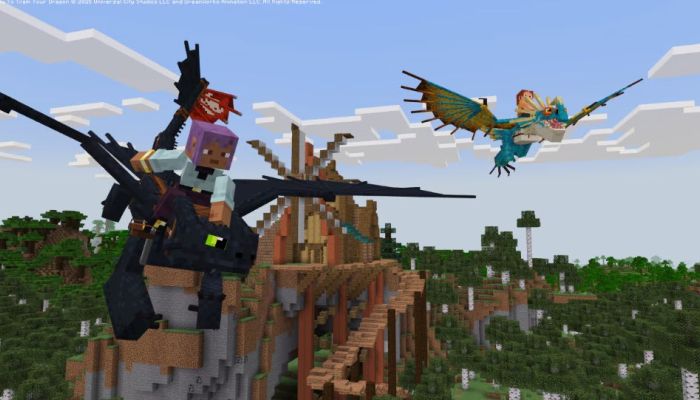
Flying is the add-on’s most exciting mechanic. Minecraft terrain looks completely different from above, particularly in worlds with dramatic mountains, winding rivers, dense forests, coastal villages, or large player-created settlements.
Taking off removes many ordinary travel problems. Cliffs, ravines, water, hostile ground creatures, and difficult vegetation become far less important. A dragon can cross terrain that would require bridges, boats, roads, or long detours on foot. Early flights may be limited by the current bond level. As trust increases, the dragon can remain in the air longer and travel farther. This gives progression a practical purpose rather than only changing a hidden relationship number.
Different species feel more or less suited to speed, control, or combat. The Night Fury naturally provides the cleanest fantasy of fast aerial exploration, while heavier dragons feel less agile. The controls are accessible, but precise movement can take practice. Wide turns and open landscapes feel comfortable. Landing near a small platform, moving between trees, or approaching a narrow village street can be more awkward. Camera behavior also affects the experience. Large wings, rapid turns, environmental obstacles, and sudden altitude changes may make it difficult to judge distance accurately.
The greatest balance issue is obvious: flight changes Minecraft progression enormously. Roads, horses, boats, minecarts, mountains, and even parts of elytra progression lose value when a dragon provides reliable transport. This is not necessarily a problem in a themed world built around dragon riding. It matters more when the add-on is introduced into an ordinary survival campaign where transportation progression was supposed to develop gradually.
Dragon Attacks: Spectacular Power With Dangerous Side Effects
As the relationship grows, dragons unlock blast attacks connected with their species. These abilities allow the creatures to defend the player, target enemies, break blocks, or affect the environment. The attacks are visually satisfying. A dragon firing across a Minecraft landscape provides exactly the kind of fantasy the collaboration promises. Combat becomes easier because hostile creatures are poorly equipped to handle a flying attacker with strong ranged abilities. Skeletons, zombies, spiders, and many other ordinary threats can be removed from a safer position. Dragon attacks also allow environmental destruction. Depending on the species, this may involve fire, lava, poison, explosive force, or other effects. That power is entertaining until it reaches something valuable. A careless attack near a wooden house can create a disaster. Fire may spread through forests, farms, roofs, or decorative builds.
Lava is even more dangerous because it can flow into unintended spaces and remain after the attack. Using a Gronckle near a carefully designed village requires much more caution than using it over empty stone. The ability to break blocks can support mining or clearing, but it may also damage terrain more broadly than expected. Precision is not always strong enough for detailed construction work.
I enjoyed the attacks most during open combat or dedicated destructive experiments. Using them inside a developed base felt less heroic and more like giving heavy machinery to an excited animal. The game would benefit from clearer command settings, such as disabling environmental damage, limiting automatic attacks, or choosing whether a dragon may use fire near player structures.
Dragon Personalities & Natural Behavior: More Than Vehicles
Wild dragons do not simply remain motionless until the player interacts with them. They hunt prey, defend territory, rest, seek food, and respond to surrounding activity.
These behaviors make the world feel changed by their presence. Finding a dragon in a biome becomes an event rather than another decorative creature appearing in the distance. Territorial behavior introduces danger. A dragon may attack if the player enters too aggressively, approaches while armed, or interferes with its environment.
Hunting behavior makes the creatures feel connected with Minecraft’s ecosystem. They are not completely separate from animals and mobs already present in the world. Rest and attention needs contribute personality, though the underlying simulation remains readable and child-friendly. The dragons are expressive without requiring complex management.
Tamed behavior is more complicated because companionship depends on reliable artificial intelligence. A dragon may follow well in open terrain but struggle around forests, buildings, enclosed spaces, or vertical construction. Large creatures naturally create pathfinding problems. A doorway designed for a player is useless for a dragon, and a compact village may not provide enough room for comfortable landing or movement.
This encouraged me to build differently. Wider roads, open courtyards, elevated landing spaces, and large shelters suddenly became practical rather than decorative. When a companion system changes architecture, it becomes meaningfully integrated with Minecraft. The dragons are not merely placed into the world; they encourage the player to reshape it.
The Forge & Armor Crafting: Becoming a Dragon Rider Visually
The add-on introduces a Forge used to create armor for the player and dragons. This provides a crafting goal connected directly with the fantasy rather than relying only on taming and flight. Dragon armor improves the visual identity of each companion and makes the relationship feel more formal. A wild creature becomes a trained partner equipped for exploration or battle.
Player armor allows me to match the dragon-rider theme instead of wearing unrelated ordinary equipment. This is especially useful in multiplayer worlds where a group may want to establish different riders, colors, or roles. Customization includes combining designs and paints. Color selection makes each set feel more personal and allows a rider and dragon to share a coordinated appearance.
The Forge adds purpose to resource gathering. Materials are no longer collected only for standard weapons, tools, and buildings; they support equipment specific to the add-on. The crafting process is approachable, though it does not provide the enormous depth of a dedicated armor-customization game. The main value is visual identity rather than complex statistics.
I would have liked more practical distinctions between armor styles. Defensive sets, flight-focused equipment, storage options, or species-specific bonuses could create meaningful build decisions. Even without that depth, the system completes the fantasy. Riding a trained dragon is enjoyable; riding one while both characters wear matching equipment feels like a complete role rather than a temporary experiment.
Exploration: Familiar Worlds Gain New Landmarks
The add-on makes ordinary exploration more exciting because every biome may contain a dragon encounter. A forest, mountain, coastline, or cave entrance is no longer interesting only for blocks and structures.
Searching for particular species creates a new reason to travel. Players who already know Minecraft’s ordinary biomes may still feel curiosity because the dragon population changes what can be found there. Aerial travel also reveals generated geography more clearly. Rivers become routes, mountains become landmarks, and villages can be identified from far greater distances.
This makes map creation easier and encourages large regional projects. I can discover several useful locations in one flight, then build roads, towers, or settlements connecting them. The danger is that flying over terrain may replace travelling through it. Ground-level exploration creates small discoveries that are easy to miss from the sky: cave openings, ruined portals, animals, exposed resources, and unusual terrain details.
Fast movement can also cause world-loading problems on weaker devices. Terrain may appear late, and sudden obstacles can become visible only after the dragon has moved close. The best exploration rhythm alternates between air and ground. I use flight to understand the region, then land when something deserves closer attention.
Building for Dragons: Larger Spaces and New Creative Goals
Dragons give builders an excellent reason to create structures beyond ordinary houses and storage rooms. Stables, roosts, training grounds, landing towers, feeding areas, mountain bases, and coastal outposts all fit naturally.
A dragon shelter must be larger than a horse stable. Wings, body size, turning space, and access routes affect practical design. Landing platforms are especially useful. A flat elevated area makes returning from flight far easier than attempting to descend between rooftops. Different species can inspire different architecture. A Monstrous Nightmare may suit a stone fortress away from flammable materials, while a Gronckle area may require protection from accidental lava.
A Night Fury roost can be placed high in the mountains to support rapid departures. The Hideous Zippleback’s unusual shape may require wider structures. The add-on does not provide enough specialized blocks to create every themed structure automatically. Much of the building still depends on ordinary Minecraft materials and player imagination.
That is not a serious weakness. Minecraft is strongest when an add-on gives me a reason to use existing blocks differently rather than replacing construction with one prefabricated object. The dragons become most valuable over time when their presence changes the settlement permanently.
Combat & Survival Balance: Powerful Friends Can Remove Too Much Risk
Minecraft’s ordinary survival difficulty depends on limited equipment, environmental danger, hunger, darkness, terrain, and hostile creatures. Dragons can reduce several of those pressures at once.
Flight avoids many ground enemies. Blast attacks remove threats from distance. Increased mobility makes escape easier, while a powerful companion can defend the player automatically.
This is exciting for players who want a heroic adventure. It is less suitable for anyone seeking demanding survival progression. The add-on does not make every challenge irrelevant. The Nether, caves, enclosed structures, bosses, and dangerous environmental situations can still create problems. Dragons are also large enough that they cannot solve every indoor encounter. A strong companion waiting outside does not automatically protect me in a narrow underground tunnel. The player still needs food, tools, resources, shelter, and ordinary crafting knowledge. The add-on supports Minecraft rather than replacing the entire game.
Balance depends heavily on when the first dragon is tamed. Gaining one early can skip transportation stages. Introducing dragons after establishing a base preserves more of the original progression. World settings and personal rules can help. A player might require iron armor before taming, limit blast attacks near settlements, or reserve flight for explored regions. Minecraft already depends on self-directed difficulty. This add-on continues that pattern, but its strongest tools make personal restraint more important.
Multiplayer: A Group of Riders Creates the Best Fantasy
The add-on becomes especially entertaining in multiplayer. Several players can search for different species, build individual roosts, customize armor, and travel as a group. Aerial journeys feel more dramatic when multiple dragons move together. One player can scout ahead, another carries combat responsibility, and others remain near the group. Different species create informal roles. Faster dragons suit exploration, while destructive ones may support combat or resource clearing. Shared settlements also benefit from specialization. One player may build a training area, another manages food, and another constructs towers or defensive walls. Multiplayer introduces additional technical pressure. Several large animated creatures, players, attacks, and rapidly loaded terrain may affect performance. Coordination is also important near buildings. One careless fire attack can damage a project created by several people.
Platform-specific online access may require an additional subscription, depending on the device. The add-on purchase does not automatically remove the ordinary multiplayer requirements of Minecraft. The social experience remains one of its strongest uses. How to Train Your Dragon is built around riders learning to cooperate with creatures and one another, and multiplayer allows that theme to emerge naturally.
Visual Design: Blocky Dragons With Recognizable Personality
The dragon models translate the film designs into Minecraft’s geometric style while preserving recognizable silhouettes, colors, faces, wings, and movement. Toothless is particularly successful because the broad head, large eyes, dark body, and expressive behavior remain readable even within block-based limitations.
The Gronckle’s heavy proportions contrast well with the more aerodynamic Night Fury. The Deadly Nadder’s sharper design and the Monstrous Nightmare’s length create clear visual variety. Animations carry much of the personality. Wing movement, resting, turning, attacking, and interacting make the dragons feel more alive than ordinary static mounts. Flight animation looks best in open environments where the full wingspan remains visible. Tight spaces expose clipping, sudden direction changes, and awkward collisions.
The designs fit Minecraft surprisingly well. Dragons have existed in the base game through the Ender Dragon, so the concept does not feel completely foreign. The film-inspired creatures are far more expressive and companion-focused than Minecraft’s original boss, giving the world a different tone. Armor customization adds further visual variety, though strong colors may occasionally make the creatures look more like toys than wild animals. For a family-focused collaboration, that tone is understandable.
Audio & Sound Design: Roars, Wings, and Elemental Attacks
Sound plays an important role in making the dragons feel physically present. Wing beats, footsteps, roars, idle noises, eating sounds, and attacks communicate size and mood. A dragon approaching from behind sounds very different from an ordinary passive creature. The audio creates enough weight that the companion remains noticeable even when I am focused on mining or construction.
Species-specific attacks use distinct effects. Fire, poison, lava, and other blasts need recognizable audio so players can react before environmental damage spreads. The dragons’ repeated idle sounds can become familiar during long sessions. Keeping several near one settlement may create a busy soundscape. Audio settings would benefit from more separate control over companion volume. Players may want strong attack cues without constant nearby vocal reactions.
The add-on generally preserves Minecraft’s original music and environmental atmosphere. Dragons add another layer rather than replacing the entire soundtrack. The contrast can be effective. Quiet Minecraft music may begin while I fly over a mountain, creating a stronger emotional moment than a constantly dramatic orchestral score would provide.
Technical Performance & Bugs: Large Creatures Test Bedrock’s Limits
The add-on is designed for Bedrock Edition, which allows Marketplace content to function across supported consoles, mobile devices, and computers. Performance depends heavily on hardware, render distance, world complexity, multiplayer activity, and the number of active dragons. Flying quickly forces the world to load terrain at a faster rate. On less powerful devices, chunks may appear slowly, textures may load late, or the frame rate may fall.
Dragon pathfinding is the most noticeable technical weakness. Large creatures struggle more than ordinary mobs around small doors, dense forests, uneven rooftops, narrow bridges, and complicated interiors. Landing can also produce awkward behavior. A dragon may hover, turn, collide with blocks, or select a position different from the one I intended. Attacks introduce additional risk because one input or AI decision may damage terrain unexpectedly. A technical misunderstanding becomes more serious when fire or lava is involved.
Marketplace add-ons must remain compatible with regular Minecraft updates. Changes to Bedrock behavior, scripting, entities, or world systems may occasionally create bugs until the content receives an update. I strongly prefer testing the add-on in a new world before activating it in a long-term save. Backups are sensible whenever behavior packs introduce complex creatures and environmental abilities.
Monetization & Value: Paid Content With Substantial Functionality
Minecraft How to Train Your Dragon is paid Marketplace content rather than a free promotional add-on. It requires Minecraft: Bedrock Edition, which is sold separately. The Marketplace listing uses Minecoins, and the approximate real-world cost may vary by platform, region, currency bundle, and sale status. This is not pay-to-win in a competitive sense. The add-on is intended for private or compatible worlds where the owner chooses whether its mechanics are active.
The purchase provides functional dragons, taming, bonding, flight, attacks, armor crafting, and integration with ordinary worlds. That offers more value than a simple skin or texture pack. The price may still feel high for players interested only in Toothless or one short experiment. The content does not provide a full cinematic campaign recreating every scene from the franchise.
It is better evaluated as a creature and mobility expansion for Bedrock survival. Players who intend to build dragon settlements and use the species across multiple worlds will receive more value than someone expecting a one-time story map. Marketplace restrictions remain a limitation. Java Edition players cannot use the add-on directly, and purchased Bedrock content is tied to the supported Marketplace ecosystem. The branded nature of the release also means part of the price reflects licensed characters and designs, not only mechanical complexity.
Who Should Play Minecraft How to Train Your Dragon?
The add-on is ideal for Bedrock players who love How to Train Your Dragon, enjoy creature companions, want earlier aerial travel, or need a strong theme for a new survival world. Builders can create roosts, Viking settlements, training arenas, mountain bases, and large structures designed around dragon movement. Families and younger players may appreciate the approachable bonding system and recognizable creatures. The ability to avoid direct aggression while earning trust supports the franchise’s central message effectively. Multiplayer groups can gain even more value by assigning different dragons and creating a complete rider community.
Players seeking difficult survival should use the add-on cautiously. Flight and attacks may remove too much risk during early progression. Java Edition users, players opposed to Marketplace purchases, or anyone wanting a complete narrative campaign may be disappointed. It is also less suitable for compact technical bases where large creatures have little room to move.
Final Verdict: The Best Moments Happen Between the Official Features
Minecraft How to Train Your Dragon succeeds because it does more than place famous creatures into the world. It gives me a reason to search for them, approach carefully, provide food, build trust, improve the relationship, create equipment, and reshape my settlements around their presence. The first flight is the obvious highlight. Minecraft’s procedural landscapes gain new scale when viewed from a dragon, and distant journeys become far more appealing.
The species variety prevents the add-on from depending entirely on Toothless. The Gronckle, Deadly Nadder, Hideous Zippleback, and Monstrous Nightmare support different personalities, attacks, and building ideas.
The Forge and armor systems complete the rider fantasy, although deeper equipment bonuses would improve long-term progression. Multiplayer also expands the concept naturally because a group of riders feels more exciting than one player collecting every creature alone.
Technical limitations remain visible. Pathfinding, landing, terrain loading, and environmental attacks can produce frustration. The dragons are most reliable in open spaces and least convincing inside the compact architecture common to many Minecraft bases.
Balance is a matter of personal preference. Players looking for a challenging survival campaign may find dragon mobility and combat support too powerful. Fans who want a themed adventure will probably consider that power the entire point.
I recommend Minecraft How to Train Your Dragon to Bedrock players, franchise fans, families, builders searching for a new project theme, and multiplayer groups interested in creating a dragon-rider settlement.
Personal rating: 8.5/10.
Minecraft How to Train Your Dragon earns that score for its convincing dragon designs, trust-based taming, satisfying flight, species variety, useful attacks, armor customization, multiplayer potential, and integration with ordinary worlds. It loses points for pathfinding problems, awkward landings, destructive abilities near builds, major survival-balance changes, Marketplace restrictions, and the absence of a deeper narrative campaign.
The add-on’s best achievement is not simply letting me ride Toothless. It is making me look at an empty mountain and imagine a landing platform, a training ground, a forge, and a home large enough for wings.
Pros

- Innovative blend of two popular franchises that creates a fresh experience
- Engaging gameplay with tactical dragon training and exploration
- Accessible across multiple platforms including PC, Mac, and Android
- Extensive mod support and cheat options enhance customization and replayability
- Vivid visual aesthetics and immersive audio design create a dynamic gaming environment
- Regular updates and active community engagement keep the game evolving
Cons

- The learning curve for mastering dragon training may be steep for newcomers
- Overuse of mods or cheats can potentially disrupt game balance
- The narrative, while engaging, may feel less developed for players seeking deeper storylines

Leave a comment
Your comment is awaiting moderation. We save your draft here
0 Comments