




A Small Hero With an Enormous Reputation
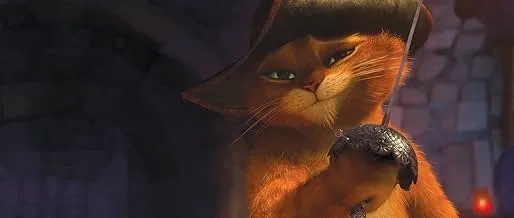
The moment that defines Puss in Boots for me arrives when Puss enters a crowded room and behaves as though every person has been waiting specifically for him. His hat is perfectly angled, his boots strike the floor with theatrical confidence, and his reputation seems to enter several seconds before the cat himself. Then someone notices how small he actually is. This Puss in Boots review begins with that contrast because the film understands the character’s central joke: Puss presents himself as a legendary romantic outlaw, but he is still a cat who can be distracted by moving light or overwhelmed by a bowl of milk.
Released in 2011 and directed by Chris Miller, Puss in Boots is a spin-off from the Shrek series. It moves the title character away from Shrek, Donkey, and Far Far Away to explore his earlier life as a wanted fugitive.
Antonio Banderas returns as Puss, giving the character a voice filled with pride, charm, regret, and carefully performed heroism. The movie builds a fairy-tale Western around him, combining sword fights, criminal partnerships, childhood betrayal, magical beans, a giant’s castle, and an extremely complicated relationship with one stolen egg.
The story follows Puss as he searches for the legendary magic beans once pursued by his former friend Humpty Alexander Dumpty. Their reunion brings Puss into contact with Kitty Softpaws, a skilled thief whose lack of claws makes her movements unusually silent.
Together, the trio plans to steal the beans from Jack and Jill, grow a beanstalk, reach the castle in the sky, and recover the Golden Goose.
The adventure is colorful and energetic, but its emotional center comes from Puss and Humpty. They were raised together, shared the same dream, and became enemies after Humpty manipulated Puss into participating in a crime.
That history gives the film more weight than a simple fairy-tale robbery. Puss is not only chasing treasure. He is trying to recover his honor and decide whether the person who betrayed him deserves another chance.
Plot & Storytelling: Magic Beans, Old Betrayals, and One Dangerous Egg
The story begins with Puss living as a fugitive. He moves between towns, steals when necessary, avoids capture, and maintains his reputation as both outlaw and romantic legend.
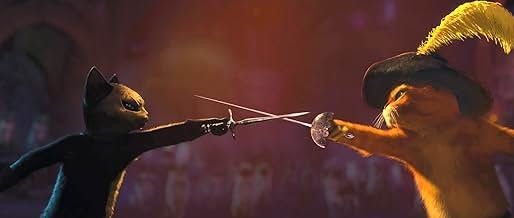
He learns that Jack and Jill possess the magic beans he has been seeking for years. According to legend, planting the beans will create a path to a giant’s castle containing a goose that produces golden eggs. Puss attempts to steal them and encounters a masked rival. Their confrontation becomes a mixture of swordplay, acrobatics, dance, and feline behavior. The mysterious thief is revealed as Kitty Softpaws. She is working with Humpty Dumpty, Puss’ childhood friend from the orphanage in San Ricardo.
Puss reacts with immediate distrust. Humpty previously involved him in a bank robbery without explaining the plan, destroying Puss’ reputation and forcing him to flee the town where he had once been celebrated as a hero. Humpty insists that he wants to repair the relationship. He presents the bean mission as an opportunity for both of them to complete their childhood dream.
Puss agrees reluctantly, partly because the treasure could help him repay San Ricardo and restore his honor. The trio tracks Jack and Jill, steals the beans, and escapes after a large chase involving wagons, weapons, and several reversals of control. The beans are planted in the desert. A giant beanstalk grows through the clouds and carries the group into a floating world above the earth.
The castle sequence gives the film a different visual rhythm. The characters move through enormous rooms, avoid a mysterious guardian, and search for the Golden Goose. Instead of stealing the adult goose, they take its chick. The young bird already produces golden eggs, making it both valuable and dangerous to remove. The journey downward appears successful, but Humpty’s real plan is revealed after the group returns to the ground.
He has arranged the entire adventure partly as revenge. Puss is captured and brought back to San Ricardo, where the stolen gold and unresolved bank robbery make him appear guilty again. Humpty has never forgiven Puss for leaving him after the original crime, even though Humpty created the betrayal.
This is the film’s most important complication. Humpty wants friendship, admiration, revenge, and proof that Puss abandoned him. These desires contradict one another, but that contradiction makes his behavior believable. Puss escapes imprisonment with help from Kitty and learns that the Golden Goose’s mother is coming to recover her child. The enormous creature threatens San Ricardo.
The final act forces Puss and Humpty to cooperate. Humpty must decide whether to continue protecting his revenge fantasy or help save the town. Their plan involves returning the chick while preventing the city from being destroyed. Humpty ultimately sacrifices himself during the rescue.
His broken shell reveals a golden interior, connecting him symbolically with the treasure he spent his life chasing. The ending restores Puss’ heroic reputation, though he remains wanted by the authorities. He leaves San Ricardo with Kitty, preserving both his romantic independence and his connection to someone capable of matching him.
Puss in Boots: Honor Performed Until It Becomes Real
Puss works as a protagonist because his confidence is both genuine and constructed. He is brave, skilled, and loyal, but he also spends enormous energy maintaining his image.
Antonio Banderas understands the humor of the character completely. Puss speaks about ordinary actions with the seriousness of a legendary warrior describing a historic campaign. His accent, pauses, whispers, and sudden emotional intensity turn even simple dialogue into performance.
The movie expands the character beyond the charming fighter introduced in Shrek 2. Puss carries shame connected with San Ricardo and wants to recover the identity he lost. He was raised in an orphanage under the care of Imelda, who gave him his boots after he performed a heroic act. Those boots became a symbol of the person he hoped to be.
The bank robbery damaged more than his public reputation. It convinced Puss that trusting Humpty had made him betray the values attached to the boots. His journey is therefore partly about distinguishing honor from reputation. The town can call him hero or criminal, but his real identity depends on what he chooses when nobody guarantees recognition.
Puss initially treats Kitty as another rival who needs to be impressed. She quickly reveals that she is equally capable and far less affected by his theatrical charm than most characters. Their competition forces Puss to confront how often performance protects him from vulnerability.
His relationship with Humpty creates a different challenge. Puss wants to believe he can repair the past without becoming foolish again. He repeatedly gives Humpty another opportunity because their childhood bond still matters. This makes Puss compassionate, though occasionally too willing to ignore obvious warning signs.
My first criticism is that Puss’ decision to trust Humpty again happens faster than the history deserves. The screenplay needs the adventure to begin, so his resistance cannot remain strong for long. Still, the character’s emotional logic remains clear. Puss does not trust Humpty because the evidence is convincing. He trusts him because part of him misses the friend he thought he had.
Kitty Softpaws: A Thief Who Matches Puss Step for Step
Kitty Softpaws is introduced as a rival rather than a romantic reward. She can fight, dance, steal, and manipulate with enough skill to challenge Puss immediately. Salma Hayek gives Kitty confidence, humor, and emotional restraint. Her performance avoids making the character only a sarcastic counterpart. Kitty’s lack of claws has practical and emotional importance. Her previous owners removed them, leaving her unable to scratch or grip in the usual way. She turned that loss into an advantage by developing extremely quiet movements. The name Softpaws reflects both injury and adaptation.
The film does not explore the history deeply, but it gives Kitty a reason to distrust attachment. She has experienced betrayal from people who were supposed to care for her. This creates a natural connection with Puss. Both characters hide insecurity behind professional competence and carefully controlled charm.
Their dance confrontation is one of the movie’s strongest sequences. It combines flirtation, competition, rhythm, physical comedy, and feline behavior without stopping the story. Kitty initially works for Humpty and helps manipulate Puss into joining the mission. Over time, she becomes uncomfortable with the revenge plan.
Her eventual decision to help Puss gives her moral agency. She is not simply changing sides because romance requires it. Kitty also refuses to become impressed by Puss too easily. She mocks his dramatic reputation, challenges his assumptions, and understands when he is using charm to avoid honest conversation.
The romance remains light, but the equality between them makes it satisfying. Kitty is one of the few characters who can participate fully in Puss’ theatrical world without becoming his audience.
Humpty Dumpty: The Friend Who Turns Hurt Into a Plan
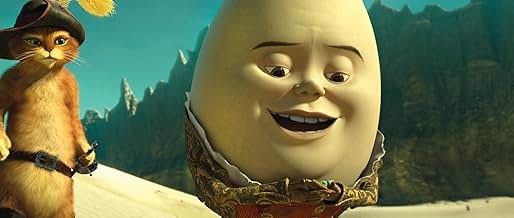
Humpty Dumpty is the film’s most complicated character. He is funny, manipulative, lonely, ambitious, and frequently cruel. Zach Galifianakis voices him with a mixture of enthusiasm, resentment, and emotional instability. Humpty can sound like a hopeful child in one scene and a calculating criminal in the next.
He and Puss grew up together in the orphanage. Humpty introduced the dream of finding magic beans and reaching the castle in the sky. For Puss, the dream became part of their friendship. For Humpty, it became proof that he was destined for something greater than the life around him.
Humpty’s intelligence is real. He creates machines, develops plans, understands criminal strategy, and manipulates several people at once. His problem is not lack of ability. It is the belief that ability entitles him to loyalty and forgiveness.
The original bank robbery reveals this flaw. Humpty tricks Puss into participating and then treats Puss’ anger as abandonment. He rarely acknowledges that Puss had a moral reason to leave. Humpty experiences every boundary as personal rejection. The magic-bean mission is therefore both childhood dream and elaborate emotional punishment. He wants Puss beside him, but he also wants Puss humiliated.
This contradiction makes Humpty more memorable than a simple villain. He does not know whether he wants reconciliation or victory. His final sacrifice provides redemption, though it cannot erase the damage caused by his plan. The movie handles this reasonably well. Puss mourns him, but the story does not pretend Humpty was secretly harmless.
My second major criticism is that the golden interior revealed after his fall makes the symbolism slightly too neat. The visual suggests that something valuable was always inside him, but his choices remain responsible for much of the disaster. Even so, Humpty gives the film its strongest emotional conflict. His tragedy comes from wanting love while repeatedly behaving in ways that make trust impossible.
Jack and Jill: Fairy-Tale Outlaws With Heavy Artillery
Jack and Jill are transformed from nursery-rhyme children into a married criminal pair transporting the magic beans. Billy Bob Thornton voices Jack with rough impatience, while Amy Sedaris gives Jill an equally aggressive personality. Their relationship is built around argument, criminal cooperation, and unexpected domestic concerns. They discuss raising children while carrying weapons and planning robberies.
This contrast creates several funny moments. They behave like a tired couple during ordinary disagreement, even when the conversation takes place in the middle of violent crime. Their wagon is designed like a moving fortress. The vehicle, pigs, weapons, and physical size make them visually threatening. Jack and Jill function mainly as obstacles rather than developed antagonists. They possess the beans, chase the heroes, and add danger to the road sequences.
Their motivations remain simple. They want wealth and appear to enjoy criminal life. The film hints at a stranger domestic side, but it never develops enough to change their role. They are effective within the fairy-tale Western tone. The story does not require every enemy to carry the emotional complexity of Humpty.
Imelda and San Ricardo: The Home Puss Wants to Deserve Again
Imelda is the maternal figure who raises Puss and Humpty in the orphanage. Constance Marie gives her warmth, authority, and visible disappointment. She recognizes Puss’ heroism and gives him the boots that define his public identity. Her approval matters deeply to him because it represents moral belonging rather than fame.
When Puss participates unknowingly in the bank robbery, he believes he has failed her. His exile becomes partly self-imposed because facing Imelda would require confronting that shame. Returning to San Ricardo therefore carries emotional risk beyond arrest.
The town itself functions as both home and judge. Citizens once celebrated Puss, then accepted the image of him as criminal. His desire to restore the stolen wealth shows that he still values their recognition, though the film gradually makes his actions more important than the public label. The final rescue allows him to serve the town without controlling how every person will interpret him.
The emotional reunion with Imelda is brief but effective. She understands that he returned to correct the harm rather than escape responsibility. San Ricardo’s visual design also supports the Western influence. Sunlit streets, stone buildings, plazas, church architecture, and surrounding desert create a setting different from Shrek’s European fairy-tale landscapes.
Humor & Comedy Style: Swordplay, Dance Battles, and Cat Behavior
Puss in Boots uses several kinds of humor at once. There is fairy-tale parody, physical slapstick, romantic competition, verbal exaggeration, and ordinary feline behavior.
The strongest jokes interrupt Puss’ heroic image with reminders that he is still a cat. He becomes fascinated by moving light, drinks milk with inappropriate intensity, and uses wide innocent eyes to manipulate people. The large-eye technique is especially effective because the audience already recognizes it from the Shrek films. The spin-off turns it into an almost supernatural ability.
The dance battle between Puss and Kitty uses movement as dialogue. Each character attempts to establish dominance through increasingly elaborate performance. Humpty contributes awkward physical humor. His egg-shaped body makes basic movement difficult, but he behaves with complete confidence.
The film also uses Western imagery for comedy. Puss enters saloons, faces wanted posters, participates in robberies, and moves through desert landscapes while maintaining fairy-tale logic. Some jokes are aimed at adults through romantic suggestion and genre references. They remain mild enough for family viewing.
The humor becomes less effective when it relies on repeated milk intoxication or obvious cat reactions. These scenes are funny initially but lose surprise when extended. The film’s comedy works best when tied to character. Puss’ pride, Kitty’s skepticism, and Humpty’s resentment create more lasting humor than isolated animal jokes.
Visual Design & Animation: A Fairy-Tale Western With Feline Movement
The film has a distinctive visual identity within the Shrek universe. San Ricardo and the surrounding desert use warm gold, red, brown, and orange tones. The environments evoke Western cinema while preserving storybook architecture and magical exaggeration. Puss’ animation is highly expressive. His body moves like a swordsman during action but returns to recognizable feline behavior during quieter moments. The animators pay close attention to ears, tail, paws, posture, and eye movement. Puss can appear confident verbally while his body reveals curiosity or fear.
Kitty’s movements are smoother and quieter. Her missing claws influence the way she lands, steals, and fights. Humpty’s design creates a technical challenge because he has no conventional body structure. His movements combine rolling, short-legged walking, mechanical assistance, and carefully balanced gestures.
The beanstalk sequence changes scale dramatically. Leaves become platforms, clouds become physical environments, and the castle feels enormous compared with the characters. The castle in the sky uses reflective surfaces, gold, open space, and oversized objects. It feels less like an inhabited home than a magical structure built around legend.
The Golden Goose chick is designed for immediate cuteness, with soft movement and innocent reactions contrasting with its enormous value. The Great Terror, revealed as the adult goose, gives the climax visual scale. Its size makes the town appear fragile without turning the creature into a malicious monster. Action scenes are generally readable, especially the wagon chase and final rescue. The camera follows movement clearly despite rapid changes in position. The animation has aged reasonably well. Fur and environmental detail are less advanced than in newer films, but character design and lighting remain strong.
Music, Direction & Pacing: Flamenco Energy Meets Adventure Scoring
Henry Jackman’s score combines orchestral adventure music with Spanish and Latin-influenced rhythms associated with Puss’ identity. Guitars, percussion, hand claps, and dance rhythms give the film energy distinct from the broader Shrek soundtrack. The music supports Puss’ theatrical personality. Even a simple entrance can sound like the arrival of a legendary outlaw. The dance scenes use rhythm as part of the conflict. Music does not merely accompany movement; it determines how characters challenge one another.
Chris Miller directs the film with confidence and keeps the story moving through several genres. It shifts from Western outlaw adventure to childhood drama, heist film, fantasy quest, romance, and monster rescue.
The first act introduces many relationships quickly. Puss’ fugitive status, Humpty’s betrayal, Kitty’s rivalry, Jack and Jill’s beans, and the San Ricardo history all require explanation.
Most of this information remains clear, though the film occasionally depends on flashbacks to maintain emotional focus. The beanstalk and castle section provides visual spectacle but slows the central relationship drama temporarily. The betrayal reveal restores urgency and gives the final act a personal reason to matter.
The pacing becomes crowded near the end. Puss must escape prison, confront Humpty, save San Ricardo, return the goose, resolve the romance, repair his reputation, and preserve his fugitive identity. The movie handles these tasks efficiently, but several emotional transitions happen quickly. Humpty’s final change is the clearest example. His sacrifice is believable as a choice, yet the film gives him limited time to confront the full consequences of his revenge.
Themes & Emotional Meaning: Trust Requires More Than Shared History
The central theme of Puss in Boots is trust. Puss and Humpty share childhood memories, dreams, and affection, but history alone cannot repair betrayal. Humpty believes that their shared past should guarantee Puss’ loyalty. Puss believes another chance may allow the past to be corrected.
Both misunderstand trust in different ways. Trust does not come from nostalgia. It comes from honest behavior repeated over time. Humpty wants forgiveness before accepting responsibility. His plan proves that he still values emotional control more than genuine reconciliation. Kitty offers a different relationship. She also deceives Puss initially, but she eventually rejects Humpty’s revenge and helps correct the harm.
Her change is demonstrated through action rather than a demand that Puss forget the betrayal. The film also explores identity and reputation. Puss sees himself as an honorable outlaw, but public opinion in San Ricardo defines him as a criminal. Recovering honor requires more than clearing his name. He must act according to his values when praise is uncertain.
Humpty’s obsession with the magic beans reflects the danger of allowing one dream to define an entire life. The childhood fantasy becomes so important that he justifies manipulation, theft, and revenge to complete it. The Golden Goose provides the treasure they imagined, but taking it creates a larger threat. The dream cannot be separated from consequences.
Redemption is another important theme. Humpty does make a final selfless choice, yet the film does not present redemption as avoidance of consequence. He saves the town by accepting personal risk. The act matters because it is the opposite of the manipulation that defined his plan. Chosen family appears through Puss, Kitty, Humpty, and Imelda. Biological connection is largely absent. Loyalty is created through care, protection, and shared responsibility.
Critical Reception & Lasting Reputation: A Spin-Off That Built Its Own Adventure
Puss in Boots received generally positive reviews for its animation, Antonio Banderas’ performance, visual energy, humor, action, and successful expansion of a supporting Shrek character. Critics often praised the decision to move Puss into a fairy-tale Western rather than recreating the exact tone and ensemble structure of Shrek. The chemistry between Antonio Banderas and Salma Hayek received positive attention. Their vocal performances gave Puss and Kitty a playful sense of competition.
Humpty Dumpty divided opinion. Some viewers appreciated the character’s emotional complexity, while others found his repeated betrayals frustrating or the egg design difficult to take seriously during dramatic scenes. The film performed strongly enough to establish Puss as the center of his own franchise. Its reputation was later affected positively by the release of Puss in Boots: The Last Wish, which brought greater emotional depth and visual experimentation to the character.
The sequel is frequently considered the stronger film, but that comparison should not erase the achievements of the original spin-off. Puss in Boots establishes the character’s history, introduces Kitty Softpaws, and proves that Antonio Banderas’ performance can support a full feature. The movie remains entertaining because its humor depends on personality and physical animation more than temporary cultural references. Its main limitations come from a busy plot and an emotional conflict that occasionally becomes tangled inside multiple betrayals.
Final Verdict: A Charismatic Hero Earns His Own Fairy Tale
Puss in Boots works because it understands that the character’s charm can support more than comic relief. Puss is not simply a talking cat with a sword. He is someone who has built an enormous heroic identity around a real wound. His exile from San Ricardo damaged his relationship with Imelda, his sense of honor, and his ability to trust Humpty.
Antonio Banderas carries the film through voice alone. His timing turns pride into comedy and quieter pauses into genuine regret. Kitty Softpaws is an excellent partner because she sees through the performance while enjoying it. Salma Hayek gives her enough confidence to remain independent beside a highly theatrical hero.
Humpty is frustrating but effective. His loneliness and intelligence make him sympathetic, while his manipulation prevents sympathy from becoming simple forgiveness. The fairy-tale Western setting gives the spin-off a strong identity. Desert roads, criminal wagons, dance confrontations, wanted posters, magic beans, and cloud castles belong to one playful world.
The animation remains expressive, particularly in the characters’ eyes, ears, tails, and movement. The story is more crowded than necessary. Jack and Jill, the bean robbery, the castle, Humpty’s revenge, San Ricardo, the goose, and the romantic subplot compete for space.
The emotional resolution also moves quickly. Humpty’s final sacrifice matters, but Puss has little time to process the relationship’s mixture of love and betrayal. I recommend Puss in Boots to families, Shrek fans, viewers who enjoy fairy-tale parody, and anyone attracted to animated adventures with Western and heist elements.
Personal rating: 8/10.
Puss in Boots earns that score for Antonio Banderas’ iconic performance, Kitty Softpaws’ strong introduction, energetic action, a distinctive fairy-tale Western setting, effective music, and a surprisingly personal story about trust. It loses points for crowded plotting, repeated betrayal, limited supporting villains, underdeveloped romance, and a rushed redemption for Humpty.
Puss enters the movie determined to recover his reputation. By the end, he earns something more valuable: the ability to define honor through his choices rather than the stories other people tell about him.
Pros

- Stunning and detailed animation that elevates the storytelling
- Engaging narrative that balances humor with heartfelt moments
- Rich character development showcasing both vulnerability and heroism
- Energetic and well-choreographed action sequences
- Intricate musical score that enhances emotional scenes
- Accessible viewing options across multiple streaming platforms
Cons

- Occasionally complex plot elements may confuse younger viewers
- Some pacing issues during slower narrative segments
- Not every character receives equal development throughout the film

Leave a comment
Your comment is awaiting moderation. We save your draft here
0 Comments