



A Vegetable Competition Becomes a Monster Movie
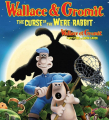
The moment that defines Wallace & Gromit: The Curse of the Were-Rabbit for me comes when the film reveals how seriously its characters treat vegetables. Giant marrows are guarded like priceless treasure. Gardeners whisper about carrots with competitive suspicion. A village prepares for its annual produce competition with the intensity of a national emergency. Into this very British crisis enters a mysterious creature capable of destroying an entire garden in seconds. This Wallace & Gromit: The Curse of the Were-Rabbit review begins with that contrast because the movie’s greatest achievement is transforming a small community obsession into a full Gothic horror parody without losing its warmth.
Released in 2005 and directed by Nick Park and Steve Box, the film expands Wallace and Gromit’s familiar world into a feature-length adventure. Wallace is an enthusiastic inventor with more confidence than judgment. Gromit is his silent, intelligent dog, whose patience repeatedly saves them both from disaster.
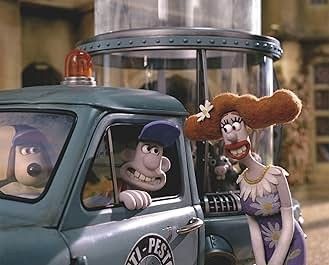
Together, they operate Anti-Pesto, a humane pest-control service protecting the neighborhood’s vegetables before Lady Tottington’s annual competition. Their business becomes unusually successful when rabbits begin invading local gardens.
Wallace attempts to solve the problem using one of his inventions, but the experiment creates a much larger threat. A giant rabbit-like monster begins appearing at night, destroying vegetables and spreading panic.
The premise combines classic monster cinema, romantic comedy, physical slapstick, detective storytelling, and affectionate social satire. It is funny for children without speaking down to them and packed with visual details adults can appreciate.
The film also understands the central relationship that made the earlier Wallace and Gromit stories effective. Wallace creates the problem. Gromit recognizes the danger. Wallace misunderstands Gromit’s warnings. Gromit quietly fixes everything while receiving far less credit than he deserves.
Plot & Storytelling: Humane Pest Control Goes Horribly Wrong
The story begins shortly before the Tottington Hall vegetable competition. Residents across the village are preparing enormous vegetables and protecting them from hungry rabbits.
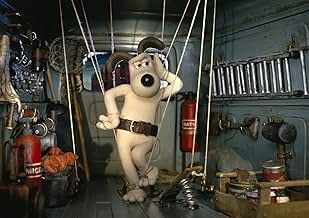
Wallace and Gromit have converted their home and vehicle into a professional pest-control operation. When an alarm sounds, mechanical systems launch them from bed, dress them, prepare equipment, and send them toward the affected garden.
Anti-Pesto captures rabbits without harming them. Wallace uses suction devices and carefully designed traps, while Gromit handles most of the precise work.
The captured animals are brought back to Wallace’s home, where they quickly create a housing problem. Dozens of rabbits fill the basement, consume food, and wait for Wallace to find a permanent solution.
Lady Tottington, the wealthy organizer of the competition, strongly supports humane treatment. Her position puts her in conflict with Victor Quartermaine, an arrogant hunter who believes every animal problem should be solved with a weapon.
Victor also wants to marry Lady Tottington. His interest appears connected less with affection than with status, property, and control. Wallace is immediately attracted to her. Their shared concern for animals creates a natural connection, though Wallace’s awkwardness and social uncertainty make every interaction more complicated.
Under pressure to manage the captured rabbits, Wallace invents the Mind Manipulation-O-Matic. His plan is to remove the animals’ desire to eat vegetables. The machine accidentally combines Wallace’s mind with that of a rabbit. At first, the experiment appears successful. One rabbit becomes unusually intelligent and is named Hutch because it begins copying Wallace’s speech, clothing, and habits.
Soon afterward, a giant creature starts attacking gardens at night. Villagers describe it as the Were-Rabbit. The monster appears enormous, fast, and almost impossible to capture. Its attacks become increasingly destructive as the vegetable competition approaches.
Wallace believes Hutch may be transforming into the creature because the rabbit displays human behavior. Gromit investigates and discovers clues suggesting the opposite. Wallace is the Were-Rabbit.
The machine transferred more than expected. During the full moon, Wallace transforms into a huge rabbit driven by an uncontrollable desire for vegetables. This reveal is both funny and emotionally effective. Wallace has created the crisis through his own invention, yet he remains largely unaware of what happens during the transformations.
Gromit attempts to protect him while finding a cure. Victor discovers the truth and decides to use it for personal advantage.
Rather than helping Wallace, Victor wants to hunt the Were-Rabbit publicly, appear heroic, and secure Lady Tottington’s admiration. The final act takes place during the vegetable competition. Wallace transforms, Victor pursues him, and the event descends into chaos.
Gromit pilots a toy aircraft in an aerial struggle with Victor’s dog, Philip. Lady Tottington learns the truth, while Wallace’s transformed instincts place the competition’s prize vegetables in danger.
The climax succeeds because several conflicts occur simultaneously without becoming confusing. Gromit must save Wallace, protect the villagers, prevent Victor from succeeding, and complete the cure. The resolution preserves the film’s humane values. Wallace survives, the rabbits receive a safe new home, and Victor is exposed as a selfish bully rather than a heroic hunter.
Wallace: An Inventor Whose Confidence Always Arrives Before His Judgment
Wallace is charming because his intelligence and foolishness are inseparable. He can create extraordinary machines but rarely thinks through every consequence. Peter Sallis voices Wallace with warmth, optimism, and complete sincerity. Even Wallace’s worst ideas sound reasonable when he explains them. He does not create the Mind Manipulation-O-Matic out of cruelty. He wants to solve a practical problem without harming the rabbits.
The mistake comes from assuming that technology can remove desire cleanly. Wallace treats the mind like another mechanical system that can be adjusted with the correct setting.
His transformation into the Were-Rabbit turns that assumption against him. The inventor who tries to control animal instinct becomes controlled by it. The film uses this transformation for broad comedy, but it also reveals something important about Wallace. He is often guided by appetite even in human form. Cheese, food, comfort, and immediate enthusiasm repeatedly influence his decisions. The Were-Rabbit exaggerates traits that were already present.
His relationship with Lady Tottington shows another side. Wallace wants to impress her but remains too honest and awkward to perform sophistication convincingly. He responds to her kindness because it matches his own preference for humane solutions. Their attraction feels based on shared values rather than appearance alone.
Wallace’s main weakness is his dependence on Gromit. He frequently ignores the dog’s warnings, accepts praise for shared achievements, and assumes his inventions are functioning even when Gromit is visibly concerned.
The film never makes Wallace cruel. His selfishness is thoughtless rather than deliberate. That distinction allows me to remain fond of him while recognizing that Gromit carries much of the emotional and practical responsibility.
Gromit: The Silent Hero Who Understands Everything First
Gromit is the true hero of the film. He has no spoken dialogue, yet his expressions communicate intelligence, frustration, loyalty, fear, and disappointment with extraordinary precision.
His eyebrows often perform the work that another character would require several sentences to explain. Gromit operates Anti-Pesto efficiently while Wallace receives most of the public attention. He drives, manages equipment, monitors alarms, and repairs problems created by inventions.
The Were-Rabbit mystery gives him a detective role. He studies evidence, watches Hutch, investigates the garden attacks, and gradually understands Wallace’s transformation.
His challenge is complicated by loyalty. Gromit is not simply hunting a monster. He is trying to protect his closest companion from Victor and from Wallace’s own behavior. The film repeatedly places Gromit in positions where he must choose between revealing the truth and keeping Wallace safe.
His relationship with Hutch becomes unexpectedly important. Gromit initially suspects the rabbit, partly because Hutch has adopted Wallace’s mannerisms. When he realizes Hutch is not the monster, Gromit adapts quickly. He does not remain attached to a theory simply because it seemed reasonable earlier.
Gromit’s aerial battle with Philip is one of the film’s strongest comic action sequences. Neither dog speaks, yet their personalities are completely clear. Philip is aggressive, proud, and loyal to Victor. Gromit is strategic, resourceful, and more interested in completing the rescue than proving superiority.
The scene combines toy planes, mechanical limitations, and silent reactions with remarkable clarity. Gromit’s devotion gives the story its emotional center. Wallace may not always recognize how much he depends on the dog, but the audience never doubts it.
Lady Tottington: Kindness Inside an Eccentric Aristocratic World
Lady Campanula Tottington is introduced as a wealthy landowner with a genuine affection for animals and gardening. Helena Bonham Carter gives the character a playful, breathy energy that fits the exaggerated world without making her feel foolish.
Lady Tottington’s support for humane pest control separates her from Victor immediately. She values life even when animals threaten the competition she loves. Her attraction to Wallace grows from this shared attitude. She sees him as kind and inventive, though she does not initially understand how often his inventions fail.
The character is eccentric but not passive. She organizes the competition, confronts Victor, and eventually helps protect Wallace after learning the truth. Her main limitation is the speed of the romance. Wallace and Lady Tottington share several charming scenes, but the feature has many other plot responsibilities.
Their relationship develops through mutual admiration more than deep conversation. Still, she works well as a romantic partner because she does not require Wallace to become conventionally impressive. His awkwardness and humane intentions are part of what she likes.
The film also uses her social position for satire. Tottington Hall represents old wealth, traditions, portraits, ceremonial events, and a community structured around a grand estate.
Lady Tottington behaves more generously than the status system surrounding her, which keeps her from becoming a simple aristocratic joke.
Victor Quartermaine: A Hunter Who Needs Everyone to Watch
Victor is one of the most entertaining villains in the Wallace and Gromit series because his motives are petty, recognizable, and exaggerated perfectly.
Ralph Fiennes voices him with theatrical confidence and barely controlled irritation. Victor treats every conversation as though he is defending his natural right to dominate the room. He believes hunting demonstrates courage. In reality, he prefers situations in which he has superior equipment and a frightened target.
His relationship with Lady Tottington is based on possession. He assumes marriage is the logical reward for his social standing and masculine performance. Wallace threatens him because Lady Tottington responds to kindness rather than intimidation.
Victor’s hatred therefore becomes personal before he discovers the Were-Rabbit’s identity. Once he learns Wallace is the monster, he sees the situation as an opportunity rather than a tragedy. He can remove a romantic rival, present himself as a public hero, and prove that violent pest control was correct.
The film mocks Victor’s obsession with weapons without turning the danger into something harmless. He is willing to injure Wallace even after understanding that the transformation is not voluntary.
Philip supports him with silent loyalty. The dog mirrors Victor’s aggression but occasionally displays more practical awareness than his owner. Victor’s eventual humiliation is satisfying because it attacks the public image he values most. He fails as hunter, romantic partner, and supposed protector of the village.
Hutch and the Rabbits: One Experiment Creates an Accidental Wallace
Hutch begins as an ordinary rabbit captured by Anti-Pesto. After the experiment, he absorbs parts of Wallace’s personality.
He wears clothing, speaks with Wallace’s rhythms, develops an interest in cheese, and behaves like a smaller, less controlled version of the inventor.
Peter Sallis voices Hutch as well, creating a comic echo of Wallace rather than a completely separate character. The similarity causes Gromit to suspect him. Hutch appears connected to the transformation and behaves far less like a normal rabbit than Wallace does during the day.
The reversal is clever. Hutch has acquired Wallace’s human characteristics, while Wallace receives the rabbit’s appetite and physical transformation. The experiment divides identity imperfectly rather than transferring it cleanly.
Hutch is not treated as evil. He is confused, enthusiastic, and increasingly useful once Gromit understands what happened. The other rabbits function as a comic crowd. They squeeze through spaces, follow food, and overwhelm Wallace’s home through sheer number.
Their simple design and synchronized reactions make them visually appealing without requiring individual personalities. The film’s final decision to give them a protected environment supports the humane premise. The story does not solve the problem by removing the animals permanently.
Humor & Comedy Style: British Restraint Meets Monster-Movie Slapstick
The Curse of the Were-Rabbit uses wordplay, visual details, character reactions, genre parody, physical accidents, and mechanical failure.
Its humor is dense without becoming frantic. Background signs, newspaper headlines, shop names, and vegetable displays contain jokes that may be missed during a first viewing. The dialogue uses polite language to describe ridiculous emergencies. Characters discuss giant vegetables and rabbit attacks with complete seriousness.
That seriousness makes the comedy stronger. The film never pauses to announce that a marrow competition is an absurd foundation for public panic. Wallace’s inventions provide mechanical humor. Devices often perform the intended task through an unnecessarily complicated sequence.
The opening wake-up system demonstrates this perfectly. It is impressive, useful, dangerous, and only partially under control. Gromit’s silent reactions provide a quieter comic layer. He often understands the approaching disaster while Wallace continues speaking confidently.
The monster parody is affectionate. Fog, church bells, full moons, angry villagers, silver bullets, transformations, and dark laboratories recall classic horror cinema. The film also uses mild adult wordplay and visual suggestions without making them central. Younger audiences can follow the action while adults notice additional jokes.
My first criticism is that a few jokes depend on repeated vegetable puns. Most are clever, but the density occasionally makes the screenplay appear too pleased with itself.
My second complaint is that some villagers function only as exaggerated reaction machines. Their panic is funny, yet individual personalities remain limited. Even so, the humor is exceptionally controlled. The film knows when to allow a visual joke to develop slowly and when to cut quickly to Gromit’s disapproval.
Stop-Motion Animation & Visual Design: Fingerprints, Fabric, and Physical Weight
The stop-motion animation is the film’s greatest technical achievement. Every character, set, prop, vegetable, machine, and background element feels physically present.
Wallace’s clothing folds. Gromit’s ears shift. Rabbit fur has texture. Machines shake slightly as they operate. These details give the world weight that highly polished digital animation can struggle to reproduce. The character designs remain simple enough for clear expressions. Wallace’s wide mouth and rounded face support large reactions, while Gromit’s eyes and eyebrows communicate subtle thought.
The film preserves the handmade quality associated with Aardman. Tiny imperfections are not hidden completely because they contribute to warmth. Tottington Hall uses rich colors, patterned interiors, portraits, large staircases, and extensive gardens. Wallace and Gromit’s home remains more mechanical and crowded.
Victor’s spaces feel formal and controlled, matching his obsession with status. The village combines narrow streets, stone buildings, shop fronts, church architecture, and small gardens. It feels exaggerated but lived in.
The Were-Rabbit’s design balances comedy and threat. It is large enough to damage gardens and frighten crowds, yet its rounded body and rabbit features prevent it from becoming genuinely horrifying.
Transformation scenes use shadows, movement, clothing, and partial views rather than realistic bodily detail. The result fits family entertainment while preserving monster-movie atmosphere. The vegetable competition provides extraordinary visual variety. Giant pumpkins, marrows, carrots, and other produce become colorful objects of pride.
Animating these environments required enormous patience, but the technical effort never overwhelms the storytelling. The film looks handcrafted because it is handcrafted, and that physical identity remains central to its appeal.
Music, Direction & Pacing: Gothic Drama With Comic Precision
Julian Nott’s music combines themes associated with Wallace and Gromit with larger Gothic and orchestral elements. The score treats the Were-Rabbit threat seriously enough to support the parody. Brass, strings, dramatic rhythms, and suspenseful cues give the monster real presence.
Wallace’s lighter themes preserve the eccentric domestic tone. Gromit’s investigative scenes use quieter tension. Nick Park and Steve Box direct with exceptional control over visual information. Important clues appear clearly without being explained immediately. The audience is encouraged to suspect Hutch before the full transformation is revealed. Gromit’s investigation gives the mystery a logical structure. The film’s pacing is remarkably efficient for a feature adapted from characters known primarily through shorter stories.
The opening establishes Anti-Pesto, the competition, the rabbits, Lady Tottington, Victor, and the romantic tension without feeling overloaded. The middle develops the monster mystery while preserving domestic comedy. Wallace’s behavior becomes stranger, Gromit grows more suspicious, and Victor increases the danger.
The final act expands into public spectacle but remains connected to the emotional stakes. Gromit is saving Wallace, not simply stopping a creature. Some sections move very quickly, especially Wallace’s growing relationship with Lady Tottington and the village’s decision to support Victor’s hunt.
Still, the film rarely feels rushed because each scene has a clear comic or narrative purpose. The direction also trusts silence. Gromit can investigate a room or react to evidence without dialogue explaining what he sees.
Themes & Emotional Meaning: Responsibility for the Problems We Create
The film’s central theme is responsibility. Wallace creates the Were-Rabbit while attempting to solve a practical problem. His intention is humane, but good intention does not remove responsibility for the consequences. Gromit spends most of the film managing those consequences. This reflects their broader relationship, in which Wallace invents and Gromit maintains. The story does not argue against technology entirely. Wallace’s inventions can be useful and imaginative.
The danger comes from using them without sufficient caution, especially when they interfere with living minds. The Mind Manipulation-O-Matic attempts to remove desire rather than manage behavior. It treats instinct as a defect that can be deleted.
The experiment fails because identity cannot be divided into clean mechanical parts. The film also contrasts humane care with violent control. Wallace and Lady Tottington want to protect vegetables without harming rabbits.
Victor sees killing as the most efficient and prestigious solution. His approach appears decisive, but it is motivated by ego rather than community safety.
The vegetable competition represents another form of obsession. Residents care so intensely about produce that they create elaborate security systems and react to damage as though society itself is collapsing.
The movie mocks this passion while respecting it. Hobbies and traditions can give a community identity, even when they appear ridiculous from outside. Wallace’s transformation also explores appetite. The Were-Rabbit is driven by desire without judgment.
Human Wallace is not entirely different. His love of cheese and comfort often overrides caution. The monster exaggerates a familiar weakness rather than introducing something completely foreign.
Finally, the film returns to loyalty. Gromit remains devoted to Wallace even when Wallace becomes the threat. That loyalty is not passive. Gromit investigates, disagrees, acts independently, and refuses to let Wallace’s poor decisions define the outcome.
Critical Reception & Lasting Reputation: Aardman’s Feature-Length Triumph
Wallace & Gromit: The Curse of the Were-Rabbit received widespread critical acclaim for its stop-motion animation, humor, voice performances, production design, and successful expansion of familiar short-film characters.
Reviewers frequently praised the film’s ability to work for children and adults without splitting into separate layers of entertainment. Gromit’s silent performance received particular admiration. His facial expressions and physical behavior carry much of the story without dialogue.
The film also earned praise for its affectionate parody of classic horror cinema. References to transformation stories and village monster hunts enrich the experience without requiring viewers to recognize every influence. It won the Academy Award for Best Animated Feature, confirming Aardman’s international reputation for handcrafted animation and character-based comedy.
Commercially, the film performed well, though its production required an extraordinary amount of time and labor. Its reputation has remained strong because the humor is based less on temporary references than character, language, and visual craft. The movie also demonstrated that Wallace and Gromit could support a full feature without losing the intimate appeal of their shorter adventures.
Some viewers consider the romantic subplot less memorable than the central friendship. Others find the villagers and secondary characters too broad. These are relatively minor concerns within a film whose craftsmanship remains easy to appreciate years later. The stop-motion has not aged in the same way as early digital animation. Its physical textures continue to feel distinctive rather than technically obsolete.
Final Verdict: A Handcrafted Horror Parody With Genuine Heart
Wallace & Gromit: The Curse of the Were-Rabbit is one of the finest stop-motion features because it expands its world without abandoning the small details that made the characters lovable.
Wallace remains inventive, enthusiastic, and dangerously confident. His desire to solve the rabbit problem humanely is admirable, even when his method creates a much worse crisis. Gromit remains the quiet intelligence behind almost every success. He notices clues, protects Wallace, saves the competition, defeats Philip, and completes the cure.
Peter Sallis gives Wallace warmth and comic rhythm, while Gromit’s animators create a complete performance through eyes, ears, posture, and timing. Ralph Fiennes makes Victor an excellent comic antagonist. His pride and obsession with public heroism create more danger than the Were-Rabbit’s appetite. Helena Bonham Carter gives Lady Tottington enough eccentric charm to belong naturally in Wallace’s world.
The film’s stop-motion animation remains extraordinary. Sets, costumes, machines, vegetables, animals, and facial expressions carry a physical presence that makes the fantasy tangible. The horror references are affectionate rather than mocking. Full moons, transformations, angry villagers, Gothic architecture, and a monster hunt become part of a comedy built around gardening.
The story also contains a clear moral choice. Humane intentions require responsibility, while decisive action is not automatically moral simply because it appears efficient. I recommend The Curse of the Were-Rabbit to families, stop-motion fans, viewers who enjoy British comedy, and anyone interested in a monster movie where the fate of several giant vegetables feels genuinely important.
Personal rating: 9.5/10.
Wallace & Gromit: The Curse of the Were-Rabbit earns that score for its handcrafted animation, Gromit’s exceptional silent performance, Peter Sallis’ warmth, Ralph Fiennes’ villainous energy, precise comedy, memorable production design, and affectionate horror parody. It loses half a point for a rushed romance, broad supporting villagers, and Wallace’s continued failure to appreciate how often Gromit saves him.
The Were-Rabbit may destroy gardens, competitions, and Wallace’s dignity. The film’s real triumph is proving that a story about pest control can become a beautifully crafted adventure about loyalty, responsibility, and one very patient dog.
Pros

- Unique visual style and masterful stop-motion animation
- Witty and engaging narrative that mixes humor with suspense
- Charming character development that provides both humor and heart
- Impeccable attention to detail in set design and craftsmanship
- Creative storytelling that appeals to both families and animation enthusiasts
- Inventive plot twists that keep viewers intrigued throughout
Cons

- Occasionally slow pacing in scenes with less action
- May feel too quirky for viewers preferring traditional animation styles
- Limited appeal for those not fond of stop-motion techniques


Leave a comment
Your comment is awaiting moderation. We save your draft here
0 Comments