







A Familiar Badge in a Changing Football World
The first thing I noticed when returning to FIFA Soccer was not a dramatic graphical effect or a spectacular goal. It was the familiarity of the structure. A squad waited to be improved, rewards were ready to be collected, and several events competed for my attention before I had even played a full match. This FIFA Soccer review is therefore not only about passing, shooting, and defending. It is about how a long-running mobile football series tries to preserve the sport’s traditional appeal while surrounding it with modern progression systems, live events, competitive modes, and constant team-building incentives.
The game once widely known as FIFA Mobile now operates under the EA Sports FC Mobile name, but its identity remains easy to recognize. It is still built around licensed clubs, famous players, Ultimate Team construction, short mobile-friendly matches, and a steady flow of seasonal content. The current version includes real-time player-versus-player competition, live events, daily training, quests, squad upgrades, and football-themed tournaments.
My opening sessions felt welcoming but busy. The menus offered rewards, objectives, limited-time activities, squad upgrades, competitive matches, and several currencies. For a returning player, these systems were understandable. For a complete newcomer, however, the interface could easily feel like walking into a football stadium through the accounting department.
Once I reached the pitch, the experience became much clearer. Players moved quickly, passes connected with satisfying speed, and attacks developed without requiring the long build-up associated with a full console simulation. FIFA Soccer wants to resemble authentic football, but it also understands that mobile players may have only a few minutes available.
That tension between tradition and innovation shapes almost every part of the game. Traditional football provides the teams, formations, rivalries, tactics, and emotional connection. Modern mobile design provides daily objectives, upgrade materials, player cards, rotating events, competitive ranks, and optional purchases. Sometimes these two sides support each other. Sometimes the business systems threaten to overwhelm the football.
Core Gameplay & Mechanics: Touchscreen Football With an Arcade Pulse
FIFA Soccer uses a streamlined control system designed around touchscreen play. A virtual directional control handles movement, while contextual buttons manage passing, through balls, shooting, sprinting, skill moves, tackling, and switching defenders. Some actions can also be performed with gestures, allowing me to tap a teammate for a pass or swipe toward the goal to shoot.
The controls are easy to understand, but using them well takes practice. A short press can produce a simple ground pass, while stronger or more deliberate input changes the speed and direction of the ball. Through balls require me to judge not only where a teammate is standing but where that player will be by the time the pass arrives. Shooting has a similar balance between accessibility and precision. Basic attempts are simple, but consistent finishing depends on angle, pressure, distance, and timing.
Matches move faster than real football. Players cover space quickly, midfield battles are compressed, and attacks often reach the penalty area within a few passes. This accelerated rhythm works on mobile because a slow tactical simulation could feel awkward during a brief session. It also makes the game immediately entertaining.
The disadvantage is that midfield play sometimes lacks weight. Possession can move from one penalty area to the other so quickly that carefully constructed attacks become less important than direct passing, sprinting, and exploiting defensive gaps. I occasionally felt as though I was playing a sequence of attacking highlights rather than controlling a complete football match.
Passing is generally responsive. Short combinations are easy to execute, and quick one-touch football can look impressive when player movement cooperates. The ball does not always travel exactly as intended, however. Assisted passing may select a different teammate from the one I had in mind, especially when several players are positioned close together.
That becomes frustrating in competitive matches. A pass intended for a nearby midfielder may travel toward a forward under pressure, turning a controlled possession into an unnecessary counterattack. The system is designed to reduce the difficulty of touchscreen input, but assistance can occasionally remove control instead of improving it.
Dribbling is based on direction changes, sprint control, and skill moves. Fast attackers feel dangerous in open space, while stronger players can protect the ball more effectively. Skill moves add flair and provide ways to beat defenders, although certain animations can feel too powerful when repeated by players who understand the competitive meta.
Defending requires switching between players, closing passing lanes, timing tackles, and deciding when to apply pressure. The game offers some automated assistance because controlling an entire defensive line on a phone would otherwise be impractical. Teammates track runs and hold positions with varying success.
The artificial intelligence can be inconsistent. Defenders sometimes maintain a convincing shape, intercept passes, and respond intelligently to danger. In other situations, a centre-back steps forward at the wrong moment or watches an attacker move into open space. These breakdowns feel particularly unfair when they occur during an online match against a stronger squad.
Physical play has received attention in recent updates, with EA describing adjustments intended to make contact more visible while keeping refereeing decisions fair. New tactical formations have also been introduced for Head to Head, VS Attack, and Manager Mode. In practice, player strength now matters more clearly in shoulder-to-shoulder situations, though collisions can still produce unpredictable rebounds.
The shooting system delivers immediate satisfaction. Powerful efforts feel dramatic, finesse attempts can curl around defenders, and clean finishes produce the visual reward expected from a football game. Goalkeepers are capable of impressive saves, but their behaviour is not always reliable. They may stop a difficult shot and then allow a weaker attempt through an awkward angle.
This inconsistency is one of my main complaints. Football naturally includes mistakes, yet competitive games need clear rules. When goalkeeper quality changes noticeably from one situation to another, losing can feel disconnected from my decisions.
FIFA Soccer offers several ways to play. Head to Head provides more traditional real-time matches, while VS Attack concentrates on scoring opportunities and compares how efficiently each player converts chances. Manager Mode shifts the focus toward tactical decisions and automated play. Club-based and tournament activities add further variety, and recent versions have included a global national-team tournament with more than 50 licensed teams.
Head to Head is the most complete expression of the football mechanics. I control attacks, defend transitions, adjust my approach, and respond directly to another player. These matches can be tense, especially when both squads have comparable ratings.
VS Attack is better suited to quick sessions. Instead of building every move from defence, I receive a sequence of attacking situations. The mode removes much of football’s strategic structure, but it creates an efficient score-chasing challenge. It is enjoyable in short bursts, though squad quality can heavily affect the difficulty of the chances provided.
Manager Mode is useful for players who enjoy formations and tactical instructions more than direct control. I can adjust the team’s mentality and observe how the squad performs. The concept is appealing, but watching automated decisions can be frustrating when players ignore obvious passing options.
The progression loop extends far beyond individual matches. I collect player items, improve the squad’s overall rating, train selected footballers, complete quests, earn currencies, and participate in rotating events. Daily training and live activities provide regular rewards, while seasonal programs encourage continued engagement throughout the year.
This system creates a strong reason to return. There is almost always another reward within reach. It also turns football into a schedule of obligations. Missing an event or failing to complete daily tasks can create the feeling that I am falling behind, even when I simply want to play a few matches.
Graphics, Audio, and Technical Performance: Big-Match Style on a Small Screen
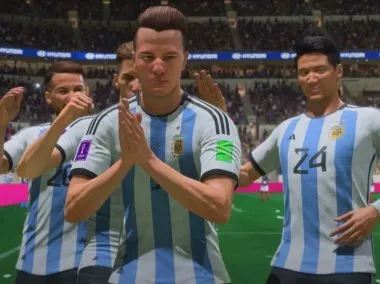
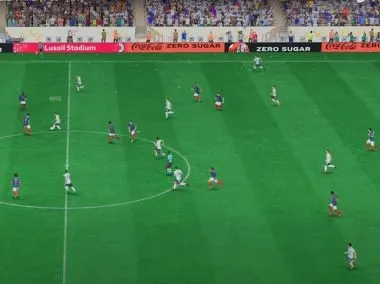
Visually, FIFA Soccer remains one of the more polished mobile football games. Stadiums are recognizable, kits are detailed, player models resemble their real counterparts to varying degrees, and broadcast-style camera angles give matches an authentic television presentation.
Lighting contributes significantly to the atmosphere. Evening matches under stadium lights look more dramatic than daytime fixtures, while pitch shading and crowd-filled stands help create a convincing sense of scale. The game cannot match the detail of a current console release, but it makes sensible compromises for mobile hardware.
Player animation is usually smooth. Running, passing, tackling, and shooting transitions connect naturally enough to keep matches readable. Signature celebrations and recognizable movement styles add personality to famous footballers.
Some animations remain too rigid, particularly when players turn sharply or collide while competing for the ball. A defender may slide into position unnaturally, or an attacker may continue an animation after the situation has changed. These moments briefly expose the mechanical structure beneath the presentation.
The interface looks modern but crowded. Team ratings, currencies, event banners, reward indicators, store offers, and notification symbols fill much of the menu space. The design communicates that there is always something available, but it also makes navigation tiring.
I often wanted a cleaner route from the main screen to a normal football match. Instead, the game repeatedly drew my attention toward rewards, upgrades, and limited-time programs. This is not a technical failure, but it affects the overall experience.
Audio presentation is effective during matches. The crowd reacts to attacks, shots, saves, and goals, while the sound of the ball adds useful feedback to passes and strikes. Commentary helps create the atmosphere of a televised fixture, although repeated lines become obvious after extended play.
Music gives the menus energy and connects the game to the broader identity of modern football culture. A recent update also introduced a nostalgia-themed soundtrack, reinforcing the attempt to connect the series’ history with its current direction.
Performance depends heavily on the device and connection. On capable hardware, matches can run smoothly with responsive controls and short transitions. Lower-end devices may require reduced graphical settings to maintain a stable frame rate.
Online stability is especially important. A brief delay can ruin a tackle, change the direction of a pass, or make a shot register too late. During poor connections, the game becomes considerably less enjoyable because football depends on timing.
Load times are acceptable, though moving between event pages, squad screens, and reward menus can create more waiting than the matches themselves. Occasional pauses after claiming items also interrupt the flow.
I did not encounter constant game-breaking errors, but smaller issues appeared: delayed menu responses, awkward collision animations, player-switching mistakes, and moments when online input felt less immediate. None destroyed the experience alone. Together, they created a noticeable layer of friction.
Monetization & Ads: Free Football With Expensive Ambitions
FIFA Soccer is free to download, but it includes advertising, in-app purchases, virtual currencies, and randomized player-item systems. The official store descriptions clearly state that optional currency can be used to obtain virtual items, including randomized selections.
The most important question is whether the game is pay-to-win. The answer is complicated. A dedicated free player can build a strong squad by completing events, earning rewards, trading resources, and playing consistently. The game provides many opportunities to improve without spending money.
However, purchases can accelerate progression. Players who buy premium currency or store offers may gain quicker access to valuable cards and upgrade resources. In competitive modes where squad quality matters, that advantage cannot be ignored.
Skill still plays an important role. A tactically aware player can defeat an opponent with a slightly stronger team by defending patiently and using chances well. The problem becomes more visible when the difference in squad quality is large. Faster attackers, stronger defenders, and better goalkeepers can compensate for mistakes.
Randomized rewards also create uncertainty. Opening a pack may produce a useful star or an item with little value to the current squad. This makes rewards exciting, but it can also make progression feel dependent on luck.
The monetization is most aggressive in the menus rather than during matches. Store offers, event passes, premium bundles, and limited-time promotions appear frequently. The game rarely lets me forget that squad improvement can be purchased.
Advertisements are present on the Google Play version, although their exact frequency and placement may vary. They are less disruptive than systems that force a video after every match, but they contribute to the sense that the experience is built around several overlapping revenue streams.
Free-to-play users can still enjoy the game. Patience, careful resource management, and consistent event participation make meaningful progress possible. Yet the experience is not entirely neutral. The design repeatedly creates problems—slow upgrades, limited resources, uncertain rewards—and then presents spending as the fastest solution.
My advice is to establish clear limits. It is easy to justify one small purchase, especially when a favourite player is featured. The problem is that the next event will eventually introduce another desirable card. Treating the game as a long-term team-building challenge is healthier than trying to own every new release.
Who Should Play This? Football Fans, Collectors, and Competitive Regulars
FIFA Soccer is best suited to football fans who want a licensed mobile game with recognizable clubs, players, leagues, and competitions. The large selection of footballers makes squad building entertaining, especially for anyone who enjoys combining current stars with legendary Icons.
Players who like short sessions will appreciate the mobile structure. Daily training, VS Attack, challenges, and event matches can often be completed quickly. I can make progress during a break without committing to a full console-length fixture.
Competitive players may enjoy Head to Head and the ranking systems. Direct matches provide tension, and building a squad for online competition gives progression a clear purpose. Success feels rewarding when both players have similar team strength.
Collectors are another major audience. Much of the game revolves around acquiring player items, improving ratings, and assembling themed squads. Creating a team built around one league, nationality, club, or personal group of favourites can be more satisfying than simply chasing the highest overall rating.
Football fans who enjoy tactical experimentation may find some value in Manager Mode and the expanded formation options. The strategic systems are not as deep as a dedicated management simulation, but they provide a change of pace from direct control.
The game is less suitable for players who want a completely fair competitive environment. Squad rating, premium progression, and randomized rewards influence outcomes. Skill matters, but it does not exist separately from team quality.
Anyone who dislikes daily tasks should also approach cautiously. The reward structure encourages regular participation. Players who disappear for several weeks may return to find that the competitive standard and available content have moved forward.
Those seeking a realistic football simulation may find the pace too fast. FIFA Soccer captures the appearance and broad tactical language of football, but it compresses the sport into a more direct mobile format. Patient possession, subtle midfield control, and slow tactical adjustments are often less effective than quick transitions.
The game is also a poor match for anyone vulnerable to impulsive spending. Limited-time offers and randomized rewards are designed to create urgency. Enjoying the football without becoming trapped by the collection system requires discipline.
Final Verdict: Football Heritage Rebuilt for the Mobile Era
FIFA Soccer stands between two versions of the same sport. One is traditional football: clubs, national teams, formations, passing moves, famous players, tactical choices, and the excitement of scoring. The other is modern mobile football: daily rewards, collectible cards, live programs, currencies, upgrades, rankings, and limited-time offers.
When these parts work together, the game is highly entertaining. Building a favourite squad gives matches personal meaning. Seasonal events connect the experience to real football. Short formats make competition accessible, while Head to Head proves that a touchscreen football game can still produce tense matches.
When the systems compete, football loses. Menus become more important than tactics. Squad rating becomes more important than decision-making. A new card becomes more valuable than improving at the game.
I enjoyed the responsive attacking play, licensed presentation, team-building options, and variety of modes. Scoring a well-constructed goal still produces a satisfying rush, especially against another player. The game understands the emotional appeal of football.
I was less impressed by the defensive inconsistency, occasional online delay, crowded interface, repetitive progression tasks, and monetization pressure. These are not minor details because they shape nearly every session outside the match.
FIFA Soccer is worth playing for fans who want a polished mobile football experience and can approach its economy patiently. It provides enough free content to be enjoyable without immediate spending, but players should understand that progression is designed to reward both time and money.
Those who want a perfectly balanced competitive simulation should look elsewhere. The difference between squads can become too influential, and touchscreen assistance occasionally interferes with precise control. Players seeking quick matches, famous footballers, regular events, and long-term team development will find much more to appreciate.
The title’s central idea—bridging tradition and innovation—is accurate. Traditional football supplies the heart. Mobile systems supply the structure, the updates, and unfortunately some of the frustration.
Personal rating: 8/10.
FIFA Soccer earns that score for its accessible controls, strong presentation, extensive licensing, competitive modes, and satisfying squad-building loop. It falls short of a higher rating because monetization affects progression, menus are overloaded, defensive behaviour remains inconsistent, and regular participation can feel more like an obligation than a choice.
At its best, it places a convincing football match in my pocket. At its worst, it places a store, a checklist, and several currencies between me and kickoff.
Pros

- Realistic gameplay physics that enhance the football simulation
- Engaging multiplayer mode offering dynamic online competitions
- Detailed graphics and immersive audio that replicate live match atmospheres
- Robust customization options and mod support for personalized experiences
- Cross-platform play ensuring accessibility on various devices
- Active community and continuous updates that foster long-term engagement
- Diverse game modes catering to both casual fans and hardcore strategists
Cons

- High learning curve for mastering advanced controls
- Inconsistent performance on lower-end devices during intensive sessions
- Controversy surrounding the use of cheats and mods in competitive play
Leave a comment
Your comment is awaiting moderation. We save your draft here
0 Comments