




Liberty City Still Feels Dangerous
Grand Theft Auto III begins without ceremony. Claude escapes from a prison transport, reaches a garage, changes clothes, and enters Liberty City with almost nothing. The game does not offer a long explanation of his personality or a heroic reason to continue. It gives me a damaged car, a criminal contact, and a city that appears ready to use anyone careless enough to trust it.
That direct opening remains one of the reasons this Grand Theft Auto III review feels important more than two decades after the original release. Earlier open-world games had offered large spaces and freedom, but Grand Theft Auto III made a three-dimensional city feel like a complete system. Cars move through traffic, pedestrians react to danger, police pursue visible crimes, radio stations continue broadcasting, and missions send the player between organizations competing for control.
Returning to it now is fascinating and occasionally painful. Liberty City still has a strong atmosphere, and the freedom to abandon a mission route and create personal chaos remains entertaining. At the same time, the controls, aiming, checkpoint design, mission structure, and camera clearly belong to an earlier generation.
Grand Theft Auto III is not the smoothest entry in the series, nor is it the richest. Its importance comes from establishing a structure that countless later games refined: enter a city, meet characters, accept jobs, unlock districts, improve access to weapons and vehicles, and gradually understand the geography through repeated travel. The game’s roughness is part of its identity. Liberty City is gray, hostile, industrial, and frequently inconvenient. It does not welcome Claude, and it rarely welcomes the player either.
Story & Setup: A Silent Criminal Moving Between Dangerous Employers
Claude begins the story as part of a robbery with his partner Catalina. She betrays him during the escape, shoots him, and leaves him for the authorities. A later attack on the prison convoy gives him an opportunity to escape alongside another prisoner, 8-Ball.
From that point, Claude works his way through Liberty City’s criminal organizations. He begins with the Leone family, completing tasks for Luigi Goterelli, Joey Leone, Toni Cipriani, and eventually Salvatore Leone. These early missions introduce the city through relatively simple jobs involving transportation, intimidation, protection, theft, and attacks on rival groups. Claude remains silent throughout the story. Other characters talk at him, give orders, insult him, and assume his loyalty. His lack of dialogue makes him flexible enough to move between employers without needing to explain himself.
This silence has advantages. Claude becomes an extension of the player’s actions, and his emotional distance fits Liberty City’s transactional relationships. Nobody asks what he wants because everyone assumes money and survival are enough. The limitation is obvious. Claude has almost no visible personality beyond obedience, determination, and occasional physical reactions. Later protagonists in the series would have stronger motivations, relationships, and internal conflicts.
The story becomes more interesting when Claude’s employers begin treating him as a disposable tool. Salvatore Leone grows suspicious and attempts to remove him, forcing Claude to work with Maria and Yakuza leader Asuka Kasen. Claude then moves deeper into the city’s power struggles, completing jobs for the Yakuza, corrupt police officer Ray Machowski, media executive Donald Love, and other figures. Each relationship offers access to new resources while creating another possible betrayal.
Catalina eventually returns as the leader of the Colombian Cartel. Her presence gives the otherwise fragmented criminal story a central destination. Claude’s progression through Liberty City becomes a path toward confronting the person responsible for his arrest. The plot is relatively simple by modern standards. Its strength lies less in dramatic complexity and more in the feeling that Liberty City contains overlapping systems of corruption. Mafia families, gangs, police officers, businessmen, politicians, and media figures all use crime differently while pretending their own version is legitimate.
Claude: An Effective Avatar With Almost No Inner Life
Claude is one of the most unusual major protagonists in the series because he never speaks. He listens, nods occasionally, and completes nearly every task without questioning the morality, logic, or personal risk involved. This makes him effective as a player avatar. I can drive carefully in one moment and create complete disorder in the next without the story needing to explain the contradiction.
His silence also supports the game’s cold atmosphere. Liberty City is not interested in emotional confession. People meet Claude because they need someone reliable enough to complete dangerous work and quiet enough not to discuss it afterward. However, the absence of dialogue weakens several relationships. Maria’s interest in Claude, Asuka’s trust, and Catalina’s betrayal all have limited emotional depth because Claude offers no clear response.
He never develops through conversation. His progression is mechanical and geographical: better weapons, more money, stronger vehicles, new safehouses, and access to additional districts. This was sufficient for the game’s original purpose. Grand Theft Auto III was building a new kind of open-world structure, and a highly characterized protagonist might have competed with the freedom Rockstar wanted players to experience.
Later games proved that player freedom and a strong central character could coexist. Returning to Claude after playing as Tommy Vercetti, Carl Johnson, Niko Bellic, or Michael De Santa makes him feel more like a functional outline. Even so, there is something memorable about his complete refusal to explain himself. Claude survives because he watches everyone, trusts almost nobody, and saves his only clear answer for action.
Liberty City: The Real Main Character
Liberty City is divided into three major areas: Portland, Staunton Island, and Shoreside Vale. Each becomes available gradually as the story progresses, turning geographical access into one of the game’s strongest forms of reward.
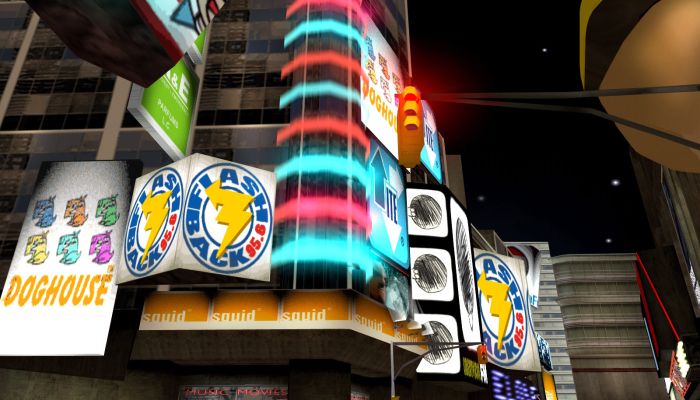
Portland is industrial and crowded. It contains docks, warehouses, narrow streets, factories, construction areas, apartment blocks, and the Leone family’s influence. Its layout feels compressed and practical, making early driving routes easy to learn. Staunton Island presents a wealthier and more commercial side of the city. Offices, parks, government buildings, hotels, and larger roads create a noticeable shift in tone. The city feels more powerful here, but not more honest.
Shoreside Vale includes suburban areas, an airport, hills, tunnels, and the Cartel’s presence. Its roads are more difficult to navigate, and some mission routes become frustrating because of elevation changes and limited crossings. The city is smaller than later Grand Theft Auto maps, but its scale works in its favor. I can learn routes, shortcuts, bridges, tunnels, and dangerous gang territories without relying constantly on navigation assistance.
Environmental variety comes through architecture, traffic, weather, time of day, and district identity rather than enormous geographic scale. Liberty City feels dense enough to remain active while still being understandable. The atmosphere is one of the game’s greatest strengths. Rain creates a dirty reflective surface across roads. Fog reduces visibility. Industrial areas feel neglected, while richer districts remain surrounded by corruption.
The world does not contain the level of interior access, side activities, or pedestrian detail found in later entries. Many buildings are decorative shells, and civilian behavior is simple. Still, Liberty City feels convincing because its systems interact. A minor collision can create traffic, police attention, frightened pedestrians, and an unexpected escape route. The city produces stories even when no mission is active.
Mission Design: Influential, Memorable, and Frequently Unforgiving
The mission structure established a formula that Rockstar would refine for years. I drive to a contact, watch a short scene, receive an objective, travel across the city, and complete a task using vehicles, weapons, or both.
Early missions are simple and useful for teaching the map. They introduce safe routes, vehicle handling, weapon pickups, gang territories, and basic police behavior without formal tutorials. Later missions become more elaborate. They involve timed travel, ambushes, vehicle destruction, escorts, targeted attacks, defensive battles, and multi-stage objectives. The best missions use the city itself. A familiar route becomes dangerous because enemies control the streets, or a vehicle choice changes how easily an objective can be completed.
The weakest missions expose the age of the design. Checkpoints are extremely limited, so one mistake near the end may require repeating the entire journey. Losing a mission can also mean losing weapons, armor, money, or a useful vehicle. Some objectives provide unclear instructions. The game may tell me what to do without explaining the most practical method, leaving experimentation to consume several attempts.
Timed missions can feel particularly harsh because traffic, vehicle condition, road layout, and accidental collisions create additional unpredictability. Escort missions are another source of frustration. Non-player characters may move slowly, enter danger, or behave in ways that make failure feel disconnected from player skill.
The mission “Espresso-2-Go!” remains a famous example of the game’s demanding design. It requires locating and destroying multiple targets across the city under time pressure. Without prior map knowledge, the objective can become an exercise in repetition rather than improvisation. Despite these problems, the missions remain effective at creating momentum. New employers introduce different parts of the city, while increasing danger reflects Claude’s growing importance.
Driving: Arcade Handling With Unstable Consequences
Driving is central to Grand Theft Auto III. Cars are transportation, weapons, escape tools, mission requirements, and disposable resources. Different vehicles have recognizable handling. Sports cars accelerate quickly but become difficult to control after collisions. Heavy vehicles are slower but can push through traffic. Taxis, vans, police cars, trucks, and emergency vehicles all create different practical options. The handling is arcade-like rather than realistic. Cars turn sharply, slide dramatically, and survive impacts that would end an ordinary journey immediately. This suits the game’s fast pace.
Vehicle damage is visible through smoke, broken panels, and eventual fire. Learning when to abandon a damaged car is essential because explosions can happen quickly once the engine begins failing. The city’s traffic makes every chase unpredictable. A clean route can be interrupted by one car turning across the road. A narrow escape can become a collision chain involving police and pedestrians.
This unpredictability creates comedy and tension, but it can also ruin timed missions. Driving skill matters, yet traffic behavior sometimes introduces failures that feel arbitrary. Motorcycles, aircraft, and the much wider vehicle variety of later games are absent. The selection is smaller, though still broad enough to support different situations.
My main irritation is camera behavior. The view may take too long to align behind the vehicle, especially after a sharp turn or collision. Manual camera control feels less natural than in modern open-world games. Driving remains enjoyable because the streets are built around it. Liberty City may be hostile, but moving through it at high speed still provides the game’s purest sense of freedom.
Combat & Weapons: Functional Action Limited by Old Controls
The weapon selection includes pistols, shotguns, submachine guns, assault rifles, sniper rifles, explosives, heavy weapons, and melee options. Each new category expands the types of missions Claude can handle confidently. Combat is much rougher than driving. The targeting system can lock onto the wrong person, struggle with groups, or make close-range encounters difficult to read.
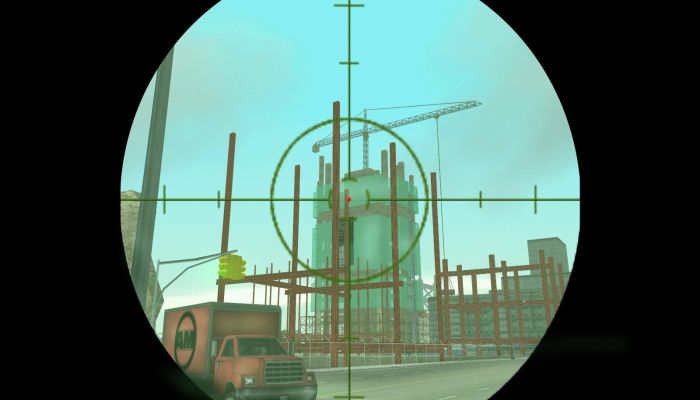
Manual aiming is limited compared with modern third-person shooters. The sniper rifle provides precision, but ordinary firefights often depend on positioning, target lock, weapon strength, and rapid movement rather than careful aim. Claude cannot use cover through a dedicated system. Survival depends on standing behind physical objects, moving out of sight, collecting armor, and removing enemies before they surround him.
Shotguns are powerful at close range, while assault rifles become useful against larger groups. Explosives can solve difficult encounters but create obvious danger in crowded streets. The flamethrower, rocket launcher, and other heavy options are effective enough to turn some missions into complete destruction. They can also attract police attention immediately. Enemy accuracy and reaction speed vary. Some opponents hesitate, while others remove health rapidly before I can adjust the camera.
The lack of modern checkpoints makes combat failures especially punishing. Losing near the end of a mission may require returning to the contact, watching or skipping the setup, finding another vehicle, and repeating the entire route. Combat remains one of the game’s weakest mechanical areas. Its importance comes from context rather than depth. A firefight matters because it takes place in a city where police, traffic, gang hostility, and escape routes continue reacting around it.
Police & Wanted Levels: Chaos Producing Immediate Consequences
The wanted system gives Grand Theft Auto III much of its open-world tension. Crimes committed near police can create attention, beginning with local pursuit and escalating toward roadblocks, tactical units, and military response. At low levels, police officers chase Claude directly and attempt to remove him from the vehicle. Escalation adds more aggressive units, stronger weapons, and increasingly difficult pursuit.
The system makes casual disorder risky. Stealing a car may be easy, but doing it in front of police can turn a short trip into a chase across several districts. Escaping requires distance, vehicle changes, hidden routes, or collecting icons that reduce attention. Pay ’n’ Spray garages can also remove a wanted level when the vehicle is accepted. Police behavior is not realistic. Officers may ignore dangerous traffic behavior until a specific crime triggers the system, then pursue Claude with complete commitment.
Their driving creates additional chaos because police cars crash into traffic, block roads, and sometimes damage one another while attempting to reach the player. At higher levels, the system becomes less about escape and more about temporary survival. The city fills with armed resistance, making ordinary movement nearly impossible. This escalation remains entertaining because it creates a clear relationship between freedom and consequence. The game allows almost any reckless action, then responds through increasingly overwhelming force.
Gangs & Territory: Progress Can Make the City More Dangerous
Different criminal groups control areas of Liberty City, including the Leone family, Triads, Yakuza, Colombian Cartel, Diablos, Yardies, and Southside Hoods. Their presence gives districts local identity. Clothing, vehicles, weapons, and street locations help communicate which group controls an area. Mission progression can change gang relationships. Former allies may become hostile, attacking Claude whenever he enters their territory.
This creates a fascinating but frustrating consequence: completing the story can make ordinary travel more dangerous. Areas that were once safe may become filled with enemies carrying powerful weapons. Portland becomes especially difficult after certain events because hostile groups can attack passing vehicles quickly. Returning for side activities or hidden items may become much harder than completing them earlier.
I like the idea that story decisions change the city’s practical geography. Criminal alliances should have consequences. The implementation is too aggressive in places. Constant attacks can make exploration irritating, and the player receives limited tools for changing or calming these relationships. Later games would develop territory systems more deeply. Grand Theft Auto III uses gang hostility primarily as environmental pressure.
Radio Stations & Audio: Liberty City’s Personality Travels With the Car
The radio stations are one of the game’s most important world-building features. Entering a vehicle activates music, talk radio, advertisements, and fictional programming that continue while I drive. The selection includes hip-hop, electronic music, classical pieces, reggae, pop, rock, and other styles. Each station creates a different mood for the same journey. Talk radio provides satire, strange callers, fictional products, public debates, and exaggerated personalities. These broadcasts make Liberty City feel culturally specific rather than merely visual.
Advertisements are especially effective because they parody consumer culture, politics, masculinity, technology, and urban anxiety. The humor can be broad, but the fictional brands help connect different areas of the world. Music also changes the emotional memory of missions. A difficult chase may become permanently associated with one song that happened to play during the successful attempt.
The game’s soundtrack is smaller than those of later entries, so repeated sessions make station loops noticeable. Some tracks and broadcasts recur frequently during long play. Voice acting varies by character but generally fits the heightened crime-film tone. Salvatore sounds tired and suspicious, Donald Love speaks with smooth emptiness, and Catalina turns every interaction into unstable theatre. Claude’s silence makes the surrounding voices even more important. Liberty City is constantly talking while the protagonist refuses to answer.
Side Activities & Collectibles: Small Systems Supporting Long-Term Play
Grand Theft Auto III includes side activities such as taxi driving, emergency services, vigilante work, firefighting, vehicle import lists, off-road challenges, hidden packages, rampages, and stunt jumps. These activities expand the game beyond the main story while encouraging players to learn the city. Taxi missions reward route knowledge and controlled driving. Ambulance work requires speed and vehicle preservation. Firefighter missions turn the city into a sequence of urgent destinations.
Vigilante activities allow police vehicles to become tools for pursuing marked targets. The missions are repetitive but fit the game’s systems naturally. Hidden packages provide one of the strongest long-term incentives. Collecting enough unlocks useful equipment at safehouses, reducing the need to purchase or search for weapons. Rampages create short challenges based on defeating a required number of enemies or vehicles using a specific weapon. They are chaotic and mechanically simple.
These activities offer useful rewards, though their design can be punishing. Ambulance and similar missions may require long uninterrupted sequences, so one collision near the end can erase substantial progress. The game also provides limited tracking and map assistance for collectibles. Completing everything without a guide requires extraordinary patience. Side content is not as varied or narrative-driven as in later open-world games. Its value comes from making the city’s existing systems serve additional purposes.
Graphics & Art Direction: A Gray City With Strong Geographic Identity
Grand Theft Auto III uses a dark, muted visual palette dominated by concrete, asphalt, industrial structures, cloudy skies, and nighttime lighting. Liberty City feels dirty without needing extreme detail. Character models are primitive by modern standards. Faces have limited expression, hands lack natural detail, and body movement can appear stiff.
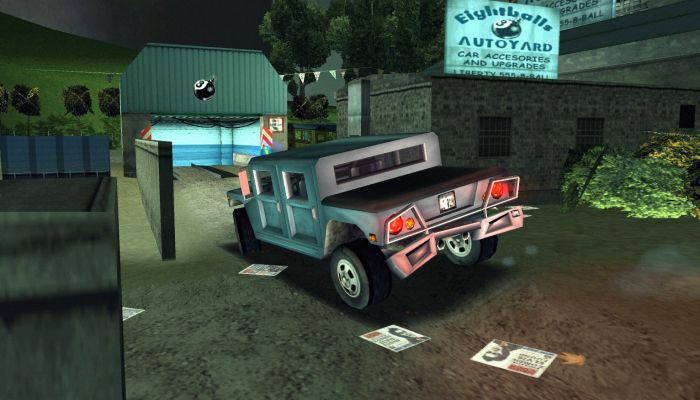
Vehicles and buildings remain more readable because their shapes communicate function clearly. A taxi, police car, sports car, van, and truck can be identified quickly from a distance. Weather contributes heavily to atmosphere. Rain, fog, and changing light alter visibility and road appearance, making familiar routes feel different. The city’s visual limitations occasionally support its mood. Distant shapes, heavy fog, and simple geometry give Liberty City a cold, impersonal quality.
Animation is less successful. Running, aiming, entering vehicles, and reacting to impacts can look awkward. Camera movement also emphasizes the age of the presentation. Modern remasters and ports have attempted to improve resolution, textures, lighting, and performance with mixed results. Cleaner visuals do not automatically preserve the atmosphere if colors, weather, or character models change too aggressively. The original art direction remains effective because it communicates a specific place rather than chasing technical realism.
Technical Performance & Modern Accessibility: A Classic With Complicated Versions
Grand Theft Auto III has appeared on numerous platforms, including consoles, computers, and mobile devices. The experience can vary significantly depending on the version. Older releases preserve the original visual atmosphere but may require compatibility adjustments, controller configuration, or community fixes on modern hardware.
Later editions may provide higher resolution, improved loading, revised controls, or additional checkpoint conveniences. They can also introduce visual changes, bugs, performance problems, and altered assets. The original game itself contains occasional technical issues. Vehicles may behave strangely after collisions, pedestrians can become trapped, mission scripts may fail, and the camera can create problems in narrow spaces. Saving is less convenient than in modern open-world games. Safehouses matter, and failing to save after progress can produce painful repetition.
There is also no modern autosave structure protecting every completed activity. This increases tension but often feels unnecessary. Players should choose the version carefully. The best-looking or newest release is not automatically the most stable or faithful. Regardless of platform, the game benefits enormously from patience. Its controls and mission logic require adjustment, especially for players accustomed to modern targeting, navigation, and checkpoints.
Influence on Open-World Games: The Blueprint Is Visible Everywhere
Grand Theft Auto III changed how developers and players thought about three-dimensional open worlds. Its importance does not come from inventing every individual mechanic. It comes from connecting them inside one coherent urban structure.
The player could accept missions, ignore them, steal vehicles, attract police, explore districts, collect items, use radio stations, and create personal situations within the same city. Later games expanded this formula through stronger stories, larger maps, improved combat, deeper side activities, and more detailed simulation. The basic rhythm remains recognizable in countless open-world titles: a navigable city, mission contacts, unlocked regions, wanted systems, vehicle access, and optional activities distributed across the map.
Grand Theft Auto III also demonstrated that technical limitations could become part of design. The city is not enormous, but careful district structure creates the impression of a larger criminal ecosystem. Its cultural influence is impossible to separate from controversy. The game’s violence, criminal freedom, and satire attracted criticism while also increasing public interest. Returning now reveals both sides of its legacy. The mechanics can feel primitive because so many later games improved them. That familiarity is evidence of how thoroughly its structure shaped the genre.
Monetization & Overall Value: A Complete Game From Another Era
Grand Theft Auto III was created before battle passes, rotating cosmetic shops, premium currencies, and daily engagement systems became standard. The core game is a complete single-player experience. Missions, districts, vehicles, weapons, side activities, and radio stations are not divided into recurring purchases.
Modern access may come through standalone releases, collections, subscriptions, mobile stores, or remastered packages depending on platform and region. The main purchasing concern is version quality rather than in-game monetization. Players need to determine whether a specific edition offers acceptable controls, performance, and preservation.
The absence of microtransactions makes progression feel direct. Money earned in the game is used for in-world systems rather than connected with real spending. The value remains strong for players interested in gaming history, open-world design, or the early development of the Grand Theft Auto formula. Someone seeking only a smooth modern crime game may find the friction too severe. The game’s historical importance does not make every mission enjoyable today.
Who Should Play Grand Theft Auto III?
Grand Theft Auto III is best suited to players interested in open-world history, classic Rockstar design, urban crime games, driving, and unscripted city chaos. Fans of later Grand Theft Auto entries may enjoy discovering the foundation beneath features they now take for granted. Players comfortable with older controls and limited checkpoints will have an easier time adapting. Patience is essential because mission failures can require substantial repetition.
Those who prioritize strong protagonist development may find Claude too empty. Players interested primarily in precise third-person shooting will struggle with the targeting and camera. Completionists should plan side activities carefully because story progression can make certain areas much more dangerous. The game remains worth experiencing, but it should not be approached as though historical importance automatically creates modern comfort.
Final Verdict: An Essential Landmark That Should Not Be Mistaken for a Comfortable Modern Game
Grand Theft Auto III remains important because it made a three-dimensional city feel less like a level and more like a place capable of responding to player behavior. Liberty City contains missions, but it does not exist only for them. Traffic continues, radio hosts keep talking, police respond, gangs control streets, and small mistakes grow into stories. The game’s compact structure has aged surprisingly well. Portland, Staunton Island, and Shoreside Vale are distinct enough to become memorable without requiring constant map consultation.
Driving remains enjoyable because every vehicle changes the rhythm of movement. The radio gives even routine travel personality, while weather and district design maintain a hostile urban atmosphere. The story is efficient but emotionally limited. Claude works as a silent instrument moving between criminals, yet his lack of personality prevents several betrayals and relationships from having greater impact.
Combat, aiming, camera control, checkpoints, and mission restarts have aged far more severely. Some objectives remain difficult for reasons that modern design would solve through better information or more generous retry systems. I recommend Grand Theft Auto III to players interested in gaming history, classic open worlds, Rockstar’s development, and the origins of modern urban sandboxes. Players expecting the comfort of Grand Theft Auto V should prepare for substantial mechanical adjustment.
Personal rating: 8.5/10.
Grand Theft Auto III earns that score for its atmospheric city, influential open-world structure, entertaining driving, memorable radio, escalating wanted system, and ability to generate unscripted situations. It loses points for dated combat, weak checkpoints, unreliable mission design, limited character development, awkward camera behavior, and inconsistent modern versions.
Liberty City does not need Claude to explain why he stays. The city offers money, danger, betrayal, and another vehicle waiting at the curb. For a game that changed open worlds permanently, that was enough.
Pros

- Revolutionary open-world gameplay that set the standard for future titles.
- Engaging narrative that combines humor, drama, and character depth.
- Innovatively designed urban environment that offers a richly detailed setting.
- Flexible gameplay mechanics that allow the use of mods and cheats for customization.
- Strong community support that continuously produces enhancements and modifications.
- Availability across multiple platforms ensuring that players can experience the game on various devices.
Cons

- Graphical quality and mechanics may feel outdated compared to modern games.
- Some control schemes and interface elements can be perceived as clunky.
- Story and thematic elements may be controversial or not appeal to all audiences.

Leave a comment
Your comment is awaiting moderation. We save your draft here
0 Comments