
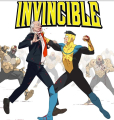






Mark Grayson Is Stronger, but Strength Is Becoming the Problem
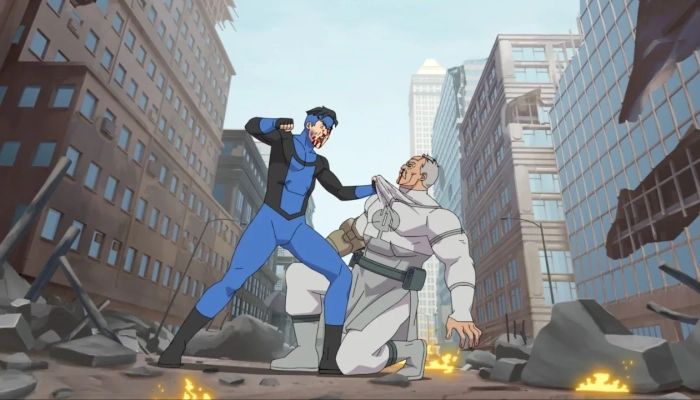
The moment that defines Invincible Season 3 for me is not one of its enormous battles, collapsing buildings, or blood-soaked confrontations. It is Mark Grayson standing opposite Cecil Stedman and realizing that the man who has protected Earth, manipulated him, saved him, and lied to him may never see him as a person with the right to say no. Their conflict is not about whether Earth needs defending. Both agree that it does. The real question is how much control can be justified in the name of survival. This Invincible Season 3 review begins there because the season’s strongest material comes from watching Mark become powerful enough to resist authority while remaining uncertain whether his own judgment deserves greater trust.
The third season continues Mark’s evolution from an enthusiastic teenager into a superhero carrying responsibilities that increasingly resemble political power. He is stronger, more experienced, and less willing to accept orders without explanation. That growth does not make his life easier.
His relationship with Cecil deteriorates. Oliver develops powers and a very different moral instinct. Atom Eve becomes more central to Mark’s emotional life. The threat of the Viltrum Empire remains unresolved, while enemies from Mark’s past return with greater preparation and resentment.
The season eventually expands into the devastating Invincible War and an even more personal confrontation with Conquest, one of the most terrifying Viltrumites Mark has faced.
Invincible remains excellent at combining intimate family drama with superhero destruction. A conversation about trust can matter as much as a citywide battle because the action usually grows from decisions made in quieter rooms. Season 3 is ambitious, emotionally heavy, and frequently brutal. It contains some of the series’ strongest character work and several spectacular episodes.
It also suffers from uneven pacing. Some subplots receive extensive attention before disappearing behind the season’s larger conflicts, while several major events arrive so close together that emotional consequences have little room to settle. Even with those flaws, this is a powerful season about a young hero discovering that independence is not the same thing as certainty.
The Story So Far: Earth Has Survived, but Mark Has Not Recovered
Mark enters the season carrying the effects of nearly every disaster that came before. His father Nolan revealed himself as a Viltrumite agent, attacked him, and nearly destroyed their relationship permanently. Mark later encountered Nolan again on Thraxa and learned that the Viltrum Empire remained an immediate threat. Angstrom Levy turned Mark’s home into a battlefield and forced him into a violent confrontation that challenged his belief that he never crosses certain moral lines. Mark has also seen friends injured, cities destroyed, and ordinary people harmed because enemies understand that attacking him directly is not always the most effective strategy.
He responds by training harder. The season emphasizes that Mark’s increasing strength is not simply a satisfying upgrade. It is a psychological response to helplessness. Mark believes greater power may prevent another catastrophe. If he becomes fast enough, strong enough, and decisive enough, perhaps nobody will suffer because he hesitated. This belief contains courage and danger.
Power can protect people, but fear of failing them can also make every compromise appear necessary. Cecil understands this weakness and attempts to direct it. He wants Mark powerful, available, and cooperative. Mark increasingly wants information before obedience. Their conflict turns the season’s early episodes into a tense argument about authority, secrecy, and whether saving the world gives anyone permission to manipulate its defenders.
Mark Grayson: Becoming His Own Kind of Hero
Steven Yeun continues giving Mark a mixture of warmth, anger, fatigue, and youthful uncertainty. Mark no longer sounds like someone amazed that he can fly. He understands the physical reality of being Invincible. What he does not understand fully is the kind of person he wants to become while using that power. His earlier heroic identity depended on clear moral distinctions. He wanted to save people, avoid unnecessary harm, and reject the Viltrumite belief that strength creates authority. Season 3 repeatedly places him in situations where those principles become difficult to apply.
Cecil’s methods are manipulative, but they often produce results. Oliver’s violent instincts are disturbing, but some enemies genuinely return to harm more people. Mark’s refusal to trust institutions protects his independence while making coordinated defense harder. His central fear is becoming Nolan. That fear shapes his response to anger and violence. Every time Mark loses control, he worries that Viltrumite cruelty is emerging from within him.
The series wisely refuses to make biology the only explanation. Mark’s rage also comes from trauma, exhaustion, guilt, and the pressure of being expected to make impossible decisions quickly. He is not dangerous simply because he is part Viltrumite. He is dangerous because he possesses extraordinary force while remaining emotionally overwhelmed. Mark’s development with Eve provides a necessary contrast. Around her, he is allowed to be uncertain without immediately converting uncertainty into action.
Their connection feels earned because it grows from shared experience rather than sudden attraction. The season also pushes Mark into leadership. During the Invincible War, he cannot remain only one fighter among many. Other heroes look to him for information, responsibility, and reassurance. The destruction is connected to alternate versions of him, making the crisis feel like a public manifestation of his private fear. Mark must confront what he could become without accepting that those versions define him.
Cecil Stedman: Protection Through Control
Cecil remains one of the show’s most compelling characters because his arguments are rarely completely wrong. Walton Goggins gives him confidence, impatience, secrecy, and enough emotional restraint to make every small reaction important. Cecil has spent years preparing Earth for threats most people cannot imagine. He has seen heroes fail, governments collapse, and enemies exploit hesitation.
His worldview is simple: survival requires options. Those options include surveillance, reanimation technology, hidden weapons, psychological manipulation, and alliances with people Mark considers unforgivable. Cecil does not enjoy every compromise, but he has become accustomed to treating discomfort as a luxury. His use of the Reanimen becomes a major point of conflict. Mark sees them as evidence that Cecil will weaponize human bodies and repeat atrocities if the results appear useful. Cecil sees them as resources capable of slowing threats that ordinary soldiers cannot survive.
Their confrontation works because it is not a disagreement between kindness and evil. It is a disagreement between moral boundaries and strategic flexibility. Cecil also understands Mark’s psychology well enough to manipulate him. He uses praise, selective truth, urgency, and guilt to keep him aligned with the Global Defense Agency. When those tools stop working, Cecil prepares physical countermeasures.
The sound-based weakness and other precautions reveal that he never trusted Mark completely. From Cecil’s perspective, refusing to prepare for a powerful being would be irresponsible. From Mark’s perspective, the preparation proves their relationship was never based on partnership. The season does not resolve this debate neatly. Mark breaks away, but later events continue demonstrating why Earth needs organized defense. Cecil remains dangerous because he can turn necessity into a permanent excuse. Mark remains vulnerable because refusing control does not automatically produce a better system.
Oliver Grayson: A Child With Power and an Alien Moral Clock
Oliver’s rapid growth creates one of the season’s most unsettling family conflicts. He is physically young but develops faster than a human child because of his Thraxan and Viltrumite biology. This accelerated development affects more than his body. Oliver processes life, death, and emotional attachment differently from Mark and Debbie. He learns quickly, becomes powerful early, and struggles to understand why human morality places such importance on preserving every life. From Oliver’s perspective, certain enemies have demonstrated that they will continue causing harm if spared. Removing them permanently appears efficient. Mark hears Nolan’s worldview inside that logic. The comparison is understandable but not entirely fair. Oliver has not been raised as a Viltrumite conqueror. He is attempting to create moral rules with limited life experience and extraordinary physical ability.
His relationship with Mark resembles both brotherhood and mentorship. Mark wants to protect him while also preventing him from becoming a weapon. The problem is that Mark’s guidance often takes the form of prohibition rather than explanation. He tells Oliver what heroes do not do, but Oliver wants to know why those limits remain valid when following them may allow more people to die. The season uses their disagreement effectively because Oliver’s questions do not have easy answers.
A rule against lethal force can protect heroes from becoming executioners. It can also become emotionally difficult when repeated villains return and create more victims. Oliver’s presence forces Mark to defend his principles consciously instead of treating them as obvious. Debbie’s role is equally important. She sees a child who needs care, not a future combat asset. Her insistence on ordinary family routines becomes a form of resistance against every institution and biological destiny trying to define Oliver before he can define himself.
Debbie Grayson: Rebuilding a Family After Nolan
Debbie continues to be one of Invincible’s emotional anchors. Sandra Oh gives her grief, anger, exhaustion, and a quiet strength that never turns her into an invulnerable parent. Debbie is trying to rebuild a household after learning that much of her marriage was built around deception. Nolan’s absence does not remove his influence. Mark fears becoming him. Oliver is biologically connected to him. Cecil treats the family as part of a larger security problem. Debbie wants to create a space where her sons can exist without being evaluated only according to their powers. That goal is nearly impossible.
Mark is repeatedly called into global crises, while Oliver matures faster than she can prepare for. Their home remains a target because enemies understand its emotional importance. Debbie also faces complicated feelings about Nolan. Anger, love, humiliation, grief, and memory coexist. The series does not demand that she resolve them into one simple position. Her scenes may be quieter than the superhero conflicts, but they reveal the cost of those conflicts more honestly.
Every broken wall and emergency call enters a family already struggling to feel secure. The season could give Debbie more independent material beyond managing Mark and Oliver. Her personal reconstruction remains visible, but the larger plot repeatedly pulls attention away. Even so, she remains essential because she refuses to let power become the only measure of value inside the Grayson family.
Atom Eve: Partnership Instead of Rescue
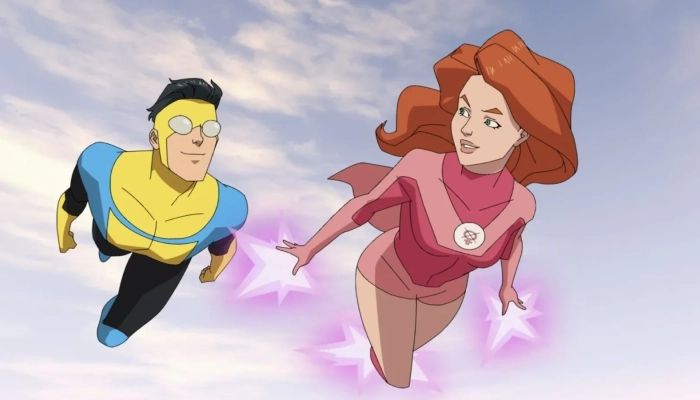
Atom Eve becomes increasingly central to Mark’s emotional and heroic life. Gillian Jacobs gives Eve intelligence, warmth, frustration, and enough self-awareness to challenge Mark rather than simply support him. Their relationship develops after years of shared danger and emotional hesitation. This history matters. They understand the practical difficulties of superhero relationships because both have experienced absence, injury, secrecy, and the fear that an ordinary disagreement may be interrupted by catastrophe.
Eve is not attracted to an idealized version of Invincible. She knows Mark’s anger, guilt, stubbornness, and tendency to place responsibility entirely on himself. Mark also understands that Eve’s confidence hides uncertainty about her own limits and future. Their romantic development works best during quiet conversations. They do not need to explain superhero life to one another before discussing the actual emotional problem.
Eve also remains a powerful hero in her own right. Her ability to restructure matter gives her extraordinary potential, though psychological restrictions and physical stress continue limiting what she can do safely. During the season’s largest conflicts, she becomes essential rather than decorative. Her role in the confrontation with Conquest carries enormous emotional weight because she refuses to remain outside Mark’s battle even when the danger is overwhelming.
The season occasionally uses her injuries to intensify Mark’s rage, creating the risk that her suffering becomes primarily motivation for him. Eve’s own choices and resilience prevent that completely, but the imbalance remains noticeable. Their relationship ends the season stronger, though not protected from future pressure. In this world, intimacy does not remove danger. It gives the danger another name.
Rex Splode: Humor, Growth, and an Unfairly Earned Heroism
Rex receives some of the season’s most meaningful development. Jason Mantzoukas continues giving him arrogance, fast insults, insecurity, and humor that often arrives before emotional honesty. Earlier versions of Rex used confidence to avoid accountability. He hurt people, damaged relationships, and assumed charm could reduce the consequences. After surviving severe injuries and witnessing the deaths of teammates, Rex becomes more aware of what heroism costs.
He does not transform into a completely different person. His jokes remain, and his ego does not disappear. What changes is his willingness to act for others without making himself the center of the moment. This development becomes especially important during the Invincible War. The crisis requires every available hero to respond to multiple attacks from alternate Marks. There is no guarantee of survival and little opportunity for personal glory.
Rex’s choices reveal that the unreliable teammate has become someone capable of genuine sacrifice. The emotional impact works because the series has allowed him to remain flawed for so long. Growth does not erase his earlier behavior, but it gives his story direction. His fate is one of the season’s most painful moments and reinforces the brutal randomness of the superhero world. Not every character receives a final speech or perfectly framed farewell. Sometimes a person changes just enough for the loss to feel even more unfair.
The Guardians of the Globe: A Team Constantly Rebuilt Through Grief
The Guardians continue operating under the shadow of the original team’s destruction. Their membership changes repeatedly, creating an organization where grief and recruitment occur almost simultaneously. Robot remains strategic and increasingly difficult to trust completely. Monster Girl continues dealing with the physical consequences of her transformations and her complicated connection with him. Bulletproof carries confidence and ambition but also private conflict. Shapesmith provides humor while still adapting to Earth and human expectations.
The team’s greatest strength is functional diversity. Different powers become necessary during large-scale emergencies, especially when no single hero can respond everywhere. The Invincible War pushes the Guardians and other heroes beyond ordinary capacity. Alternate Marks attack multiple locations, and the defenders must make rapid decisions with incomplete information.
The season uses this event to show the broader superhero community rather than presenting Earth as a stage where only Mark matters. Some characters receive only brief moments before being injured or removed. This creates scale but limits emotional clarity. The Guardians remain an important representation of institutional heroism: necessary, brave, imperfect, and constantly asked to absorb losses before they have recovered from the previous ones.
The Invincible War: Mark’s Worst Possibilities Become Public
The Invincible War is one of the season’s most ambitious storylines. Angstrom Levy returns with alternate versions of Mark drawn from different realities. Many of these Invincibles accepted Viltrumite ideology, embraced conquest, or developed into ruthless dictators.
The concept transforms Mark’s identity crisis into a global disaster. He has spent years fearing that his power and anger could make him resemble Nolan. Now the world sees multiple versions of him doing exactly that. The alternate Marks are visually familiar but behaviorally distinct. Costumes, scars, attitudes, and loyalties reveal different histories.
The war’s scale is enormous. Cities are attacked, heroes are overwhelmed, and civilians cannot distinguish the Mark they know from the versions destroying their world. This creates a moral injury Mark cannot solve simply by defeating enemies. His face becomes associated with mass destruction. The event also demonstrates the limits of centralized defense. Cecil, the Guardians, and independent heroes must respond simultaneously across different regions. Victory becomes collective and costly.
The war is thrilling, but its compressed presentation is one of the season’s largest structural problems. An event this destructive could support an entire season. Here, it unfolds rapidly before the story moves into another major Viltrumite confrontation. The speed communicates chaos but reduces aftermath. Cities, relationships, and public trust should remain transformed for a long time. The season acknowledges the damage without exploring every consequence fully.
Angstrom Levy: Revenge as a Complete Identity
Angstrom Levy remains a personal threat because his hatred is built around memories from multiple realities. He has seen versions of Mark commit terrible acts and can no longer separate those experiences cleanly from the Mark in front of him. His anger contains genuine suffering but becomes morally distorted. Angstrom does not seek accountability for one specific action. He wants Mark to experience endless punishment for every possible version of himself.
This makes him a dark reflection of the season’s identity theme. Mark fears that alternate versions reveal something inevitable about him. Angstrom treats that possibility as certainty. The villain’s dimensional ability also changes the scale of conflict. He does not need to defeat Mark physically when he can recruit entire realities against him.
His plan for the Invincible War is effective because it attacks Mark’s reputation, relationships, and psychological stability simultaneously. Angstrom remains compelling, though the season gives him less intimate focus than his earlier confrontation with the Grayson family. The alternate Marks become the central spectacle, while the wounded person organizing them occasionally feels secondary.
Powerplex: Grief Searching for the Wrong Target
Powerplex introduces another consequence of superhero destruction. His hatred of Invincible grows from personal loss caused during one of Mark’s earlier battles. From his perspective, the distinction between intentional harm and collateral damage offers little comfort. People he loved are gone, while the superhero connected with the destruction continues receiving praise. This is an important challenge to Mark’s self-image. Saving the world does not erase the lives lost during the rescue.
Powerplex builds his identity around making Mark acknowledge that cost. The tragedy is that his obsession creates more destruction and places his remaining relationships in danger. His anger is understandable, but understanding does not make his choices safe. The storyline works best when it refuses a simple villain label. Mark cannot dismiss him as someone who enjoys hurting people.
Powerplex wants recognition of grief. He chooses a method that reproduces the same harm he condemns. The season could give the aftermath more space. His story raises difficult questions about superhero accountability, compensation, public memory, and who is responsible when battles destroy civilian lives. Instead, the series moves relatively quickly toward its larger threats.
Conquest: Viltrumite Ideology Without Nolan’s Hesitation
Conquest arrives after Earth has already been devastated, making his appearance feel especially cruel. Jeffrey Dean Morgan voices him with confidence, amusement, contempt, and the relaxed brutality of someone who has survived countless wars.
Conquest is not interested in convincing Mark through careful argument. He considers resistance childish and assumes physical domination will settle every philosophical disagreement. His body tells its own history. Scars, missing parts, and age reveal that he has endured violence for centuries and interpreted survival as proof of superiority. Unlike Nolan, Conquest displays little emotional conflict about the Viltrumite mission. He enjoys battle and respects strength only as something worth crushing or recruiting.
This makes him terrifying because Mark cannot appeal easily to hidden affection or uncertainty. Conquest arrives to evaluate whether Mark has prepared Earth for Viltrumite control. Mark’s failure to do so becomes justification for punishment. The fight is one of the series’ most physically intense confrontations. Mark is powerful but outmatched in experience, cruelty, and endurance. Conquest understands how to use pain strategically and how to make emotional attachments into weaknesses.
Eve’s involvement changes the battle. Her apparent loss pushes Mark toward a level of rage he fears. The victory, such as it is, does not feel triumphant. Mark survives by entering a state close to the violence he associates with Viltrumites. The confrontation leaves him physically ruined and emotionally uncertain. Conquest functions both as external enemy and possible future. He represents what power becomes when empathy is treated as an obstacle.
Nolan and the Viltrumite Conflict: A Father Seeking Another Path
Nolan’s storyline remains physically separated from much of Mark’s season but thematically connected. J.K. Simmons continues giving him authority, regret, and emotional restraint. Nolan has begun questioning the Viltrumite Empire more openly, though centuries of ideology cannot disappear through one family attachment. His relationship with Allen the Alien creates an unusual partnership. Both understand the scale of the coming war and the weakness of current resistance. Nolan possesses knowledge the Coalition needs, but trusting him remains difficult. He has committed enormous harm and participated willingly in conquest before his connection with Earth changed him. The series does not treat regret as automatic redemption. Nolan’s development matters because Mark fears inheriting his violence while also hoping his father can become better.
If Nolan is capable of rejecting Viltrumite ideology, biology cannot determine Mark’s future completely. At the same time, Nolan’s example shows how long someone can participate in cruelty while believing duty justifies it. His arc prepares future conflict rather than resolving the current season. That setup is compelling but contributes to the number of active storylines competing for attention.
Action & Violence: Every Battle Leaves an Emotional Stain
Invincible remains distinguished by the relationship between superhuman action and physical consequence. Bodies do not move like indestructible symbols. Bones break, skin tears, organs are damaged, and exhaustion changes how characters fight. The violence is extreme, but it is most effective when connected with emotion. Mark’s battle with Conquest is not memorable only because of its brutality. It matters because every injury challenges Mark’s confidence, attachment, and moral restraint.
The Invincible War uses destruction differently. Its scale creates helplessness. Heroes cannot save every location, and the audience cannot process every casualty individually. Powerplex’s storyline focuses on collateral damage, asking the series to confront what its spectacular battles mean for ordinary people. The animation generally handles action clearly. Flight paths, impacts, speed, and changes in position remain understandable even during chaotic scenes.
Some background animation and quieter movement remain less polished than the biggest battles. Resources are clearly concentrated around major sequences. The contrast can be noticeable, but the season’s visual peaks are impressive. My main concern is desensitization. When graphic injury occurs repeatedly, individual moments can lose impact. The season usually avoids this by tying the most severe violence to character relationships, but not every battle receives equal emotional weight.
Stronger Consistency With Familiar Limitations
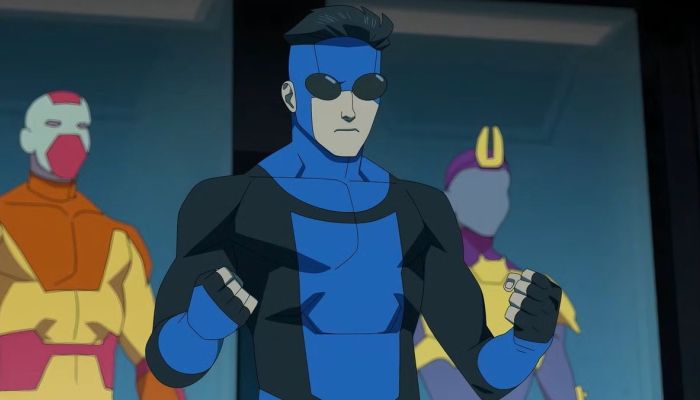
Season 3 improves several aspects of visual consistency while retaining the series’ direct comic-book aesthetic. Character designs remain clean and readable. Bold shapes, simple color blocks, and recognizable silhouettes allow complex battles to remain clear. Mark’s darker costume reflects his changing emotional state and growing independence.
The design suggests greater seriousness, but the season wisely avoids pretending a new suit creates a complete new identity. Locations vary from domestic interiors to government facilities, alternate dimensions, ruined cities, alien prisons, and large open battlefields. The Invincible War provides the greatest visual variety because multiple Marks attack different environments. The series continues using limited movement during some dialogue scenes. Characters may hold poses or rely heavily on facial changes while backgrounds remain static.
This allows resources to support major action but can make quieter scenes visually plain. The strongest character acting compensates. Voice performances and careful expressions keep emotional conversations engaging. The season’s large fights use speed and impact effectively. Conquest feels heavier and more experienced than Mark through timing, posture, and how little effort certain attacks require. The animation’s greatest strength is clarity rather than decorative complexity.
Music, Voice Acting & Sound: The Cast Keeps the Violence Human
The voice cast remains one of the show’s greatest advantages. Steven Yeun gives Mark a more mature emotional register without losing the vulnerability that defines him. Sandra Oh makes Debbie’s quieter scenes as important as the superhero confrontations. Walton Goggins turns Cecil’s controlled speech into a weapon. He rarely sounds uncertain, even when events exceed his plans. Gillian Jacobs gives Eve warmth and frustration, while Jason Mantzoukas allows Rex’s humor to reveal rather than hide development.
Jeffrey Dean Morgan’s Conquest is an excellent addition. His relaxed vocal confidence makes the character more threatening than constant shouting would. The sound design gives Viltrumite combat enormous force. Impacts feel dense, movement tears through air, and physical damage is presented with uncomfortable detail. Music supports tension without overwhelming dialogue. Emotional scenes often rely more on performance and silence than on obvious musical instruction. The title-card variations continue functioning as a playful visual tradition, though the season’s increasing darkness gives that joke a sharper contrast.
Several Seasons of Material Fighting for Space
Season 3 contains enough major material for far more than eight episodes. The Cecil conflict, Oliver’s development, Mark and Eve’s relationship, Powerplex, Angstrom Levy, the Invincible War, Conquest, Nolan, Allen, and the wider Viltrumite threat all demand attention.
Individually, most storylines are strong. Together, they create uneven rhythm. The early episodes focus effectively on Mark’s independence and family tensions. The middle expands into personal enemies and broader hero politics. The final episodes escalate at extraordinary speed. The Invincible War alone changes the entire planet. Following it closely with Conquest creates emotional overload. This structure reflects the comics’ escalating danger, but television benefits from aftermath. Viewers need time to understand how characters, institutions, and civilians respond.
The season provides moments of grief and recovery, but not enough for every major event. Some subplots also disappear temporarily when the central crisis begins. This can make the world feel broad while reducing narrative cohesion. The pacing is never dull. Its problem is the opposite: the season is so eager to reach powerful material that it occasionally reduces the space needed to make that material permanent.
Themes & Emotional Meaning: Power Does Not Create Moral Certainty
The season’s central theme is the relationship between power and authority. Cecil believes knowledge and responsibility give him the right to make hidden decisions. Mark believes personal autonomy gives him the right to refuse manipulation. Oliver believes power creates a duty to remove threats efficiently. Conquest believes strength itself proves who deserves control. Each position connects force with moral permission differently.
The season rejects the idea that good intentions settle the question. Cecil wants Earth to survive. Mark wants to protect people. Oliver wants to prevent repeated harm. All remain capable of dangerous choices. Identity is another major theme. Alternate Marks reveal that one person can develop into radically different versions depending on experience and decisions. Mark is not comforted simply because he is currently better than them. Their existence demonstrates possibility.
The season’s answer is not that Mark possesses a uniquely pure nature. It is that identity must be maintained through repeated choices. Trauma also shapes nearly every character. Mark trains because he remembers helplessness. Debbie builds routines because her family was shattered. Powerplex turns grief into revenge. Angstrom turns suffering into obsession. Healing is rarely linear. People become stronger, harsher, kinder, or more controlling according to how they interpret pain. The season also examines whether restraint remains moral when enemies repeatedly return. It does not provide one universal rule. Instead, it shows why abandoning restraint can transform protection into domination.
Critical Reception & Audience Response: The Series Reaches Another Peak
Invincible Season 3 received highly positive critical and audience reactions, with particular praise directed toward its character development, consistent release schedule, voice acting, large-scale conflicts, and adaptation of major comic storylines. The Invincible War and Conquest confrontation became the season’s most widely discussed events. Steven Yeun, Walton Goggins, Sandra Oh, Gillian Jacobs, and Jeffrey Dean Morgan were frequently highlighted for their performances. Viewers also responded strongly to Rex’s development, Mark and Eve’s relationship, and the ideological conflict between Mark and Cecil.
Criticism focused primarily on pacing, compressed aftermath, uneven animation outside major action scenes, and the large number of subplots. Some audiences wanted the Invincible War to occupy more time, while others appreciated the season’s relentless escalation. The season reinforced Invincible’s position as one of the most successful adult superhero series. Its appeal comes not only from graphic violence but from its willingness to make every superhuman conflict emotionally and politically complicated.
Final Verdict: Mark Wins Battles Faster Than He Understands What They Are Doing to Him
Invincible Season 3 is one of the series’ strongest chapters because it forces Mark to confront authority, violence, identity, and responsibility without offering a single safe answer. Steven Yeun makes Mark stronger without making him emotionally secure. His frustration with Cecil is justified, yet independence places greater responsibility on his own decisions. Walton Goggins keeps Cecil morally dangerous and strategically convincing. He may genuinely be protecting Earth, but he has spent so long using people as pieces that trust has become another resource to manage.
Oliver gives the family conflict a new direction. His alien development and practical approach to lethal force force Mark to explain principles he previously accepted instinctively. Sandra Oh keeps Debbie grounded inside a household shaped by superhuman consequences, while Gillian Jacobs makes Eve a genuine partner in both emotional and physical conflict. Rex’s development provides the season with one of its most rewarding and painful arcs.
The Invincible War is spectacular, frightening, and slightly too compressed. Conquest then raises the physical and psychological stakes even further. Jeffrey Dean Morgan makes him sound as though destroying Mark is not personal anger but enjoyable confirmation of a natural hierarchy. The animation remains uneven between ordinary dialogue and major action, but the strongest sequences are among the show’s best. The season’s greatest flaw is abundance. Too many excellent storylines arrive without enough room for consequences.
I recommend Invincible Season 3 to adult superhero fans, viewers already invested in the series, and audiences interested in stories about power, authority, trauma, family, and the moral cost of protection. New viewers should begin with the first season. The emotional effect depends heavily on earlier relationships and accumulated consequences.
Personal rating: 9/10.
Invincible Season 3 earns that score for Steven Yeun’s performance, Mark and Cecil’s ideological conflict, Oliver’s unsettling development, Rex’s arc, the Invincible War, and the terrifying confrontation with Conquest. It loses one point for compressed pacing, underdeveloped aftermath, uneven attention across the ensemble, and an overloaded final stretch.
Mark spends much of the season proving that nobody has the right to control him. The harder lesson comes afterward: freedom from another person’s authority does not make his own choices automatically wise.
Pros

- High-quality animation that seamlessly blends traditional comic aesthetics with modern techniques
- Deep character development that provides fresh insights into familiar personas
- Innovative sound design that enhances both dramatic and introspective moments
- Detailed world-building that creates a rich and expansive universe for the narrative
- Balanced pacing that skillfully alternates between high-energy action sequences and reflective, introspective scenes
- Immersive storytelling that draws viewers into a complex emotional journey
Cons

- Some plot developments might feel convoluted or overly intricate
- Technical elements, while innovative, may not resonate with traditional fans who prefer a classic style
- The complex narrative may be challenging for some viewers to fully grasp

Leave a comment
Your comment is awaiting moderation. We save your draft here
0 Comments