




A Familiar Blue Alien Lands in a More Fragile World
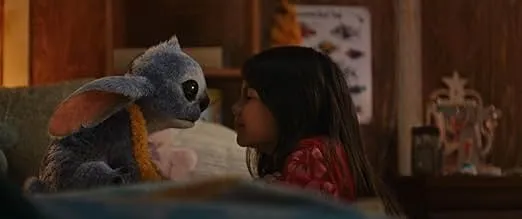
The moment that defines Lilo & Stitch for me is not Stitch crashing onto Earth, stealing a police vehicle, or attempting to behave like a dog. It is Lilo placing a flower garland around him and treating the destructive alien as though he has already earned a place beside her. She does not know what he was designed to do. She only recognizes another creature who is angry, lonely, and unwanted. This Lilo & Stitch 2025 review begins with that connection because the remake works best whenever it remembers that the original story was never mainly about aliens. It was about two sisters trying to remain a family while the world kept measuring whether they were capable of doing so.
Directed by Dean Fleischer Camp, the 2025 film reimagines Disney’s 2002 animated classic as a combination of live action and computer-generated animation. Maia Kealoha plays Lilo, Sydney Elizebeth Agudong plays her older sister Nani, and Chris Sanders returns as the voice of Stitch.
The basic story remains recognizable. Stitch, officially known as Experiment 626, escapes from alien custody and lands in Hawaii. Lilo adopts him from an animal shelter, believing he is an unusual dog. His presence creates destruction at exactly the moment when Nani is struggling to convince social services that she can care for her younger sister.
The remake preserves the emotional foundation of the original while changing several relationships, adding community figures, expanding Nani’s personal ambitions, and modifying the ending.
Some of these changes make the human story more realistic. Maia Kealoha and Sydney Agudong create a convincing sisterly relationship filled with affection, irritation, exhaustion, and shared grief.
Other decisions weaken the material. The live-action environment makes Stitch’s destruction feel more dangerous, several supporting aliens become broader comic figures, and the revised ending changes the meaning of Nani’s responsibility in ways that may divide viewers.
The film is warm, accessible, and frequently charming. It is also another Disney remake that struggles to justify replacing expressive hand-drawn animation with a more physically realistic world.
Plot & Storytelling: An Illegal Experiment Finds an Unstable Home
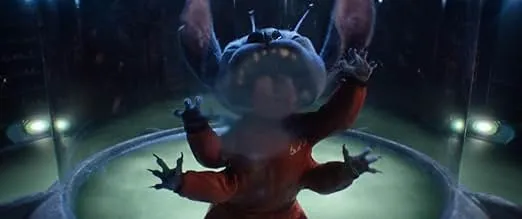
The story begins in space, where Dr. Jumba Jookiba is placed on trial for creating Experiment 626. Stitch has been designed to possess extraordinary strength, intelligence, durability, and a powerful desire to cause destruction.
The Galactic Federation treats him as a dangerous product rather than a person. Stitch responds by escaping custody and stealing a spacecraft.
He crash-lands on Earth, reaching the Hawaiian island of Kauai. The environment presents several immediate problems. Stitch cannot swim because his dense body causes him to sink, and the island offers limited opportunities to escape without crossing water. The Galactic Federation sends Jumba and Earth specialist Pleakley to recover him quietly.
Meanwhile, Lilo and Nani are attempting to survive after the deaths of their parents. Nani has become Lilo’s legal guardian while still being young enough to need support herself. Their home is filled with evidence of love and instability. Bills, household damage, employment pressure, grief, and arguments occupy the same rooms as photographs and shared memories.
Lilo has difficulty connecting with other children. She behaves impulsively, invents unusual explanations, and responds aggressively when she feels rejected. The film does not treat her simply as a cute eccentric child. Her behavior grows from loneliness and unresolved grief.
After another conflict, Lilo decides that adopting a dog may give her a friend. At the shelter, she chooses Stitch. Stitch recognizes that staying near Lilo may protect him from Jumba and Pleakley. He initially treats the adoption as camouflage. The arrangement creates immediate chaos. Stitch damages property, frightens people, and interferes with Nani’s attempts to present a stable household.
Mrs. Kekoa, the social worker assigned to the family, evaluates whether Nani can continue caring for Lilo. Unlike a simple antagonist, she recognizes Nani’s effort while remaining concerned about the increasingly dangerous home environment.
Nani is also trying to keep a job and consider a future beyond immediate survival. Her interest in marine biology and education gives her a personal goal that exists outside guardianship.
This addition creates one of the remake’s central tensions. Nani loves Lilo, but becoming a parent so young has restricted the life she might otherwise build.
Lilo gradually attempts to teach Stitch how to behave. She introduces him to Elvis Presley, explains family traditions, and gives him a model of someone who became admired despite being unusual.
Stitch misunderstands many lessons, but the effort changes him. He begins protecting Lilo even when doing so does not improve his chances of escape.
Jumba and Pleakley continue pursuing him, creating increasingly visible destruction. The alien storyline eventually collides with Nani’s social-services crisis.
Lilo is placed in danger, Stitch’s identity is exposed, and the family’s future becomes connected with whether he is viewed as property or as someone capable of choosing where he belongs.
The conclusion preserves the principle that nobody should be abandoned. It also expands the definition of family beyond one household. Community support becomes more important, and Nani is given an opportunity to pursue education without completely leaving Lilo behind. This revised outcome is emotionally hopeful. It is also more complicated than the film admits because the original story placed powerful importance on the sisters remaining together against institutional separation.
Lilo Pelekai: Maia Kealoha Makes Weirdness Feel Personal
Maia Kealoha gives Lilo an energetic and emotionally open performance. She can be funny, confrontational, frightened, and deeply lonely without making those qualities feel carefully separated.
Lilo’s unusual behavior is essential to the character. She does not behave differently merely to create cute dialogue. She creates stories, reacts intensely to rejection, and struggles to understand why other children refuse to accept her. Her imagination helps her survive experiences she cannot control.
The live-action format gives her anger additional weight. When Lilo pushes, shouts, or damages something, the behavior feels less abstract than it did in animation. This makes the character occasionally more difficult but also more believable. She is a grieving child, not a perfectly charming mascot. Lilo recognizes something familiar in Stitch. He is aggressive, rejected, and unable to communicate what he actually needs.
She does not excuse every destructive action. She attempts to teach him that belonging creates responsibilities. Her definition of family becomes the moral standard of the film. Family means nobody is treated as disposable, even when caring for someone is difficult. Kealoha’s strongest scenes occur with Sydney Agudong. Lilo and Nani argue like sisters who know exactly which words will hurt.
Their affection remains visible beneath the conflict. Lilo fears being sent away, while Nani fears that one mistake will convince authorities she is incapable of protecting her. The film occasionally pushes Lilo’s comic behavior too far. A few outbursts appear designed to increase chaos rather than deepen character. Still, Kealoha provides enough vulnerability to make Lilo more than a source of trouble.
Stitch: An Adorable Weapon Learning to Choose
Stitch remains the film’s main visual attraction. His computer-generated design preserves the large ears, wide mouth, blue fur, black eyes, and compact body associated with the animated character.
Chris Sanders returns to voice him, maintaining the growls, broken language, and sudden emotional softness that made the character recognizable. Stitch begins as a creature designed around destruction. He enjoys disorder because disorder is the only purpose he has been given. Earth creates an unexpected problem. The island limits his escape options, while Lilo’s adoption places him inside a relationship he does not understand.
His early behavior is intentionally selfish. He uses Lilo as protection and sees the household as temporary shelter. The film gradually changes his motivation through small acts. Lilo gives him a name, shares her grief, attempts to teach him music, and continues returning after he causes problems.
Stitch has never experienced care that does not depend on obedience or usefulness. The question of whether he can become good is therefore slightly misleading. Stitch does not need to erase his personality. He needs the opportunity to direct his abilities toward something other than destruction.
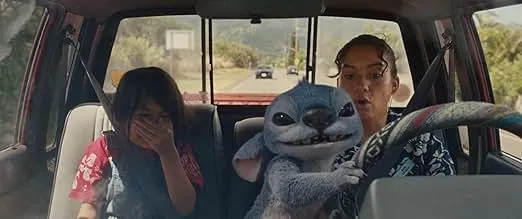
His bond with Lilo works because they remain difficult. Neither becomes calm enough to fit easily into the expectations surrounding them. The live-action environment introduces a problem, however. Stitch’s physical comedy creates realistic property damage and places human characters in visible danger. In animation, destructive behavior could feel elastic and temporary. Here, broken walls, damaged vehicles, and public accidents carry more practical consequences.
This is my first major criticism. The film wants Stitch to remain a harmless source of chaos while placing him inside a world where his actions appear genuinely expensive and dangerous.
The visual effects are generally convincing. His fur responds to light, his face preserves animated expression, and his movements communicate both alien strength and animal behavior.
Occasionally, his weight and contact with human performers feel inconsistent. He may appear physically solid in one moment and slightly detached from the environment in another. Despite those issues, Stitch remains lovable because Sanders gives him a personality that survives the change in medium.
Nani Pelekai: A Sister Asked to Become an Entire Support System
Sydney Elizebeth Agudong gives Nani the film’s most grounded performance. She appears young, tired, loving, frustrated, and constantly aware that adults are evaluating her.
Nani is not only Lilo’s sister. After their parents’ deaths, she has become guardian, provider, household manager, emotional support, and disciplinary authority.
The impossible nature of that role creates much of the conflict. Nani must comfort Lilo while processing the same grief. She must maintain employment while responding to school problems and property damage.
The remake emphasizes that she had personal ambitions before becoming responsible for the household. Her interest in studying marine biology gives her future a specific direction.
This makes her conflict more complicated. The question is no longer simply whether she can keep Lilo. It becomes whether loving Lilo requires abandoning every independent goal.
Agudong handles that tension well. Nani’s moments of irritation never suggest that she does not love her sister. They show what happens when love is expected to replace money, sleep, experience, and community support.
The film also gives Nani stronger connections with people outside the household. Tutu offers practical care, David provides affection without demanding immediate commitment, and Mrs. Kekoa understands the family’s cultural and emotional context.
These additions support the idea that Nani should not have to function alone. The revised ending allows her to continue pursuing education while Lilo remains connected to an extended network of caregivers. Emotionally, I understand the decision. Nani deserves the opportunity to become more than a substitute parent.
My second major criticism is that the ending risks weakening the sisters’ central promise. The story spends most of its running time insisting that separation is their greatest fear, then presents a new living arrangement as a relatively smooth solution. The film needed more time to show how Lilo understood and accepted that change.
Nani and Lilo: Love Does Not Automatically Create Stability
The sisters’ relationship is the heart of the movie. Every alien chase matters because it threatens a home that was already close to breaking. Nani and Lilo share grief but express it differently. Nani responds through responsibility. Lilo responds through imagination, anger, and attachment. Nani tries to build routines because routines may convince authorities that the household is stable. Lilo disrupts those routines because emotional pain does not follow schedules.
Their arguments often contain two valid perspectives. Lilo wants reassurance that Nani will never leave. Nani needs Lilo to understand that dangerous behavior can have consequences neither can control.
The film avoids presenting Nani as a perfect guardian. She loses patience, makes mistakes, and occasionally treats immediate order as more important than listening.
It also avoids blaming her for failing to perform an impossible role flawlessly.
The strongest scenes allow the sisters to be quiet together. Photographs, familiar rooms, and memories of their parents communicate the family history without lengthy explanation. Their home is damaged repeatedly, but its emotional meaning remains clear. It is the last physical space in which the four-person family once existed.
This makes every threat to the house feel connected with grief. The remake’s expanded community changes the message slightly. The original family structure depended heavily on the sisters refusing separation. The new version argues that remaining a family may require accepting help and allowing roles to change. That is a worthwhile idea. It simply needed a more patient transition.
Jumba and Pleakley: Alien Pursuers Become Broad Comic Partners
Zach Galifianakis plays Jumba Jookiba, the scientist who created Stitch. The performance emphasizes comic pride, irritation, and curiosity more than danger.
Jumba considers Stitch his greatest achievement. He discusses destructive design with the enthusiasm of an inventor describing a successful household appliance.
Galifianakis gives him amusing confidence, though the character feels less physically threatening than the animated version.
Billy Magnussen plays Pleakley as an anxious Earth specialist who frequently misunderstands human behavior.
His attempts to maintain a disguise and manage Jumba create broad physical comedy.
The pair works best when their different priorities collide. Jumba wants to recapture Stitch directly, while Pleakley worries about secrecy and environmental consequences.
Their live-action disguises produce mixed results. The actors commit fully, but the human forms reduce some of the strange visual appeal of the original aliens.
The comedy can also become repetitive. Jumba ignores caution, Pleakley panics, and their plan causes additional damage.
Both characters receive more emotional softness as the story develops. They begin recognizing Stitch as someone who has changed rather than a failed experiment that must be controlled.
Their eventual inclusion in the larger family supports the movie’s central definition of belonging.
Mrs. Kekoa, Tutu, David, and Cobra Bubbles: Building a Wider Community
The remake separates the social-worker role from Cobra Bubbles. Tia Carrere plays Mrs. Kekoa, the professional evaluating Lilo’s home. Her performance gives the character authority without making her cold. Mrs. Kekoa understands the cultural and emotional reality of the sisters’ situation. She does not want to punish Nani. She must determine whether Lilo is safe. This creates a more balanced conflict than presenting social services as an impersonal enemy. Every dangerous incident makes her concern increasingly reasonable.
Amy Hill plays Tutu, a neighbor who provides the family with practical and emotional support. Tutu represents a wider understanding of family. She is not a biological parent or legal guardian, yet her presence gives Nani and Lilo stability. Including her strengthens the film’s community theme and makes the revised ending more believable than it would be otherwise.
Kaipo Dudoit plays David, whose affection for Nani remains patient and supportive. He does not treat her family responsibilities as an inconvenience blocking romance. David’s role is smaller than the sisters’ conflict, which is appropriate. His value comes from showing up rather than attempting to become the solution.
Courtney B. Vance plays Cobra Bubbles as an intelligence figure connected with the alien crisis. Separating him from the direct social-services evaluation gives the character a different function. He becomes part of the government response to Stitch rather than the person deciding Lilo’s domestic future.
Vance brings calm authority, though the film gives him limited time to build the unusual combination of menace and hidden warmth associated with the character. The expanded adult network supports a realistic principle: two grieving young people should not be expected to survive entirely through personal determination.
Humor & Comedy Style: Alien Destruction Meets Family Stress
Lilo & Stitch uses physical chaos, alien misunderstandings, family arguments, Stitch’s expressive behavior, and references to Elvis Presley.
The strongest jokes come from Stitch attempting to imitate acceptable behavior. He understands that a dog should appear harmless but has little idea what harmlessness looks like. His body language changes rapidly between calculated innocence and destructive excitement.
Lilo’s explanations also create humor. She treats unusual ideas with complete seriousness and expects adults to follow her logic. Jumba and Pleakley provide broader comedy through disguises, failed pursuit, and confusion about Earth. Several jokes work well for younger audiences but feel more exaggerated than the sisters’ grounded emotional story.
This tonal difference is unavoidable to some degree. Lilo & Stitch has always combined domestic pain with alien slapstick. The animated film could move between those modes more smoothly because every character and environment belonged to the same visual language.
The remake’s realism makes transitions sharper. A quiet conversation about losing custody may be followed by a destructive chase involving computer-generated aliens. The humor remains enjoyable, but the film occasionally seems uncertain about how seriously the physical consequences should be treated.
Visual Design & Effects: Stitch Survives the Move Into Live Action
The Hawaiian locations give the film natural beauty. Ocean views, mountains, roads, vegetation, neighborhoods, and warm light create a physical sense of place.
The strongest visual scenes allow characters to occupy these environments without excessive digital spectacle. The water creates both beauty and narrative danger because Stitch cannot swim. Beaches and coastline therefore become limits as well as attractive backgrounds.
Stitch’s design is carefully protected. The filmmakers avoid transforming him into a realistic animal that would lose the exaggerated features people recognize. His eyes remain large, his ears remain expressive, and his mouth can shift rapidly between adorable and threatening. This compromise generally works. Stitch looks believable enough to share the frame with Maia Kealoha while remaining visibly animated.
The effect is weaker during rapid action. Physical contact with furniture, vehicles, and performers occasionally lacks convincing weight. Jumba and Pleakley’s alien forms are more difficult. Their designs contain greater anatomical complexity and can appear less naturally integrated.
The spacecraft and galactic environments are polished but generic compared with the Hawaiian setting. Metal corridors and digital control rooms lack the handmade personality of the original animation. The remake also loses the watercolor-inspired visual identity of the 2002 film. The original backgrounds gave Hawaii softness, warmth, and an illustrated emotional quality.
Live action provides physical detail but not the same artistic unity. This is the central visual tradeoff. The new film makes the family’s economic and domestic struggle feel more immediate while reducing the distinctive beauty of the animated world.
Music & Sound: Elvis, Hawaiian Influences, and Familiar Emotional Cues
The soundtrack preserves the importance of Elvis Presley in Lilo’s identity. His music becomes part of the way she teaches Stitch about admired outsiders, performance, and confidence.
“Hawaiian Roller Coaster Ride” returns as a major connection with the original film’s energy and cultural setting.
The musical choices work best when they emerge from character rather than functioning as nostalgic reminders. Dan Romer’s score supports the family drama with warm themes while giving the alien sequences greater movement and scale. The music becomes quieter during conversations between Lilo and Nani, allowing grief and uncertainty to remain present.
Chris Sanders’ vocal work remains essential to Stitch. The character’s growls, broken words, laughter, and sudden cries contain more personality than ordinary dialogue would provide. Sound design gives Stitch physical force. Impacts, movement, claws, machinery, and vehicle damage make him feel heavier than his small body suggests.
This strength can become a tonal problem because the realistic sound makes comic destruction appear more dangerous. The film uses familiar musical material respectfully, but it rarely creates a new theme as memorable as the strongest elements inherited from the original.
Direction & Pacing: A Tender Filmmaker Inside a Large Disney Production
Dean Fleischer Camp brings a useful sensitivity to the relationship between lonely characters. His direction is strongest when Lilo, Nani, or Stitch is allowed to behave quietly rather than serve the next plot event.
The child performances feel natural. Conversations include interruptions, uncertain pauses, and emotional reactions that do not appear overly polished. The first half balances the family crisis with Stitch’s arrival effectively. Lilo’s isolation, Nani’s pressure, the social-services evaluation, and the alien pursuit all connect around the household.
The middle becomes busier as Jumba, Pleakley, Cobra Bubbles, community figures, job problems, and Stitch’s destruction compete for attention. The final act contains several departures from the animated structure. These changes give Nani more personal possibility but require additional explanation.
The pacing does not provide enough space after the crisis. New family arrangements and future plans appear before Lilo’s fear of separation has been fully processed. Fleischer Camp handles emotional sincerity better than large action. The chases are energetic but less distinctive than the domestic scenes. The film’s best direction appears in faces: Nani trying not to show panic, Lilo realizing an adult may leave, and Stitch discovering that his actions have emotional consequences.
Themes & Emotional Meaning: Family Is Larger Than One House
The central theme remains family. The film defines family not through biology alone but through the decision to protect people who might otherwise be discarded.
Stitch was created as a weapon and treated as property. Lilo is considered difficult by other children and potentially removable by adult institutions. Both believe rejection is inevitable. Their friendship interrupts that belief. Lilo teaches Stitch that family creates permanence. A person may cause trouble without becoming disposable.
Stitch teaches Lilo something equally important. Being unusual does not mean she is alone. Nani’s storyline complicates the theme by asking whether family responsibility should require complete self-erasure. She has become Lilo’s guardian because no other immediate option seemed possible. Love motivates the choice, but the role also limits her education, employment, and emotional recovery.
The remake argues that family support should be shared. Tutu, David, Mrs. Kekoa, and the alien characters form a wider network. This interpretation reflects the idea that a household can change without the emotional bond disappearing. Grief is another central theme. Lilo and Nani have lost the same parents but occupy different positions. Lilo is allowed to behave like a grieving child, even when adults struggle with her actions. Nani is expected to become functional immediately because someone must maintain the home.
The difference creates resentment. Lilo experiences Nani’s exhaustion as possible abandonment. Nani experiences Lilo’s behavior as another crisis she must manage alone.
Stitch enters the family without understanding grief but becomes part of how they survive it. The film also explores purpose. Stitch was created for destruction, but design does not determine his final identity. He becomes capable of care because someone treats him as more than the function assigned to him.
Reimagining the 2002 Film: More Realism, Less Visual Freedom
The original Lilo & Stitch remains one of Disney’s most distinctive animated films because it combined science fiction with a small domestic story.
Its hand-drawn characters could shift between comedy and sadness with remarkable flexibility. The watercolor backgrounds gave Hawaii a visual identity unlike most studio animation.
The remake preserves much of the plot and emotional language. Several scenes, jokes, songs, and character beats are designed for immediate recognition.
This faithfulness protects the story’s heart but raises the question of necessity. The new film rarely discovers an idea powerful enough to replace what is lost through the change in medium.
Its strongest addition is the expanded community. Nani and Lilo no longer appear almost completely isolated from supportive adults. This change creates greater cultural and practical context around the family.
Nani’s educational ambition is another meaningful addition. She becomes more clearly a young woman whose future was interrupted rather than only a guardian struggling with employment. The altered ending is the most controversial change. It offers Nani a healthier division between love and responsibility.
At the same time, it modifies the original promise that the sisters will remain together despite pressure to separate them. Neither interpretation is inherently wrong. The remake needed more emotional time to connect them. The film succeeds when it expands character circumstances. It is less successful when it recreates animated comedy through realistic digital action.
Critical Reception & Audience Response: A Crowd-Pleasing Remake With Familiar Questions
Lilo & Stitch received a generally positive critical response and a particularly warm reaction from family audiences.
Maia Kealoha’s performance was widely recognized as one of the film’s greatest strengths. Reviewers also praised Sydney Agudong, the emotional sisterly relationship, and Stitch’s successful visual translation into live action.
The remake was often described as one of Disney’s better recent adaptations. Its emotional foundation remained strong enough to survive changes in medium.
Criticism focused on its limited necessity, weaker visual imagination, inconsistent digital effects, altered ending, and inability to match the expressive freedom of the animated original.
Some reviewers appreciated the more grounded approach. Seeing Nani as a visibly young guardian increased the pressure surrounding employment, social services, and household safety. Others found that realism worked against Stitch’s comic destruction. Actions that appeared playful in animation could seem reckless beside human performers.
Audience enthusiasm was reflected in the film’s enormous commercial success. Stitch’s continuing popularity, nostalgia for the original, and the accessibility of the family story helped the remake reach viewers far beyond children seeing the characters for the first time. The financial result confirmed that Stitch remains one of Disney’s most marketable modern characters.
Popularity does not settle the artistic debate. The remake is enjoyable and emotionally sincere, but it also represents a studio strategy built heavily around reproducing familiar stories. Its strongest argument for existence is the new cast. Maia Kealoha and Sydney Agudong make the central relationship feel alive rather than mechanically copied.
Final Verdict: Stitch Remains Irresistible, Even When the Remake Plays It Safe
Lilo & Stitch is one of Disney’s more successful live-action remakes because the original story contains an emotional foundation strong enough to survive a less expressive visual format.
Maia Kealoha makes Lilo strange, difficult, funny, and deeply sympathetic. She never reduces the character to a child waiting for an adorable alien friend.
Sydney Agudong gives Nani equal emotional importance. Her performance reveals the exhaustion of being treated as an adult authority while still grieving and trying to imagine a future of her own.
Chris Sanders ensures that Stitch sounds exactly right. The character remains a destructive experiment whose first real act of independence is choosing to care about someone.
Dean Fleischer Camp directs the quieter family material with sensitivity. The domestic scenes often feel more convincing than the large alien pursuit. The expanded community is a meaningful addition. Tutu, David, and Mrs. Kekoa demonstrate that family survival should not depend entirely on one young woman performing every role.
The visual effects are effective without matching the artistic personality of the 2002 animation. Stitch looks appealing, but Jumba, Pleakley, spacecraft, and action sequences vary in quality. The revised ending contains a worthwhile idea: Nani should not have to abandon her education and identity to prove that she loves Lilo.
Its execution is rushed. The film needs more time to show that changing a household does not repeat the abandonment Lilo fears. I recommend Lilo & Stitch to families, younger audiences, fans of Stitch, and viewers who enjoy Disney remakes that preserve the original emotional structure. Those deeply attached to the 2002 film may appreciate the performances while still finding the remake visually less imaginative and thematically less precise.
Personal rating: 7.5/10.
Lilo & Stitch earns that score for Maia Kealoha’s excellent debut, Sydney Agudong’s grounded performance, Chris Sanders’ irreplaceable voice work, the enduring bond between Lilo and Stitch, and a compassionate expansion of community support. It loses points for uneven digital effects, broad alien comedy, reduced visual personality, realistic destruction that clashes with the tone, and an ending that changes the family structure without enough emotional space.
Stitch arrives believing he was created for one purpose. Lilo gives him something his creator never considered: the freedom to decide who he belongs with and what he wants to become.
Pros

- Innovative storyline that blends beloved classic elements with fresh narrative twists
- Stunning visual production and advanced CGI that enhances traditional hand-drawn textures
- Strong character development, allowing both new and longtime fans to connect deeply
- Rich, immersive soundscapes that complement the film's emotional journey
- Balanced mix of humor and heartfelt moments that cater to diverse audiences
- Thoughtful exploration of modern themes such as identity, belonging, and familial bonds
Cons

- Non-linear narrative structure may confuse viewers unfamiliar with the original
- Some longtime fans might feel the reinterpreted story sidesteps classic simplicity
- Frequent flashbacks and layered subplots can disrupt the pacing for viewers seeking a straightforward narrative

Leave a comment
Your comment is awaiting moderation. We save your draft here
0 Comments