


How Many Times Can One Worker Die Before Somebody Calls It Exploitation?
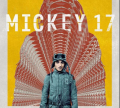
The moment that defines Mickey 17 for me comes after Mickey Barnes has already accepted the strangest employment contract imaginable. He is an “Expendable,” a crew member assigned to lethal jobs because the colony can print another version of him after each death. Nobody treats this arrangement as miraculous for long. His coworkers complain about delays, supervisors discuss his body as equipment, and Mickey himself approaches another fatal assignment with the exhausted resignation of someone reporting for an unpleasant shift. This Mickey 17 review begins there because Bong Joon Ho’s science-fiction satire understands that the most horrifying technology is often the one a workplace converts into routine.
Released theatrically in March 2025, Mickey 17 was written and directed by Bong Joon Ho and adapted from Edward Ashton’s novel Mickey7. Robert Pattinson plays Mickey Barnes, while Naomi Ackie, Steven Yeun, Toni Collette, and Mark Ruffalo lead the supporting cast. Jung Jae-il composed the music, and Darius Khondji served as cinematographer.
Mickey joins a colonial expedition led by failed politician and self-appointed visionary Kenneth Marshall. The mission intends to establish a human settlement on the frozen planet Niflheim.
Because Mickey has signed up as an Expendable, he performs the jobs nobody else wants. He tests dangerous chemicals, enters contaminated areas, explores unstable terrain, and dies repeatedly. After every confirmed death, the colony prints a new body and restores Mickey’s stored memories. The system works until Mickey 17 survives a mission everyone assumes has ended his life. When he returns to the colony, Mickey 18 has already been printed. The rules forbid “multiples.” Two living versions of the same person are considered an abomination and a serious crime. Mickey 17 and Mickey 18 therefore face a strange problem: each has the same memories and legal identity, but only one is permitted to exist.
Bong uses that premise to examine labor exploitation, authoritarian politics, religious performance, colonial arrogance, romantic possession, and the unstable idea that memory alone defines a human being. The film is often funny. Robert Pattinson performs two versions of Mickey with different voices, physical rhythms, and attitudes. Mark Ruffalo turns Marshall into an absurd political showman whose insecurity is more dangerous than his confidence.
The movie is also crowded. Several satirical targets compete for attention, tonal changes can be abrupt, and the middle section occasionally circles the same identity conflict without moving it forward. Still, Mickey 17 is a rare large-scale science-fiction film willing to be ugly, silly, political, romantic, and deeply uncomfortable at the same time.
A Disposable Employee Refuses to Stay Dead
Mickey Barnes begins the story in financial trouble. He and his friend Timo have borrowed money from a dangerous lender and need a way to disappear before repayment becomes impossible. Their solution is to join an interstellar expedition. Mickey does not read the employment documents carefully. He sees the word “Expendable,” assumes it means ordinary labor, and signs.The mistake defines his new life.
Kenneth Marshall’s colony uses human-printing technology that remains legally and morally controversial. An Expendable’s body can be recreated from biological material, while stored memories are transferred into the replacement. The printed person wakes believing they are the same individual who died. Mickey becomes the expedition’s only Expendable and is repeatedly sent into situations with extremely low survival rates. The film shows several deaths through a rapid, darkly comic sequence. Mickey is exposed to disease, tested with experimental treatments, and sacrificed whenever the colony needs information more than it values his comfort.
Each replacement receives a new number. Mickey 17 is sent outside during an expedition on Niflheim. He falls into a deep opening populated by large native creatures the humans call Creepers. Timo sees him trapped and assumes rescue is pointless. He takes Mickey’s equipment and leaves. The Creepers do not attack. They push Mickey toward an exit and allow him to return to the colony. By the time he reaches his room, another version has been printed.
Mickey 18 is physically identical and carries the same stored memories, but his personality immediately appears different. He is more aggressive, impulsive, suspicious, and unwilling to accept mistreatment quietly. The duplication creates philosophical and practical tension. Both men remember being Mickey Barnes. Both remember meeting Nasha, falling in love with her, and experiencing every death before the most recent backup. Mickey 17 believes cooperation and secrecy may allow them to survive. Mickey 18 sees the colony’s rules as another system that deserves no obedience. Their relationship becomes part rivalry, part brotherhood, and part confrontation between different responses to exploitation.
Mickey 17 has survived by making himself agreeable. He apologizes, lowers his voice, and accepts humiliation because resistance appears likely to produce another painful death. Mickey 18 embodies the anger Mickey 17 has suppressed. Nasha discovers the duplication and reacts with more curiosity than horror. She refuses to accept that one Mickey is automatically authentic and the other is only a copy. Her response creates a romantic complication but also supports the film’s central argument. Identity cannot be reduced neatly to chronology.
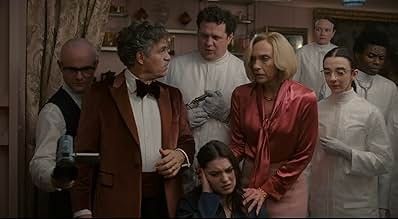
Kenneth Marshall and his wife Ylfa remain unaware initially. They are busy preparing the colony’s political future and attempting to establish their preferred version of human civilization. Marshall presents himself as a historic leader chosen to save humanity from cultural decline. His speeches combine religious language, nationalism, business branding, and personal resentment. Ylfa protects the image. She manages social performance, food rituals, and the emotional atmosphere around her husband.
The colony’s food supplies are limited, making every meal politically significant. Ylfa’s obsession with sauces becomes a running joke and a sign of privilege inside scarcity. While the Mickeys hide, conflict grows between the humans and the Creepers. Marshall views the native species as disgusting obstacles to colonization. He wants the planet cleared before the creatures can challenge human settlement. Mickey 17’s earlier survival suggests the Creepers are intelligent and capable of mercy. The humans misinterpret unfamiliar communication as animal noise. Their first assumption is that difference indicates inferiority.
The crisis intensifies when a young Creeper is captured. Marshall sees the creature as an opportunity for public experimentation and extermination research. Mickey’s experience gives him reason to believe that harming it may provoke a larger conflict. The two Mickeys eventually become impossible to conceal. Their existence threatens Marshall’s authority because it proves the printing system can create legal and philosophical situations his rules cannot manage. Marshall orders a brutal solution rather than admitting uncertainty.
The final act brings the colony outside, where the humans confront a vast group of Creepers. Marshall attempts to turn the event into a heroic public performance while preparing weapons capable of mass destruction. Mickey and Nasha work to understand the creatures’ intentions and return the captured young. The conflict is resolved not by proving humanity stronger but by recognizing that the supposedly primitive species has its own intelligence, social bonds, and grief. The Mickeys also confront the question of which version deserves to continue. The answer carries genuine emotional weight because the film has established that neither is disposable simply because another body exists. The colony survives, but Marshall’s political project does not remain intact. The printing system is challenged, Mickey’s legal identity changes, and the humans are forced to reconsider the society they intended to build.
Mickey 17: Survival Through Submission
Robert Pattinson gives Mickey 17 a high, uncertain voice and a physical posture that appears permanently prepared for apology. He walks into rooms as though expecting to be told he has made a mistake. Even when he has done nothing wrong, he behaves like someone attempting to minimize inconvenience. This performance is funny initially. Pattinson stretches words, reacts with awkward confusion, and gives Mickey a strange social rhythm. The humor gradually becomes sadder. Mickey has learned that appearing harmless is his safest form of resistance. Every death confirms that his employers see the current body as temporary. Complaining seems pointless when the system can print someone expected to cooperate more easily. Mickey’s passivity is therefore not simple cowardice. It is an adaptation to institutional power.
He knows the colony controls his food, medical access, memory backup, legal status, and physical continuation. His relationship with Nasha provides one place where he is treated as a person rather than a resource. Even there, Mickey struggles to believe that he deserves clear boundaries or exclusive emotional consideration. The arrival of Mickey 18 forces him to see the anger he has avoided. Mickey 17 dislikes the other version partly because Mickey 18 behaves in ways he secretly wishes he could. He speaks directly, rejects orders, and refuses to treat repeated death as a reasonable workplace expectation. Yet Mickey 18’s aggression creates new danger. Anger without restraint can reproduce the same disregard for other lives that created the Expendable system. Mickey 17’s development involves finding a position between submission and uncontrolled retaliation. He does not need to become the harsher Mickey. He needs to understand that gentleness does not require accepting dehumanization.
Mickey 18: The Same Memories Produce a Different Man
Pattinson makes Mickey 18 immediately distinguishable without relying on costume or visual effects. His voice is lower, his movement more direct, and his facial expressions openly hostile. He occupies space as though every room must prove it deserves him. The difference raises one of the film’s most interesting questions. If both Mickeys share nearly all the same memories, why are their personalities not identical? The movie suggests that embodiment, circumstance, and immediate experience matter alongside recorded memory. Mickey 18 wakes into a world where another version is already alive. His first experience is therefore not continuity but competition. He knows the colony will destroy one or both of them if the truth is discovered. That pressure intensifies characteristics Mickey 17 has suppressed. Mickey 18 is not an evil duplicate. The screenplay avoids the simplest version of that idea. He is more willing to use violence, but his anger has legitimate foundations. He understands the absurdity of a system that calls one human illegal because a printer produced the next body too early.
His contempt for Mickey 17 can become cruel. He interprets caution as weakness and struggles to respect the survival strategy that kept their earlier versions alive. The two Mickeys gradually recognize that they are neither one person nor complete strangers. They share history but begin creating different experiences from the moment both exist. Their relationship gives the film an unusual emotional center. It resembles sibling rivalry, self-hatred, and political disagreement occurring between two bodies carrying the same childhood.
Nasha Barridge: Love Without a Simple Ownership Rule
Naomi Ackie gives Nasha confidence, warmth, sexual directness, and enough practical intelligence to prevent her from becoming only Mickey’s emotional shelter. Nasha is one of the few people aboard the colony who responds to Mickey’s humanity consistently. She sees the repeated bodies but does not treat each version as a disposable replacement. Her reaction to Mickey 18 is deliberately provocative. She does not accept the colony’s rule that only one version can count as the legitimate partner. This creates comic and romantic discomfort, but it also asks whether love belongs to one body, one memory line, or a continuing legal identity. Nasha is attracted to qualities shared by both Mickeys and differences emerging between them. The film does not resolve every implication cleanly. Consent, jealousy, exclusivity, and personal identity become complicated quickly. Some scenes use the situation for broad humor when more emotional precision would help. Ackie keeps Nasha grounded by making her protective without becoming blindly agreeable. She challenges both Mickeys and recognizes when their conflict threatens more than their relationship.
Nasha also becomes essential during the confrontation with the Creepers. Her willingness to treat them as intelligent beings separates her from Marshall’s colonial mentality. The character could have received more history outside Mickey. We learn enough to understand her loyalty but less about why she joined the expedition or what kind of society she hoped to build. Even with that limitation, Nasha remains one of the film’s strongest figures because she refuses every system that reduces a person to function.
Kenneth Marshall: An Insecure Dictator Performing Historical Greatness
Mark Ruffalo gives Kenneth Marshall an exaggerated voice, stiff gestures, artificial smiles, and the unstable rhythm of a man constantly checking whether the room still admires him. The performance is intentionally broad. Marshall is not presented as a subtle politician hiding authoritarian beliefs beneath perfect professionalism. He is visibly ridiculous, and people follow him anyway. That is the joke and the warning. Marshall has failed in earlier political ambitions, but the colony gives him a closed environment in which he can design power without democratic inconvenience.
He presents the expedition as a moral mission. Humanity will occupy a new world, restore proper values, and begin again under his leadership. His language combines religious destiny with corporate management. Workers become followers, colonization becomes purification, and personal loyalty becomes proof of moral worth. Ruffalo’s comic choices make Marshall entertaining, though they also create one of the movie’s most divisive elements. The character is so exaggerated that his followers can appear foolish for taking him seriously.
Bong’s point seems to be that absurdity does not prevent authoritarianism. A leader can look ridiculous and remain dangerous when institutions, fear, and ambition protect him. Marshall’s treatment of Mickey reveals his worldview clearly. The Expendable is valuable only because he can be replaced. The Creepers receive even less consideration. Marshall assumes the planet belongs to humanity because humans arrived with technology and weapons. He wants to become history’s heroic founder but lacks the curiosity required to understand the place he intends to rule.
Ylfa: Privilege Expressed Through Appetite
Toni Collette plays Ylfa as both devoted spouse and active architect of Marshall’s public image. She is not simply standing beside him. She helps transform insecurity into ritual and personal preference into social expectation. Her obsession with food, particularly sauces, is one of the film’s strangest running jokes. Inside a colony where resources are limited, Ylfa treats flavor as a symbol of civilization and status. She can demand culinary variety because other people absorb the scarcity. Collette performs the role with complete seriousness. Ylfa discusses absurd concerns as though the survival of human culture depends on them. The character represents privilege in a closed system. She rarely needs to issue direct threats because proximity to Marshall gives every preference political force.
Her marriage also reveals the private structure beneath his public authority. She flatters, manages, and occasionally redirects him. Ylfa is underdeveloped compared with the satirical potential of the role. Her beliefs and background remain secondary to her function as Marshall’s partner. Still, Collette makes every appearance memorable through precise physical and vocal choices.
Timo: Friendship Eroded by Self-Preservation
Steven Yeun plays Timo, Mickey’s former business partner and supposed friend. Timo joins the expedition for reasons similar to Mickey’s, but he secures a more desirable role. He benefits from Mickey becoming the Expendable because the arrangement places someone else beneath him. Their relationship exposes how exploitative systems recruit ordinary people into maintaining cruelty. Timo does not design the printing technology or write the rules. He simply learns that Mickey’s vulnerability can improve his own position. When Mickey falls into the Creeper opening, Timo takes his equipment and leaves rather than attempting a rescue. He assumes another Mickey will be printed, allowing technology to become an excuse for abandonment.
Yeun gives Timo charm and selfish calculation. He behaves like someone who still wants to be considered a friend while refusing every obligation friendship creates. The character occasionally disappears for long stretches, weakening the potential conflict between him and Mickey. A more focused version of the film might have used Timo to examine how personal betrayal becomes normalized inside competitive labor.
The Creepers: The “Alien Threat” That Understands Community Better Than Humans
The Creepers are introduced through fear. They are large, unfamiliar, and hidden beneath the ice of Niflheim. Their appearance encourages the humans to classify them as pests or monsters before meaningful contact occurs. Mickey’s survival provides the first contradiction. The creatures could have harmed him easily but instead return him to the surface. Their behavior suggests intelligence, communication, family organization, and a clear understanding of exchange. The humans fail to recognize these signs because acknowledging them would complicate colonization. If Niflheim already contains intelligent life, Marshall cannot present occupation as the transformation of an empty world.
The captured young Creeper becomes the center of this moral conflict. Marshall sees a specimen. The larger group sees a member of its community. The film’s colonial satire is not subtle. Human settlers arrive, rename the native creatures, misunderstand their language, claim territory, and prepare extermination when resistance appears possible. The Creepers ultimately display more restraint than the humans. Their strength could destroy the colony, yet their objective is connected with protection and recovery rather than conquest.
Their design combines mammalian warmth, insect-like movement, and enormous scale. They need to appear strange enough for fear to be understandable while expressive enough for empathy to develop. The balance mostly works, though their society remains simplified. They function thematically more than culturally. I wanted more detail about how they communicate, organize, and experience the human arrival.
Labor, Printing, and the Price of a Replaceable Body
The Expendable program is the film’s sharpest satirical concept. Mickey’s employers claim death is temporary because the body can be printed again. This allows them to redefine lethal work as inconvenience. The new Mickey remembers previous experiences only up to the latest backup. Every death therefore creates a possible gap in continuity. The technology does not remove mortality. It industrializes a particular version of survival. Pain still occurs. Fear still exists. The dying Mickey experiences an ending even when another body later wakes with related memories. The colony ignores this distinction because the system is economically useful. Mickey can test diseases and chemicals without risking a more valued crew member. His repeated return turns sacrifice into job description. This reflects a familiar labor pattern. When organizations can replace workers easily, safety becomes a cost rather than a moral duty. The film exaggerates the logic through cloning, but the emotional structure remains recognizable.
Mickey’s mistake is signing the contract without understanding it. The colony then treats consent given once as permanent permission for unlimited harm. No later fear, objection, or change of mind matters. The existence of Mickey 17 and Mickey 18 breaks the system because both versions make equal claims to continuity. The colony’s rule against multiples is less about philosophy than administrative control. The institution requires one legal unit called Mickey so it can assign ownership and responsibility cleanly. Two living versions reveal that identity cannot be managed like equipment inventory.
Visual Style & Production Design: A Frozen Colony Built to Feel Temporary
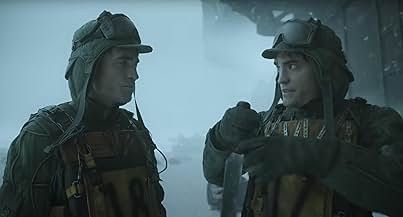
Darius Khondji’s cinematography gives Niflheim a cold, colorless physicality. White landscapes, dark openings, industrial vehicles, and severe weather make the planet feel hostile before the Creepers do anything. The human colony is crowded, metallic, and functional. Corridors, printing rooms, laboratories, kitchens, and sleeping spaces communicate an expedition more interested in survival than comfort.
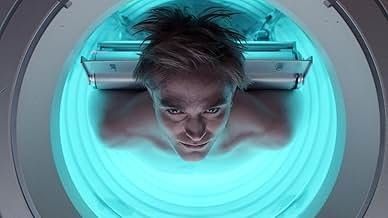
The printing technology is deliberately physical. Bodies emerge through an unpleasant industrial process rather than clean futuristic magic. This choice prevents Mickey’s return from feeling spiritual or beautiful. Human creation has been reduced to manufacturing. The machinery surrounding the process also emphasizes ownership. Mickey does not control when he is printed, what memories are restored, or how the body is handled. Marshall’s private spaces provide contrast. His surroundings contain greater visual ceremony and personal detail. The difference between leadership and workers is visible even before the film discusses political hierarchy.
The Creeper environments are more organic. Ice tunnels, darkness, bodies, and collective movement create a living system beneath the colony’s rigid surfaces. Some visual effects vary in quality. Wide shots of the creatures are impressive, while certain close interactions feel lighter and less physically grounded. The film’s production design remains stronger than its occasional digital limitations. Every environment communicates who controls resources and who is expected to endure discomfort.
Music & Sound: Comedy and Dread Sharing the Same Corridor
Jung Jae-il’s score moves between unsettling orchestral writing, dark comedy, large-scale science fiction, and emotional restraint. The music rarely treats Mickey’s deaths as purely heroic. Several sequences use uncomfortable rhythm or absurd energy, reinforcing the routine nature of the violence. Marshall’s public appearances receive a sense of artificial ceremony. The music supports his desire to transform every event into political theatre. Niflheim’s exterior scenes use sound to communicate scale. Wind, machinery, distant creatures, and ice create an environment where the human colony feels small despite its technological confidence. The printing process has a wet, mechanical sonic identity that makes each new body feel manufactured rather than reborn.
Pattinson’s two voices become part of the sound design. Mickey 17’s uncertain delivery and Mickey 18’s lower aggression allow the audience to identify them even before visual context becomes clear. The score is effective but less immediately memorable than Jung Jae-il’s work in Parasite. It serves the tonal complexity rather than producing one dominant theme.
Direction & Pacing: Bong Joon Ho Refuses to Choose One Genre
Mickey 17 shifts between workplace comedy, science-fiction thriller, political satire, creature feature, romance, body horror, and philosophical drama. Bong Joon Ho has often combined genres, using tonal change to reveal connections between systems and characters. Here, the transitions are sometimes thrilling and sometimes unstable. The early section is the strongest. Mickey’s recruitment, repeated deaths, relationship with Nasha, and accidental duplication establish the world efficiently. The central conflict between Mickey 17 and Mickey 18 contains excellent performance work but occasionally repeats itself. They argue about survival, Nasha, and legitimacy several times before the external crisis forces a decision.
Marshall’s satire also competes with Mickey’s identity story. Both deserve attention, yet the film frequently interrupts one to return to the other. The Creeper conflict gives the final act clear urgency while connecting personal disposability with colonial violence. Marshall considers Mickey replaceable and the native species removable for the same reason: neither fits the hierarchy he wants to build. Bong’s direction is strongest when visual comedy and cruelty occupy the same scene. Workers may discuss a death casually while the audience still recognizes its horror. The weakest moments explain political ideas already visible through behavior. The film does not lack intelligence. It occasionally lacks trust that the satire has landed.
Themes & Emotional Meaning: A Copy Is Still Someone
Mickey 17 asks what makes a person continuous. Is Mickey Barnes defined by one biological body, a collection of stored memories, legal paperwork, relationships, or the subjective experience of waking and believing he is himself? The movie refuses one simple answer.
Mickey 17 and Mickey 18 share history but become different immediately because each begins occupying a different position. One is the surviving version whose existence was assumed to have ended. The other is the newly printed version expecting to inherit the identity without competition. Neither is less human. The colony’s desire to identify one original reveals its need for administrative simplicity. Moral complexity threatens systems built around ownership. The film also examines how people internalize disposability. Mickey 17 speaks about his deaths with resignation because accepting the role feels easier than confronting how thoroughly he has been exploited. Mickey 18 reacts through rage because he refuses the emotional survival strategy used by the earlier version. Both responses emerge from the same history.
Colonialism provides the larger version of this conflict. Marshall decides the Creepers do not count as meaningful life because recognizing their value would limit human ambition. He uses the same logic on workers. Value depends on usefulness to his project. Empathy becomes politically disruptive. Nasha and Mickey threaten Marshall not only by resisting orders but by recognizing life where he sees material. The film also criticizes charismatic leadership. Marshall’s incompetence does not prevent him from gaining power. His followers convert personal absurdity into ideology because his project gives them identity, hierarchy, and promised belonging.
Critical Reception & Commercial Response: Admired More Than Universally Embraced
Mickey 17 received generally positive but divided critical reactions. Reviewers frequently praised Robert Pattinson’s dual performance, Bong Joon Ho’s social satire, the production design, and the film’s willingness to combine comedy with disturbing ideas. Other critics considered it overstuffed, tonally uneven, and less focused than Bong’s strongest work.
The film opened at number one in North America with approximately $19 million. Its theatrical performance was modest relative to its reported production and marketing costs, and Warner Bros. Discovery later acknowledged that it did not become a major financial success.
That commercial result is understandable. Mickey 17 is an expensive science-fiction film without the simple structure of a conventional franchise adventure.
Its protagonist is passive for much of the story, its political satire is intentionally uncomfortable, and its violence is mixed with comedy in ways likely to divide audiences.
The film may gain a stronger reputation over time. Its ideas about disposable labor, manufactured identity, authoritarian performance, and colonial entitlement are likely to remain relevant beyond its theatrical moment.
Verdict: Death Is Temporary, but Exploitation Remains Very Much Alive
Mickey 17 is an ambitious, funny, disturbing science-fiction satire that treats human duplication as both philosophical crisis and administrative inconvenience.
Robert Pattinson gives one of his most playful performances. Mickey 17 survives through nervous cooperation, while Mickey 18 responds to the same history with aggression.
Watching them occupy one room makes the film’s central idea immediate: memory may create continuity, but experience begins producing difference at once. Naomi Ackie gives Nasha enough confidence to reject the colony’s simplistic definition of authenticity. Steven Yeun makes Timo an effective portrait of friendship weakened by self-interest.
Toni Collette turns privilege into domestic ritual, while Mark Ruffalo creates a ridiculous leader whose insecurity becomes dangerous because an entire institution agrees to protect it.
Bong Joon Ho’s direction is not as precise as it was in Parasite. Mickey 17 contains too many targets and occasionally explains what its strongest images already communicate. The film remains unmistakably his work. Machines turn bodies into products, architecture separates power from labor, and comedy exposes violence rather than making it harmless.
The Creepers provide a clear moral challenge to the colony. The humans arrive believing intelligence, territory, and survival belong to whichever species possesses the better weapons. Mickey understands the flaw because he has lived under the same logic. His employers also decided that usefulness determined whether his pain mattered.
I recommend Mickey 17 to adult science-fiction viewers, Robert Pattinson fans, Bong Joon Ho followers, and audiences interested in stories about cloning, labor, identity, authoritarianism, and colonial power. Viewers expecting a conventional space adventure may find its pacing irregular and its political comedy too broad.
Personal rating: 8.5/10.
Mickey 17 earns that score for Robert Pattinson’s excellent dual performance, Bong Joon Ho’s dark labor satire, Naomi Ackie’s grounded work, the disturbing printing concept, and a creature conflict built around empathy rather than conquest. It loses points for an overcrowded narrative, repetitive middle section, lightly developed supporting characters, inconsistent effects, and satire that occasionally trades precision for volume.
Mickey’s employers believe printing another body makes the previous life expendable. The film’s answer is much less convenient: every version feels the pain, every version wants to continue, and no technology can make cruelty morally efficient.
Pros

- Innovative narrative structure that challenges conventional storytelling
- Stunning visual effects and set design create an immersive viewing experience
- Deep character development that resonates on an emotional level
- Thoughtful sound design and musical score enhance the cinematic atmosphere
- Fusion of modern technology with traditional filmmaking craft enriches the aesthetic
- Intricate symbolic imagery and allegorical themes invite deep reflection
Cons

- Non-linear plot can cause confusion for some viewers
- The pacing occasionally feels uneven
- Minimal dialogue may not satisfy all audience preferences

Leave a comment
Your comment is awaiting moderation. We save your draft here
0 Comments