







Introduction & First Impressions: A Penthouse Visit With No Peaceful Exit
My first attempt at PAYDAY 2: Mountain Master Heist began with the confidence of someone who had already completed dozens of jobs. I checked the available routes, studied the guards, moved carefully through the lower part of the building, and convinced myself that the penthouse above would be another controlled operation. Several minutes later, an alarm was screaming, security forces were filling the corridors, and my crew was fighting through an expensive San Francisco residence that now looked like a construction site after a small war. This PAYDAY 2: Mountain Master Heist review is built around that contrast: the fantasy of a precise assassination and the reality of a loud, violent climb toward a heavily protected target.
Mountain Master was released on March 9, 2022, as paid downloadable content for PAYDAY 2. It requires the base game and serves as the finale of the City of Gold campaign. The contract sends the Payday Gang after Yufu Wang, leader of the Golden Dagger Triad, inside his penthouse apartment in San Francisco. Shayu wants Wang removed so she can take control of the organisation and settle her conflict with the gang.
The setup gives the heist more personal energy than a simple robbery. I am not entering the building only to steal valuables. The central objective is revenge and elimination. Previous City of Gold jobs established the gang’s conflict with the triad through stolen artefacts, Vlad’s rescue, and the destruction of a profitable floating casino operation. Mountain Master turns that continuing rivalry into a direct attack on the person at the top.
That sense of finality shapes the atmosphere. The penthouse is luxurious, elevated, and heavily defended. It feels like the private fortress of someone who knows enemies are coming. Guards, cameras, locked spaces, security systems, and physical barriers create the impression that Wang has prepared for retaliation.
Yet the heist never feels completely serious. PAYDAY 2’s familiar mixture of criminal fantasy, exaggerated enemies, frantic police assaults, awkward object interaction, and crew banter remains present. The location may be stylish, but the operation can still collapse because someone answers a pager too slowly or walks through the wrong doorway at the wrong moment.
Mountain Master supports both quiet and loud approaches. The official launch description explicitly allows players to sneak through the lobby and reach the penthouse before Yufu expects an attack, or enter aggressively and announce their arrival through gunfire. That flexibility is essential because the two approaches produce very different versions of the same space.
My stealth attempts felt tense and investigative. My loud runs felt like a vertical siege. Both routes had memorable moments, though neither was free from the older mechanical frustrations that still define PAYDAY 2.
Core Gameplay & Mechanics: From Lobby Infiltration to Penthouse Warfare
Mountain Master follows the broad PAYDAY 2 structure of entering a secured environment, completing several connected objectives, managing guards or police pressure, and escaping after the main contract is complete. What makes it distinctive is the way the heist uses vertical movement and changing levels of security.
The operation begins below Yufu Wang’s private penthouse. Reaching him requires navigating the building rather than appearing directly inside the final combat space. This creates a useful sense of progression. I am moving upward toward a protected target, and each completed objective feels like another layer of defence being removed.
In stealth, the early sections require patience. Guards follow routes through compact spaces, cameras cover important angles, and civilians can create unexpected risks. The size of the location works both for and against the player. Short distances make it possible to move quickly between objectives, but they also mean a guard can arrive before I have enough time to hide evidence or answer a pager safely.
PAYDAY 2’s detection system remains central. Guards and civilians gradually recognise suspicious behaviour, exposed weapons, broken cameras, bodies, or masked criminals. The interface provides warning indicators, but the speed of detection depends on difficulty, equipment, skills, distance, and visibility.
I found the penthouse setting particularly effective for stealth because expensive interiors create a false sense of openness. Large windows and attractive rooms suggest freedom, yet safe routes are narrow. A guard turning around near a doorway can close the only practical path forward.
The heist rewards familiarity. During my first quiet attempt, I spent too much time hesitating because I did not know which rooms connected or where guards might stop. On later runs, understanding the layout allowed me to move with greater confidence. I learned where I could wait safely, which corners offered visual cover, and how long certain objectives were likely to leave me exposed.
This improvement gives the mission replay value. A successful stealth completion is not based only on mechanical skill. It also reflects accumulated knowledge of the map.
However, randomised details and unpredictable AI behaviour prevent the process from becoming completely reliable. A guard can pause in an inconvenient position, take a slightly different route, or discover evidence at the worst possible moment. Some players will appreciate that uncertainty. Others will feel that a careful plan has been disrupted by an inconsistent system.
Pager management remains one of the most restrictive elements. Eliminating a guard creates an immediate responsibility: answer the pager, control the area, and ensure another guard does not arrive during the interaction. This mechanic discourages simply clearing the building, but it also makes certain stealth failures feel mechanical rather than dramatic.
The first specific annoyance is the interaction system. PAYDAY 2 often requires me to hold a button while completing an action, and Mountain Master includes moments where doing so leaves the player exposed. Starting an interaction a fraction too early or facing an object from an incorrect angle can waste valuable time. In stealth, that delay may be enough for a guard to enter the room.
If the alarm activates, the heist changes sharply. Security forces begin attacking the building while the crew continues working toward Yufu Wang. Corridors, stairs, doorways, and rooms become defensive positions. Enemies approach from several directions, forcing the team to split attention between objectives and survival.
The penthouse is visually open but tactically restrictive. Large rooms contain furniture and decorative objects, yet movement often funnels through a limited number of entrances. This can be useful when holding a position, but dangerous when specialised enemies enter from multiple routes.
PAYDAY 2’s enemy roster gives loud runs their familiar rhythm. Regular units apply constant pressure, shields disrupt direct fire, snipers punish exposure, Tasers interrupt movement, Cloakers attack isolated players, and heavily armoured Bulldozers demand concentrated damage. Mountain Master does not reinvent these opponents, but its layout changes how threatening they feel.
Snipers are particularly irritating because the penthouse has exterior views and exposed areas. A beautiful skyline becomes a source of danger once distant enemies begin targeting the crew. Moving between cover and objectives requires more care than the game’s fast combat initially suggests.
Cloakers are dangerous in enclosed corridors because they can reach the player quickly and may be difficult to identify during a crowded assault. Bulldozers create the opposite problem: they occupy space, absorb ammunition, and block routes that the crew may need immediately.
The gunplay remains direct and flexible. PAYDAY 2 supports an enormous range of weapons, modifications, armour choices, deployables, perk decks, and skill combinations. A player can build around assault rifles, shotguns, sniper rifles, explosives, dodge, armour, health recovery, critical hits, or team support.
Mountain Master benefits from this build variety. Close-range weapons are effective inside the building, while accurate rifles help with enemies positioned across open areas. Ammunition efficiency matters because prolonged assaults can drain resources quickly.
Crew composition affects the experience substantially. A coordinated team can divide responsibilities: one player handles objectives, another controls a chokepoint, a third watches exterior threats, and a fourth supports damaged teammates. A disorganised group can become trapped because everyone follows the same objective marker and leaves another entrance undefended.
Solo play with AI teammates is possible, but it exposes the limitations of their behaviour. Bots are useful for reviving the player, absorbing enemy attention, and contributing firepower. They are much less reliable when an objective requires careful positioning or when the map creates several separate areas of pressure.
The second major annoyance is objective communication. PAYDAY 2 veterans usually understand how to follow voice instructions and markers, but Mountain Master occasionally asks players to search or interact without making every required step immediately obvious. This can create confusion during a loud assault when there is little time to study the environment.
The confrontation with Yufu Wang gives the heist a more focused ending than a simple escape after securing loot. He is not treated as an ordinary civilian waiting to be controlled. The entire contract builds toward removing him and destroying the remaining power of the Golden Dagger Triad. Official descriptions frame this as the final effort to end Wang’s operation.
The finale works because it gives the violence a narrative target. PAYDAY 2 often turns large criminal operations into sequences of drills, bags, switches, and waiting periods. Mountain Master still contains objective interactions, but the presence of a named enemy provides stronger motivation.
Replayability comes from difficulty levels, stealth and loud routes, achievements, crew composition, and the possibility of collecting optional valuables. One official challenge connects Mountain Master with the other City of Gold heists through hidden tea sets. Stealing the sets from all four jobs unlocks the Laohu Dashi outfit and its variations, and the achievement can be completed without every participant personally owning each heist.
That cross-heist reward is a smart way to make Mountain Master feel like a campaign finale rather than an isolated level. It gives returning players a reason to revisit earlier contracts and reinforces the shared theme.
Graphics, Audio, and Technical Performance: Luxury Above the San Francisco Skyline
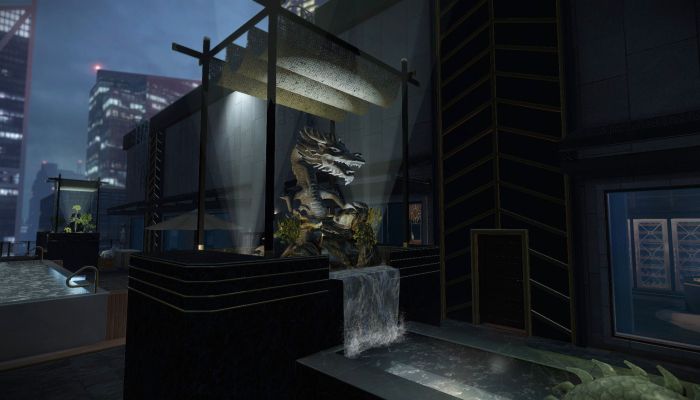
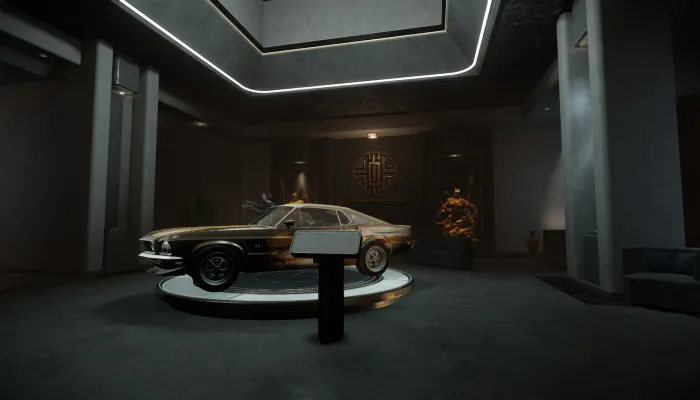
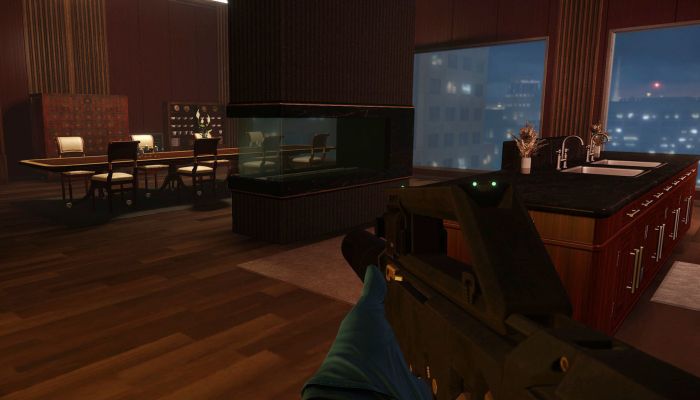
Mountain Master’s greatest visual strength is its location. A high-rise penthouse allows the artists to contrast wealthy interiors with a broad city view. Polished floors, expensive decoration, private rooms, security areas, terraces, and large windows create an environment that feels more personal than a generic warehouse or bank.
The penthouse communicates Yufu Wang’s status without requiring a lengthy cutscene. The building is not merely secure; it is designed to project wealth and control. That makes the inevitable destruction more satisfying. Gunfire breaks the visual order, bodies block decorated corridors, and police assaults transform luxury into a battlefield.
The exterior skyline provides a strong sense of elevation. Looking through the windows reminds me that the operation is happening far above the street. This also makes exposed areas feel dangerous because the openness contrasts with the protected interior.
Lighting helps separate the mission from darker industrial heists. Rooms are bright enough for stealth players to read guard movement, while reflective surfaces and decorative lighting strengthen the upscale atmosphere. The visual design is functional as well as thematic.
The limitations come from PAYDAY 2’s age and Diesel engine. Character animation, object interaction, facial detail, and environmental geometry can look dated. Furniture and decorative items do not always respond naturally to combat, and some surfaces lack the detail expected from newer cooperative shooters.
The Diesel engine has always produced a distinctive mixture of efficient action and technical awkwardness. Mountain Master inherits that identity. Enemies may move stiffly through doorways, bodies can settle in strange positions, and collision behaviour is not always convincing.
Visual clarity during loud play can also suffer. Muzzle flashes, smoke, enemy outlines, damage effects, objective markers, and crowded interiors compete for attention. The penthouse is attractive when quiet but can become visually noisy once a full assault begins.
The soundtrack is one of the mission’s strongest presentation elements. PAYDAY 2’s music system responds to different phases of a heist, shifting between quieter anticipation, increased tension, and full assault. Mountain Master’s track supports the City of Gold setting while still delivering the aggressive momentum expected during combat.
I found the transition from stealth tension to loud music especially effective. The alarm does not simply change enemy behaviour. It changes the entire emotional character of the job. What had been a cautious infiltration becomes a desperate attack against escalating resistance.
Weapon audio remains forceful. Shotguns have satisfying impact, automatic weapons build pressure during sustained fire, and enemy voices communicate both threats and assault intensity. Cloaker cues and other specialised enemy sounds remain important because recognising them can prevent a sudden incapacitation.
Voice guidance provides narrative direction, but repeated lines become obvious after several attempts. A failed stealth run often means restarting and hearing the same instructions again. This is a normal problem in replayable heists, though it becomes more noticeable when working toward achievements.
Performance depends on the base game, hardware, active mods, graphical settings, and the number of enemies present. The DLC lists the same modest minimum requirements as PAYDAY 2, including a dual-core processor, 4 GB of memory, and a DirectX 9-compatible graphics card, although modern operating-system support and practical performance expectations are higher than those old minimum specifications suggest.
Mountain Master is not the largest PAYDAY 2 map, but loud assaults can still stress the engine. Large enemy groups, corpses, particles, and simultaneous effects may cause frame-rate instability. This is particularly frustrating when a brief performance drop affects aiming during a difficult assault.
Network quality matters as well. PAYDAY 2 is built around cooperative hosting, and latency can influence enemy movement, hit registration, interaction timing, and the perceived position of teammates. A strong crew on a stable connection offers the best experience.
Mods introduce another variable. PAYDAY 2 has a substantial modding community, but outdated modifications may conflict with updates or cause crashes. Mountain Master itself is generally functional, yet a heavily modified installation can make it difficult to identify whether a technical problem comes from the DLC, the base game, or third-party files.
As of July 2026, PAYDAY 2 is also receiving an engine-upgrade open beta, demonstrating that Starbreeze continues to make technical changes to the game years after Mountain Master’s release. That does not retroactively modernise every part of the heist, but it confirms that the base platform remains under active attention.
Monetization & Ads: A Paid Contract Inside a DLC-Heavy Game
Mountain Master Heist is paid DLC. It requires the Steam version of PAYDAY 2 and was listed at a standard price of $4.99 before temporary discounts. The heist can also be purchased through bundles such as the Mountain Master Bundle, City of Gold Collection, or the wider Infamous Collection. Prices and discounts may change over time.
The DLC provides the contract rather than weapons, outfits, or gloves from the related packs. The Golden Dagger Tailor Pack was released alongside Mountain Master but remains a separate cosmetic purchase containing two outfits with variations, four masks, and four pairs of gloves.
This separation can be annoying. The heist and its matching cosmetic theme were launched together, yet purchasing the level does not automatically provide the complete visual collection. Players interested only in gameplay can ignore the Tailor Pack, but completionists may feel pushed toward a bundle.
Mountain Master is not pay-to-win in the usual sense. Owning the heist does not automatically make a player stronger. Build power comes from the broader PAYDAY 2 ecosystem of weapons, skills, perk decks, modifications, and other DLC packs.
However, PAYDAY 2’s huge catalogue complicates the value discussion. The Mountain Master page currently sits within a library containing dozens of purchasable heists, weapon packs, cosmetic packs, and collections. For a new player, understanding which content is important can be exhausting.
The good news is that only the host needs to own a paid heist for other players to join the contract through that lobby. This makes PAYDAY 2’s map DLC more group-friendly than content that locks every participant out individually. A player can experience Mountain Master with a friend who owns it before deciding whether to purchase it personally.
The heist includes no traditional advertisements. There are no commercial breaks, reward videos, energy timers, or mobile-style currency prompts during play. The purchase gives access to the contract, and the game does not charge per attempt.
The value depends on replay habits. A player who completes Mountain Master once on normal difficulty may find the price difficult to justify. A crew that explores stealth, loud tactics, high difficulties, achievements, challenge runs, and different builds can receive much more value from the same map.
The current Steam user reception is mixed. At the time checked, roughly two-thirds of approximately 180 reviews were positive. That does not prove the heist is poor, but it suggests that players disagree about its quality and value compared with PAYDAY 2’s strongest DLC contracts.
I understand that divided response. Mountain Master is visually distinctive and narratively important, yet it does not offer the scale or mechanical novelty of the series’ most ambitious heists. Much of the experience depends on familiar PAYDAY 2 systems operating inside a new location.
Who Should Play This? A Contract for Established Heisters
Mountain Master is designed primarily for existing PAYDAY 2 players. It assumes familiarity with detection, pagers, assault waves, specialised enemies, deployables, skills, equipment, and cooperative roles. A newcomer can technically join, but the heist is not the best introduction to the game.
Fans of the City of Gold campaign are the clearest audience. Mountain Master completes the conflict with Yufu Wang and the Golden Dagger Triad, giving narrative closure to the campaign’s sequence of Asian connections, criminal rivalries, and high-value operations.
Stealth players should enjoy learning the building, tracking guard routes, and refining a reliable infiltration path. The penthouse rewards map knowledge and patient observation. It is satisfying to reach Wang without triggering the large battle waiting behind a failed detection check.
Loud players receive a concentrated combat environment with vertical movement, interior chokepoints, exterior threats, and an aggressive final target. Builds focused on close-range control, armour, ammunition sustainability, or team support can perform well.
Coordinated crews will get more from the heist than random groups. Communication helps with pagers, guard management, objective division, equipment placement, and defensive positioning. Mountain Master can become frustrating when every player responds to the same threat while another area remains exposed.
Achievement hunters and campaign completionists also have a reason to play. The City of Gold tea-set challenge connects Mountain Master to the earlier heists and unlocks a themed outfit with four variants.
Players who prefer large, multi-stage heists may be less impressed. Mountain Master has a focused setting and clear narrative purpose, but it does not provide the sprawling scale associated with PAYDAY 2 contracts that move through multiple major locations.
Solo players should approach with reasonable expectations. AI teammates provide combat assistance but cannot replace human coordination. Stealth is often effectively a solo activity even when bots are present, while loud play may require the player to handle most important objectives personally.
Anyone tired of PAYDAY 2’s basic systems will not be converted by this DLC. Drills, interaction timers, waves of law enforcement, occasional AI problems, and Diesel-engine roughness remain central. Mountain Master rearranges those components rather than replacing them.
The heist is also a questionable purchase for players with no interest in replaying missions. Its value grows through repeated attempts. Learning the layout, testing both approaches, increasing the difficulty, and completing optional goals reveal more of the design than one successful run.
Final Verdict: A Stylish Final Strike Against the Golden Dagger Triad
PAYDAY 2: Mountain Master Heist is an effective ending to the City of Gold campaign. It takes the gang directly to Yufu Wang, moves the action into his protected penthouse, and gives players the choice between a controlled infiltration and a loud assault.
I enjoyed the sense of climbing toward a target who had prepared for the gang’s arrival. The penthouse feels like a destination rather than a random contract location. Its luxury, security, verticality, and exposure create a distinctive battlefield.
Stealth is satisfying once the layout becomes familiar. Each successful movement through the building feels earned, especially when guards pass only a few metres away. Reaching the upper area without an alarm provides the controlled criminal fantasy that PAYDAY 2 performs so well.
Loud play offers the opposite pleasure. The building becomes a defensive puzzle filled with pressure from corridors, windows, exterior positions, and specialised enemies. A coordinated team can create order within the chaos, while a weak team may lose control quickly.
The heist’s greatest limitation is familiarity. Mountain Master does not redefine PAYDAY 2. It uses the game’s established mechanics in a strong new environment. Players exhausted by those mechanics will still notice the same interaction delays, AI weaknesses, repeated assault structure, and technical roughness.
The price is reasonable for players who replay heists, pursue achievements, raise the difficulty, or complete the City of Gold storyline. It is less attractive for someone planning one casual completion. Purchasing it through a discounted collection may offer better value than buying it alone, particularly for players missing the rest of the campaign.
I recommend Mountain Master to established PAYDAY 2 crews, stealth enthusiasts, City of Gold followers, and players who enjoy compact maps with both infiltration and combat routes. Newcomers should learn the base game through earlier contracts before confronting Wang’s penthouse.
Personal rating: 8/10.
Mountain Master earns that rating for its memorable location, flexible approach, campaign significance, tense stealth route, focused loud combat, and replayable challenge structure. It loses points for limited mechanical novelty, unclear moments, ageing AI, performance issues during busy assaults, and its position within a heavily fragmented DLC catalogue.
It may not be PAYDAY 2’s largest or most inventive contract, but it gives Yufu Wang and the Golden Dagger Triad an appropriately destructive farewell.
Pros

- Immersive storyline integrated with intricate heist planning
- Stunning visuals that bring rugged alpine landscapes to life
- Robust cooperative gameplay that rewards team coordination
- High level of customization through mods and community content
- Efficient download and installation process across various platforms
- Great replayability with variable mission outcomes and dynamic challenges
Cons

- High system requirements may limit performance on lower-end devices
- Complex mission objectives can be daunting for newcomers
- Reliance on community-sourced mods and cheats may impact gameplay balance

Leave a comment
Your comment is awaiting moderation. We save your draft here
0 Comments