
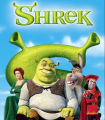

A Fairy Tale That Starts in a Swamp
The opening of Shrek announces its intentions immediately. A traditional fairy-tale book introduces a beautiful princess, a terrible curse, and the promise that true love will break the spell. Then Shrek tears a page from the book and uses it as toilet paper. That joke is crude, direct, and perfectly chosen. This Shrek review begins there because the film’s greatest strength is its refusal to treat familiar fairy-tale rules as sacred.
Released in 2001 and directed by Andrew Adamson and Vicky Jenson, Shrek follows a solitary ogre whose peaceful swamp is invaded by fairy-tale creatures expelled from their homes by Lord Farquaad. To reclaim his land, Shrek agrees to rescue Princess Fiona from a dragon-guarded castle.
The setup sounds like a conventional quest. An unlikely hero travels to a dangerous location, rescues a princess, and returns her to the ruler who intends to marry her. Shrek uses that structure only to dismantle nearly every assumption attached to it.
The hero is not handsome, polite, or eager to prove himself. The princess is not helpless. The noble ruler is vain, cowardly, and physically absent from the dangerous work. The loudest companion is a talking donkey who refuses to respect personal boundaries.
Beneath the jokes, the film tells a surprisingly sincere story about shame, rejection, and the fear that affection will disappear once someone sees the truth. Shrek wants isolation because he believes it gives him control over rejection. Fiona hides part of herself because she has been taught that happiness depends on changing.
The result is a family comedy with sharp parody, memorable performances, emotional clarity, and a soundtrack that helped redefine how popular music could be used in animation.
Plot & Storytelling: A Rescue Mission That Refuses to Behave
Shrek begins as a creature satisfied with solitude. He lives in a swamp, frightens intruders, prepares unusual meals, and enjoys the reputation that keeps everyone away.
His routine is destroyed when fairy-tale characters arrive in large numbers. The Three Little Pigs, Pinocchio, the Big Bad Wolf, witches, and other familiar figures have been exiled by Lord Farquaad.
Shrek does not defend them out of kindness. He wants them removed from his property. His first heroic action is therefore motivated by irritation rather than compassion.
Accompanied by Donkey, Shrek travels to Duloc and confronts Farquaad. The ruler agrees to clear the swamp if Shrek rescues Princess Fiona from a castle surrounded by lava and guarded by a dragon.
Farquaad wants Fiona because becoming king requires him to marry a princess. He chooses her through a parody of a game show rather than through any genuine romantic interest. Shrek accepts the mission because it offers a direct path back to solitude. Donkey joins because he has already decided that Shrek is his friend.
The castle sequence appears to follow familiar rescue-story expectations before reversing them. Shrek enters wearing mismatched armor, Donkey accidentally becomes the object of the dragon’s affection, and Fiona becomes frustrated when her rescuer refuses to follow the romantic script she has imagined.
Fiona expects dramatic gestures, formal introductions, and a heroic identity. Shrek simply wants to leave before the dragon catches them.
The journey back to Duloc gives the characters time to change. Shrek and Fiona discover shared habits, including unusual food preferences, physical confidence, and a willingness to behave in ways that do not match royal expectations.
Their growing connection feels natural because it develops through conversation, jokes, irritation, and small acts of trust. The film does not rely entirely on immediate attraction.
Fiona’s secret creates the central emotional conflict. Every night, she transforms into an ogre because of a childhood curse. She believes true love’s first kiss will restore her to the beautiful human form she considers her real self.
Shrek overhears only part of a conversation in which Fiona describes herself as ugly and undesirable. He assumes she is speaking about him. This misunderstanding is a familiar romantic device, but it works because it connects directly to Shrek’s insecurity. He is prepared to believe rejection before Fiona has actually rejected him.
Instead of asking what she meant, Shrek protects himself by delivering her to Farquaad and returning to his swamp.
The final act brings Shrek back to Duloc after Donkey confronts him about his behavior. Shrek interrupts the wedding, Fiona’s secret becomes public, and the expected magical transformation occurs.
The film’s most important reversal is that Fiona does not become permanently human. Her true form is revealed as an ogre.
That decision gives the ending emotional integrity. Fiona does not earn happiness by becoming conventionally beautiful. She finds love after accepting the appearance she had been taught to treat as a punishment.
Shrek: An Ogre Who Uses Anger as Armor
Shrek is memorable because he is not secretly gentle in a simple way. He can be rude, impatient, selfish, and deliberately intimidating.
His hostility is partly defensive. People judge him before he speaks, so he has learned to control the encounter by frightening them first. The film establishes this pattern during the opening, when villagers arrive to hunt him. Shrek terrifies them with confidence, then allows them to escape.
He does not appear surprised by their fear. He expects it. The famous comparison between ogres and onions explains more than his personality. Shrek wants Donkey to understand that his visible behavior is only one layer.
He also becomes frustrated when Donkey refuses to accept the explanation in the exact form he intended. That frustration is part of what makes the scene funny and revealing.
Shrek’s desire for privacy is genuine, but it is also safe. Solitude prevents embarrassment, misunderstanding, and rejection. Meeting Fiona creates a problem because she seems to understand him. Their connection threatens the emotional system he has built around isolation. His response to the misunderstanding shows that he has not yet learned how to trust. Shrek assumes the worst and withdraws before Fiona can choose him.
The film does not present this as noble suffering. Donkey correctly identifies Shrek’s behavior as cowardly and unfair. Shrek’s development requires action. He must leave the swamp, interrupt the wedding, admit his feelings publicly, and accept the possibility of rejection.
Mike Myers gives Shrek a voice that combines irritation, warmth, comic timing, and emotional hesitation. The Scottish accent became central to the character’s identity, giving him a specific rhythm that separates him from a generic fairy-tale hero. Myers is especially effective in quieter scenes. Shrek’s pauses and changes in tone reveal vulnerability without requiring long emotional speeches.
Princess Fiona: More Than the Person Waiting in the Tower
Fiona initially appears to be the most traditional character in the film. She waits in a castle, knows how a rescue is supposed to proceed, and believes a romantic kiss will solve her life.
That performance is partly learned behavior. Fiona has spent years believing that her future depends on fulfilling a fairy-tale role correctly. Once she leaves the castle, her personality becomes more complicated. She can fight, sing, joke, hunt, and behave with the same physical confidence as Shrek.
The scene in which she defeats Robin Hood and his companions is one of the film’s clearest reversals. Fiona does not need Shrek to protect her, and her combat ability is presented as both impressive and comic.
Her secret explains why she understands Shrek’s social position. Fiona also expects judgment based on appearance. The difference is that Shrek has responded by rejecting society, while Fiona tries to reshape herself according to its standards.
Cameron Diaz gives Fiona enough warmth and force to prevent the character from becoming only a lesson for Shrek. She has her own shame, expectations, and emotional decisions. Fiona’s most important choice occurs at the end. The magical transformation appears to have failed according to the fairy-tale logic she was taught.
Instead, the result reveals that the curse’s language was misunderstood. True love does not make her fit an external ideal. It allows her to become the form connected to her authentic life.
The ending is emotionally satisfying, though the film treats Fiona’s adjustment very quickly. Years of believing that her ogre form was unacceptable are resolved within one scene.
A longer story might have explored that identity conflict more deeply. For the film’s compact structure, the symbolic resolution remains effective.
Donkey: Comic Relief Who Refuses to Remain Secondary
Donkey is introduced as comic relief, but his role is more important than simply producing jokes.
He is the first character who chooses Shrek’s company without fear, obligation, or manipulation. Shrek repeatedly tells him to leave, and Donkey repeatedly decides not to.
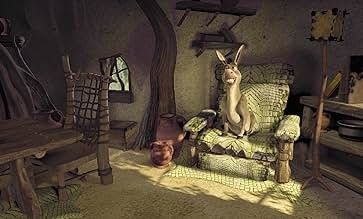
Eddie Murphy gives the film its fastest comic energy. Donkey talks through fear, excitement, danger, and silence. He fills space because silence makes him uncomfortable. His dialogue often appears improvised even when carefully scripted. Murphy’s rhythm makes Donkey feel unpredictable.
The character can become exhausting, which is intentional. Shrek’s irritation is understandable because Donkey ignores nearly every boundary. However, Donkey also sees through Shrek’s defenses. He recognizes that Shrek is lonely and later identifies the misunderstanding with Fiona.
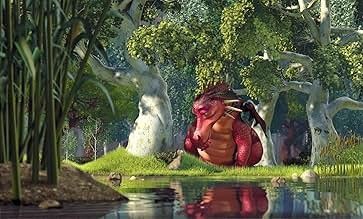
His confrontation with Shrek after the mission gives the friendship real weight. Donkey does not simply accept being treated badly because the hero is emotionally hurt. The dragon subplot turns Donkey into the romantic center of another parody. His fear gradually becomes negotiation, flattery, and an unexpected relationship.
The idea is absurd, but the film commits to it completely. Dragon later becomes essential to stopping Farquaad. Donkey’s loyalty provides the emotional bridge between Shrek and Fiona. Without him, Shrek would likely return to isolation and remain convinced that rejection was inevitable.
Lord Farquaad: A Perfectly Groomed Little Tyrant
Lord Farquaad is a strong villain because his threat is built from control, vanity, and insecurity rather than physical power.
He wants a kingdom organized according to his image of perfection. Fairy-tale creatures are removed because they disrupt the clean, controlled identity of Duloc. The city itself reflects him. It is polished, symmetrical, cheerful, and deeply artificial.
Farquaad presents authoritarian control through the language of entertainment and order. Public violence becomes a tournament. Marriage becomes a path to legitimacy. Exile becomes a beautification project.
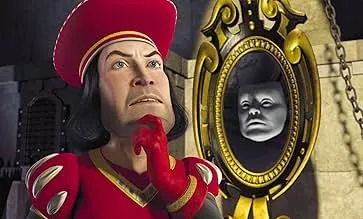
John Lithgow gives the character a formal, theatrical voice that contrasts with his immaturity. Farquaad sounds dignified even while interrogating a gingerbread man or seeking romantic advice from a magic mirror.
The jokes about his height are frequent and not especially subtle. Some remain funny because the film connects them with his oversized architecture and ego. The more meaningful criticism concerns his dependence on others. He sends Shrek to rescue Fiona because he is unwilling to face danger himself. Farquaad wants the title of king without demonstrating courage, empathy, or responsibility.
His relationship with Fiona is entirely transactional. He sees her as a requirement rather than a person. The villain’s defeat is sudden and deliberately undignified. Dragon eats him before he can control the final scene. Farquaad lacks the emotional complexity of Shrek or Fiona, but he functions perfectly as the embodiment of superficial judgment.
Humor & Parody: Fairy Tales With Their Politeness Removed
Shrek’s comedy operates through parody, physical humor, character conflict, references, and deliberate violations of fairy-tale expectations.
The film treats familiar characters as residents of one crowded fictional world. Pinocchio worries about lying, the Three Little Pigs speak with exaggerated accents, and the Big Bad Wolf occupies someone else’s bed.
Duloc is presented like a disturbing theme park. Its singing information display welcomes visitors with mechanical cheerfulness before taking a souvenir photograph. The scene mocks artificial family entertainment while also giving the film one of its most memorable musical jokes.
Many jokes are designed for adults without becoming completely inaccessible to children. Dialogue contains double meanings, references to celebrity culture, and brief suggestions that younger viewers may not notice.
This layered approach helped Shrek distinguish itself from animation built only around child-friendly innocence. The film is not afraid of crude humor. Bodily functions, bad smells, and physical embarrassment appear frequently.
Some of those jokes remain effective because they fit Shrek’s character and challenge polished fairy-tale imagery. Others feel dated or unnecessarily obvious.
The strongest humor comes from personality. Shrek’s irritation, Donkey’s refusal to stop talking, Fiona’s hidden abilities, and Farquaad’s self-importance create reliable conflict.
The pop-culture references are more uneven. Some were immediately recognizable in 2001 but have lost impact as the specific cultural moment has faded. Fortunately, the film does not depend entirely on references. Its main character comedy continues to work even when an individual parody is no longer current.
My first major criticism is that several jokes target appearance in ways that conflict slightly with the film’s broader message. Farquaad’s height, ugly characters, and bodily features are repeatedly used as punchlines.
My second complaint is that some adult humor feels inserted primarily to signal that the film is not a traditional children’s movie. The best jokes emerge naturally from character and story.
Visual Design & Animation: A Storybook World With Mud on Its Shoes
Shrek was a major technical achievement for computer animation at the time of release. Its environments, lighting, facial animation, and character textures helped demonstrate how digital animation could support a full fantasy comedy.
The visual style combines fairy-tale imagery with deliberate imperfection. Shrek’s swamp is muddy, cluttered, and comfortable rather than frightening. Duloc provides the opposite design. Its straight lines, spotless streets, bright colors, and repeated decorations create a controlled environment without personality. Fiona’s castle uses Gothic architecture, lava, narrow bridges, and a dragon to exaggerate the classic rescue location.
The film stages action clearly. Shrek and Donkey’s movement through the castle remains readable even while the sequence divides them between Fiona and Dragon. Character animation focuses strongly on facial performance. Shrek’s expressions often communicate discomfort before his dialogue does.
Donkey is highly active, with constant movement supporting Eddie Murphy’s rapid speech. Fiona’s animation shifts between formal princess behavior and more relaxed physical comedy.
The human characters reveal the film’s age more clearly than Shrek or Donkey. Skin, hair, and certain facial movements look less natural by modern standards. Farquaad’s design benefits from exaggeration, so his artificial appearance remains consistent with the character. The environmental textures also appear simpler compared with current animation. Grass, crowds, fabric, and background objects lack the density expected today.
The film’s art direction matters more than technical age. Each major location expresses character and theme clearly.
Shrek’s swamp represents privacy without judgment. Duloc represents perfection without warmth. The castle represents the fairy-tale role Fiona is expected to inhabit.
Music, Direction & Pacing: Pop Songs in a Fairy-Tale World
The soundtrack is one of Shrek’s most recognizable features. The film combines an orchestral score with contemporary popular songs in a way that felt unusually confident for mainstream animation.
“Walkin’ on the Sun,” “I’m a Believer,” “My Beloved Monster,” and other tracks shape the film’s comic and emotional identity.
The use of “All Star” during the opening became inseparable from Shrek’s cultural image. The song establishes confidence, movement, irreverence, and a refusal to behave like a traditional fairy tale.
The soundtrack does not always blend naturally with the fantasy setting. That contrast is partly the point. Shrek belongs to a world where medieval villages, modern jokes, game-show formats, and popular music coexist.
Harry Gregson-Williams and John Powell provide the orchestral score, which adds warmth and adventure beneath the pop selections. The quieter themes support Shrek and Fiona’s growing relationship without overwhelming their conversations.
Andrew Adamson and Vicky Jenson direct the film with strong control of pace. The story moves quickly from the swamp to Duloc, the castle, the return journey, and the wedding.
The quest structure is simple, leaving enough room for character interaction. The middle section is especially effective because the film slows down after the castle. Shrek, Fiona, and Donkey are allowed to talk, argue, eat, and gradually become comfortable together.
The final misunderstanding develops quickly, but the audience already understands Shrek’s insecurity well enough for the reaction to feel credible. The wedding climax is energetic without becoming excessively long. The film resolves the central romance, defeats Farquaad, and ends with a musical celebration.
Themes & Emotional Meaning: Beauty, Rejection, and the Stories People Accept
Shrek’s central theme concerns the difference between identity and reputation.
Shrek is treated as dangerous because he is an ogre. Fiona believes her ogre form makes her unworthy of love. Fairy-tale creatures are expelled because they do not fit Farquaad’s ideal society.
The film repeatedly shows how characters become trapped by stories told about them. Shrek has accepted the belief that everyone will reject him. He turns that expectation into a reason never to trust anyone. Fiona has accepted the belief that a princess must look human and beautiful to receive a happy ending.
Farquaad has accepted the belief that titles, appearances, and public ceremony can create legitimacy. Donkey is the character least controlled by these expectations. He sees Shrek as a friend almost immediately and treats Fiona’s transformation as surprising but not disqualifying.
The film’s message is not simply that appearance does not matter. Attraction and visual judgment remain part of the comedy.
Its stronger argument is that love cannot survive when people hide behind roles. Shrek must admit vulnerability. Fiona must reveal her secret. Donkey must demand respect within the friendship. The onion metaphor expresses this idea directly. People contain layers that cannot be understood from one visible quality.
The fairy-tale parody also questions the promise that happiness follows one approved formula. Fiona does receive true love’s kiss, but the result does not match the expected image.
Her ending rewrites the rule rather than rejecting magic entirely. The film also values chosen family. Shrek begins without community, but by the end, his swamp is filled with friends and fairy-tale characters. This change does not erase his need for privacy. It expands his definition of home.
Critical Reception & Lasting Reputation: The Film That Changed Animation’s Attitude
Shrek received a strong critical response, with praise directed toward its humor, voice cast, fairy-tale parody, animation, music, and emotional story.
Critics recognized that the film appealed to adults and children without functioning only as a collection of references.
Eddie Murphy’s performance received particular attention. Donkey’s speed, energy, and comic confidence became one of the film’s defining elements. Mike Myers was also praised for giving Shrek enough emotional depth to balance the crude jokes and sarcasm. The film won the first Academy Award for Best Animated Feature, establishing its importance during a period when computer animation was rapidly expanding. Its commercial success helped turn Shrek into a major franchise and made DreamWorks Animation a stronger competitor within the industry.
The film’s reputation has changed in interesting ways. It remains respected as an influential animated comedy, but it has also become a major source of internet memes and ironic appreciation. That online afterlife occasionally overshadows the film itself. Shrek is treated as a comic symbol, yet the original movie contains sincere character work that does not depend on irony. Some criticism has focused on dated references, crude humor, and the film’s tendency to mock physical appearance while promoting acceptance. Others argue that its success encouraged later animated films to rely too heavily on celebrity voices, pop songs, rapid references, and jokes aimed at adults.
Those criticisms are fair, but imitation should not erase the effectiveness of the original choices.
Shrek’s influence came from combining parody with a complete emotional story. Many later films copied the surface attitude without reproducing the character depth beneath it.
Final Verdict: An Animated Comedy With More Heart Than Its Reputation Suggests
Shrek remains effective because it understands that parody works best when the story being mocked still matters.
The film laughs at princesses, heroic knights, magical creatures, perfect kingdoms, and romantic destiny. It also gives its characters a genuine need for love and acceptance.
Shrek is a compelling lead because his greatest obstacle is not the dragon or Farquaad. It is his belief that rejection is inevitable. Fiona gives the story its strongest reversal. Her curse is not solved by making her conventionally beautiful. True love reveals a form she had been taught to fear.
Donkey provides relentless comic energy, but he also becomes the emotional force that prevents Shrek from retreating permanently. Lord Farquaad represents a society obsessed with surfaces. Duloc looks perfect because everything inconvenient has been removed. The voice cast remains outstanding. Mike Myers, Eddie Murphy, Cameron Diaz, and John Lithgow give each major character an immediately recognizable personality.
The animation has aged technically, especially in human faces and background detail. The character design, staging, and environmental symbolism remain strong enough to preserve the film’s visual identity.
The soundtrack is bold, sometimes excessive, and impossible to separate from the movie’s legacy. Its use of contemporary music helped establish Shrek as something different from a traditional animated fairy tale.
I recommend Shrek to families, animation fans, viewers who enjoy character-based comedy, and anyone interested in how parody can support rather than destroy emotional storytelling.
Personal rating: 9/10.
Shrek earns that score for its memorable characters, excellent voice cast, sharp parody, emotional romance, energetic soundtrack, efficient direction, and lasting themes of acceptance. It loses one point for dated references, uneven crude humor, contradictory appearance jokes, and an emotional resolution that occasionally moves too quickly.
Shrek became famous for mocking fairy tales. The reason it endured is that underneath the sarcasm, it still believes people deserve a happy ending without becoming someone else first.
Pros

- Clever narrative structure that defies traditional fairy tale tropes and surprises viewers with unexpected twists
- Engaging humor that balances witty dialogue with self-aware satire
- Visually creative and vibrant animation that captures the essence of an unconventional world
- Thought-provoking character development that invites introspection and personal reflection
- An impressive soundscape with a memorable musical score that enhances emotional moments
- A unique blend of folklore elements with modern storytelling techniques that appeals to diverse audiences
Cons

- Some sequences may feel overly unconventional for viewers expecting traditional fairy tale narratives
- Background humor and subtle visual gags might be overlooked by audiences not paying close attention
- Occasional pacing fluctuations could disrupt the immersive flow of the story

Leave a comment
Your comment is awaiting moderation. We save your draft here
0 Comments