







A Magical House Built on Quiet Pressure
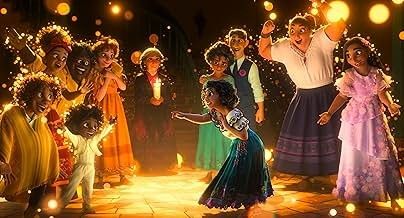
The moment that defines Encanto for me is not the first appearance of the magical Casita or the reveal of another extraordinary family gift. It is Mirabel standing outside a glowing door that never opens for her. Everyone around her expects a miracle. The candle shines, the family watches, and the child reaches toward the future she has been promised. Then nothing happens. This Encanto review begins with that disappointment because the film’s greatest strength is understanding how one missing gift can shape an entire identity.
Released in 2021 and directed by Jared Bush and Byron Howard, with Charise Castro Smith serving as co-director, Encanto follows the Madrigal family, who live in a magical house hidden within the mountains of Colombia. Each child receives a supernatural ability that appears to match a useful family role.
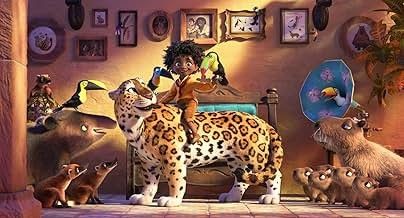
Luisa possesses enormous strength. Isabela creates flowers and plants. Dolores hears sounds from great distances. Camilo changes his appearance. Antonio communicates with animals. Julieta heals injuries through food, while Pepa’s emotions influence the weather.
Mirabel receives no visible gift.
She remains part of the family but never fully escapes the feeling that she failed during the ceremony that should have revealed her purpose. When cracks begin appearing inside Casita and the family’s magic starts weakening, Mirabel becomes determined to discover what is happening.
Encanto is structured like a mystery, but its real subject is family pressure. The magic is not failing because one character has become a conventional villain. It is failing because the Madrigals have built their lives around roles that no longer allow them to be complete people.
The film is colorful, musically ambitious, and emotionally sharp. It also contains a large cast, rapid exposition, and a final reconciliation that moves faster than some of its conflicts deserve.
What makes Encanto memorable is not the miracle itself. It is the painful question beneath it: what happens when a family begins loving the roles people perform more clearly than the people performing them?
Plot & Storytelling: The Cracks Begin Inside the Family
The story begins with Abuela Alma explaining the origin of the miracle. As a young woman, she fled violence with her husband Pedro and their newborn triplets.
Pedro sacrificed himself to protect the family. Alma’s grief and desperation created a magical candle, mountains that enclosed a safe valley, and a living house that became the Madrigals’ home.
Years later, the family has grown into a central part of the local community. Their gifts help neighbors, solve practical problems, and reinforce the belief that the miracle must be protected.
Mirabel introduces the household through a rapid musical sequence that explains each relative’s power. Her enthusiasm appears genuine, but the speed of her presentation also reveals how carefully she has learned to redirect attention away from herself.
The family prepares for Antonio’s gift ceremony. Mirabel supports her young cousin because she understands the fear of standing before the magical door. Antonio receives the ability to communicate with animals, and his bedroom transforms into a huge natural environment filled with wildlife. The celebration confirms that the miracle still works. It also intensifies Mirabel’s isolation. She is proud of Antonio, but his successful ceremony reminds her of the night when her own door disappeared.
During the party, Mirabel notices cracks spreading through the house. The candle’s flame weakens, and the magic appears to be in danger. When she brings the family to see the damage, everything has returned to normal. Abuela interprets Mirabel’s warning as another attempt to draw attention toward herself.
Mirabel begins investigating. She learns that her uncle Bruno, who disappeared years earlier, once had a vision connected with her and the possible destruction of Casita. Bruno’s gift allows him to see possible futures. Because his visions often involved unpleasant events, the family and community began treating him as the cause of the problems he predicted.
Mirabel enters Bruno’s abandoned room and reconstructs pieces of the vision. The image appears to show her standing before a damaged house, but its meaning changes depending on how the pieces are viewed. The discovery initially makes Mirabel believe she may be responsible for the failing miracle.
Her investigation also reveals that the apparently perfect members of the family are struggling privately. Luisa feels crushed by the expectation that she will carry every physical and emotional burden without complaint. Isabela feels trapped inside a future designed around beauty, obedience, and a marriage she does not want.
Mirabel eventually discovers that Bruno never truly left. He has been living inside the walls of Casita, repairing cracks and remaining close enough to watch his family without being welcomed back into it. This reveal changes the mystery. Bruno is not a dark magician preparing a disaster. He is an anxious and loving relative who disappeared because he believed his absence would protect Mirabel.
Mirabel persuades him to create another vision. It suggests that repairing her relationship with Isabela may strengthen the miracle. The sisters initially argue. Isabela admits that she has no desire to marry Mariano and resents the pressure to remain perfect. During their confrontation, Isabela accidentally creates a cactus. The imperfect plant becomes the first expression of her power that reflects personal desire rather than family expectation.
Mirabel encourages her to experiment. Isabela discovers that her gift can create strange, sharp, colorful, and unpredictable plants rather than only beautiful flowers.
Their reconciliation appears to restore some of the magic, but Abuela interrupts and blames Mirabel for damaging the family. Mirabel finally confronts her grandmother. She argues that the pressure to protect the miracle has made everyone afraid of disappointing Abuela. The argument causes Casita to collapse. The magical candle goes out, and the Madrigals lose their gifts. Mirabel runs away, believing she has destroyed the family. Abuela finds her near the river where Pedro died.
For the first time, Alma explains her fear without presenting it as authority. She recognizes that the miracle began through love and sacrifice, but her terror of losing it turned protection into pressure.
The family and community rebuild the house without magical abilities. When Mirabel places the new doorknob into the front door, Casita returns and the family’s gifts are restored. The ending reveals that Mirabel’s role was never to possess one specialized power. She becomes the person capable of seeing the family as individuals and reconnecting them when the miracle’s structure begins to fail.
Mirabel Madrigal: The Only Ordinary Person Who Sees the Whole Family
Mirabel is an excellent protagonist because she is neither powerless nor secretly waiting for a conventional magical upgrade. Her gift is attention. She notices cracks in the walls because she is already watching the family carefully. Living without a magical role has made her unusually aware of how everyone else performs theirs.
Stephanie Beatriz gives Mirabel energy, humor, insecurity, and emotional honesty. Her vocal performance avoids turning the character into a permanently cheerful outsider. Mirabel wants to belong. She loves her family and celebrates their gifts, but she also wants recognition from Abuela. This desire makes her investigation personal. She wants to save the miracle partly because she believes success may finally prove that she is valuable.
The film never presents this motivation as selfish. A child excluded from the family’s central tradition would naturally search for another way to become necessary. Mirabel’s lack of a gift also gives her freedom. The family cannot reduce her to one function as easily as they do with Luisa, Isabela, Dolores, or Pepa.
That freedom initially feels like failure. Over time, it becomes the reason she can move between different relatives and understand their private fears. She does not solve problems through perfect wisdom. Mirabel invades private spaces, reaches conclusions too quickly, and occasionally treats the mystery like a way to prove herself.
Her confrontation with Isabela begins through resentment rather than empathy. The sisters have spent years misreading each other because the family’s roles placed them on opposite sides of an invisible comparison. Mirabel sees Isabela as effortlessly perfect. Isabela sees Mirabel as free from the pressure she experiences.
Their reconciliation works because both assumptions are incomplete. Mirabel’s argument with Abuela is equally important. She stops requesting approval and names the damage created by constant expectations. The scene does not make her fearless. She is angry because she has reached the point where silence would cause greater harm.
Mirabel never receives a glowing bedroom or a specialized power. The ending is stronger because it refuses that easy reward. Her importance comes from understanding that a family cannot survive by treating people as tools for maintaining one perfect image.
Abuela Alma: A Protector Who Turns Fear Into Control
Abuela is the closest character Encanto has to an antagonist, but she is not a traditional villain. Her actions grow from trauma. She lost her home, watched Pedro sacrifice himself, and became responsible for three infants and an entire displaced community.
The miracle provided safety at the moment she had no reason to expect survival. Alma therefore treats the magic as both blessing and fragile defense. Every gift becomes evidence that the family remains protected.
Her fear is understandable. The harm comes from converting that fear into a system of expectations. Abuela decides what each gift should mean. Luisa must always carry burdens. Isabela must represent beauty and perfection. Pepa must control every emotion that affects the weather.
Bruno’s visions become unacceptable because they introduce uncertainty. Mirabel’s lack of a gift becomes difficult for Alma because it threatens the belief that the miracle has a clear plan. María Cecilia Botero gives Abuela authority without removing vulnerability. Her voice can sound loving, disappointed, frightened, and controlling within the same scene. Alma rarely believes she is behaving cruelly. She sees pressure as preparation and sacrifice as proof of gratitude.
This makes her conflict with Mirabel more painful. Both characters want to protect the family, but they understand protection differently. Mirabel believes the family needs honesty. Alma believes honesty about weakness may endanger the miracle. The river scene provides the emotional explanation the story has been building toward. Alma finally allows Mirabel to see the terrified young woman beneath the family leader.
The film does not excuse her behavior. It shows how trauma can continue harming later generations when survival strategies become permanent family rules. My main criticism is that her transformation happens quickly. One conversation moves Alma from defensive authority to public accountability. The emotional logic is present, but the family deserves more time to process the consequences of years spent under her expectations.
Bruno Madrigal: The Family Scapegoat Living Behind the Walls
Bruno is introduced through absence. His name is avoided, his room is abandoned, and family members describe his gift as a source of trouble.
“We Don’t Talk About Bruno” presents several conflicting memories. Pepa blames his prediction for ruining her wedding weather. Dolores hears him inside the house. Townspeople remember small forecasts that appeared to cause later problems.
The song reveals how families create myths around missing people. Bruno becomes responsible for every uncomfortable event because blaming him is easier than accepting uncertainty.
John Leguizamo voices Bruno with nervous humor, fragmented speech, and deep affection for the family he avoids.
When Mirabel finds him, he is not building revenge or embracing darkness. He is living with rats, creating fictional entertainment, and repairing cracks from inside the walls. His isolation is both comic and tragic. He remains physically close enough to hear meals and celebrations but believes returning would create more harm.
Bruno left primarily to protect Mirabel after his vision placed her at the center of the miracle’s uncertain future. This decision shows the cost of the family’s fear. Bruno knows they may interpret the vision as proof that Mirabel is dangerous, just as they interpreted his other predictions as causes.
His superstitious rituals provide humor, but they also reveal anxiety. Bruno knocks on wood, crosses his fingers, throws salt, and performs small actions to manage a future he cannot control. The film wisely avoids making his visions perfectly deterministic. They show possibilities rather than fixed outcomes. That distinction explains why the image of Mirabel and the cracked house can represent destruction or healing.
Bruno’s return is emotionally satisfying, especially when his sisters embrace him. However, the reunion moves so quickly that the family never fully apologizes for turning him into a scapegoat. The movie forgives the household faster than it allows Bruno to describe what his isolation cost him.
Luisa: Strength as a Family Assignment
Luisa possesses superhuman strength and uses it to solve nearly every physical problem in the community. She carries buildings, redirects animals, moves bridges, and accepts requests without visible resistance. Jessica Darrow gives Luisa a deep, confident voice that contrasts with the panic beneath her performance.
“Surface Pressure” reveals the character’s internal life more effectively than ordinary dialogue could. Luisa believes her value depends on remaining useful. She does not simply perform difficult tasks. She has become the person everyone calls before considering whether she has the energy or desire to help.
Her fear is not physical weakness. It is the possibility that weakness would remove her purpose. The song’s visual imagination turns psychological pressure into impossible images: Luisa carries enormous weights, protects the family from disasters, and attempts to hold the entire world together.
The sequence also shows how responsibility becomes identity. Luisa no longer knows where helping ends and obligation begins. When the magic weakens, she becomes physically less powerful and emotionally terrified. Losing strength means losing the role through which she receives approval.
Mirabel responds with sympathy, but the story moves away from Luisa before fully resolving the problem. The ending restores her gift and suggests that she has learned to rest and share responsibility. That improvement appears during the rebuilding, when others carry weight beside her.
Still, I wanted more direct conversation between Luisa and Abuela. The film clearly identifies the pressure but gives the relationship little personal resolution. Luisa remains one of Encanto’s most memorable characters because her conflict is immediately recognizable. Many viewers understand the feeling of becoming dependable enough that nobody asks whether dependability has become painful.
Isabela: Perfection as Another Form of Confinement
Isabela is introduced as the family’s golden child. She is graceful, beautiful, admired, and capable of creating perfect flowers without visible effort. Mirabel resents her because Isabela seems to receive everything Mirabel lacks: a magical door, Abuela’s approval, public admiration, and a planned marriage.
The film gradually reveals that perfection is not freedom. It is another assigned role. Isabela is expected to marry Mariano because the relationship appears beneficial to the family. She accepts the plan without wanting it.
Diane Guerrero gives Isabela a polished voice during the early scenes, then allows more excitement and spontaneity to emerge as the character experiments with her power. The cactus she creates during the argument with Mirabel is a perfect symbol. It is sharp, irregular, and completely different from the controlled flowers associated with her identity.
“What Else Can I Do?” becomes an exploration of creative freedom. Isabela discovers vines, strange colors, carnivorous plants, and natural forms that do not need to appear delicate. Her transformation is not about rejecting beauty. It is about rejecting beauty as an obligation.
The reconciliation with Mirabel works because both sisters admit that they have been performing hostility shaped by the family’s expectations. Mirabel believed Isabela enjoyed perfection. Isabela believed Mirabel’s lack of a role gave her freedom to criticize.
Their bond changes when they stop treating each other as symbols. The storyline is emotionally effective but compressed. Isabela moves from years of obedience to open experimentation within one musical sequence. As with Luisa, her conflict with Abuela receives less direct resolution than it deserves.
The Rest of the Madrigal Family: Gifts That Define Every Conversation
Julieta, Mirabel’s mother, heals injuries through food. Her gift reflects care, nourishment, and practical affection. Angie Cepeda gives Julieta a calm warmth. She supports Mirabel consistently, though she rarely challenges Abuela as directly as the situation requires.
This creates an interesting but underexplored conflict. Julieta loves her daughter and recognizes the pain caused by exclusion, yet she remains inside the family structure that continues producing it. Agustín, Mirabel’s father, has no magical gift. Wilmer Valderrama gives him nervous humor and clear devotion to his wife and daughters.
His lack of power makes him a possible emotional ally for Mirabel, but the film uses him mainly for comic accidents and protective reactions. Pepa’s emotions control the weather. Carolina Gaitán gives the character intense energy, making every attempt at calm feel like additional pressure.
The family repeatedly tells Pepa to manage her feelings because clouds and storms inconvenience others. Her gift turns emotional suppression into a visible family demand. Félix supports her with patience and affection. Mauro Castillo’s warm performance suggests a marriage in which emotional intensity is accepted rather than treated as failure. Dolores can hear almost everything. The gift sounds useful, but it gives her little privacy and places her in the role of family information system.
Adassa voices Dolores with controlled softness, suggesting a person accustomed to listening more than speaking. Camilo changes shape and often uses the ability for comedy or practical help. Rhenzy Feliz gives him playful confidence, though the film provides little information about who he is when not becoming someone else.
Antonio receives the ability to speak with animals. Ravi Cabot-Conyers gives him sweetness and understandable fear during the ceremony. His relationship with Mirabel is important because he trusts her before receiving his gift and continues loving her afterward. The large ensemble makes the family feel active and believable. It also means several characters remain built around one power and one emotional implication. A longer format could have explored how every magical ability functions as both opportunity and burden.
Music & Songs: The Soundtrack That Became Larger Than the Film
Lin-Manuel Miranda’s songs are central to Encanto’s identity. They introduce characters, reveal private fears, advance the mystery, and turn family structure into rhythm. “The Family Madrigal” performs an enormous amount of exposition without feeling like a lecture. Mirabel moves rapidly through the household, naming relatives and gifts while avoiding the question of her own power.
The speed reflects both excitement and defense. Mirabel has explained the family often enough to know exactly how to keep attention moving. “Waiting on a Miracle” is quieter and more personal. It gives Mirabel space to admit that celebrating everyone else’s gifts does not remove her own pain. Stephanie Beatriz performs the song with increasing urgency, turning private longing into a declaration that she is ready to help. “Surface Pressure” provides one of the film’s strongest emotional concepts. Its rhythm and visual exaggeration communicate Luisa’s burden immediately.
“We Don’t Talk About Bruno” became the soundtrack’s largest cultural phenomenon. The song combines several character perspectives, rhythmic styles, melodies, and pieces of narrative information. Its structure reflects the family itself. Everyone remembers Bruno differently, and their voices overlap until the missing person becomes a collection of stories rather than a real relative.
“What Else Can I Do?” gives Isabela a more spontaneous musical identity. The arrangement expands as her power becomes less controlled. “Dos Oruguitas” is the emotional center. Performed in Spanish, it accompanies Abuela’s memory of Pedro and the origin of the miracle. The song avoids overexplaining the grief. Its imagery of caterpillars changing and separating gives the river scene tenderness without reducing it to dialogue.
“All of You” resolves the story by combining musical ideas from earlier songs. It turns rebuilding into a shared act and gives several characters brief emotional conclusions. The soundtrack’s main limitation is density. Some songs move so quickly that lyrics, visual jokes, and plot information compete. Repeated listening reveals details that may be difficult to absorb during a first viewing. Still, the music does more than decorate the film. It is the primary method through which Encanto organizes a large family and reveals what each person cannot say directly.
Visual Design & Animation: Casita Moves Like Another Family Member
Encanto is visually rich from its first scenes. The Madrigal home is not simply magical architecture. Casita behaves like a relative. Floor tiles move characters, drawers open helpfully, stairs flatten, shutters communicate, and objects respond to emotion. The house has no human face or voice, yet its personality is always clear. It teases, protects, warns, and comforts Mirabel. Casita’s relationship with her is especially meaningful because the house appears to recognize her value even when Abuela does not. The family rooms transform according to gifts. Antonio’s room becomes an enormous forest, while Bruno’s tower contains sand, stairs, and a distant cave associated with uncertain visions.
The film does not explore every bedroom, which preserves some mystery but also leaves the magical system incomplete. Color plays an important role in distinguishing family branches and personalities. Costumes contain symbols connected with gifts, relationships, and local design. Mirabel’s embroidered clothing includes visual references to multiple relatives, reinforcing her role as the person carrying the whole family story.
The Colombian setting influences architecture, plants, food, clothing, music, mountains, and community life. The environments feel specific without becoming a simple tourism display. The village exists as a working community connected with the Madrigals’ gifts. Character animation is especially strong during musical sequences. Luisa’s body communicates confidence and exhaustion. Isabela’s controlled movement becomes increasingly free. Mirabel’s hands, glasses, and posture reveal constant nervous energy.
Hair, fabric, facial expressions, and crowd movement are detailed without overwhelming the characters. The magical destruction of Casita is visually powerful because the audience understands the house as a living presence. Cracking walls feel like injury rather than ordinary property damage.
The rebuilding sequence uses physical labor to contrast with effortless magic. The family must cooperate with the community using ordinary tools and shared effort.
Direction & Pacing: A Family Drama Moving at Musical Speed
Jared Bush, Byron Howard, and Charise Castro Smith direct Encanto with impressive control over a large cast. The film establishes the family, miracle, village, central wound, and new gift ceremony quickly. Musical storytelling allows exposition and character work to happen simultaneously.
The pacing is generally energetic, but the mystery structure creates an unusual shape. Mirabel moves from Luisa to Bruno to Isabela, learning one new family truth at each stage.
This design is efficient but can feel like a sequence of emotional appointments. One relative reveals a burden, the story records the information, and Mirabel continues toward the next clue.
The film’s middle section becomes strongest once Bruno appears. His presence gives the mystery a face and connects Mirabel’s exclusion with the family’s older pattern of avoiding uncomfortable people.
The final act moves rapidly. Mirabel reconciles with Isabela, confronts Abuela, watches Casita collapse, runs away, hears Alma’s story, returns home, rebuilds the house, restores the magic, and welcomes Bruno back. Every step makes emotional sense. Together, they need more time.
A few additional scenes after the collapse could have shown individual family members responding to the loss of their gifts and confronting the roles they had performed. The film instead uses music and montage to provide closure. The concise structure keeps the running time family-friendly and prevents the story from becoming heavy. It also limits the depth of several apologies.
The directors are most effective when allowing visual behavior to carry emotion. Mirabel protecting the candle, Casita using its last strength to save her, and Bruno serving an imaginary dinner communicate more than long explanations.
Themes & Emotional Meaning: A Gift Can Become a Demand
Encanto’s central theme is the difference between a person and the value a family assigns to them. The Madrigal gifts are magical, but they also function like family roles. Luisa is the strong one. Isabela is the perfect one. Pepa is the emotional one who must remain calm. Bruno is the difficult one whose presence creates anxiety. Mirabel is the disappointing one without a role.
These labels simplify people for the convenience of the family system. Abuela measures stability through usefulness. Every gift must serve the community and prove that Pedro’s sacrifice created something worthy.
This expectation transforms gratitude into debt. The younger generations feel responsible for earning a miracle they never requested. Mirabel exposes the problem because she cannot demonstrate value through magic. Her existence asks whether someone deserves belonging without performing a useful function. The answer is clearly yes, but the family struggles to live according to that principle.
The film also explores intergenerational trauma. Alma’s behavior begins in real fear and loss. She protects the family using the strategies that helped her survive: discipline, usefulness, control, and public strength. Those strategies become harmful when passed to children who are not living through the original crisis.
Encanto does not argue that Alma stopped loving her family. It shows how love can become distorted when fear determines its conditions. The magical house represents the family’s emotional structure. Cracks appear when pressure becomes impossible to hide. Casita collapses only after Mirabel and Abuela finally speak openly. The destruction is painful, but it also removes the system that prevented change. The rebuilding matters because it happens without gifts. The family and village cooperate as ordinary people. Magic returns only after belonging has been demonstrated through collective action rather than supernatural usefulness.
Critical Reception & Lasting Reputation: A Family Story That Grew Through Its Music
Encanto received widespread praise for its animation, songs, voice cast, Colombian setting, emotional themes, and depiction of family pressure. Critics frequently highlighted Stephanie Beatriz’s performance and the film’s decision to avoid a traditional external villain.
The soundtrack became a major part of the movie’s cultural impact. “We Don’t Talk About Bruno” achieved extraordinary popularity, while “Surface Pressure” connected strongly with viewers who identified with Luisa’s burden.
“Dos Oruguitas” also received significant praise for its emotional role in Abuela’s story. The film’s theatrical release occurred during a period when cinema attendance remained affected by the pandemic. Its later streaming availability helped expand its audience and turn the songs into a widespread cultural phenomenon.
Encanto won the Academy Award for Best Animated Feature and received additional recognition for its music. Audience discussion often focused on which character experienced the greatest pressure and whether Abuela’s apology was sufficient.
Some viewers considered the reconciliation too quick after years of emotional harm. Others appreciated that the film approached Alma with empathy without presenting her behavior as harmless.
The large family also encouraged extensive interpretation. Characters with limited screen time inspired discussion because their gifts suggested emotional burdens the movie could only hint at.
The film’s reputation has remained strong, particularly among families and viewers interested in stories about generational expectations. Its influence is visible in the way audiences discuss family roles through phrases connected with Luisa, Isabela, Bruno, and Mirabel. Encanto works as an animated musical for children, but much of its lasting response comes from adults recognizing patterns they experienced inside their own households.
Final Verdict: The Miracle Was Never the Most Important Gift
Encanto is one of Disney’s strongest modern animated films because it builds its fantasy around a conflict many families recognize. Mirabel grows up surrounded by exceptional people and interprets her ordinary status as evidence that she does not deserve the same pride. The story gradually reveals that everyone else is also trapped by the family’s definition of exceptionality.
Luisa is exhausted by strength. Isabela is confined by perfection. Bruno disappears because uncertainty becomes unacceptable. Pepa is expected to manage every visible emotion. Abuela created these expectations while trying to preserve the safety born from Pedro’s sacrifice. The film approaches her with empathy, but it does not suggest that good intentions remove harm. Alma must recognize that protecting the miracle has caused her to stop seeing the people carrying it.
Stephanie Beatriz gives Mirabel humor, frustration, warmth, and enough insecurity to prevent her from becoming a perfect moral guide. John Leguizamo makes Bruno funny without reducing the loneliness of living behind his family’s walls.
Jessica Darrow and Diane Guerrero give Luisa and Isabela some of the film’s strongest musical performances, revealing emotional lives hidden beneath familiar roles. The animation is outstanding. Casita feels alive, the magical rooms express personality, and the destruction of the house carries genuine emotional force.
The songs are ambitious and often excellent. Their density can be overwhelming, but they transform family exposition into memorable character storytelling. The ending moves too quickly. Bruno deserves a fuller apology, the sisters need more time with Abuela, and the return of the gifts raises questions the film does not answer.
Those weaknesses do not erase the clarity of its central message. People should not have to earn love by becoming useful, perfect, strong, or magical. I recommend Encanto to families, animation fans, musical viewers, and anyone interested in stories about identity, family expectations, inherited fear, and emotional roles.
Personal rating: 9/10.
Encanto earns that score for Mirabel’s character, its exceptional soundtrack, expressive animation, layered family conflict, memorable supporting characters, and thoughtful treatment of generational pressure. It loses one point for compressed reconciliation, underdeveloped relatives, unresolved questions about the restored gifts, and a final act that repairs emotional wounds faster than real families usually can.
The Madrigals believe their miracle is the candle, the house, and the magical doors. Encanto’s wiser answer is that the miracle is a family learning to see one another before the cracks become impossible to hide.
Pros

- Stunning and vibrant visual details that create an immersive world
- Engaging musical score that deeply connects with the story
- Innovative blend of traditional and modern animation techniques
- Thoughtful exploration of complex family dynamics
- Rich cultural heritage celebrated with respect and vibrancy
- Clever integration of humor and emotional depth
Cons

- Occasional reliance on predictable narrative tropes
- Some aspects of the storyline may feel overly sentimental
- Subtle symbolism might be missed by younger or less attentive viewers


Leave a comment
Your comment is awaiting moderation. We save your draft here
0 Comments