

The Smurfs Enter a Much Stranger Universe
The moment that defines Smurfs for me is not Papa Smurf being kidnapped or Rihanna’s Smurfette leading another dangerous mission. It is the point when the movie suddenly abandons its familiar glossy animation and throws the characters into a completely different visual style. Clay, drawings, pixels, exaggerated cartoon forms, and other worlds begin colliding as though somebody discovered several animation programs and refused to close any of them. This Smurfs 2025 review begins there because the film’s greatest strength and largest problem are identical: it is determined to keep changing before any single idea has time to settle.
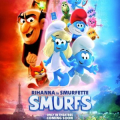
Directed by Chris Miller, Smurfs brings the small blue characters back to cinemas through an animated musical adventure mixed with limited live-action material. Rihanna voices Smurfette and also serves as one of the film’s producers. James Corden voices No Name, a Smurf struggling to discover what makes him special, while John Goodman provides Papa Smurf with his familiar mixture of authority and warmth.
The central adventure begins when Papa Smurf is taken by the wizard Razamel, Gargamel’s more capable and threatening brother. Smurfette, No Name, and several companions leave Smurf Village to rescue him.
Their search moves beyond the village and into the human world, magical books, secret histories, alternate animation styles, and a wider mythology involving the Smurfs’ purpose.
The movie wants to update the franchise without abandoning its basic identity. It preserves mushrooms, communal life, repeated uses of the word “Smurf,” cheerful musical energy, Gargamel, Azrael, and characters defined by one central personality trait.
At the same time, it adds destiny, family secrets, interdimensional travel, celebrity voices, surreal humor, and a message about refusing labels. Some scenes are playful and visually imaginative. Rihanna gives Smurfette calm confidence, and No Name has a clear emotional problem younger viewers can understand. The experience becomes exhausting because almost every scene introduces another character, joke, location, song, visual technique, or piece of mythology. Smurfs is not boring. It is far too active to become boring. Its problem is that activity and storytelling are not always the same thing.
Plot & Storytelling: Papa Smurf’s Kidnapping Opens Too Many Doors
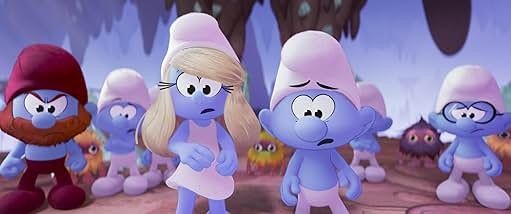
The story begins in Smurf Village, where each resident has a name connected with a recognizable quality or occupation.
Brainy is intelligent. Clumsy causes accidents. Hefty is physically strong. Vanity cares about appearance. Grouchy expresses dissatisfaction. Smurfette has grown beyond the original definition assigned to her but remains one of the village’s most capable members.
No Name lacks that certainty. He has not discovered one ability, personality, or useful role strong enough to define him. The problem becomes more painful because the village is organized around clear identities. Every other Smurf can explain who they are using one word. No Name cannot. James Corden voices him with familiar nervous energy, giving the character a mixture of self-consciousness, eagerness, and frustration. No Name wants to be useful but frequently causes trouble while trying too hard to discover his defining talent.
His emotional crisis becomes connected with the larger adventure when unusual power appears around him. What initially seems like another failure may be evidence that he possesses abilities nobody understands. Before the village can investigate fully, Razamel attacks and captures Papa Smurf. Razamel is connected with Gargamel but presented as more disciplined and ambitious. He does not merely want to capture Smurfs for personal experiments.
His plans involve magical power, books, portals, and control reaching far beyond one forest. Papa Smurf allows himself to be taken partly to protect the others and partly because he knows more about No Name’s origin than he has revealed. Smurfette organizes a rescue mission. Her leadership feels natural because she has repeatedly demonstrated courage and independence across earlier adaptations.
The group leaves the village and enters increasingly unfamiliar environments. Their journey eventually reaches the human world, where the film introduces additional allies and comic complications. The Smurfs discover that their conflict is linked with a magical book and a broader collection of unusual beings sometimes referred to as the Snooterpoots.
These characters expand the mythology but also make the story significantly harder to follow. New names and rules arrive before the previous information has become emotionally meaningful.
The heroes must identify where Papa Smurf has been taken, understand Razamel’s objective, protect No Name, and prevent magical power from being used to reshape multiple worlds.
Gargamel appears as a secondary comic threat whose relationship with Razamel creates sibling rivalry. Razamel sees him as less competent, while Gargamel remains convinced that his long history of hunting Smurfs should give him status.
Azrael continues reacting to both wizards with the exhausted awareness of an animal surrounded by ridiculous people.
The mission moves through several set pieces designed around different artistic styles. The Smurfs may appear inside conventional computer animation during one sequence and enter a handcrafted or illustrated environment during the next.
This gives the film visual variety and allows the animators to experiment beyond the standard village design.
Narratively, the constant movement weakens the rescue. Papa Smurf’s kidnapping should provide urgency, but the movie repeatedly pauses for side characters, comic detours, songs, and explanations about destiny.
No Name gradually learns that his lack of a conventional label does not mean he lacks value. His uncertainty becomes an advantage because he is not trapped inside one expected function.
The final confrontation depends on him accepting this identity without needing one simple word to explain it. Papa Smurf is rescued, Razamel’s immediate plan is stopped, and Smurfette confirms her position as a confident leader. The conclusion celebrates individuality and community, though it reaches that message through a plot containing far more machinery than necessary.
Smurfette: Rihanna Gives the Mission Its Center
Smurfette is the film’s central heroic figure even when No Name carries the more explicit identity arc. Rihanna voices her with confidence and relative restraint. The performance does not chase every possible joke, which helps Smurfette feel grounded inside a frantic ensemble.
She responds to Papa Smurf’s disappearance through action. While others panic or argue, Smurfette organizes the search and accepts responsibility for leaving the village.
Her history makes this leadership meaningful. Smurfette was originally created through Gargamel’s interference and spent much of the franchise trying to define herself beyond that origin.
The new movie does not repeat this story in depth, but the theme of identity remains connected with her. She understands No Name’s frustration because she also knows what it means to have other people decide who she is supposed to be. The relationship could have become one of the film’s strongest emotional elements. Smurfette has experience escaping a label, while No Name desperately wants one. The screenplay uses this parallel but does not slow down enough to explore it fully.
Smurfette often becomes the person delivering encouragement before the next location or action sequence. Rihanna’s musical involvement gives the character additional presence. The songs aim to connect the Smurfs with contemporary pop energy rather than the more traditional musical identity associated with earlier versions.
The music is polished and accessible, though the film occasionally treats Smurfette’s celebrity voice as a feature more important than her internal development. She remains capable throughout the adventure. She fights, plans, protects the group, and refuses to abandon Papa Smurf or No Name. My main criticism is that Smurfette rarely makes a serious mistake. Leadership becomes something she already possesses rather than something tested through difficult consequences.
A more emotionally demanding story might have forced her to choose between rescuing Papa Smurf and protecting the wider community. Instead, the plot usually confirms that her instincts are correct.
No Name: A Smurf Who Cannot Fit Inside One Word
No Name represents the movie’s clearest theme. Every Smurf around him has a label, while he remains uncertain. The idea is strong because the franchise has always organized characters through fixed traits. A Smurf’s name can become both identity and limitation. No Name sees those labels as security. He believes discovering one special talent will give him belonging.
The film gradually argues that a person may contain several qualities that cannot be summarized easily. James Corden gives No Name nervous comic timing. The character talks quickly, apologizes, and attempts to prove usefulness before anyone asks him to. His behavior can become repetitive. Several scenes follow the same pattern: No Name attempts something, loses control, creates trouble, and feels embarrassed.
The strongest moments allow the comedy to stop. No Name’s real fear is not incompetence. It is the possibility that he has no purpose inside a community where everyone appears necessary. Papa Smurf knows more about his background and delays explaining it, partly for protection.
This secrecy creates avoidable conflict. No Name interprets the missing information as further proof that something is wrong with him. The eventual discovery of his power provides narrative excitement but risks weakening the message. A story about not needing one special trait becomes less convincing when the protagonist is revealed to possess unusual importance.
The film partly corrects this by emphasizing his choices rather than power alone. No Name succeeds because he accepts complexity and acts for the community, not because a magical ability suddenly makes him superior. His final identity remains more open than the other Smurfs’, which is the correct decision. Giving him a neat permanent label would contradict the story’s central point.
Papa Smurf: A Protective Leader With Too Many Secrets
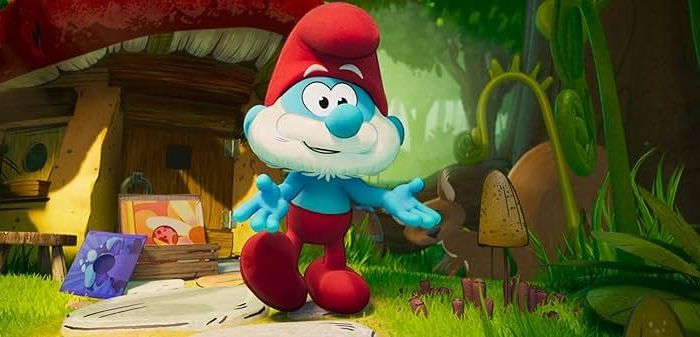
John Goodman gives Papa Smurf warmth, gravity, and enough authority to make his kidnapping feel important. Papa Smurf has led the village for years and understands dangers the younger characters have never encountered. His greatest strength is care. His greatest flaw is believing that protection justifies withholding information. He knows more about Razamel, No Name, and the wider magical conflict than he shares.
This decision follows a familiar fantasy pattern. An older leader hides the truth to protect a younger character, only to create greater confusion later. Papa Smurf’s capture removes him from much of the active story, allowing Smurfette to lead. That structural choice works, but it leaves John Goodman with fewer meaningful interactions than expected. The most important relationship should be between Papa Smurf and No Name. One has built the community around clear identities, while the other cannot find one.
Their conversations contain affection, but the film gives visual spectacle more room than emotional accountability. Papa Smurf eventually admits enough of the truth to help No Name understand his place. The reconciliation is warm, though he is forgiven quickly for keeping information that affected the entire village.
Razamel and Gargamel: Two Wizards Competing for Villainous Respect
Razamel serves as the primary antagonist. JP Karliak gives him dramatic confidence and greater focus than Gargamel usually demonstrates. Razamel wants power that can extend across worlds. He views the Smurfs as resources connected with magic rather than as enemies in a personal feud. This larger ambition increases the scale but reduces some of the charm associated with the franchise’s traditional conflict. Gargamel’s obsession was ridiculous and personal. Razamel’s plan is more conventionally dangerous.
Nick Kroll voices Gargamel with comic frustration. Gargamel dislikes being treated as the less competent brother and repeatedly tries to prove that his experience with Smurfs matters.
The sibling rivalry provides several amusing moments. Both villains are selfish, theatrical, and unable to cooperate without competing. Razamel’s superiority is clear enough that Gargamel occasionally becomes almost sympathetic.
The movie does not explore whether Gargamel might oppose his brother for reasons beyond wounded pride. Azrael remains the smarter observer. His reactions often communicate that both wizards are creating unnecessary problems.
Razamel’s design and magical abilities are effective, but his motivation remains thin. He wants control because he is the villain. A stronger antagonist would connect more directly with No Name’s identity conflict. Razamel could believe everyone must have one fixed purpose and attempt to force the worlds into defined roles. The film hints at control versus individuality without making that philosophy central to him.
The Supporting Smurfs: A Village of Labels Fighting for Screen Time
The supporting cast contains an enormous number of recognizable voices and familiar Smurfs.
Brainy, Hefty, Clumsy, Grouchy, Vanity, and others contribute jokes based on their defining traits. This is consistent with the franchise but creates a structural problem. The movie wants to celebrate characters whose personalities are intentionally simple while telling a story about escaping simple labels.
Some supporting Smurfs receive one repeated joke and little else. Brainy explains information. Clumsy causes physical accidents. Grouchy complains. Vanity focuses on appearance. These traits provide immediate readability for younger viewers. They also make the ensemble feel mechanical.
The celebrity voice cast adds energy but can become distracting. I occasionally heard a recognizable performer more clearly than the character. The film does not have enough time to develop everyone, especially after introducing additional human and magical figures. The supporting Smurfs work best as a group. Their arguments, panic, songs, and teamwork create a sense of community larger than the central heroes. Their willingness to follow Smurfette also reinforces her leadership.
The Snooterpoots and New Mythology: Expansion Without Enough Foundation
The new magical beings introduced during the journey represent the film’s attempt to expand the Smurfs beyond their familiar village and enemies. Their designs, behavior, and connection with the larger universe are intentionally strange.
Some of this material is imaginative. The film becomes less predictable when it enters places that do not resemble earlier Smurfs adaptations. The problem is explanation. Names, magical rules, family relationships, and historical details arrive quickly. The audience is expected to understand why these characters matter while still following Papa Smurf’s rescue and No Name’s development. The Snooterpoots sometimes feel as though they belong to a different franchise introduced halfway through the movie.
Their existence may support future stories, but it reduces the current film’s focus. A simpler version could have used one new ally to reveal the wider mythology gradually. Instead, the movie presents several concepts at once and relies on speed to prevent viewers from questioning them for too long.
Humor & Comedy Style: Smurf Puns at Maximum Speed
Smurfs uses verbal jokes, physical comedy, celebrity references, absurd creatures, self-aware franchise humor, and repeated substitutions involving the word “Smurf.” The wordplay is expected. The Smurfs have always replaced verbs, nouns, and emotional expressions with variations of their own name.
A few uses are clever. Many become predictable because the joke depends only on recognizing the substitution. Gargamel and Razamel provide stronger character-based comedy. Their rivalry works because each considers himself the serious villain. No Name’s attempts to discover a talent create physical humor, though repetition reduces the effect. The film also includes references clearly aimed at adults. These moments may briefly entertain parents but do not always fit the fairy-tale environment.
Several jokes feel written to produce quick reactions rather than develop through timing. The movie moves away from almost every punchline immediately, as though silence might allow the audience to lose interest. This is my first major complaint. The humor needs breathing room.
The best comic scenes involve visual contrast. Tiny Smurfs attempt to navigate oversized human objects, or a dramatic villain is interrupted by an animal reaction. These jokes emerge naturally from scale and personality. The weakest depend on random statements, modern references, or characters announcing the strange thing already visible on screen.
Visual Design & Animation: Multiple Styles Searching for One Identity
The film’s most ambitious feature is its use of different animation styles.
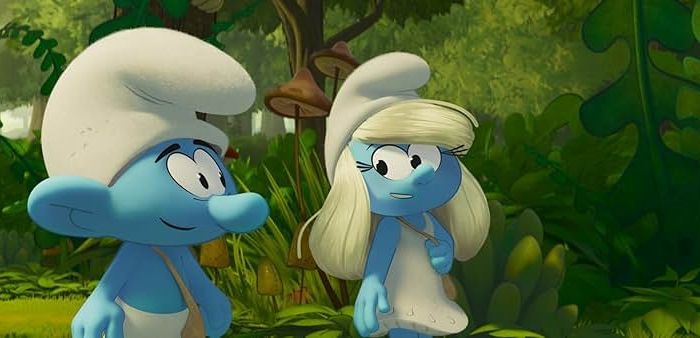
The primary Smurf world uses polished computer animation, bright colors, soft textures, and rounded character designs. Smurf Village remains visually familiar through mushroom houses, green landscapes, pathways, bridges, and communal spaces.
When the characters travel between worlds, the animation changes. Certain sequences use clay-like figures, hand-drawn imagery, retro pixels, anime-inspired movement, crayon textures, or other forms. This variety can be genuinely exciting. It communicates that the larger magical universe contains different rules and artistic identities.
The transitions also fit a story about characters refusing one fixed definition. The issue is visual coherence. Individual styles appear briefly and disappear before their possibilities are explored. Rather than allowing one alternative world to become meaningful, the film frequently uses each as another surprise.
The main computer animation is technically clean but less distinctive. The Smurfs look polished enough to support merchandise and close facial expression, yet the environments sometimes resemble generic modern family animation. The clay and drawn sections contain more visible personality because texture and imperfection create a stronger sense of authorship. The limited live-action material adds another visual layer without becoming essential.
Combining humans and Smurfs creates predictable scale comedy, but the film does not use live action long enough to justify moving outside animation completely. My second major criticism is that visual experimentation becomes decoration. The movie borrows artistic languages without always connecting them with character or emotion.
Music & Songs: Rihanna Brings Pop Energy to Smurf Village
Music plays a larger role than in several previous Smurfs films. Rihanna’s involvement gives the soundtrack clear promotional importance. The songs aim for contemporary pop accessibility while supporting Smurfette’s leadership and the adventure’s themes of self-discovery.
Rihanna’s vocal presence is confident, and the polished production gives musical sequences energy. The strongest song moments allow Smurfette to express determination rather than simply pause the story for performance. Other numbers function more like colorful breaks. Characters dance, backgrounds change, and the plot waits briefly. This creates additional variety but contributes to the crowded structure.
Henry Jackman’s score supports fantasy adventure, villainy, emotional discovery, and comic movement. The music becomes larger during portal sequences and more playful inside Smurf Village. It performs its function effectively without creating one instrumental theme likely to become inseparable from the franchise. The soundtrack is modern enough to attract younger listeners, though some choices may date the film more quickly than traditional orchestral writing would.
Direction & Pacing: A Movie That Refuses to Stop Moving
Chris Miller directs Smurfs with constant energy. Scenes begin quickly, deliver information or jokes, and transition before the rhythm can slow.
This approach suits younger audiences accustomed to rapid visual change. It also prevents emotional scenes from becoming heavy. The cost is depth. Papa Smurf’s disappearance, No Name’s insecurity, Smurfette’s responsibility, and the expanded mythology all require attention. The film rarely stays with any one conflict long enough for it to become emotionally powerful.
The first act is relatively clear. No Name feels uncertain, Papa Smurf is taken, and Smurfette forms the rescue mission. The middle becomes increasingly scattered as worlds, allies, magical objects, villains, animation styles, and musical sequences accumulate. The final act reconnects these elements but depends on substantial explanation.
The action remains readable despite the speed. Character colors and simple silhouettes help keep Smurfs identifiable during crowded scenes. The direction is strongest during visual experimentation and weakest during sincere conversation. A quieter scene between Smurfette and No Name could have done more for the film than another fast detour through a new artistic style.
Themes & Emotional Meaning: A Name Should Not Become a Cage
Smurfs is primarily about identity. The village gives each resident a name that defines a central quality. This system offers belonging but can reduce someone to one function. No Name believes he has failed because he cannot find the word that explains him. The film argues that identity may remain open, changing, and difficult to summarize.
This is a useful message for children who feel pressure to discover one talent or future role early. Smurfette supports the theme because her own history involves escaping an identity designed by someone else. Papa Smurf represents the protective side of labels. Clear roles help organize a community, but his secrecy reveals the danger of deciding what others are ready to know. Creativity and control form another thematic conflict. The changing visual worlds celebrate variety, while Razamel seeks power over them. The idea remains broad but understandable. A healthy community makes room for difference rather than forcing every person into one approved shape. Family is also defined through choice. The Smurfs protect one another because belonging depends on care, not usefulness alone.
Critical Reception & Audience Response: Visual Ambition Inside a Weak Story
Smurfs received a largely negative critical response. Reviewers frequently criticized its crowded plot, inconsistent humor, excessive characters, and dependence on familiar children’s-film ideas.
The animation received more mixed reactions. Some critics appreciated the changes in visual style and willingness to become strange.
Others felt the experimentation resembled borrowed decoration rather than a complete artistic identity. Rihanna’s performance attracted attention, though opinions differed on whether the celebrity casting strengthened Smurfette or distracted from her.
James Corden’s No Name also divided viewers. His energetic insecurity fits the character, but the performance may feel familiar to audiences who have heard similar roles from him. Young viewers were generally more receptive to the film’s speed, bright imagery, songs, and constant changes.
The movie’s commercial performance was modest compared with the strength of the Smurfs brand and the scale of its voice cast. That result suggests recognizable characters alone are not enough to guarantee a major animated hit. The film may develop a small following among viewers who enjoy its surreal visual detours. Its weaker story is less likely to improve with time.
Final Verdict: The Smurfs Needed a Simpler Path Through Their New Worlds
Smurfs is a colorful, energetic, and occasionally inventive attempt to rebuild the franchise for a new generation. Rihanna gives Smurfette leadership and enough calm presence to hold together scenes filled with louder performances. James Corden makes No Name sympathetic, though the screenplay repeats his insecurity more often than it develops it.
John Goodman gives Papa Smurf warmth, while Nick Kroll’s Gargamel benefits from being treated as the disappointing brother of a more dangerous wizard. The animation is the main reason to remain interested. Changes into clay, drawings, pixels, and other styles create genuine surprises.
Those surprises rarely become part of a coherent visual philosophy. The movie displays different techniques without giving them enough narrative meaning. The central message is positive. A person does not need one label, ability, or public function to deserve belonging. The film would communicate that message more effectively through a smaller story.
Instead, it adds magical books, secret histories, new species, celebrity cameos, songs, portals, live-action environments, and multiple villains. I recommend Smurfs mainly to younger children, established franchise fans, Rihanna fans, and viewers interested in animated films that change visual styles frequently. Adults may appreciate occasional surreal humor but are likely to find the plot exhausting and the emotional material underdeveloped.
Personal rating: 5.5/10.
Smurfs earns that score for Rihanna’s performance, John Goodman’s warmth, No Name’s relatable conflict, several imaginative animation experiments, and a sincere message about identity. It loses points for overcrowded storytelling, weak villains, repetitive humor, excessive exposition, shallow supporting characters, and a pace that rarely allows any emotion to last.
The movie wants to prove that a Smurf can be more than one defining word. Its own difficulty is similar: it tries to be a musical, fantasy quest, multiverse comedy, family mystery, celebrity showcase, and visual experiment at the same time. Somewhere inside all those versions is a smaller and better film waiting to be named.
Pros

- Impeccable animation quality that honors the spirit of the original comics while embracing state-of-the-art visuals
- Engaging, multi-layered storytelling that appeals to both longtime fans and newcomers
- Thoughtful, relevant themes including environmentalism and teamwork, woven subtly into the plot
- Excellent voice performances that lend both humor and emotional gravity to the characters
- Rich, immersive musical score that complements the storytelling
- Balanced pacing, which keeps the story engaging without becoming frenetic or exhausting
- Smart humor and clever cultural references that feel organic rather than forced
- Impressive world-building, making the forest habitat feel lived-in and magical
Cons

- Occasionally, some jokes drift into territory that may go over the youngest viewers’ heads, potentially alienating a portion of the family audience
- Antagonist motivations, while improved, could use further exploration to fully avoid cartoonish simplicity
- A few secondary characters get less narrative time, leading to missed opportunities for fan favorites to shine

Leave a comment
Your comment is awaiting moderation. We save your draft here
0 Comments