







Introduction & First Impressions: A Fox Who Cannot Stop Digging
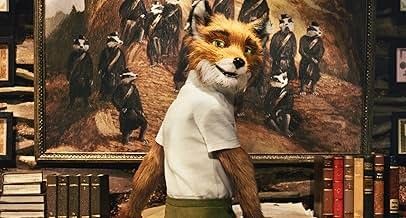
The moment that defines Fantastic Mr. Fox for me is not one of its elaborate robberies or underground escapes. It is Mr. Fox standing in front of a mirror, straightening his tie, and admiring the version of himself he wants everyone else to see. He is charming, intelligent, stylish, and completely certain that ordinary life is beneath him. This Fantastic Mr. Fox review begins with that self-image because Wes Anderson’s film is less interested in whether Mr. Fox can outsmart three farmers than in why he keeps needing to prove that he can.
Released in 2009 and adapted from Roald Dahl’s children’s novel, Fantastic Mr. Fox follows a former chicken thief who has promised his wife, Felicity, that he will abandon dangerous criminal work. Years later, he lives with her and their son Ash, writes a newspaper column, and appears to have built a respectable life.
Respectability does not satisfy him.
After purchasing a new home near the farms of Boggis, Bunce, and Bean, Mr. Fox begins planning one final series of raids. He tells himself that the robberies are practical, exciting, and connected with his natural identity. In reality, he misses admiration and danger.
The thefts provoke the farmers into a violent campaign against the entire animal community. Mr. Fox’s private need for excitement becomes a public crisis, forcing his family and neighbors underground.
Fantastic Mr. Fox is funny, visually distinctive, and emotionally sharper than its playful surface suggests. Its stop-motion characters move with intentional stiffness, its dialogue sounds both formal and ridiculous, and its world is filled with tiny handmade objects that reward attention.
The film is often described as charming, and it is. It is also anxious, melancholic, and quietly critical of people who turn personal restlessness into problems everyone else must solve.
Plot & Storytelling: One Last Job Becomes a Community Disaster
The film opens with Mr. Fox and Felicity raiding a farm together. They are fast, coordinated, and clearly accustomed to danger.
Their escape fails when they become trapped inside a cage. Felicity reveals that she is pregnant and asks Mr. Fox to promise that, if they survive, he will stop stealing birds. He agrees.
Years later, Mr. Fox works as a newspaper columnist. He lives with Felicity and their son Ash inside a burrow that feels safe but ordinary. Mr. Fox decides that the family should move into a tree. He ignores warnings from his lawyer, Badger, who explains that the location is dangerously close to three hostile farmers.
The farmers are introduced through precise visual and verbal descriptions.
Boggis raises chickens and consumes enormous meals. Bunce farms ducks and geese while eating a strange diet. Bean produces cider and appears colder, thinner, and more strategic than the others.
Mr. Fox becomes fascinated by them almost immediately. Their farms represent temptation, challenge, and the opportunity to recover his old identity. He recruits Kylie, an opossum who works as a superintendent, to help with a series of robberies.
They steal chickens from Boggis, ducks and geese from Bunce, and cider from Bean. Mr. Fox presents each raid as a carefully controlled operation.
The thefts are successful, but he hides them from Felicity. This secrecy is central to the conflict. Mr. Fox is not merely breaking a promise; he is constructing a second life based on the assumption that his family will never discover the risk.
Boggis, Bunce, and Bean recognize that a fox is responsible. They wait outside his home and fire when he appears. Mr. Fox escapes but loses his tail.
The farmers then begin digging into the tree. Mr. Fox moves his family deeper underground, but the farmers respond with larger machines. Soon, the attack affects more than the Fox family. Badger, Rabbit, Beaver, and other animals are forced from their homes.
The community initially blames Mr. Fox, correctly recognizing that his private choices created the emergency. Rather than admit defeat, Mr. Fox organizes the animals into a larger tunnel system. He proposes stealing food from all three farms while remaining underground.
The operation succeeds temporarily. The animals collect enough food and cider for a feast. The celebration creates the illusion that Mr. Fox’s reckless behavior has become heroic. He has endangered everyone, then used the crisis to display leadership. Bean responds by flooding the tunnels with cider. The animals are driven into the sewer system beneath the town.
The conflict becomes more personal when Kristofferson, Mr. Fox’s nephew, is captured during an attempt to recover the missing tail. Ash had encouraged the mission because he wanted to prove himself. His insecurity, combined with Mr. Fox’s example, produces another dangerous decision.
Mr. Fox finally recognizes that performance and cleverness will not solve everything. He offers to surrender in exchange for Kristofferson’s safety. The final rescue combines disguise, planning, physical action, and cooperation. The animals recover Kristofferson, and Mr. Fox confronts the farmers’ violence without pretending the situation is only another game.
The family eventually settles into the sewers, gaining access to food through a supermarket owned by the farmers. The ending is both triumphant and compromised. Mr. Fox has not restored the old life. He has found a way for the community to survive inside the consequences of his choices.
Mr. Fox: Charm as Both Talent and Defense
George Clooney voices Mr. Fox with effortless confidence. His performance makes nearly every plan sound intelligent, even when the character is obviously rationalizing selfish behavior.
Mr. Fox speaks quickly, dresses carefully, and treats conversation as an opportunity to control how others see him. He is genuinely capable. His plans often work, he understands physical space, and he can inspire frightened animals.
The problem is that competence becomes part of his addiction to danger. Mr. Fox tells himself that stealing is natural because he is a wild animal. The argument contains some truth. The film repeatedly contrasts animal instinct with civilized routine. Yet he uses instinct selectively. He enjoys the freedom of being wild while expecting Felicity and the community to absorb the consequences. His decision to move near the farms is presented as a family improvement, but it is also a way to place temptation within reach.
The robberies are described as one final adventure. This is a familiar promise made by characters who already know they are unlikely to stop.
Mr. Fox’s need for admiration becomes visible in the way he tells stories. He wants Kylie to recognize his brilliance, wants Ash to respect him, and wants Felicity to continue seeing him as extraordinary.
His fear is not merely boredom. It is the possibility of becoming ordinary. This makes his midlife crisis funny and painful. Mr. Fox has a loving family and meaningful work, yet he interprets stability as evidence that he is disappearing.
The film does not punish him by removing every positive quality. He remains clever, charismatic, and courageous. It asks whether those traits are valuable when separated from responsibility.
His partial growth comes through humiliation. He loses his tail, endangers the community, watches Felicity reject his excuses, and sees Kristofferson captured. By the end, Mr. Fox is still theatrical. The difference is that he becomes more willing to admit fear and dependence. He does not transform into a completely reliable husband or father. That imperfection makes the ending believable.
Felicity Fox: The Person Who Sees Through Every Performance
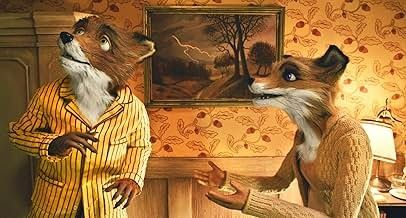
Felicity is the moral center of the film because she understands Mr. Fox without being impressed by every version of him. Meryl Streep gives her warmth, intelligence, anger, and emotional precision. Felicity rarely wastes words.
She once participated in robberies and understands the appeal of danger. Her request that Mr. Fox stop is not based on ignorance or fearfulness. It comes from pregnancy, responsibility, and the recognition that a family cannot survive if every decision is organized around one person’s appetite. When she discovers the truth, Felicity does not respond with simple panic. She tells Mr. Fox that she loves him but should not have married him. The statement is painful because both parts are sincere. She does not deny the relationship’s affection. She recognizes that affection has not prevented repeated betrayal. Felicity also refuses to let Mr. Fox turn apology into performance. He wants one emotional speech to restore trust. She understands that trust depends on behavior after the speech.
Her artistic identity receives smaller but meaningful attention. She paints landscapes, including images that appear more emotionally honest as the story darkens. The paintings suggest a private inner life beyond her role as wife and mother. One of the film’s weaknesses is that Felicity spends much of the middle reacting to Mr. Fox’s decisions rather than shaping the strategy herself. Her intelligence is obvious, but the plot gives him more opportunities to act publicly. Even so, Streep ensures that Felicity never feels secondary. Her judgment matters because she sees the difference between Mr. Fox’s charm and his actual choices.
Ash Fox: A Son Who Thinks Difference Means Failure
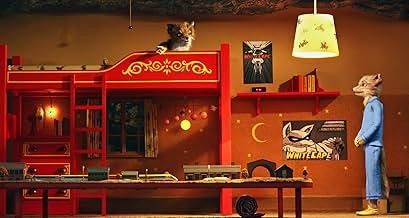
Ash is one of the film’s most emotionally recognizable characters. He is small, angry, imaginative, and convinced that everyone compares him unfavorably with someone else.
Jason Schwartzman gives Ash defensive speed and awkward intensity. His voice makes even simple complaints sound like arguments prepared long before the conversation began.
Ash wants his father’s approval but does not know what form that approval should take. Mr. Fox values athletic confidence, cleverness, and public competence. Ash feels physically less capable and socially stranger than the image his father admires. The arrival of Kristofferson intensifies this insecurity. Kristofferson is calm, talented, polite, athletic, and immediately liked by adults. Ash interprets every compliment directed toward his cousin as evidence that he is being replaced. His hostility is unfair but understandable. The adults repeatedly praise Kristofferson without recognizing what the comparison does to Ash.
Mr. Fox contributes most clearly. He treats Kristofferson with the admiration Ash wants and speaks to his son with impatience. Ash’s unusual identity is not the problem. The problem is that he believes difference has made him unworthy of respect. His improvised superhero costume becomes an important symbol. It looks strange and amateur, but it gives him a way to imagine courage in his own style. During the rescue, Ash proves useful not by becoming identical to Kristofferson but by acting according to his own instincts. His relationship with Kristofferson also improves once the comparison loses some of its power.
The film avoids turning Ash into a conventionally confident child. He remains sensitive and unusual. What changes is his willingness to believe that those qualities do not disqualify him from belonging.
Kristofferson: The Perfect Cousin Who Never Asked to Be a Rival
Kristofferson comes to stay with the Fox family because his father is ill. Eric Chase Anderson voices him with calm politeness. His emotional control contrasts sharply with Ash’s defensive behavior. Kristofferson practices meditation, understands physical tasks quickly, and responds to adults respectfully. These qualities make him appealing to Mr. and Mrs. Fox. They also make him an easy target for Ash’s resentment.
The film wisely does not make Kristofferson arrogant. He rarely uses his ability to humiliate Ash deliberately. He appears confused by the hostility but continues trying to connect. His calmness may also be a coping strategy. His father’s illness is serious, and living with another family places him in an uncertain emotional position. The movie gives this anxiety limited attention. Kristofferson often functions as the perfect cousin whose presence exposes Ash’s insecurity. His capture raises the stakes because he is a guest endangered by the Fox family’s conflict. Ash’s role in the rescue helps repair their relationship. He acts not to defeat Kristofferson in competition but to bring him home.
Kylie: A Loyal Assistant Who Frequently Loses Focus
Kylie is an opossum who works with Mr. Fox during the robberies. Wallace Wolodarsky gives him a slow, uncertain delivery that contrasts with Mr. Fox’s speed. He is dependable enough to participate in dangerous plans but not always capable of following Mr. Fox’s complicated instructions. When frightened or overwhelmed, Kylie’s eyes become blank spirals. The visual joke is simple and consistently effective.
Kylie also serves as an audience for Mr. Fox’s performance. Mr. Fox explains plans, seeks validation, and assumes leadership partly because Kylie allows him to occupy that role. Their partnership contains affection, though it is not equal. Mr. Fox makes decisions and expects Kylie to follow. Kylie’s greatest strength is loyalty without excessive admiration. He sometimes appears confused by Mr. Fox’s confidence rather than inspired by it.
The character remains lightly developed, but his quiet presence helps balance the film’s fast dialogue.
Boggis, Bunce, and Bean: Three Farmers United by Humiliation
The three farmers are introduced as grotesque variations on appetite, industry, and control.
Boggis is physically large and associated with chickens. Bunce is smaller, aggressive, and connected with ducks and geese. Bean is thin, calculating, and obsessed with cider. Michael Gambon voices Bean with cold authority. He emerges as the leader because he responds to Mr. Fox’s thefts strategically rather than emotionally. The farmers’ anger begins with property loss but quickly becomes personal humiliation.
They cannot tolerate being outsmarted by an animal. Their campaign grows far beyond any reasonable attempt to protect the farms. Machines destroy the landscape, families lose homes, and the entire community is placed under pressure because the farmers refuse to accept defeat. This makes them effective antagonists even without complex psychology. They represent power responding to embarrassment with overwhelming force. Bean is especially dangerous because he understands patience. He is willing to wait underground, flood tunnels, and reshape the environment. The farmers also mirror Mr. Fox. All are proud, territorial, and unwilling to accept limits. The difference is scale. Their wealth and machinery allow private anger to become collective punishment.
Humor & Comedy Style: Formal Dialogue, Sudden Violence, and One Useful Substitute Word
Fantastic Mr. Fox uses dry dialogue, visual precision, awkward pauses, physical comedy, repeated phrasing, and abrupt changes in tone. The characters speak with unusual formality. Plans, arguments, and emotional confessions often sound like carefully written statements. This gives the film a rhythm distinct from most family animation. Jokes are rarely shouted toward the audience.
Mr. Fox’s confidence produces much of the humor. He explains dangerous operations with the calm tone of someone organizing a dinner. Kylie’s slower responses create natural contrast. Ash’s emotional intensity adds another kind of comedy, built from insecurity rather than incompetence.
The film repeatedly substitutes the word “cuss” for stronger language. Characters use it as noun, verb, adjective, and emotional punctuation. The joke works because everyone understands the missing word without hearing it.
Animal behavior also interrupts civilized presentation. Characters eat suddenly, growl, dig, scratch, and display instinct beneath tailored clothing. The contrast between elegant language and wild movement is central to the movie’s identity. Some humor depends on emotional discomfort. Mr. Fox neglects Ash, lies to Felicity, and places others in danger while continuing to behave charmingly. I often laugh and then recognize that the underlying behavior is genuinely selfish.
This tension gives the comedy depth but may make the film less immediately warm for younger viewers. A few repeated mannerisms become predictable. Mr. Fox’s gestures and the careful pauses occasionally feel too controlled. Still, the humor remains remarkably consistent because it grows from character and visual design rather than temporary references.
Stop-Motion Animation & Visual Design: Fur That Moves Like a Handmade Thought
The stop-motion animation gives Fantastic Mr. Fox a physical identity that cannot be separated from its story. Fur moves between frames, fabric shifts, faces snap into new expressions, and characters walk with deliberate stiffness. The filmmakers do not hide every sign of manual construction. Visible texture becomes part of the beauty.
Mr. Fox’s fur, suit, tie, and posture create a carefully managed silhouette. His clothing reflects the civilized identity he performs, while his face and movement preserve animal energy. Felicity’s design is softer but equally precise. Ash is smaller and less balanced, matching his insecurity. The farmers are exaggerated through shape. Boggis appears heavy, Bunce compact, and Bean impossibly narrow. The environments use autumnal oranges, browns, yellows, and reds. Fields, tunnels, trees, farms, and underground rooms share a controlled palette.
This creates visual unity even when the story moves between domestic spaces and large mechanical destruction. The tree house initially looks attractive and exposed. It represents Mr. Fox’s desire to improve status while placing the family closer to danger. Underground spaces become increasingly complex as the animals dig. Tunnels turn into social rooms, escape routes, storage spaces, and temporary homes. Tiny objects receive extraordinary attention. Newspapers, cider bottles, furniture, maps, food, tools, and vehicles make the world feel built rather than rendered. The animation’s intentional roughness may feel strange to viewers accustomed to smoother motion. Characters sometimes move on fewer frames, producing a jerky quality. This is not a technical failure. It reinforces the film’s storybook rhythm.
The visual style communicates personality more effectively than realism could. Every frame looks arranged, yet the moving fur prevents the arrangement from becoming lifeless.
Music & Sound: Banjo Rhythms, Pop Songs, and Underground Momentum
Alexandre Desplat’s score combines playful orchestral writing with percussion, banjo, whistle-like textures, and rhythmic repetition.
The music gives the robberies a sense of precision and forward movement. It often treats Mr. Fox’s plans as elegant operations before the visuals reveal how unstable they actually are. The film also uses existing songs from artists including the Beach Boys, the Rolling Stones, and Bobby Fuller Four. These selections create an unusual mixture of nostalgia, rebellion, and playful energy. “Heroes and Villains” fits particularly well because the movie repeatedly questions which category Mr. Fox occupies. Music supports the stop-motion rhythm. Repeated beats match digging, running, planning, and mechanical movement.
Sound design gives texture to dirt, claws, machinery, food, and fabric. The animals’ sudden eating sounds are especially effective. Civilized dialogue can stop instantly when instinct takes control. Silence is also used carefully. Emotional conversations often include pauses long enough to become uncomfortable. The score rarely forces sentiment. It supports the film’s melancholy without instructing the audience to forgive Mr. Fox too quickly.
Direction & Pacing: Wes Anderson Builds a Dollhouse Around a Midlife Crisis
Wes Anderson directs the film with symmetrical framing, lateral movement, chapter-like structure, carefully arranged interiors, and characters facing the camera directly.
These techniques could feel restrictive in stop motion. Instead, they make the handmade environments resemble moving illustrations. The camera often travels sideways through tunnels or rooms, revealing action as though a stage wall has been removed. This supports the story’s focus on hidden systems and underground planning.
The pacing is quick but controlled. Dialogue arrives rapidly, while visual reactions may remain still for several seconds. The opening establishes the promise, time jump, family tension, new house, and farmers efficiently. The middle becomes increasingly complex as robberies lead to retaliation, digging, community displacement, and flooding. The film remains coherent because every escalation traces back to Mr. Fox’s original choice.
The final rescue includes multiple plans and locations but avoids becoming visually confusing. Anderson’s direction is less effective when emotional distance becomes too strong. Characters sometimes describe pain with such formal precision that spontaneity disappears. This style suits Mr. Fox’s self-presentation but can limit Felicity or Ash during their most vulnerable moments.
The film’s compact running time also means some consequences pass quickly. The animal community is displaced and endangered, yet the social resentment toward Mr. Fox softens once he presents another plan. A longer aftermath could have required him to rebuild trust more directly.
Themes & Emotional Meaning: Instinct Is Not an Excuse
Fantastic Mr. Fox explores the tension between instinct and responsibility. Mr. Fox argues that stealing birds is part of his nature. He is a wild animal pretending to live a civilized life. The film never rejects that tension. The animals do possess instincts that cannot be reduced to polite social behavior.
The problem is Mr. Fox’s use of nature as justification. He treats one desire as more authentic than every promise, relationship, and responsibility built around it. Felicity is also a fox. She once participated in raids. She does not accept that biology removes choice. This distinction gives the film moral weight. Identity may shape desire, but it does not determine every action.
The story also examines masculinity and performance. Mr. Fox wants to appear daring, capable, admired, and impossible to control. His fear of ordinariness becomes dangerous because he interprets care, routine, and stability as threats to identity. Ash experiences a younger version of the same pressure. He believes worth depends on physical confidence and public recognition. Both father and son must discover that individuality does not require constant demonstration.
Family is another major theme. Mr. Fox loves Felicity and Ash, but he repeatedly treats love as protection from consequences.
He assumes affection will survive secrecy because the emotional bond is real. Felicity’s response shows that love and trust are different. One can remain while the other is damaged. Community responsibility expands the theme beyond the household. Mr. Fox’s private choices destroy homes and food supplies belonging to others.
His intelligence becomes valuable only when used to repair rather than impress. The ending does not return the animals to their former lives. They adapt to the sewers and supermarket. This is important. Consequences remain even after the immediate danger is overcome.
Critical Reception & Lasting Reputation: A Cult Favorite That Improved With Time
Fantastic Mr. Fox received strong critical reviews for its stop-motion animation, voice cast, visual design, humor, music, and distinctive adaptation of Roald Dahl’s story.
George Clooney and Meryl Streep were frequently praised for giving the animal characters sophisticated emotional personalities without losing comic energy.
The film’s visual style attracted particular attention. Its textured fur, miniature environments, deliberate frame rate, and autumnal palette separated it from smoother computer-animated releases. Some viewers found Wes Anderson’s controlled dialogue and symmetrical presentation emotionally distant.
The film also performed modestly compared with larger family-animation franchises. Its humor, adult anxieties, and unusual visual rhythm were less immediately commercial.
Over time, its reputation grew substantially. It became a cult favorite among animation fans, filmmakers, designers, and viewers who appreciated its balance of childish adventure with adult dissatisfaction.
The movie is now often regarded as one of the strongest modern stop-motion films and one of Wes Anderson’s most accessible works. Its influence is visible in later animated projects that embrace handmade texture, intentionally limited movement, dry dialogue, and visually controlled worlds. The film also remains notable for refusing to separate family entertainment from flawed adult behavior. Mr. Fox is charming, but the story does not pretend charm makes him reliable.
Final Verdict: A Clever Animal Story About the Cost of Needing to Feel Exceptional
Fantastic Mr. Fox is one of the finest stop-motion films because its craftsmanship and character conflict are inseparable.
Mr. Fox’s world is carefully arranged, just like the identity he presents. He wears a suit, speaks confidently, writes a column, and performs the role of a respectable family man.
Beneath that surface, he remains frightened that stability has made him ordinary.
George Clooney makes the character irresistible without hiding his selfishness. Mr. Fox lies, manipulates, and exposes others to danger because he misses the feeling of being extraordinary.
Meryl Streep ensures that Felicity’s love never becomes passive acceptance. She understands his instincts and still expects responsibility.
Jason Schwartzman gives Ash a painful need for recognition, while Eric Chase Anderson makes Kristofferson calm enough to reveal how unfair comparison can become.
The film’s stop-motion animation remains extraordinary. Fur trembles, dirt falls, tiny tools move, and every environment feels physically constructed. Alexandre Desplat’s score and the carefully selected songs give the robberies momentum while preserving the story’s sadness. The movie is funny, but its humor frequently carries discomfort. Mr. Fox’s clever speeches do not erase the damage beneath them. The ending is hopeful without restoring everything. The animals survive underground, the family remains together, and Mr. Fox learns something about dependence. He does not become completely different. A fully transformed Mr. Fox would feel dishonest.
I recommend Fantastic Mr. Fox to stop-motion fans, families with older children, Wes Anderson viewers, Roald Dahl readers, and anyone interested in stories about ego, parenting, instinct, and the fear of becoming ordinary.
Personal rating: 9.5/10.
Fantastic Mr. Fox earns that score for its remarkable animation, George Clooney and Meryl Streep’s performances, precise humor, memorable production design, layered family conflict, and honest treatment of a charismatic but unreliable protagonist. It loses half a point for emotional distance, underused supporting characters, and a community reconciliation that arrives slightly too easily.
Mr. Fox spends the story insisting that he steals because he is wild. The wiser truth is that freedom is not doing whatever instinct demands. It is learning which desires are worth the damage they may cause.

Leave a comment
Your comment is awaiting moderation. We save your draft here
0 Comments