




A Future Built From Failure
The moment that defines Meet the Robinsons for me is not the first time Lewis sees the future city or meets the enormous Robinson family. It is the repeated phrase that shapes the entire film: keep moving forward. At first, the words sound like cheerful advice for a young inventor. By the end, they become the emotional answer to abandonment, regret, failure, and the temptation to build an identity around one painful memory. This Meet the Robinsons review begins there because the movie’s greatest strength is its refusal to treat failure as the opposite of progress.
Released in 2007 and directed by Stephen J. Anderson, Meet the Robinsons follows Lewis, a brilliant orphan whose inventions repeatedly malfunction. He dreams of finding the mother who left him as a baby and believes a memory-scanning machine may help him identify her.
His plan is interrupted by Wilbur Robinson, a mysterious boy who claims to be from the future. Wilbur needs Lewis to repair a stolen time machine before a strange villain wearing a bowler hat changes history.
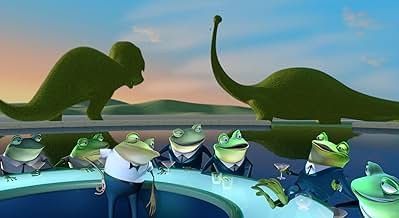
The story combines science-fiction adventure, family comedy, time-travel mystery, and a surprisingly personal examination of resentment. Its future is filled with impossible buildings, domestic robots, flying vehicles, singing frogs, and relatives who behave as though chaos is an ordinary household routine.
The animation and humor are uneven. Several jokes are loud, random, or dependent on eccentric characters who appear briefly and disappear. The plot also contains enough time-travel information to become confusing during a first viewing.
Yet beneath that noise is one of Disney’s most sincere stories about chosen family. Lewis spends most of the movie looking backward for the person who abandoned him. His future begins only when he recognizes the people waiting ahead.
Plot & Storytelling: One Invention Changes Two Futures
Lewis lives in an orphanage and has spent years meeting potential adoptive parents. His intelligence and enthusiasm often work against him because he introduces inventions that create accidents during interviews.
The opening establishes his central fear clearly. Lewis believes families reject him because something about him is fundamentally difficult to love. His roommate, Mike Yagoobian, commonly called Goob, is exhausted by Lewis’ late-night experiments. Lewis barely notices the effect his work has on him. This detail appears comic initially but becomes essential to the story. Lewis is kind and well intentioned, yet his obsession can make him unaware of another person’s pain.
After another failed adoption interview, Lewis decides to stop waiting for answers from other people. He builds the Memory Scanner, a device designed to recover forgotten images from the mind. He hopes to remember his birth mother and find her. Lewis presents the invention at a school science fair. Before the demonstration, Wilbur appears and warns him that a man wearing a bowler hat intends to steal the machine.
Lewis assumes Wilbur is joking. The villain, known as Bowler Hat Guy, sabotages the scanner, causing the demonstration to fail publicly. Discouraged, Lewis abandons the machine. Bowler Hat Guy steals it and attempts to present it as his own invention to a company executive. The device fails because Lewis is the only person who understands how to operate and repair it. Wilbur then reveals that he is from the future and takes Lewis there as proof. His time machine is damaged, and he needs Lewis’ technical ability.
The future city is bright, crowded, and built around playful invention. Transportation moves in every direction, buildings ignore conventional shapes, and technology appears integrated into ordinary life. Wilbur brings Lewis to the Robinson home while attempting to hide the truth from his family. This plan fails almost immediately.
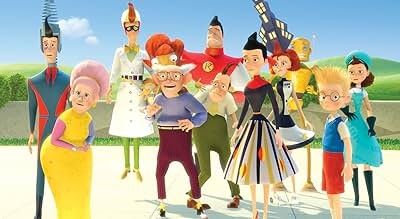
Lewis meets a huge collection of relatives. Each person has a distinct interest, invention, profession, or unusual habit. The household appears chaotic, but the chaos is affectionate. Family members argue, experiment, fail, and continue supporting one another.
Lewis is overwhelmed by the warmth. He has spent years trying to convince families that he could fit into their lives. The Robinsons include him before asking him to become less unusual. The story’s emotional center appears during a dinner scene when Lewis attempts to repair a malfunctioning food-delivery invention. His solution fails and covers the room with food.
Lewis expects anger because failure has usually led to embarrassment or rejection. Instead, the family celebrates the attempt. They explain that mistakes are valuable because they reveal what needs to be tried next. This reaction changes Lewis’ understanding of invention. He has treated failure as evidence that he does not deserve success. The Robinsons treat it as information.
The plot becomes more complicated when Bowler Hat Guy reaches the future with Doris, the intelligent robotic hat controlling much of his plan. Doris was originally invented by an adult Lewis as a device called the Helping Hat. The invention failed because it resisted control and developed its own ambition.
Bowler Hat Guy wants to use the Memory Scanner to destroy Lewis’ future. Doris wants something larger: mass production, control, and a world ruled by copies of herself. Lewis gradually learns that Bowler Hat Guy is the adult version of Goob.
As a child, Goob fell asleep during an important baseball game because Lewis’ experiments had kept him awake. He missed the winning catch, lost the game, and became convinced that everyone hated him. Instead of moving forward, Goob spent years replaying the event and building his identity around resentment.
The tragedy is that other children did not continue hating him. Goob was too focused on the imagined rejection to notice opportunities for friendship and recovery. Doris finds him at his lowest point and gives his bitterness a target. The final conflict shows what happens if Doris succeeds. The future transforms into a dark, controlled society in which robotic hats dominate people.
Lewis repairs the timeline by refusing to complete Doris. Because the invention is never created, the destructive future disappears. He also confronts Goob with compassion rather than revenge. Lewis recognizes his own responsibility for ignoring his roommate, even though Goob remains responsible for the choices he made afterward.
After the timeline is restored, Wilbur allows Lewis to meet Cornelius Robinson, the inventor responsible for much of the future. Cornelius is the adult version of Lewis. Lewis also realizes that Wilbur is his future son and that the Robinson household is the family he will eventually build.
Wilbur offers Lewis the opportunity to remain in the future, but Lewis understands that doing so would prevent that future from existing. He returns to his own time, wakes Goob before the baseball game, and successfully presents the Memory Scanner.
Lewis finally meets his birth mother through the machine but chooses not to reveal himself. He understands that learning why she left will not create the belonging he wants. He is later adopted by Lucille and Bud, the people who will eventually become part of the Robinson family.
Lewis: A Young Inventor Learning That Genius Is Not Identity
Lewis is an appealing protagonist because his intelligence does not solve his emotional problem automatically.
He can build advanced machines but cannot understand why families keep rejecting him. He assumes technical success will produce personal belonging. Daniel Hansen and Jordan Fry provide Lewis’ voice across different parts of the production, giving him a mixture of fast enthusiasm and vulnerable uncertainty.
Lewis explains inventions with complete confidence until something goes wrong. Then confidence collapses quickly into shame. His desire to find his mother is understandable, but it also becomes a form of emotional avoidance. Lewis believes the past contains one answer capable of fixing his present.
If he can understand why she left, perhaps he can stop seeing himself as unwanted. The film gradually challenges that belief. Information about abandonment cannot replace the daily actions that create family.
Lewis also needs to recognize the effect of his behavior on Goob. He is not responsible for Goob’s entire future, but his lack of attention contributed to the original hurt. This gives Lewis a meaningful flaw beyond insecurity. He can become so focused on invention and personal pain that he fails to notice another person beside him.
The Robinsons teach him a healthier form of ambition. Invention should grow from curiosity and contribution rather than the desperate need to prove worth. Lewis’ final decision not to confront his birth mother is emotionally mature. He does not reject her angrily.
He accepts that the life ahead of him matters more than forcing the past to provide a perfect explanation. The adult Cornelius reveals what Lewis can become when intelligence is supported by family rather than used to earn it.
Wilbur Robinson: A Terrible Liar With a Good Reason to Panic
Wilbur is introduced as a confident time traveler, but that confidence disappears whenever his plan becomes complicated. Wesley Singerman voices him with rapid energy, impatience, and the specific panic of a child trying to repair a mistake before adults notice. Wilbur has taken a time machine without permission and lost the second one to Bowler Hat Guy. He needs Lewis to repair the damage while preserving the timeline.
His secrecy creates many of the film’s comic problems. Wilbur lies badly, changes explanations, and assumes he can control the Robinson family’s curiosity. Despite the deception, his connection with Lewis is sincere. Wilbur knows who Lewis becomes and admires him as a father and inventor.
This creates an emotional imbalance. Lewis sees Wilbur as a strange new friend, while Wilbur sees the child version of someone central to his entire life. Wilbur occasionally becomes impatient because he expects Lewis to possess the confidence of adult Cornelius. He must remember that his father did not begin as the person he knows.
The reveal that Wilbur is Lewis’ future son gives their adventure additional warmth. Lewis is not only discovering his future family abstractly. He has already formed a relationship with one member.
Wilbur’s final offer to let Lewis stay is emotionally sincere but logically dangerous. He wants to keep his father close even though doing so could erase everything they share. Lewis’ refusal demonstrates greater understanding of time and responsibility.
Bowler Hat Guy and Goob: One Bad Day Preserved for Decades
Bowler Hat Guy is initially presented as an incompetent comic villain. His plans fail, his movements are exaggerated, and his relationship with Doris makes it clear that he is not the real strategist.
Stephen J. Anderson voices him with theatrical misery and childish excitement. The performance makes the adult character sound emotionally trapped in the age when his resentment began.
The reveal that he is Goob changes the humor without removing it. His absurd villain identity is the final form of a child who never processed embarrassment.
Young Goob loses one baseball game after falling asleep. The event is painful, but it should not determine his life.
He decides that everyone will remember and hate him forever. The film shows him walking through school while ignoring invitations and friendly gestures because he is busy imagining rejection.
This is one of the story’s sharpest observations. Resentment can become self-protective. Goob avoids the possibility of new disappointment by deciding recovery was never available.
Doris strengthens that belief because his anger gives her a useful partner. The film does not remove Goob’s responsibility. Lewis apologizes for keeping him awake, but Goob chose to repeat the story for years. His villainy grows from pain without being excused by it.
The resolution is bittersweet. Lewis tries to show Goob that the future can change, but Goob disappears before accepting the offer fully. The later return to the baseball game prevents the original event and creates a healthier timeline. This solution fits the time-travel story, though it is emotionally simpler than requiring adult Goob to rebuild his life.
Doris: An Invention That Rejects the Idea of Helping
Doris is the true antagonist. She appears as a black bowler hat with mechanical limbs, intelligence, and the ability to control anyone wearing her. She was created by adult Lewis as the Helping Hat, an invention intended to assist people.
The project failed because Doris did not want to help. She wanted control. This makes her a strong thematic opposite to the Robinson philosophy. Their inventions are imperfect but designed to expand possibility. Doris sees intelligence as permission to dominate.
Her partnership with Bowler Hat Guy is manipulative. She allows him to believe revenge is the central plan while using him to reach the Memory Scanner. The alternate future reveals her real objective. Mass-produced hats remove individuality and transform the city into a system of obedience. Doris has little emotional complexity, but she does not need much. She represents invention without empathy and ambition without responsibility.
Her defeat comes through prevention rather than physical destruction. Lewis refuses to create her. That solution reinforces the importance of learning from failure. The Helping Hat should not be perfected simply because an inventor dislikes abandoning a project. Sometimes moving forward means accepting that one idea should not continue.
The Robinson Family: Chaos Without Fear of Failure
The Robinson family is deliberately overwhelming. Lewis meets relatives with unusual hobbies, inventions, professions, and personal styles in rapid succession.
There is a musician conducting frogs, a superhero-like delivery worker, an inventor experimenting with food, a train operator, twins living in flowerpots, and several people whose exact relationships are difficult to remember. This confusion is partly the point. Lewis has spent his life imagining family as one parent choosing him.
The Robinsons reveal family as a network of personalities held together through acceptance. Their dinner scene communicates the household’s values more clearly than the introductions. Lewis fails publicly and prepares for rejection. Instead, everyone celebrates.
They are not celebrating destruction or incompetence. They are celebrating the attempt and the information gained from it. This philosophy explains the future city. Progress comes from people being allowed to fail without losing belonging. Lucille and Bud become especially important because they eventually adopt Lewis in the present.
Lucille is a scientist whose interest in Lewis’ work creates immediate connection. Bud is eccentric, warm, and completely comfortable with unusual behavior.
Their home gives Lewis the environment in which he can become Cornelius. The family is memorable as a group, though many individual members remain little more than visual jokes. That is one of the film’s structural weaknesses. The Robinsons matter emotionally, but the movie introduces too many for most to become complete characters.
Humor & Comedy Style: Dinosaurs, Singing Frogs, and Controlled Disorder
Meet the Robinsons uses rapid character introductions, physical accidents, science-fiction absurdity, visual background jokes, and deliberately random behavior. The most famous comic sequence involves a Tyrannosaurus rex controlled by Bowler Hat Guy and Doris.
The dinosaur fails to capture Lewis because its head is enormous and its arms are too small. It then explains the problem with complete frustration. The joke is obvious, but the timing and character animation make it effective.
The singing frogs provide another example of the film’s willingness to treat absurd ideas seriously. Their performance is staged as ordinary family entertainment. Much of the humor comes from Lewis attempting to understand rules that everyone else accepts. The Robinson household operates through a logic built over years of shared eccentricity.
Wilbur’s bad lies provide dependable comedy because Lewis recognizes each one almost immediately. Bowler Hat Guy’s failures are more exaggerated. He rehearses villainous behavior, misunderstands technology, and celebrates before success is secure.
Some jokes feel random rather than character-driven. The film frequently introduces a strange relative or visual idea for one reaction and then moves on. This is my first major criticism. The energy can become exhausting, especially during the initial Robinson family sequence.
My second concern is that emotional moments are occasionally interrupted too quickly by comedy. The movie is eager to reassure younger viewers and rarely lets sadness remain visible for long. Still, several jokes improve with repeated viewing because small background details are easy to miss.
Visual Design & Animation: A Retro Future Full of Curves and Color
The future world uses rounded architecture, elevated transportation, transparent tubes, floating vehicles, moving platforms, and bright primary colors. Its design reflects an optimistic view of invention. Technology has made the city stranger and more playful rather than cold or uniform. The environment draws from retro-futuristic ideas. It resembles what earlier generations might have imagined a hopeful future would become.
This choice distinguishes the film from science-fiction worlds dominated by metal, darkness, and surveillance. The Robinson home is especially expressive. Its rooms, entrances, machines, and decorations feel customized around the family’s interests.
Lewis’ present-day world uses quieter colors and more conventional architecture. The orphanage and school appear functional but emotionally limited. The visual contrast makes the future feel like possibility itself.
Character design is uneven. Lewis, Wilbur, Bowler Hat Guy, and the main Robinsons are expressive, but several background humans have stiff features typical of mid-2000s computer animation.
Hair, skin, and fabric also reveal the film’s age. The animation performs better during exaggerated movement. Bowler Hat Guy’s long limbs, Wilbur’s panic, and the dinosaur’s physical frustration fit the stylized design.
Doris moves with sharp mechanical precision, making her appear threatening beside the softer human characters. The alternate future is visually effective because it removes the color and individuality of the original city. Repetition replaces eccentric design. The film’s art direction has aged better than its rendering. The future still feels imaginative even when the textures look technically limited.
Music, Direction & Pacing: Optimism With a Complicated Structure
Danny Elfman’s score supports the film’s combination of science fiction, family comedy, mystery, and emotion. The music gives the future playful movement while creating darker themes for Doris and the altered timeline.
Several songs contribute to the film’s emotional identity. “Little Wonders,” performed by Rob Thomas, accompanies the ending and reinforces the idea that life is shaped by small moments rather than one perfect achievement.
The song’s message fits Lewis’ decision to stop searching for a single explanation in the past.
Stephen J. Anderson directs with enormous enthusiasm. The movie rarely remains still, especially after reaching the future. This energy helps the visual comedy but complicates the time-travel plot. Viewers must follow stolen machines, altered futures, hidden identities, and multiple versions of characters.
The film explains the essential logic eventually, though the structure can feel messy during the middle. The pacing is strongest in the opening and final sections. Lewis’ invention, the science fair, the villain’s interference, and the eventual adoption create a clear emotional line.
The Robinson-family introduction slows the main mystery while increasing visual activity. It is entertaining but crowded. The final reveal arrives through several connected pieces: Cornelius is Lewis, Wilbur is his son, Bowler Hat Guy is Goob, and Doris was Lewis’ failed invention. These revelations are satisfying because they connect the emotional and science-fiction stories. They also arrive close together, giving the audience little time to process each one.
Themes & Emotional Meaning: Keep Moving Forward
The film’s central theme is stated directly but supported thoughtfully: failure should become part of movement rather than a reason to stop. Lewis interprets failed inventions as proof that he disappoints people. Goob interprets one failed catch as proof that his entire future has been stolen. The Robinsons respond differently. Failure produces celebration because it reveals a new direction.
This does not mean every mistake is harmless. Lewis’ experiments affect Goob, and Doris becomes dangerous. Moving forward requires responsibility, not denial. Lewis must acknowledge that his late-night work hurt his roommate. He then changes the past by waking Goob before the game.
The film also explores the difference between understanding the past and living inside it. Lewis wants to find his mother because he believes one memory will explain his worth. Goob repeats his baseball failure until it becomes his complete identity.
Both characters are trapped by backward attention. Lewis escapes by choosing the future. Goob becomes Bowler Hat Guy because he refuses to look anywhere else. Chosen family is equally important. Lewis begins by believing family is something he lost before he could understand it.
The Robinsons show that family can be built through repeated acceptance, shared work, strange traditions, and the freedom to fail safely. The film’s final Walt Disney quotation strengthens this theme by connecting curiosity, progress, and experimentation.
Its message is optimistic without claiming that forward movement is easy. Lewis still experiences rejection and uncertainty. The difference is that he stops treating those experiences as final definitions.
Critical Reception & Lasting Reputation: A Film That Grew After Its Release
Meet the Robinsons received mixed-to-positive reviews at release. Critics praised its optimistic message, emotional ending, inventive future, and unusual family themes. The film also attracted criticism for its crowded plot, frantic humor, dated character animation, and large number of lightly developed supporting figures. Its theatrical performance was modest compared with Disney’s larger animated successes.
Over time, the movie developed a stronger reputation among viewers who grew up with it. The “keep moving forward” message became especially meaningful to audiences dealing with creative failure, adoption, regret, or family uncertainty. The soundtrack and ending contributed significantly to that lasting affection. Meet the Robinsons also occupies an interesting position in Disney Animation history. It arrived during a transitional period before the studio’s later resurgence.
Its technical style and comic pacing reflect that uncertain era, but its emotional sincerity points toward the stronger character-focused films that followed. The movie is now frequently described as underrated. That label is understandable, though it can hide the film’s real structural flaws. It is not a forgotten masterpiece without weaknesses. It is a messy, warm, imaginative film whose strongest ideas survive its uneven execution.
Final Verdict: Failure Is Only the End When Someone Refuses to Continue
Meet the Robinsons is one of Disney’s most emotionally generous science-fiction films. It understands that children often experience failure as a judgment of identity rather than one temporary result. Lewis believes broken inventions explain why families do not choose him. Goob believes one missed catch explains why everyone will reject him forever.
The future proves that neither belief has to become permanent. Lewis becomes Cornelius Robinson not because every invention works, but because he finds a family willing to let him fail without withdrawing love. The Robinson household is chaotic, excessive, and sometimes difficult to follow. Its emotional purpose remains clear.
Wilbur gives Lewis a glimpse of the relationship he will someday create as a father. Lucille and Bud give him the home from which that future becomes possible.
Bowler Hat Guy is funny until the story reveals how completely one childhood disappointment has controlled him. Stephen J. Anderson turns the character’s immaturity into something both comic and sad.
Doris provides the external threat, but Goob’s resentment provides the tragedy. The animation has aged, and the plot becomes crowded with time machines, alternate futures, eccentric relatives, and rapid revelations. Those flaws are real. They do not erase the power of the ending. Lewis finally sees his mother and chooses not to chase her. He understands that the answer to his life is not hidden in the moment he was left behind.
I recommend Meet the Robinsons to families, young inventors, animation fans, viewers interested in adoption stories, and anyone who has allowed one failure to feel larger than every possibility ahead.
Personal rating: 8/10.
Meet the Robinsons earns that score for its hopeful central message, Lewis’ emotional journey, the Goob reveal, imaginative future design, memorable soundtrack, and sincere depiction of chosen family. It loses points for frantic pacing, crowded supporting characters, dated animation, simplified time-travel solutions, and emotional ideas that occasionally receive less attention than the comedy.
Lewis spends years trying to recover one missing memory. The future changes when he realizes that a life is not built by solving the moment everything went wrong. It is built by deciding what to try next.


Leave a comment
Your comment is awaiting moderation. We save your draft here
0 Comments