




When Sonic Finally Meets His Dark Reflection
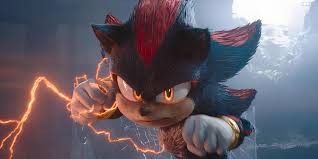
The moment Sonic the Hedgehog 3 establishes its real identity is not the first joke, the first burst of speed, or the first appearance of Doctor Robotnik. It is Shadow standing alone, surrounded by military personnel who clearly understand that they have awakened something they cannot control. He looks familiar enough to resemble Sonic, but every part of his presence feels heavier. Sonic runs because movement gives him joy. Shadow moves as though stopping would force him to remember everything he has lost. This Sonic the Hedgehog 3 review begins with that contrast because the film’s best decision is treating Shadow as more than an evil version of its hero.
Directed by Jeff Fowler, Sonic the Hedgehog 3 continues the live-action and computer-animated film series inspired by Sega’s games. Sonic now lives with Tom and Maddie alongside Tails and Knuckles, forming an unconventional family and increasingly confident heroic team. Their stability is interrupted when Shadow escapes from containment and immediately proves capable of overpowering all three heroes.
The third film is larger, faster, and more closely connected to the mythology of the games than its predecessors. It draws heavily from ideas associated with Sonic Adventure 2, particularly Shadow’s history, Maria Robotnik, Gerald Robotnik, the Space Colony ARK, and the destructive potential of grief transformed into revenge.
That increased loyalty to the games gives the film stronger dramatic material, but it also creates a crowded narrative. Sonic, Shadow, Tails, Knuckles, two Robotniks, Tom, Maddie, Commander Walters, Agent Stone, Maria, and several large action concepts all compete for attention.
The film usually controls that crowd through speed and confident editing. It rarely becomes boring. It does, however, occasionally move so quickly that emotional moments receive less space than they deserve.
Plot & Storytelling: A New Threat Forces Old Enemies Together
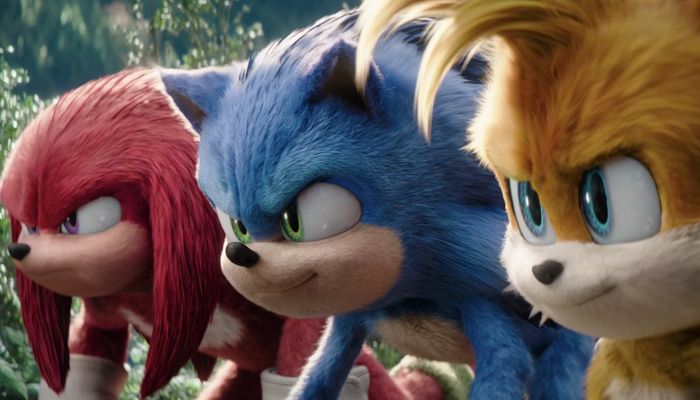
Sonic, Tails, and Knuckles begin the film as Team Sonic, a group that has developed enough confidence to respond to major threats together. Their dynamic has become familial rather than merely tactical.
Sonic remains impulsive and energetic. Tails supplies technical intelligence, while Knuckles approaches every situation with physical seriousness. Their contrasting personalities provide easy comedy, but the team also demonstrates real trust.
The central crisis begins when Shadow escapes from a secret Guardian Units of Nations facility. He has been held in suspended animation for decades following a classified experiment and the death of Maria, the young person with whom he formed his closest emotional bond.
Team Sonic is sent to stop him, but their first confrontation ends decisively. Shadow matches Sonic’s speed, exceeds his combat discipline, and fights with a level of aggression the heroes are not prepared to handle.
This early defeat is important because it prevents Shadow from feeling like another obstacle waiting to be overcome through teamwork. He understands their abilities quickly and treats the encounter as an inconvenience.
With conventional options failing, Sonic and his friends turn to Doctor Robotnik. The alliance is naturally unstable. Robotnik has attempted to control or destroy Sonic repeatedly, while Sonic has no reason to trust him.
Jim Carrey’s return gives the partnership comic energy, but it also creates an unexpected emotional direction once Robotnik discovers his grandfather, Professor Gerald Robotnik.
Gerald presents himself as the family connection Ivo never had. Their reunion initially gives Robotnik something he has wanted beneath the ego and theatrical cruelty: recognition from someone who understands his intelligence.
The film then reveals the larger plan surrounding Shadow and the Eclipse Cannon, a weapon capable of devastating Earth. Gerald has preserved his grief for decades and intends to convert it into collective punishment.
Shadow becomes essential to this plan because his pain can be directed toward the belief that humanity deserves destruction. Gerald does not need to create Shadow’s anger. He only needs to prevent him from questioning it.
The story follows two parallel emotional conflicts. Sonic must decide whether anger justifies revenge after someone he loves is harmed. Shadow must decide whether Maria’s death should define the meaning of his entire existence.
This parallel gives the action more weight. Sonic and Shadow are not simply competing because they possess similar abilities. They represent two possible responses to loss. The screenplay does not always handle this comparison subtly. Characters explain emotional lessons directly, and important decisions arrive within the demands of a fast climax.
Still, the structure is stronger than the plots of the previous films. The threat grows from character history rather than an unrelated machine or another attempt by Robotnik to capture Sonic.
Shadow the Hedgehog: The Character Who Changes the Series’ Tone
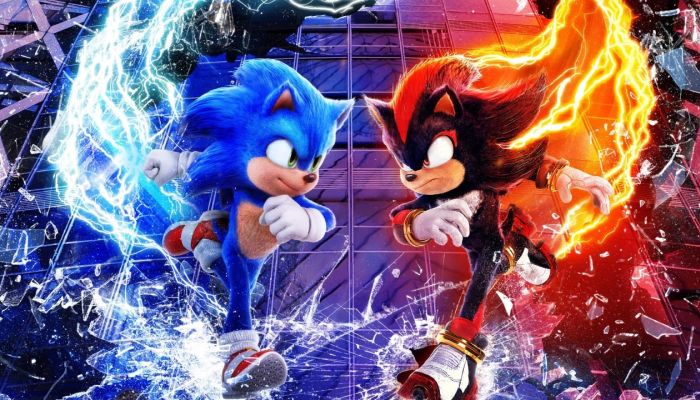
Shadow is the film’s most successful addition. His design immediately communicates that he belongs to Sonic’s world without functioning as a simple visual duplicate.
The black and red coloring, controlled posture, and sharper expressions make him appear more dangerous. Sonic rarely stays physically still, while Shadow often seems completely composed until he attacks.
Keanu Reeves gives Shadow a low, restrained voice that contrasts with Ben Schwartz’s rapid and playful Sonic. The performance avoids excessive shouting, allowing bitterness and grief to remain beneath the surface.
Reeves is especially effective when Shadow speaks about Maria. His voice becomes quieter without losing the character’s emotional distance. Shadow’s power is established through action before the film explains his history. He can match Sonic’s speed, use Chaos energy, teleport, and overwhelm Team Sonic in direct combat.
This makes the later flashbacks more effective. The audience first meets a weapon and then learns about the lonely individual who existed before the weaponized identity.
Maria treats Shadow with curiosity and affection rather than fear. Their relationship gives him an experience of humanity based on one person’s kindness instead of the institution that imprisoned him.
The film’s flashbacks are emotionally direct, sometimes to the point of simplification. Maria is designed primarily as the source of Shadow’s love and grief rather than as a deeply developed person.
Her limited development is one of my main criticisms. The story tells me that she changed Shadow’s life, and the actors create warmth between them, but their time together is brief.
More ordinary scenes between Maria and Shadow would have strengthened the later tragedy. The film provides enough to make his motivation understandable, but not enough to make the relationship feel fully lived.
Shadow’s anger remains convincing because he has spent decades isolated with an incomplete understanding of what Maria would have wanted. Gerald encourages him to remember the pain while ignoring the compassion attached to it.
His eventual change is not based on forgetting Maria. It comes from recognizing that revenge would betray the person he claims to honor.
That is a familiar message, but it fits the character. Shadow does not become cheerful or suddenly identical to Sonic. He simply chooses to stop allowing Gerald to define his grief.
Sonic’s Development: The Hero Learns How Easily Pain Becomes Rage
Sonic begins the film comfortable in his role as leader. He has a family, trusted friends, and enough victories to believe that he understands heroism.
Shadow challenges that confidence physically and emotionally. Sonic sees someone with similar abilities who has been shaped by completely different experiences. At first, Sonic treats Shadow as a dangerous opponent who needs to be stopped. He listens to the story but does not fully understand the anger behind it.
That changes after the conflict becomes personal. Sonic experiences the possibility of losing someone important and immediately begins moving toward the same emotional position he criticized in Shadow.
This is the film’s most meaningful development for Sonic. His optimism is not treated as permanent moral protection. Under enough pressure, he can become reckless, angry, and willing to use power for revenge.
Ben Schwartz continues to give Sonic a fast, enthusiastic voice, but the performance gains greater intensity during these darker scenes.
Sonic’s anger is believable because it still sounds like him. He does not transform into a completely different character. His usual confidence becomes aggression, while his refusal to slow down becomes an unwillingness to think.
The conflict also tests his role within Team Sonic. Tails and Knuckles are not simply assistants waiting for orders. They challenge Sonic when he abandons the values they share.
Knuckles is particularly important because he understands anger and inherited revenge. His earlier life was shaped by conflict, yet he has learned that strength without discipline can destroy the relationships he values.
The film could have spent more time on this disagreement. Sonic’s emotional change happens quickly because the plot must reach the final confrontation.
Even so, the parallel with Shadow gives Sonic a stronger arc than he received in the second movie. He must choose what kind of hero he wants to become when optimism is no longer easy.
Robotnik and Gerald: Twice the Jim Carrey, for Better and Worse
Jim Carrey plays both Doctor Ivo Robotnik and Professor Gerald Robotnik, turning much of the film into an extended showcase for his physical comedy, vocal flexibility, and willingness to make every movement larger than expected.
Ivo begins in a state of personal collapse. He has lost direction, neglected himself, and withdrawn from the theatrical ambition that previously defined him. The discovery that Gerald is alive restores his energy. For the first time, Ivo encounters a family member who appears proud of his intelligence.
Their early scenes together are intentionally excessive. The two Robotniks celebrate their similarities, compete through performance, and behave as though emotional connection must include choreography.
Carrey distinguishes them through posture, voice, age, and motive. Ivo is childish, insecure, and desperate for recognition. Gerald appears more controlled, but his grief has hardened into something far more dangerous.
Gerald’s plan gives the Robotnik family a tragic dimension. His intelligence has not helped him process Maria’s death. It has only provided more powerful tools for expressing his rage. Ivo gradually discovers that Gerald does not truly value him as a grandson. He values him as another useful component in the plan.
This realization gives Robotnik a surprisingly effective emotional choice. He has spent the series demanding attention and superiority, yet he finally receives the opportunity to act for someone other than himself.
Carrey handles the quieter disappointment well, particularly when Ivo understands that the family connection he wanted was conditional. The double performance is also one of the film’s greatest sources of excess. Some scenes continue long after the central joke is clear.
This is my second major criticism. The Robotnik material can be hilarious, but it occasionally interrupts Shadow’s darker story with comedy so broad that the emotional transition becomes uncomfortable.
A more restrained version could have preserved Carrey’s energy while giving Gerald greater menace. Instead, the villain frequently moves between grief-driven extremism and elaborate comic performance.
Tails, Knuckles, and the Human Cast: A Team Fighting for Screen Time
Tails and Knuckles remain essential members of Team Sonic, though neither receives an arc as substantial as Sonic or Shadow.
Tails provides technical support, strategic thinking, and emotional loyalty. His gadgets frequently allow the group to enter locations, analyze threats, and survive situations that speed or strength cannot solve.
Colleen O’Shaughnessey continues to voice Tails with warmth and intelligence. Her performance gives the character sincerity without making him sound fragile. Tails’ main limitation is narrative space. The film uses his abilities constantly but rarely pauses to explore what the conflict means to him personally.
Knuckles receives more comedy. His literal understanding of language and intense approach to ordinary situations remain reliable sources of humor. Idris Elba maintains the deep seriousness that makes these jokes work. Knuckles never appears to believe he is being funny.
He also functions as the team’s voice of discipline. His relationship with Sonic has moved beyond rivalry, allowing him to challenge the leader without attempting to replace him.
James Marsden and Tika Sumpter return as Tom and Maddie. Their roles are smaller because the film focuses more heavily on the animated characters and game mythology.
This reduction is generally helpful. Earlier films occasionally moved away from Sonic’s world for human comedy that felt less important than the central adventure. Tom remains emotionally important as Sonic’s adoptive father figure. His presence gives Sonic something personal to protect and something painful to imagine losing. Maddie receives less material, though she continues to represent the stable family Sonic found on Earth.
Agent Stone again demonstrates loyalty to Robotnik. Lee Majdoub gives the character humor and genuine affection, suggesting that Stone’s devotion is more emotionally sincere than Robotnik usually acknowledges.
The ensemble is large, and several characters receive only functional scenes. The film’s focus on Shadow improves the main plot but leaves less room for individual development elsewhere.
Action & Visual Effects: The Fastest and Most Confident Film in the Series
Sonic the Hedgehog 3 contains the strongest action in the trilogy. The filmmakers appear more comfortable staging battles around characters who can move at extreme speed.
Sonic and Shadow’s first encounter establishes their different styles. Sonic relies on improvisation and constant motion. Shadow fights with control, teleportation, and direct aggression.
The choreography communicates speed without reducing every battle to colored lines moving across the screen. Characters pause, redirect momentum, use the environment, and react visibly to impacts.
The Tokyo sequence uses urban surfaces, roads, signs, vehicles, and vertical space to create a larger playground. Neon lighting complements Shadow’s red energy and Sonic’s blue electricity. Team battles make good use of distinct powers. Knuckles provides force, Tails supplies technology, and Sonic controls movement.
The final act expands into space and becomes increasingly connected to the visual language of the games. The ARK, Chaos energy, energy beams, and super transformations create the series’ largest spectacle.
The computer-generated characters blend convincingly with live-action locations. Fur, lighting, eye movement, and physical contact have improved considerably since the first film.
Shadow’s animation is especially strong. Small changes in his eyes and posture communicate emotion even when his voice remains restrained.
The film occasionally overwhelms the frame with speed, energy, debris, and rapid camera changes. Most major actions remain understandable, but smaller details can disappear during the final confrontation.
The visual effects serve character best during quieter scenes. Shadow’s isolation, Sonic’s changing expression, and Robotnik’s emotional realization are more memorable than another collapsing structure.
Humor & Tone: Family Comedy Beside Genuine Tragedy
The Sonic films have always mixed action with broad family comedy. The third movie attempts the most difficult tonal balance because Shadow’s story involves death, imprisonment, grief, and planned global destruction.
Some of the humor works extremely well. Knuckles remains funny because the film gives him confidence rather than making him unintelligent. Sonic’s quick comments fit his restless personality.
Robotnik and Gerald generate the loudest comedy. Jim Carrey uses physical movement, strange vocal choices, elaborate costumes, and sudden improvisational energy. Agent Stone provides a quieter form of humor through devotion and disappointment.
The problem appears when the film moves directly from Shadow remembering Maria to an extended Robotnik joke. Both modes belong in the movie, but the editing does not always provide enough transition.
The family-friendly rating also limits how directly the story can explore grief and institutional cruelty. The film communicates what happened without remaining in the emotional aftermath for too long.
Several jokes are designed for adults, including references and performance choices younger viewers may not fully recognize. They rarely interfere with the story. The comedy is more successful than in the second film because the narrative spends less time on disconnected human subplots.
However, restraint would have improved several scenes. Jim Carrey is entertaining enough that the film occasionally appears unwilling to cut any part of his performance.
The result is a movie that can be emotionally sincere, visually exciting, and extremely silly within a few minutes. That energy is appealing, but not always smooth.
Music, Direction & Pacing: Running Toward “Live & Learn”
Jeff Fowler directs with greater confidence than in the earlier films. The story spends more time with Sonic, Shadow, and the mythology audiences came to see.
The pacing is extremely fast. New threats, alliances, betrayals, flashbacks, and action scenes arrive with little delay. This momentum makes the film entertaining, but it also creates emotional compression. Shadow’s history and Sonic’s anger could each support more patient scenes.
Tom Holkenborg’s score combines orchestral action music with electronic elements suited to Sonic’s world. Shadow receives darker themes that distinguish his presence from Sonic’s brighter energy.
The use of musical material associated with “Live & Learn” is especially meaningful for fans of Sonic Adventure 2. It connects the film’s climax with one of the most recognizable parts of Shadow’s game history.
The music does not function only as nostalgia. Its rising energy matches the moment when Sonic and Shadow stop fighting one another and direct their power toward a shared goal.
The film’s sound design gives speed a physical quality. Sonic and Shadow do not simply disappear. Their movement produces pressure, impacts, electrical energy, and changes in the environment.
Fowler also handles character entrances effectively. Shadow’s introduction, Gerald’s reveal, and the super transformations are staged as major events.
The direction becomes less controlled around the Robotnik comedy. Some scenes feel as though the camera is waiting for Jim Carrey to finish every possible version of a joke.
A slightly longer running time with more emotional pauses might have helped, though the film already contains a great deal of story. The stronger solution would have been reducing repeated comedy rather than adding more material.
Themes & Emotional Meaning: Grief Is Not Permission to Destroy
The central theme of Sonic the Hedgehog 3 is the relationship between grief and revenge.
Shadow has every reason to feel anger. He was imprisoned, treated as an experiment, and separated violently from the person who showed him kindness. The film does not ask him to pretend that these experiences were acceptable. It asks whether harming others can honor Maria’s memory.
Gerald believes grief creates moral permission. Because the world took Maria from him, he believes the world deserves to suffer. Shadow initially accepts this logic because revenge gives his pain direction. Without the mission, he would have to confront the emptiness beneath it.
Sonic becomes vulnerable to the same reasoning after his own family is threatened. He briefly believes that his anger makes destructive action necessary. Their confrontation reveals how easily a hero can become controlled by the desire to make someone else hurt.
The film’s answer is forgiveness in a broad sense, but not forgetfulness. Shadow does not excuse what happened. He rejects Gerald’s demand that the tragedy determine every future choice.
Family is another important theme. Sonic’s family is chosen: Tom, Maddie, Tails, and Knuckles. Shadow’s most important bond was with Maria. Robotnik longs for biological family and discovers that shared blood does not guarantee love.
These relationships create different definitions of belonging. The film argues that family is demonstrated through protection, honesty, and sacrifice rather than origin alone. Robotnik’s final decision supports this idea. The person who spent multiple films treating relationships as weaknesses finally acts because he recognizes that someone matters to him.
The theme is sincere, even when the screenplay explains it too directly. Younger viewers can understand the distinction between feeling anger and allowing anger to control every action.
Critical Reception & Audience Response: The Franchise’s Strongest Entry
Sonic the Hedgehog 3 received generally positive reviews, with many critics describing it as the strongest film in the series. Praise frequently focused on Shadow, Keanu Reeves’ vocal performance, Jim Carrey’s double role, improved visual effects, and the film’s closer connection to the games.
The critical response was not universally enthusiastic. Some reviewers considered the film entertaining but disposable, while others criticized its frantic pacing, predictable structure, tonal imbalance, and excessive Robotnik comedy. Metacritic categorized the overall response as mixed or average despite the stronger approval seen elsewhere.
Keanu Reeves received particular praise for making Shadow emotionally sympathetic without softening his intimidating presence. Jim Carrey was also widely recognized for the physical commitment and comic energy of his dual performance.
Audience response was highly positive, especially among fans familiar with Sonic Adventure 2. The inclusion of Shadow’s history, Gerald Robotnik, the ARK, and “Live & Learn” gave longtime players material they had waited years to see adapted.
The film was also a major commercial success, earning approximately $492 million worldwide and becoming the highest-grossing entry in the Sonic film series.
That success reflects the franchise’s unusual progression. The original film began with widespread criticism of Sonic’s first character design. By the third movie, the series had become confident enough to introduce darker mythology and assume that audiences understood its growing cast.
Some viewers unfamiliar with the games may find the mythology crowded. The film explains the essential details, but several reveals clearly carry more weight for existing fans.
Its reputation will likely remain tied to Shadow. He gives the series a stronger dramatic center and demonstrates that these films can handle more than cheerful speed and broad comedy.
Final Verdict: Shadow Pushes Sonic to His Best Movie Yet
Sonic the Hedgehog 3 is the strongest entry in the film series because it finally gives Sonic an opponent who challenges more than his speed.
Shadow can match him physically, but the more important conflict concerns how each character responds to pain. Sonic believes friendship and family can create a better future. Shadow believes loss has already decided what his future must become.
Keanu Reeves gives Shadow enough restraint to make every line feel deliberate. The character does not need constant shouting to appear dangerous.
Ben Schwartz continues to make Sonic energetic and likable while adding genuine anger to the performance. Sonic’s optimism gains value because the film shows that it can fail under pressure.
Jim Carrey is both one of the film’s greatest strengths and one of its most obvious sources of excess. His two Robotnik performances create outstanding comic moments and a surprising emotional payoff, but several scenes need stronger editing.
Tails and Knuckles remain appealing partners. Their teamwork gives Sonic a family rather than a collection of side characters, even though their individual stories are limited.
The action is fast, readable, and visually confident. Sonic and Shadow’s abilities create movement with weight, while the final space sequence embraces the scale fans expect from the games.
The film’s treatment of Maria is emotionally effective but compressed. More time with her and Shadow would have made the tragedy feel less functional.
I also wanted the film to sit with Sonic’s anger longer. His movement toward revenge is important, but the rapid plot resolves it before the transformation can become fully uncomfortable.
Despite those weaknesses, the film finds a successful balance between adaptation and family entertainment. New viewers receive a clear action story, while longtime fans recognize characters, music, locations, and emotional ideas associated with Sonic Adventure 2.
I recommend Sonic the Hedgehog 3 to families, Sonic fans, viewers who enjoy fast science-fiction adventures, and anyone who found the previous films enjoyable but too dependent on human comedy.
Personal rating: 8.5/10.
Sonic the Hedgehog 3 earns that score for Shadow’s introduction, Keanu Reeves’ performance, Sonic’s stronger development, improved action, confident visual effects, effective use of game mythology, and an emotionally meaningful climax. It loses points for rushed character development, limited use of Maria, excessive Robotnik comedy, crowded plotting, and tonal transitions that occasionally weaken the drama.
The previous films proved that Sonic could work on the big screen. The third proves that his world becomes far more interesting when someone just as fast forces him to stop and consider where anger is taking him.
Pros

- Engaging narrative with deep thematic elements
- Impressive blend of practical effects and CGI
- Rich character evolution that adds complexity to familiar faces
- Memorable soundtrack that enhances both action and emotional scenes
- Seamless balance between humor and high-stakes drama
- Wide accessibility through multiple streaming and download platforms
Cons

- Occasional pacing issues in segments of the film
- Some CGI sequences can feel inconsistent with practical effects
- Complex narrative elements may be challenging for younger viewers

Leave a comment
Your comment is awaiting moderation. We save your draft here
0 Comments